
Acadia (; French: Acadie) was a colony of New France in northeastern North America which included parts of what are now the Maritime provinces, the Gaspé Peninsula and Maine to the Kennebec River. Settlers primarily came from the southwestern regions of France, including Poitou-Charentes and the Aquitaine region (now known as Nouvelle-Aquitaine), as well as Poitou and Anjou. The territory was originally inhabited by various First Nations of the Wabanaki Confederacy who referred to the region as Dawnland.
The first capital of Acadia was established in 1605 as Port-Royal. Soon after, English forces of Captain Argall, an English ship's captain employed by the Virginia Company of London attacked and burned down the fortified habitation in 1613. A new centre for Port-Royal was established nearby, and it remained the longest-serving capital of French Acadia until the British siege of Port Royal in 1710. There were six colonial wars in a 74-year period in which British interests tried to capture Acadia, starting with King William's War in 1689.
French troops from Quebec, Acadians, the Wabanaki Confederacy, and French priests continually raided New England settlements along the border in Maine during these wars. Acadia was conquered in 1710 during Queen Anne's War, while New Brunswick and much of Maine remained contested territory. Prince Edward Island (Île Saint-Jean) and Cape Breton (Île Royale) remained under French control, as agreed under Article XIII of the Treaty of Utrecht. The English took control of Maine by defeating the Wabanaki Confederacy and the French priests during Father Rale's War. During King George's War, France and New France made significant attempts to regain mainland Nova Scotia. The British took New Brunswick in Father Le Loutre's War, and they took Île Royale and Île Saint-Jean in 1758 following the French and Indian War. The territory was eventually divided into British colonies.
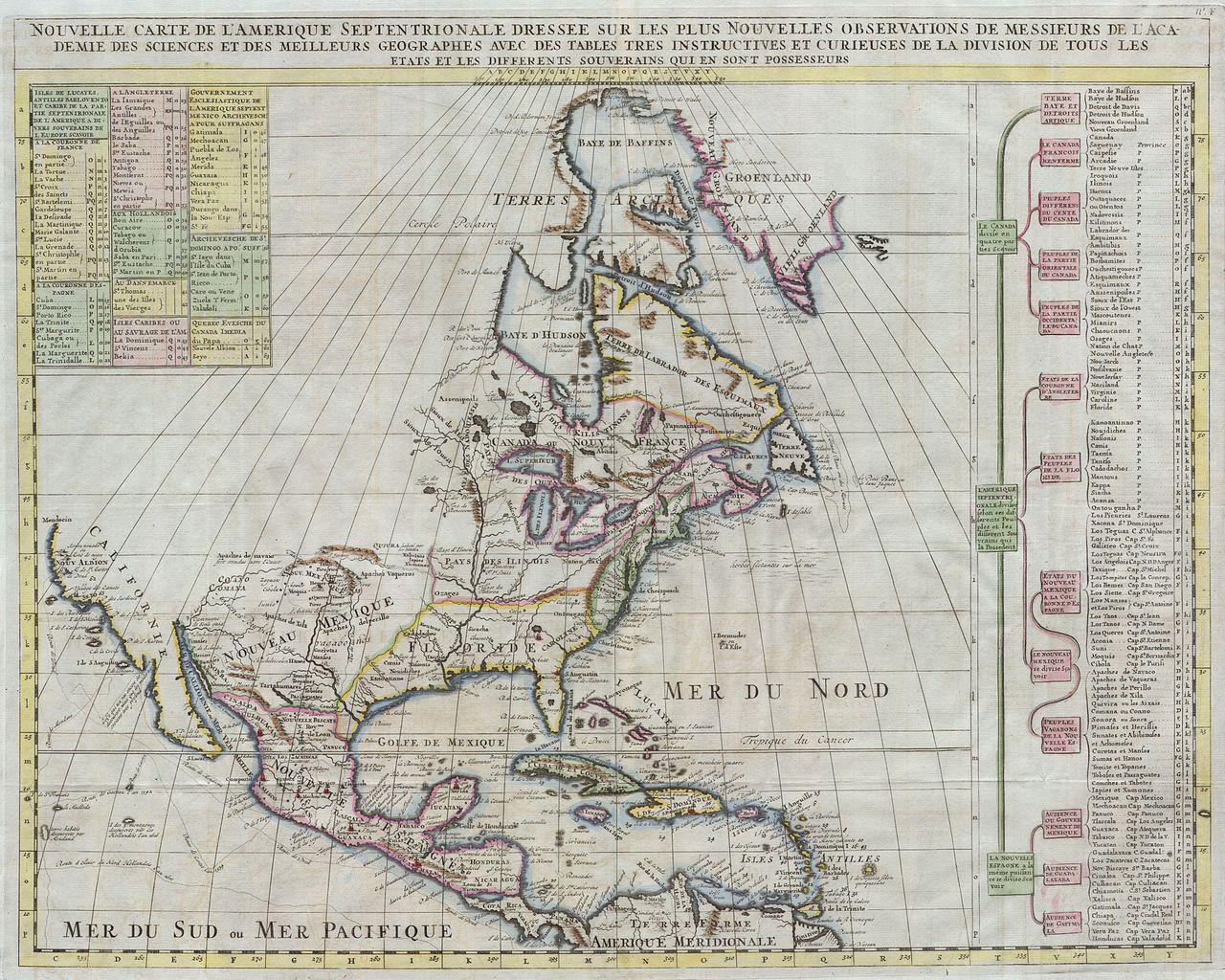
The term Acadia today refers to regions of North America that are historically associated with the lands, descendants, or culture of the former region. It particularly refers to regions of the Maritimes with Acadian roots, language, and culture, primarily in New Brunswick, Nova Scotia, the Magdalen Islands and Prince Edward Island, as well as in Maine. "Acadia" can also refer to the Acadian diaspora in southern Louisiana, a region also referred to as Acadiana since the early 1960s. In the abstract, Acadia refers to the existence of an Acadian culture in any of these regions. People living in Acadia are called Acadians, which in Louisiana changed to Cajuns, the more common, rural American, name of Acadians.
Etymology
Explorer Giovanni da Verrazzano is credited for originating the designation Acadia on his 16th-century map, where he applied the ancient Greek name "Arcadia" to the entire Atlantic coast north of Virginia. "Arcadia" is derived from the Arcadia region in Greece, which had the extended meanings of "refuge" or "idyllic place". Henry IV of France chartered a colony south of the St. Lawrence River between the 40th and 46th parallels in 1603, and he recognized it as La Cadie. Samuel de Champlain fixed its present orthography with the r omitted, and cartographer William Francis Ganong has shown its gradual progress northeastwards to its resting place in the Atlantic provinces of Canada.
As an alternative theory, some historians suggest that the name is derived from the indigenous Canadian Mi'kmaw language, in which Cadie means "fertile land".

History
17th century
The history of Acadia was significantly influenced by the great power conflict between France and England, later Great Britain, that occurred in the 17th and 18th centuries. Prior to the arrival of Europeans, the Mi'kmaq had been living in Acadia for at least two to three thousand years. Early European settlers were French subjects primarily from the Poitou-Charentes and Aquitaine regions of southwestern France, now known as Nouvelle-Aquitaine. The first French settlement was established by Pierre Dugua de Mons, Governor of Acadia, under the authority of the French King, Henri IV, on Saint Croix Island in 1604. The following year, the settlement was moved across the Bay of Fundy to Port Royal after a difficult winter on the island and deaths from scurvy. There, they constructed a new habitation. In 1607, the colony received bad news as Henri IV revoked Sieur de Mons' royal fur monopoly, citing that the income was insufficient to justify supplying the colony further. Thus recalled, the last of the French left Port Royal in August 1607. Their allies, the Mi'kmaq, agreed to act as custodians of the settlement. When the former lieutenant governor, Jean de Biencourt de Poutrincourt et de Saint-Just, returned in 1610, he found the Port Royal habitation just as it was left.
During the first 80 years of the French presence in Acadia, there were numerous significant battles as the English, Scottish, and Dutch contested the French for possession of the colony. These battles happened at Port Royal, Saint John, Cap de Sable (present-day Port La Tour, Nova Scotia), Jemseg, Castine, and Baleine.
From the 1680s onward, there were six colonial wars that took place in the region (see the French and Indian Wars as well as Father Rale's War and Father Le Loutre's War). These wars were fought between New England and New France, and their respective native allies. After the British siege of Port Royal in 1710, mainland Nova Scotia was under the control of British colonial government, but both present-day New Brunswick and virtually all of present-day Maine remained contested territory between New England and New France, until the Treaty of Paris of 1763 confirmed British control over the region.

The wars were fought on two fronts: the southern border of Acadia, which New France defined as the Kennebec River in southern Maine and in present-day peninsular Nova Scotia. The latter involved preventing the British from taking the capital of Acadia, Port Royal (See Queen Anne's War), establishing themselves at Canso (See Father Rale's War) and founding Halifax (see Father Le Loutre's War).
Acadian Civil War
From 1640 to 1645, Acadia was plunged into what some historians have described as a civil war. The war was between Port Royal, where the Governor of Acadia Charles de Menou d'Aulnay de Charnisay was stationed, and present-day Saint John, New Brunswick, where Governor of Acadia Charles de Saint-Étienne de la Tour was stationed. There were four major battles in the war, and d'Aulnay ultimately prevailed over La Tour.
King Philip's War
During King Philip's War (1675–78), the governor was absent from Acadia (having first been imprisoned in Boston during the Dutch occupation of Acadia) and Jean-Vincent d'Abbadie de Saint-Castin was established at the capital of Acadia, Pentagouêt. From there he worked with the Abenaki of Acadia to raid British settlements migrating over the border of Acadia. British retaliation included attacking deep into Acadia in the Battle of Port La Tour (1677).

Wabanaki Confederacy
In response to King Philip's War in New England, the native peoples in Acadia joined the Wabanaki Confederacy to form a political and military alliance with New France. The Confederacy remained significant military allies to New France through six wars. Until the French and Indian War the Wabanaki Confederacy remained the dominant military force in the region.
Catholic missions
There were tensions on the border between New England and Acadia, which New France defined as the Kennebec River in southern Maine. English settlers from Massachusetts (whose charter included the Maine area) had expanded their settlements into Acadia. To secure New France's claim to Acadia, it established Catholic missions (churches) among the four largest native villages in the region: one on the Kennebec River (Norridgewock); one further north on the Penobscot River (Penobscot); one on the Saint John River (Medoctec); and one at Shubenacadie (Saint Anne's Mission).
King William's War
During King William's War (1688–97), some Acadians, the Wabanaki Confederacy and the French Priests participated in defending Acadia at its border with New England, which New France defined as the Kennebec River in southern Maine. Toward this end, the members of the Wabanaki Confederacy, on the Saint John River and in other places, joined the New France expedition against present-day Bristol, Maine (the siege of Pemaquid (1689)), Salmon Falls and present-day Portland, Maine.

In response, the New Englanders retaliated by attacking Port Royal and present-day Guysborough. Acadia was notionally integrated into the newly formed Province of Massachusetts Bay in 1691, along with bordering areas now part of Maine.
In 1694, the Wabanaki Confederacy participated in the Raid on Oyster River at present-day Durham, New Hampshire. Two years later, New France, led by Pierre Le Moyne d'Iberville, returned and fought a naval battle in the Bay of Fundy before moving on to raid Bristol, Maine, again. In retaliation, the New Englanders, led by Benjamin Church, engaged in a Raid on Chignecto (1696) and the siege of the Capital of Acadia at Fort Nashwaak.
At the end of the war in 1697, England returned the territory to France in the Treaty of Ryswick and the borders of Acadia remained the same.
18th century
Queen Anne's War
During Queen Anne's War, some Acadians, the Wabanaki Confederacy and the French priests participated again in defending Acadia at its border with New England. They made numerous raids on New England settlements along the border in the Northeast Coast Campaign and the famous Raid on Deerfield. In retaliation, Major Benjamin Church went on his fifth and final expedition to Acadia. He raided present-day Castine, Maine and continued with raids against Grand Pre, Pisiquid, and Chignecto. A few years later, defeated in the siege of Pemaquid (1696), Captain March made an unsuccessful siege on the Capital of Acadia, Port Royal (1707). British forces were successful with the siege of Port Royal (1710), while the Wabanaki Confederacy were successful in the nearby Battle of Bloody Creek (1711) and continued raids along the Maine frontier.
The 1710 conquest of the Acadian capital of Port Royal during the war was confirmed by the Treaty of Utrecht of 1713. The British conceded to the French "the island called Cape Breton, as also all others, both in the mouth of the river of St. Lawrence, and in the gulph of the same name", and "all manner of liberty to fortify any place or places there." The French established a fortress at Louisbourg, Cape Breton, to guard the sea approaches to Quebec.
On 23 June 1713, the French residents of Nova Scotia were given one year to declare allegiance to Britain or leave the region. In the meantime, the French signalled their preparedness for future hostilities by beginning the construction of Fortress Louisbourg on Île Royale, now Cape Breton Island. The British grew increasingly alarmed by the prospect of disloyalty in wartime of the Acadians now under their rule. French missionaries worked to maintain the loyalty of Acadians, and to maintain a hold on the mainland part of Acadia.
Dummer's War
During the escalation that preceded Dummer's War (1722–1725), some Acadians, the Wabanaki Confederacy and the French priests persisted in defending Acadia, which had been conceded to the British in the Treaty of Utrecht, at its border against New England. The Miꞌkmaq refused to recognize the treaty handing over their land to the English and hostilities resumed. The Miꞌkmaq raided the new fort at Canso, Nova Scotia in 1720. The Confederacy made numerous raids on New England settlements along the border into New England. Towards the end of January 1722, Governor Samuel Shute chose to launch a punitive expedition against Sébastien Rale, a Jesuit missionary, at Norridgewock. This breach of the border of Acadia, which had at any rate been ceded to the British, drew all of the tribes of the Wabanaki Confederacy into the conflict.
Under potential siege by the Confederacy, in May 1722, Lieutenant Governor John Doucett took 22 Miꞌkmaq hostage at Annapolis Royal to prevent the capital from being attacked. In July 1722, the Abenaki and Miꞌkmaq created a blockade of Annapolis Royal, with the intent of starving the capital. The natives captured 18 fishing vessels and prisoners from present-day Yarmouth to Canso. They also seized prisoners and vessels from the Bay of Fundy.
As a result of the escalating conflict, Massachusetts Governor Shute officially declared war on 22 July 1722. The first battle of Father Rale's War happened in the Nova Scotia theatre. In response to the blockade of Annapolis Royal, at the end of July 1722, New England launched a campaign to end the blockade and retrieve over 86 New England prisoners taken by the natives. One of these operations resulted in the Battle at Jeddore. The next was a raid on Canso in 1723. Then in July 1724 a group of sixty Miꞌkmaq and Wolastoqiyik raided Annapolis Royal.
As a result of Father Rale's War, present-day central Maine fell again to the British with the defeat of Sébastien Rale at Norridgewock and the subsequent retreat of the native population from the Kennebec and Penobscot rivers.
King George's War
King George's War began when the war declarations from Europe reached the French fortress at Louisbourg first, on May 3, 1744, and the forces there wasted little time in beginning hostilities. Concerned about their overland supply lines to Quebec, they first raided the British fishing port of Canso on May 23, and then organized an attack on Annapolis Royal, then the capital of Nova Scotia. However, French forces were delayed in departing Louisbourg, and their Miꞌkmaq and Wolastoqey allies decided to attack on their own in early July. Annapolis had received news of the war declaration, and was somewhat prepared when the Indians began besieging Fort Anne. Lacking heavy weapons, the Indians withdrew after a few days. Then, in mid-August, a larger French force arrived before Fort Anne, but was also unable to mount an effective attack or siege against the garrison, which had received supplies and reinforcements from Massachusetts. In 1745, British colonial forces conducted the siege of Port Toulouse (St. Peter's) and then captured Fortress Louisbourg after a siege of six weeks. France launched a major expedition to recover Acadia in 1746. Beset by storms, disease, and finally the death of its commander, the Duc d'Anville, it returned to France in tatters without reaching its objective. French officer Jean-Baptiste Nicolas Roch de Ramezay also arrived from Quebec and conducted the Battle at Port-la-Joye on Île Saint-Jean and the Battle of Grand Pré.
Father Le Loutre's War (1749–1755)
Despite the British capture of the Acadian capital in the siege of Port Royal (1710), Nova Scotia remained primarily occupied by Catholic Acadians and Miꞌkmaq. To prevent the establishment of Protestant settlements in the region, Miꞌkmaq raided the early British settlements of present-day Shelburne (1715) and Canso (1720). A generation later, Father Le Loutre's War began when Edward Cornwallis arrived to establish Halifax with 13 transports on 21 June 1749. The British quickly began to build other settlements. To guard against Miꞌkmaq, Acadian and French attacks on the new Protestant settlements, they erected fortifications in Halifax (Citadel Hill) (1749), Dartmouth (1750), Bedford (Fort Sackville) (1751), Lunenburg (1753) and Lawrencetown (1754). There were numerous Miꞌkmaq and Acadian raids on these villages such as the Raid on Dartmouth (1751).
Within 18 months of establishing Halifax, the British also took firm control of peninsular Nova Scotia by building fortifications in all the major Acadian communities: present-day Windsor (Fort Edward, 1750); Grand Pre (Fort Vieux Logis, 1749) and Chignecto (Fort Lawrence, 1750). (A British fort already existed at the other major Acadian centre of Annapolis Royal, Nova Scotia. Cobequid remained without a fort.) Numerous Miꞌkmaq and Acadian raids took place against these fortifications, such as the siege of Grand Pre (1749).
Deportation of the Acadians
In the years after the British conquest, the Acadians refused to swear unconditional oaths of allegiance to the British crown. During this time period some Acadians participated in militia operations against the British and maintained vital supply lines to Fortress Louisbourg and Fort Beausejour. During the French and Indian War, the British sought to neutralize any military threat Acadians posed and to interrupt the vital supply lines Acadians provided to Louisbourg by deporting them.
This process began in 1755, after the British captured Fort Beauséjour and began the expulsion of the Acadians with the Bay of Fundy Campaign. Between six and seven thousand Acadians were expelled from Nova Scotia to the lower British American colonies. Some Acadians eluded capture by fleeing deep into the wilderness or into French-controlled Canada. The Quebec town of L'Acadie (now a sector of Saint-Jean-sur-Richelieu) was founded by expelled Acadians. After the siege of Louisbourg (1758), a second wave of the expulsion began with the St. John River Campaign, Petitcodiac River Campaign, Gulf of St. Lawrence Campaign and the Île Saint-Jean Campaign.
The Acadians and the Wabanaki Confederacy put up a significant resistance to the British throughout the war. They repeatedly raided Canso, Lunenburg, Halifax, Chignecto and into New England.
Any pretense that France might maintain or regain control over the remnants of Acadia came to an end with the fall of Montreal in 1760 and the 1763 Treaty of Paris, which permanently ceded almost all of eastern New France to Britain. In 1763, Britain would designate lands west of the Appalachians as the "Indian Reserve", but did not respect Miꞌkmaq title to the Atlantic region, claiming title was obtained from the French. The Miꞌkmaq remain in Acadia to this day. After 1764, many exiled Acadians finally settled in Louisiana, which had been transferred by France to Spain as part of the Treaty of Paris which formally ended conflict between France and Great Britain over control of North America (the Seven Years' War, known as the French and Indian War in the United States). In Louisiana, the demonym Acadian developed into Cadien, anglicized as Cajun, which was first used as a pejorative term until its later mainstream acceptance.
Britain eventually moderated its policies and allowed Acadians to return to Nova Scotia. However, most of the fertile former Acadian lands were now occupied by British colonists. The returning Acadians settled instead in more outlying areas of the original Acadia, such as Cape Breton and the areas which are now New Brunswick and Prince Edward Island.
19th century
Acadian Renaissance
Among the Acadian descendants in the Canadian Maritime provinces, there was a revival of cultural awareness which is recognized as an Acadian Renaissance, with a struggle for recognition of Acadians as a distinct group starting in the mid-nineteenth century. Some Acadian deputies were elected to legislative assemblies, starting in 1836 with Simon d'Entremont in Nova Scotia. Several other provincial and federal members followed in New Brunswick and in Prince Edward Island.
This period saw the founding of Acadian higher educational institutions: the Saint Thomas Seminary from 1854 to 1862 and then Saint Joseph's College from 1864, both in Memramcook, New Brunswick. This was followed by the founding of Acadian newspapers: the weekly Le Moniteur Acadien in 1867 and the daily L'Évangéline in 1887 (fr), named after the epic poem by Longfellow.
In New Brunswick the 1870s saw a struggle against the Common Schools Act of 1871, which imposed a non-denominational school system and forbade religious instruction during school hours. This led to widespread Acadian protests and school-tax boycotts, culminating in the 1875 riots in the town of Caraquet. Finally in 1875 a compromise was reached allowing for some Catholic religious teaching in the schools.
In the 1880s there began a series of Acadian national conventions. The first in 1881 adopted Assumption Day (Aug.15) as the Acadian national holiday. The convention favored the argument of the priest Marcel-François Richard (fr) that Acadians are a distinct people which should have a national holiday distinct from that of Quebec (Saint-Jean-Baptiste Day). The second convention in 1884 adopted other national symbols including the flag of Acadia designed by Marcel-François Richard, and the anthem Ave maris stella. The third convention in 1890 created the Société nationale L'Assomption to promote the interests of the Acadian people in the Maritimes. Other Acadian national conventions continued until the fifteenth in 1972.
In 1885, the author, historian and linguist Pascal Poirier became the first Acadian member of the Senate of Canada.
20th century and beyond
By the early twentieth century, some Acadians were chosen for leadership positions in New Brunswick. In 1912, Monseigneur Édouard LeBlanc of Nova Scotia was named bishop of Saint John, after a campaign lasting many years to convince the Vatican to appoint an Acadian bishop. In 1917, the premier of Prince Edward Island resigned to accept a judicial position, and his Conservative Party chose Aubin-Edmond Arsenault as successor until the next election in 1919. Arsenault thus became the first Acadian provincial premier of any province in Canada. In 1923, Peter Veniot became the first Acadian premier of New Brunswick when he was chosen by the Liberal Party to complete the term of the retiring premier until 1925.
The expansion of Acadian influence in the Catholic church continued in 1936 with the creation of the Archdiocese of Moncton whose first archbishop was Louis-Joseph-Arthur Melanson, and whose Cathédrale Notre-Dame de l’Assomption was completed in 1940. The new archdiocese was expanded to include new predominantly Acadian dioceses in Bathurst, New Brunswick (1938), in Edmundston (1944) and in Yarmouth, Nova Scotia (1953).
Government of Louis Robichaud
In 1960, Louis Robichaud became the first Acadian to be elected premier of a Canadian province. He was elected premier of New Brunswick in 1960 and served three terms until 1970.
The Robichaud government created the Université de Moncton in 1963 as a unilingual French-language university, corresponding to the much older unilingual English-language University of New Brunswick. In 1964, two different deputy ministers of education were named to direct English-language and French-language school systems respectively. In the next few years, the Université de Moncton absorbed the former Saint-Joseph's College, as well as the École Normale (teacher's college) which trained French-speaking teachers for the Acadian schools. In 1977, two French-speaking colleges in Northern New Brunswick were transformed into the Edmundston and Shippagan campuses of the Université de Moncton.