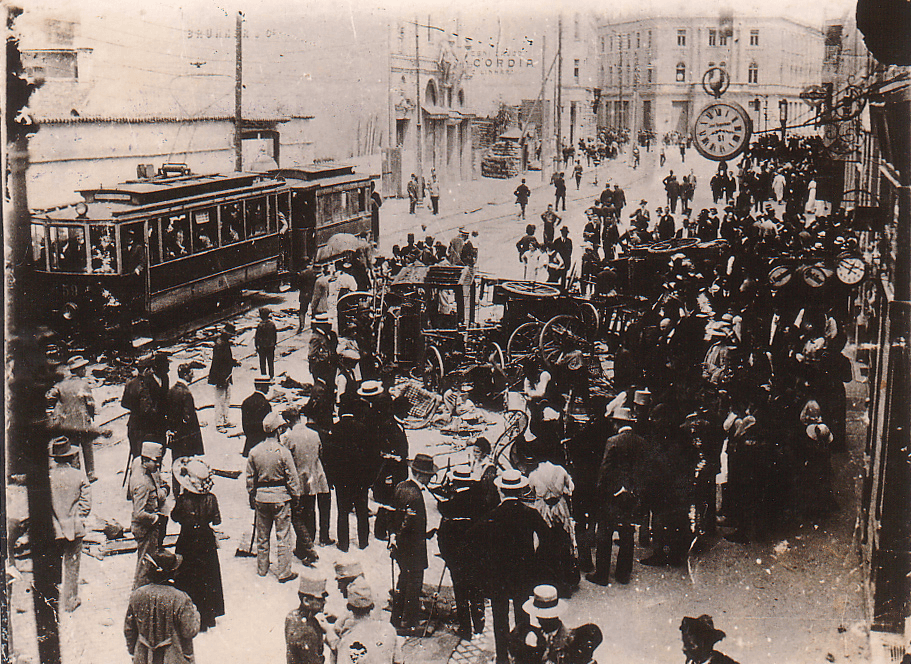
On the morning of June 28, 1914, a nineteen-year-old Bosnian Serb named Gavrilo Princip fired two shots on a street corner in Sarajevo and changed the course of history. His victims were Archduke Franz Ferdinand, heir to the Austro-Hungarian throne, and his wife Sophie. Within six weeks, nearly every major power in Europe had declared war on at least one other. By the time the guns fell silent on November 11, 1918, more than seventeen million people were dead, four empires had crumbled, and the political map of the world had been redrawn beyond recognition.
A Continent Primed to Explode
To understand why a single assassination ignited a global conflagration, one must appreciate the powder keg that Europe had become by 1914. Decades of imperial rivalry, colonial competition, and nationalist ferment had produced an intricate web of military alliances. On one side stood the Triple Entente — France, Russia, and Great Britain. On the other, the Triple Alliance — Germany, Austria-Hungary, and Italy (which would ultimately switch sides). Each power had spent years building vast conscript armies and sophisticated rail networks designed to mobilize millions of men with terrifying efficiency. Military planners operated on hair-trigger timetables; once mobilization began, it was nearly impossible to stop. When Austria-Hungary issued an ultimatum to Serbia following the assassination, the alliance system activated like a row of falling dominoes, and Europe lurched into a war that almost none of its leaders fully intended or understood.
The Illusion of a Short War
In August 1914, soldiers on both sides marched off to cheering crowds with flowers tucked into their rifle barrels. Most believed they would be home by Christmas. Germany's strategic plan — the Schlieffen Plan — called for a lightning sweep through Belgium and France to knock out the Western Front in six weeks before pivoting east to face Russia. It nearly worked. German forces swept through Belgium and Luxembourg, prompting Britain's entry into the war, and drove deep into France before being halted at the First Battle of the Marne in September 1914. That check proved decisive. Both sides dug in, and within months a continuous line of trenches stretched some 700 kilometers from the Swiss border to the English Channel. The war of rapid maneuver had become a war of grinding attrition.
Life and Death in the Trenches
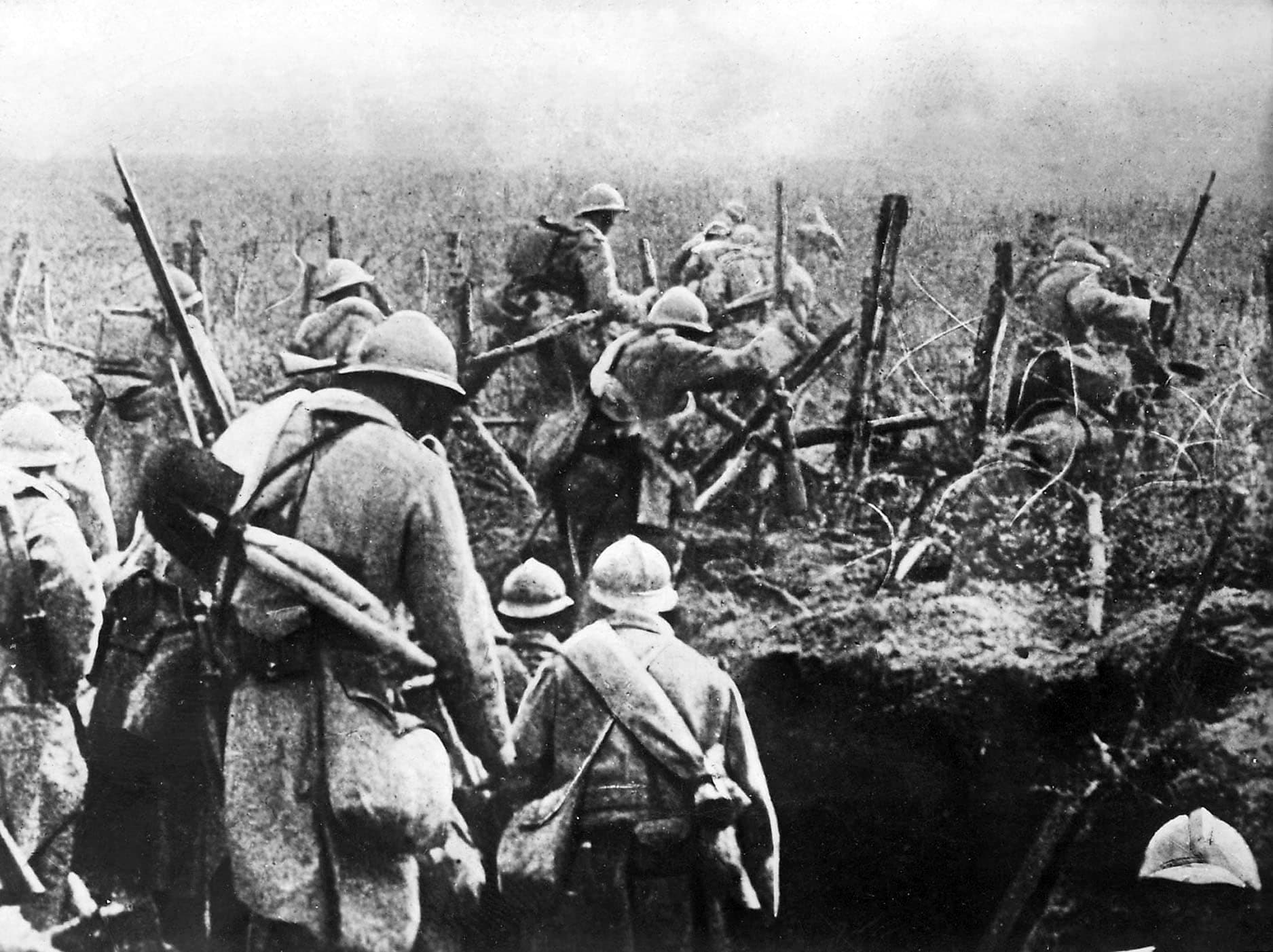
The Western Front became the defining symbol of the war — a muddy, rat-infested labyrinth of trenches where men lived under constant artillery bombardment, the threat of poison gas, and the ever-present possibility of a sniper's bullet. The scale of the carnage was unprecedented. The Battle of the Somme, launched on July 1, 1916, saw the British Army suffer nearly 57,000 casualties on its first day alone — the bloodiest single day in British military history. By the battle's end in November, roughly one million men on both sides had been killed or wounded, and the front line had shifted by just a few miles. At Verdun, fought almost simultaneously, the French and Germans traded blows for ten months in a battle that produced an estimated 700,000 casualties. 'They shall not pass,' vowed French commanders; ultimately, neither side did.
Technology Transforms Warfare
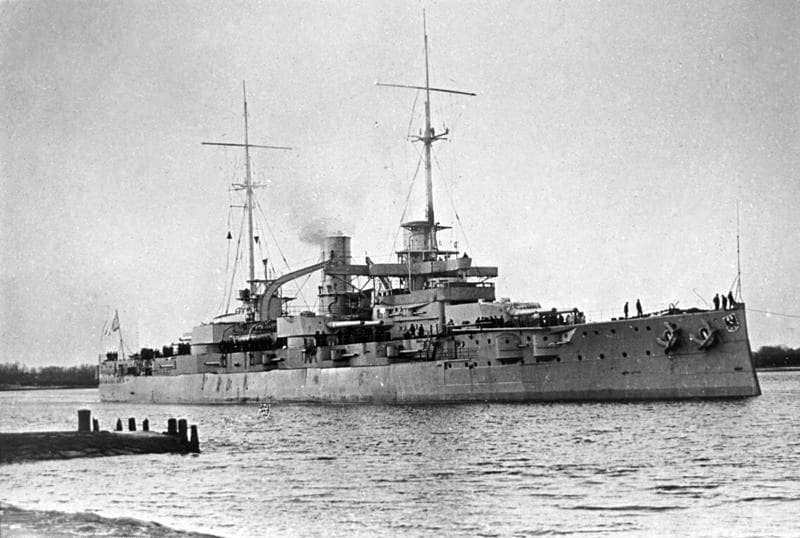
World War I was the first industrial war, and it introduced weapons of mass destruction that shocked even those who deployed them. Chlorine gas was first used on a large scale by Germany at Ypres in April 1915, followed by the even more lethal phosgene and mustard gas. The tank made its battlefield debut on the Somme in 1916, offering a potential solution to trench warfare. Aircraft evolved from fragile reconnaissance tools into dedicated fighters and bombers; the skies above the Western Front became a new arena of combat, producing celebrated aces like Manfred von Richthofen — the 'Red Baron' — credited with 80 aerial victories. Submarines, or U-boats, gave Germany a weapon to strangle Britain's Atlantic supply lines, ultimately drawing the United States into the conflict when American ships and lives were lost.
| Battle | Year | Approximate Casualties (Both Sides) | Outcome |
|---|---|---|---|
| First Battle of the Marne | 1914 | ~500,000 | Allied victory; halted German advance |
| Battle of Verdun | 1916 | ~700,000 | Stalemate; France held |
| Battle of the Somme | 1916 | ~1,000,000+ | Stalemate; minimal territorial gain |
| Battle of Passchendaele (Third Ypres) | 1917 | ~600,000 | Limited Allied gain |
| Spring Offensive (Operation Michael) | 1918 | ~500,000 | Initial German gains, then Allied counter |
The War Beyond Europe
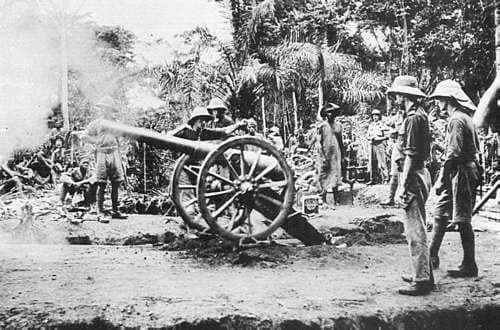
Though the Western Front dominated the popular imagination, the war was genuinely global. On the Eastern Front, Germany and Austria-Hungary battled Russia across a far more fluid, sprawling theater. The strain of that conflict contributed directly to the Russian Revolution of 1917, which toppled Tsar Nicholas II and eventually brought the Bolsheviks to power. In the Middle East, British and allied Arab forces fought the Ottoman Empire; Lawrence of Arabia became a legend rallying Arab tribes, while campaigns in Gallipoli, Mesopotamia, and Palestine reshaped the entire region. German colonial possessions in Africa and the Pacific were seized by Allied forces within the first months. Japan, an Allied partner, expanded its sphere of influence in Asia. The war's tentacles reached virtually every continent.
America Enters — and the Balance Shifts
The United States had maintained an uneasy neutrality under President Woodrow Wilson, but two factors tipped the scales. Germany's resumption of unrestricted submarine warfare in early 1917 threatened American shipping and lives. Then the Zimmermann Telegram, a secret German proposal urging Mexico to attack the United States in exchange for the return of Texas, Arizona, and New Mexico, inflamed public opinion when it was intercepted and published. On April 6, 1917, Congress declared war on Germany. Fresh American troops — eventually numbering two million — began arriving in France just as France and Britain faced mutinies and exhaustion. Their arrival, combined with a sweeping Allied counteroffensive in the summer and autumn of 1918, broke the German lines and forced an armistice.
The Peace That Planted New Seeds of War
The Paris Peace Conference of 1919 produced the Treaty of Versailles, signed on June 28, 1919 — exactly five years after the Sarajevo assassination. Germany was stripped of territory, its military was drastically curtailed, and it was saddled with crippling reparations under the controversial 'war guilt' clause (Article 231). The Austro-Hungarian and Ottoman Empires were dismantled; new nations emerged across Central Europe and the Middle East, often drawn with little regard for ethnic or cultural boundaries. Wilson's vision of a League of Nations was enshrined in the treaty, but the U.S. Senate refused to ratify it, crippling the organization from birth. Historian Margaret MacMillan and others have noted that the peace settlement, rather than resolving the tensions that caused the war, largely displaced and intensified them — laying essential groundwork for the rise of Adolf Hitler and a Second World War barely two decades later.
A Legacy Written in Stone and Memory
World War I killed an estimated 17–20 million people and wounded more than 21 million others. It was followed almost immediately by the 1918 influenza pandemic — spread in part by troop movements — which killed tens of millions more. The war gave birth to modern propaganda, industrialized death, and the concept of shell shock, now recognized as post-traumatic stress disorder. It accelerated women's suffrage movements, redrew colonial maps, and permanently undermined the aristocratic order that had governed Europe for centuries. Every November 11 at 11 a.m., nations across the world pause in silence to remember the moment the guns stopped. That silence speaks to something the noise of those four terrible years could not: the weight of a world that was lost, and the uneasy world that was born in its place.