Few conflicts in modern history have left as deep a scar on the American psyche — or on the Vietnamese landscape — as the Vietnam War. Spanning roughly two decades of direct and indirect involvement, the war claimed more than three million lives, displaced millions more, and ultimately ended with the fall of Saigon on April 30, 1975. It was a war born from the anxieties of the Cold War, the dying embers of French colonialism, and a fundamental misunderstanding of Vietnamese nationalism. Its legacy continues to shape military doctrine, foreign policy, and cultural memory to this day.
Colonial Roots and the First Indochina War
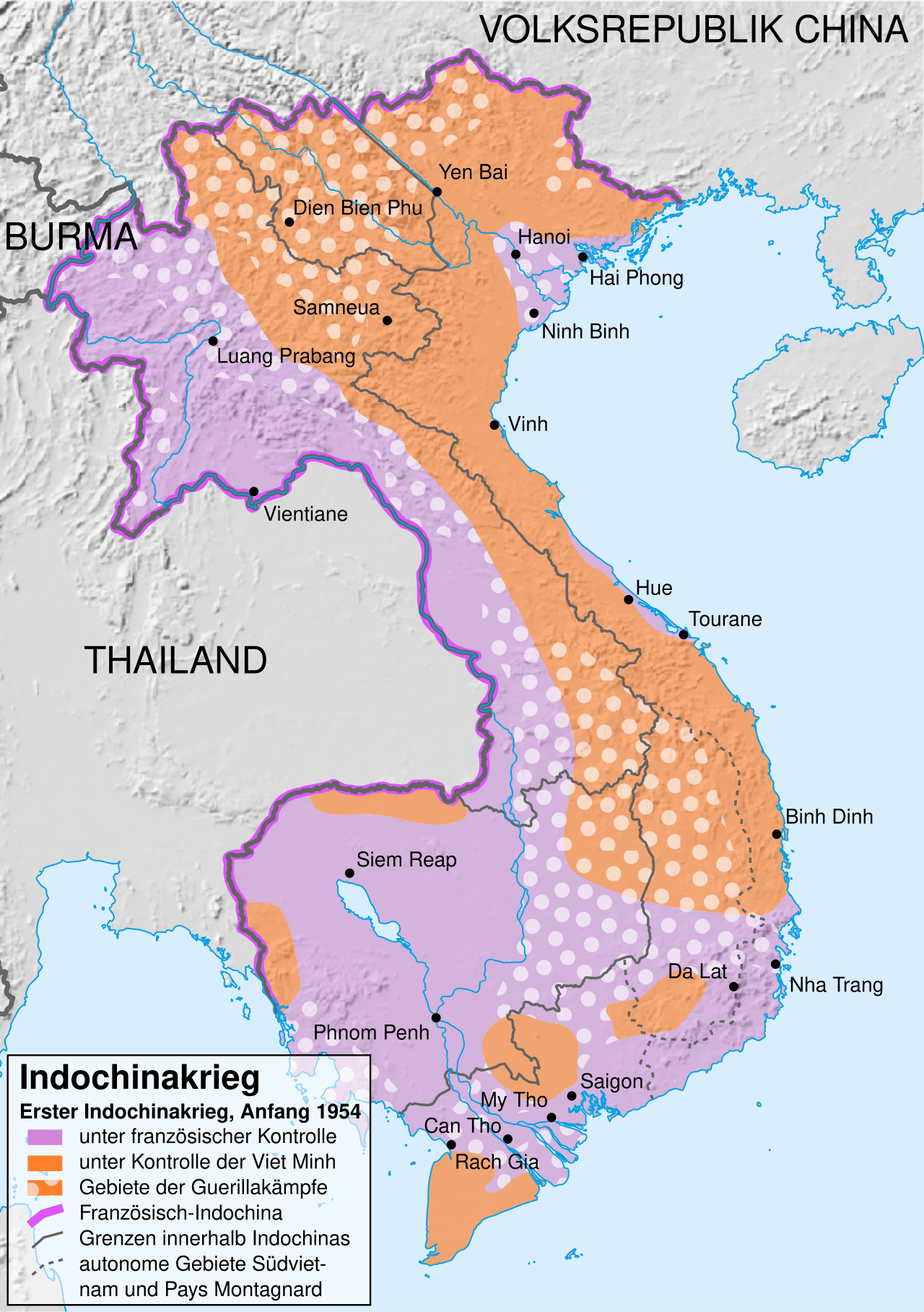
To understand Vietnam, one must first understand French Indochina. France colonized Vietnam, Laos, and Cambodia throughout the 19th century, exploiting the region's resources and suppressing indigenous culture and governance. Vietnamese resistance never fully extinguished, and by the 1940s, a communist-led nationalist movement called the Viet Minh, headed by Ho Chi Minh, had emerged as the dominant anti-colonial force. When Japan surrendered at the end of World War II in 1945, Ho Chi Minh declared Vietnamese independence, drawing directly from the language of the American Declaration of Independence. France, however, refused to relinquish its colony, leading to the First Indochina War (1946–1954). The decisive Battle of Dien Bien Phu in 1954 ended in a catastrophic French defeat, forcing negotiations that temporarily divided Vietnam at the 17th parallel — a communist North under Ho Chi Minh and a Western-backed South under Emperor Bao Dai and later Ngo Dinh Diem.
America Steps In: Escalation Through the 1960s
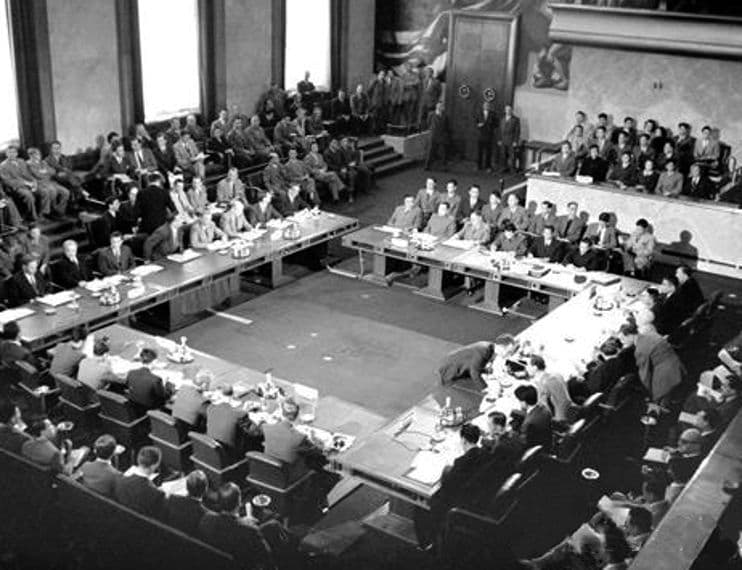
The Geneva Accords of 1954 called for nationwide elections in 1956 to reunify Vietnam, but both the South Vietnamese government and the United States refused to hold them, fearing a communist victory. This decision radicalized opposition in the South and galvanized the North. President Eisenhower committed military advisers and economic aid to South Vietnam, framing it within the 'domino theory' — the belief that if one country fell to communism, its neighbors would inevitably follow. Under President Kennedy, the number of U.S. military advisers swelled to over 16,000 by 1963. The pivotal escalation came under President Lyndon B. Johnson following the Gulf of Tonkin incident in August 1964, when North Vietnamese forces were alleged to have attacked U.S. naval vessels. Congress passed the Gulf of Tonkin Resolution, granting Johnson sweeping authority to escalate military operations. By 1969, over 543,000 American troops were deployed in Vietnam.
The Nature of the War: Jungle, Guerrilla Tactics, and the Ho Chi Minh Trail
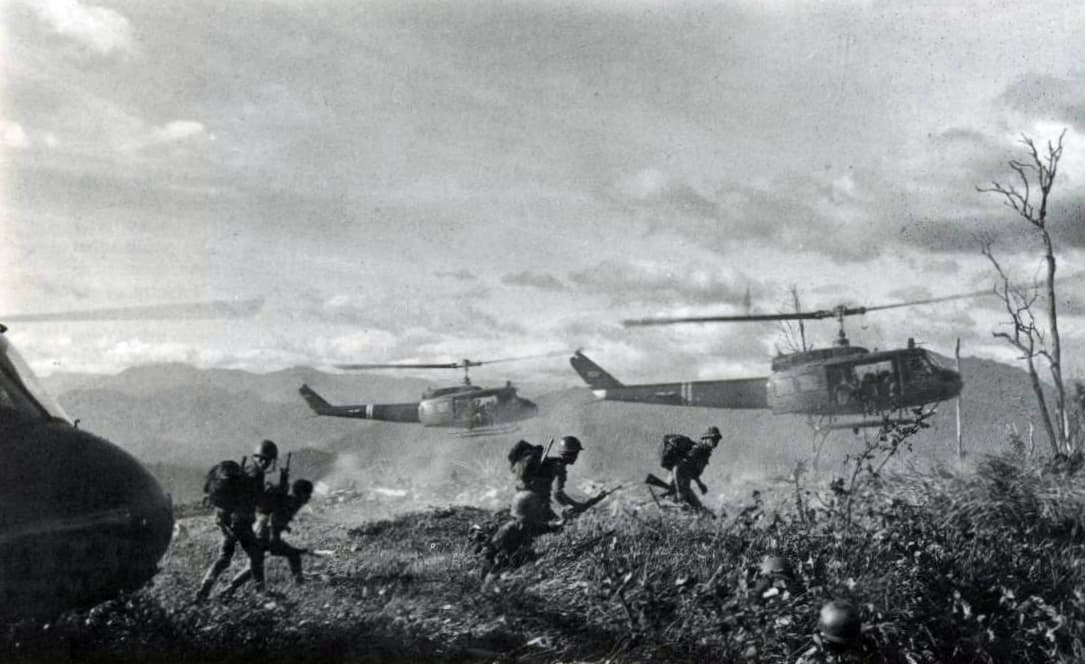
Unlike the conventional warfare of World War II, Vietnam was a conflict of ambushes, booby traps, and ideological persuasion. The National Liberation Front — derisively called the 'Viet Cong' by their opponents — operated as a guerrilla insurgency within South Vietnam, blending into civilian populations and striking U.S. and South Vietnamese forces with devastating unpredictability. The Ho Chi Minh Trail, a complex network of jungle paths running through Laos and Cambodia, served as the North's logistical lifeline, funneling troops and supplies southward despite relentless American bombing campaigns. The United States responded with massive firepower: Operation Rolling Thunder (1965–1968) dropped more bombs on North Vietnam than were used in all of World War II combined. Chemical defoliants like Agent Orange stripped millions of acres of jungle and caused lasting health devastation among both Vietnamese civilians and American veterans. Yet military might alone could not win the hearts and minds of a population deeply suspicious of foreign intervention.
The Tet Offensive: A Turning Point
On January 30, 1968, during the Vietnamese lunar new year celebration of Tet, North Vietnamese and Viet Cong forces launched simultaneous attacks on over 100 cities and outposts across South Vietnam, including a daring assault on the U.S. Embassy in Saigon. The Tet Offensive was ultimately repelled with heavy communist casualties, but its psychological impact was devastating to the American war effort. It shattered the official narrative that the war was nearly won. When CBS anchor Walter Cronkite — then considered the most trusted man in America — declared the war a 'stalemate' in his February 1968 broadcast, President Johnson reportedly said, 'If I've lost Cronkite, I've lost Middle America.' Johnson announced he would not seek re-election. The Tet Offensive transformed domestic opinion and marked the beginning of America's slow exit from Vietnam.
Vietnamization, Withdrawal, and the Paris Peace Accords
President Richard Nixon entered office in 1969 promising 'peace with honor.' His strategy, termed 'Vietnamization,' aimed to progressively transfer combat responsibilities to South Vietnamese forces while withdrawing American troops. Simultaneously, Nixon secretly expanded the air war into Cambodia, triggering massive protests at home. The killing of four student protesters by National Guard troops at Kent State University in May 1970 deepened the national trauma. The publication of the Pentagon Papers in 1971 — a classified study revealing systematic government deception about the war — further eroded public trust. The Paris Peace Accords were signed in January 1973, providing a framework for ceasefire and American withdrawal. The last U.S. combat troops left Vietnam by March 1973. Without American military support, the South Vietnamese government struggled to hold the line.
The Fall of Saigon and Reunification
North Vietnamese forces launched a final offensive in early 1975. South Vietnamese resistance collapsed with stunning speed. On April 30, 1975, North Vietnamese tanks rolled through the gates of the Presidential Palace in Saigon, effectively ending the war. The iconic images of American helicopters evacuating personnel from rooftops captured the chaotic, humiliating final hours. Over 130,000 South Vietnamese fled the country in the immediate aftermath, the beginning of a refugee exodus that would eventually see over two million 'boat people' risk their lives to escape. Vietnam was formally reunified as the Socialist Republic of Vietnam in July 1976, with Saigon renamed Ho Chi Minh City.
The Human Cost and Lasting Legacy
The war's toll was staggering. Estimates of Vietnamese military and civilian deaths range from 1.5 to 3.5 million. The U.S. military lost 58,220 personnel, with hundreds of thousands more returning home with physical and psychological wounds. Post-traumatic stress disorder — still barely understood at the time — afflicted a generation of veterans who returned to a divided, often hostile nation. The use of Agent Orange exposed an estimated 4.8 million Vietnamese to toxic dioxins, causing cancers, birth defects, and chronic illness for generations. The war catalyzed profound changes in American society: it accelerated the civil rights movement's intersection with anti-war activism, lowered the voting age to 18, ended the military draft, and fundamentally altered the relationship between the government, the media, and the public. The War Powers Resolution of 1973 sought to limit presidential power to commit forces without Congressional approval. In Vietnam itself, decades of unexploded ordnance continue to kill and maim civilians. The legacy of Agent Orange is still being addressed in bilateral U.S.-Vietnamese cooperation programs. Yet despite everything, the two former enemies normalized diplomatic relations in 1995, and today Vietnam is a significant trading partner of the United States — a testament to how profoundly history can turn.
| Country / Party | Estimated Deaths | Notes |
|---|---|---|
| North Vietnam & Viet Cong | ~1,100,000 | Military deaths; civilian deaths additional |
| South Vietnam (ARVN) | ~250,000 | Military personnel |
| United States | 58,220 | Includes all causes of death |
| South Vietnamese Civilians | ~430,000–500,000 | Estimates vary widely |
| North Vietnamese Civilians | ~65,000 | Primarily from bombing campaigns |
| Other Allied Forces (Australia, South Korea, etc.) | ~6,000 | Combined total |