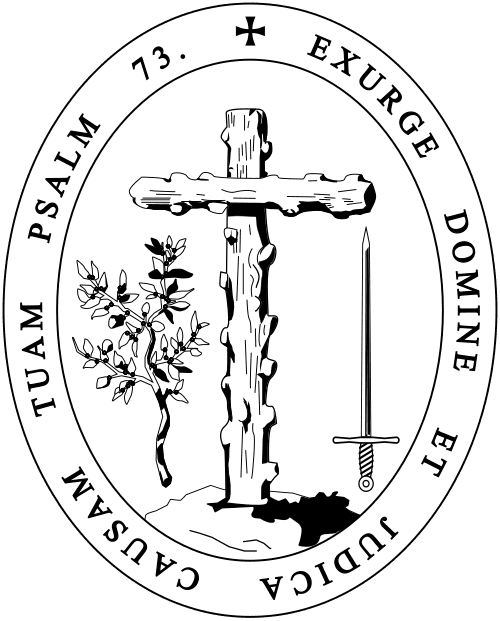
Nobody expected it — or so the famous joke goes. But in the Spain of 1478, the arrival of the Inquisition was, in fact, very much anticipated. Requested by the Crown, sanctioned by the Pope, and cheered by many ordinary Spaniards, the Tribunal of the Holy Office of the Inquisition was not an aberration of its age but a calculated instrument of state and Church power. Over the next three and a half centuries, it would investigate hundreds of thousands of people, torture thousands, and burn hundreds at the stake, all in the name of religious purity. Its shadow stretched from Madrid to Mexico City, from Seville to Lima, leaving a legacy that historians still debate with passion today.
Origins: A Crown in Search of Unity
The Spanish Inquisition was established by royal decree on November 1, 1478, when Pope Sixtus IV issued the papal bull 'Exigit Sinceras Devotionis Affectus' at the request of King Ferdinand II of Aragon and Queen Isabella I of Castile. The newly unified Spain was a patchwork of religions and cultures — a legacy of centuries of convivencia, the uneasy but often productive coexistence of Christians, Muslims, and Jews. That pluralism, however, was increasingly seen by the monarchy as a threat to political and spiritual cohesion. The primary target at the Inquisition's founding was the conversos — Jewish converts to Christianity, also known as New Christians or, pejoratively, 'marranos.' Rumors swirled that many secretly practiced Judaism, a heresy in the eyes of the Church. The Inquisition was the Crown's answer.
Tomás de Torquemada: The Grand Inquisitor
No figure looms larger over the Spanish Inquisition than Tomás de Torquemada, a Dominican friar who became the first Grand Inquisitor in 1483. Ironically, Torquemada himself was believed to have converso ancestry. A man of fierce personal piety and political cunning, he codified the Inquisition's procedures in a set of instructions issued between 1484 and 1498, establishing how suspects were to be arrested, tried, and punished. He oversaw approximately 2,000 executions during his tenure and was instrumental in persuading Ferdinand and Isabella to expel all Jews from Spain in 1492 — the same year Columbus sailed west. Torquemada became a synonym for fanaticism and cruelty, his name borrowed by later generations as shorthand for religious terror.
The Machinery of the Tribunal
The Inquisition operated through a network of regional tribunals across Spain and its colonies. The process began with denunciation — anyone could inform on a neighbor, colleague, or family member. After arrest, the accused was typically held in isolation, sometimes for months or years, before facing inquisitors who demanded confession. Torture, while technically limited to a single session and prohibited from drawing blood or causing permanent injury, was employed through instruments such as the strappado (a form of stress position using ropes and weights) and the toca (a form of water torture). Confessions extracted under such conditions were then used as evidence. Sentences ranged from penances and fines to imprisonment, public humiliation, and death.
The most dramatic public event in the Inquisition's calendar was the auto-da-fé — literally 'act of faith' — a solemn public ceremony in which sentences were read and carried out. These spectacles, sometimes attended by thousands, featured processions, sermons, and the burning of heretics. The condemned who recanted their heresy might be strangled before being burned; the unrepentant were burned alive. Paintings and contemporary accounts describe these events as theatrical, almost festive, which speaks to the degree to which the Inquisition had normalized religious violence as a civic spectacle.
Who Were the Targets?
While the Inquisition began as a tool against conversos suspected of Judaizing, its scope expanded dramatically over the decades. After the forced conversion of Spanish Muslims in the early 16th century, Moriscos (Muslim converts) became a major focus. Lutheranism, entering Spain from northern Europe after the Protestant Reformation, prompted further waves of persecution in the mid-1500s. Bigamists, blasphemers, those accused of witchcraft, and practitioners of folk magic also fell under its scrutiny. The Inquisition even investigated members of the clergy. Notably, it had no jurisdiction over Jews or Muslims who had never converted — only over baptized Christians who were suspected of apostasy.
| Target Group | Period of Greatest Persecution | Estimated Cases |
|---|---|---|
| Conversos (Jewish converts) | 1480s–1530s | ~10,000–20,000 |
| Moriscos (Muslim converts) | 1520s–1610s | ~5,000–10,000 |
| Lutherans/Protestants | 1550s–1570s | ~1,000–2,000 |
| Bigamists & Blasphemers | Ongoing, 16th–18th c. | ~7,000–15,000 |
| Witchcraft accusations | Late 16th–17th c. | ~3,000–5,000 |
Revisionism and the Black Legend
For centuries, the Spanish Inquisition was depicted in Protestant Europe — and later in Enlightenment writings — as a uniquely sadistic institution, part of what historians call the 'Leyenda Negra,' or Black Legend: a narrative portraying Spanish Catholicism as exceptionally brutal and barbaric. Works by Protestant propagandists exaggerated the numbers of victims, and engravings showing elaborate torture chambers entered popular imagination as fact. Modern historical scholarship, aided by access to Inquisition archives in Madrid (which survived largely intact), has revised some of these figures significantly downward. Historians like Henry Charles Lea and more recently Henry Kamen have estimated that perhaps 3,000 to 5,000 people were actually executed across the Inquisition's entire history — a number that is still horrifying, but far lower than the millions sometimes claimed in popular culture.
This revisionism, however, must not be mistaken for rehabilitation. The Inquisition's power to investigate, imprison, torture, and destroy the livelihoods and reputations of hundreds of thousands of people represents a profound assault on human dignity, intellectual freedom, and religious pluralism. The trauma of forced conversion, of living under perpetual suspicion, of watching neighbors denounce neighbors — these are not diminished by lower death counts. The institution's most lasting damage may have been cultural: the stifling of intellectual inquiry in Spain at the very moment when the Scientific Revolution was transforming northern Europe.
The Inquisition in the New World
The Spanish Inquisition was not confined to the Iberian Peninsula. As Spain built its American empire, the Inquisition followed the conquistadors. Tribunals were established in Lima (1570) and Mexico City (1571), and later in Cartagena (1610). In the colonies, the Inquisition targeted not only conversos and Lutherans but also indigenous religious practices — though technically indigenous people were exempt from its jurisdiction, since they had not been Christians before. In practice, the boundary was often blurred. The colonial Inquisition also served political purposes, silencing critics of the colonial system under the guise of rooting out heresy.
Abolition and Legacy
The Spanish Inquisition was abolished not once but several times. Napoleon suppressed it in 1808 during the French occupation of Spain. It was briefly restored in 1814 and again in 1820 before being permanently abolished in 1834 — a full 356 years after its founding. Its last execution had occurred in 1826, when Cayetano Ripoll, a schoolteacher accused of deism, was garroted and symbolically 'burned' in effigy. The Inquisition's final decades were a pale shadow of its fearsome peak, more bureaucratic relic than active terror machine. But the institution's cultural and psychological imprint on Spanish society proved nearly indelible. It shaped a culture of conformity, suspicion, and limpieza de sangre — 'purity of blood' — that would influence Spanish and Latin American societies for generations.
Today, the Spanish Inquisition remains a touchstone of historical debate, a shorthand for institutionalized intolerance, and a warning about what happens when political power and religious zealotry merge without check. Its archives, housed in Madrid's Archivo Histórico Nacional, continue to yield new insights — reminding us that history's darkest chapters are best confronted directly, without flinching and without exaggeration.