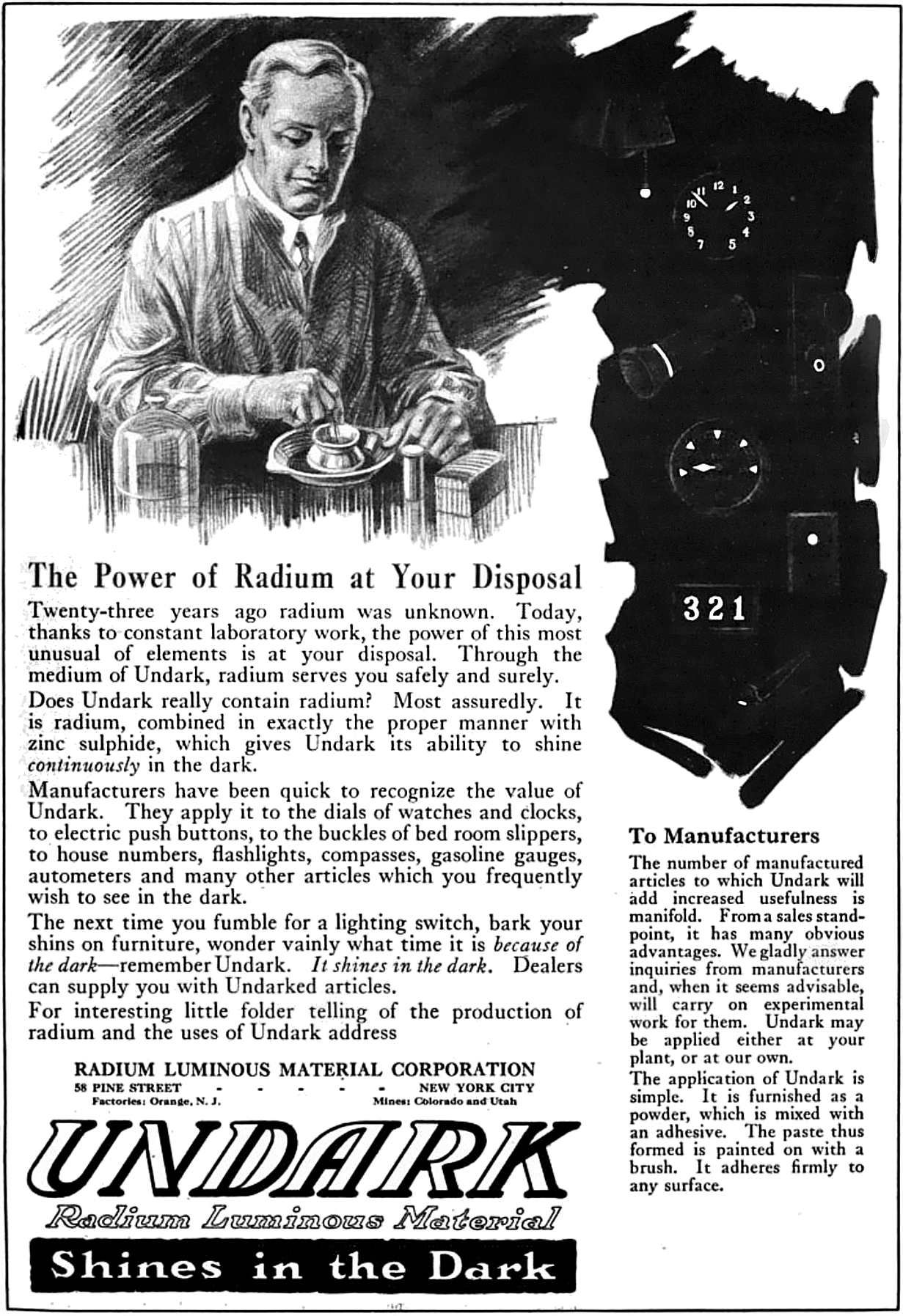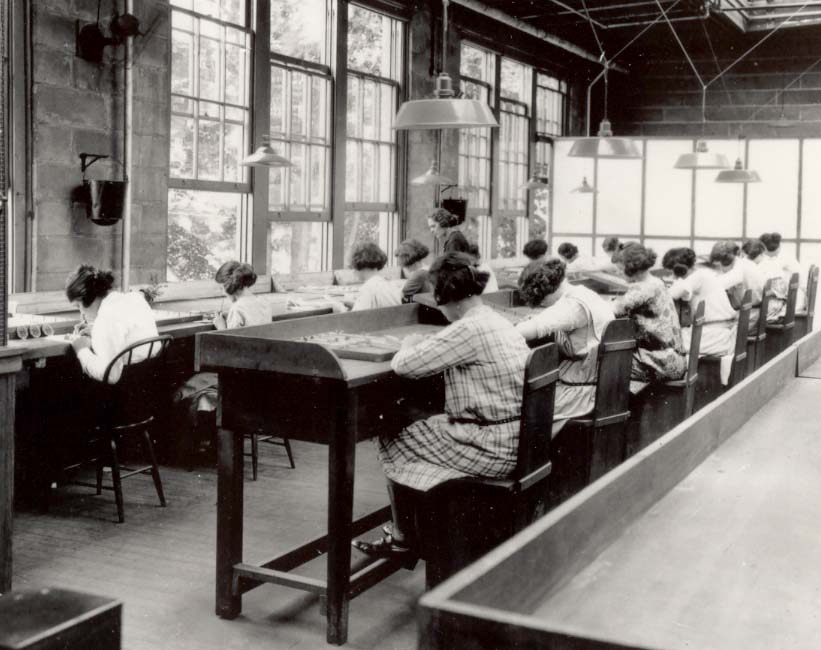
The Radium Girls were young female factory workers employed by the United States Radium Corporation (USRC) in Orange, New Jersey, and a sister plant in Ottawa, Illinois, during the 1910s and 1920s. Instructed to point their brushes with their lips while painting luminous radium-dial watches, they ingested lethal doses of radium-226. Their ensuing illnesses, courageous lawsuits, and landmark 1928 legal settlement fundamentally transformed American occupational safety law and established the principle that corporations are liable for knowingly exposing workers to toxic substances.
What Was the Radium Dial Industry and Why Was It So Dangerous?
After Marie Curie's isolation of radium in 1898, the element became a cultural sensation, marketed as a health tonic and energising additive. During World War I, demand for luminous watch dials — essential for soldiers reading the time in dark trenches — made radium-dial painting a booming industry. The USRC's Newark and Orange, NJ facilities employed hundreds of young women, many as young as 15, at wages far above average factory pay. Workers were trained to 'lip-point' their fine camel-hair brushes — pressing them to their lips to form a precise tip — sometimes dozens of times per dial. Supervisors assured them the paint was harmless, even as company scientists wore lead shields and handled radium with tongs. Radium-226 is a bone-seeking isotope: once ingested, it mimics calcium and deposits permanently in skeletal tissue, where it emits alpha radiation continuously. There is no safe threshold for internal radium exposure.
How Did the Workers' Health Deteriorate — and What Did the Company Know?
By the early 1920s, dial painters began suffering catastrophic symptoms. Teeth fell out spontaneously; jawbones crumbled and had to be surgically removed. Workers developed severe anaemia, bone fractures, and tumours. Mollie Maggia, one of the first to die, passed away in September 1922 at age 24 — her cause of death was initially misdiagnosed as syphilis, a label used to discredit the women. By 1925, USRC's own medical consultant, Dr. Frederick Flinn, had examined workers and privately documented radium poisoning, yet publicly declared them healthy. Internal documents later revealed that company executives understood the hazard by at least 1924. Five workers — Grace Fryer, Edna Hussman, Katherine Schaub, Quinta McDonald, and Albina Larice — became the public faces of the legal battle, collectively known as 'the Radium Girls.' By the time their case went to court, several could barely walk or lift their arms.

What Was the Legal Outcome and Its Lasting Legacy?
In 1928, after USRC's attempts to delay proceedings until the plaintiffs died, New Jersey Vice Chancellor John Backes allowed the case to proceed despite a statute of limitations challenge. The company settled out of court in June 1928, awarding each plaintiff $10,000 (roughly $180,000 in 2024 dollars) plus a $600 annual pension and coverage of medical expenses — a significant precedent. The case established that workers had the right to sue employers for occupational disease contracted on the job, a concept not clearly recognised in US law before. It directly influenced the creation of occupational health standards and contributed to the foundation of the Occupational Safety and Health Administration (OSHA) in 1970. The Ottawa, Illinois, case (1938) further extended protections. The dial painters' bodies remain radioactive today; several gravesites in Ottawa still register above background radiation levels on Geiger counters.
| Worker | Plant Location | Outcome |
|---|---|---|
| Mollie Maggia | Orange, NJ | Died September 1922, age 24 |
| Grace Fryer | Orange, NJ | Lead plaintiff; died 1933 |
| Katherine Schaub | Orange, NJ | Died 1933 of radium-induced illness |
| Catherine Donohue | Ottawa, IL | Won 1938 Illinois case; died 1938 |
| Inez Vallat | Ottawa, IL | Survived to 1953; key witness |