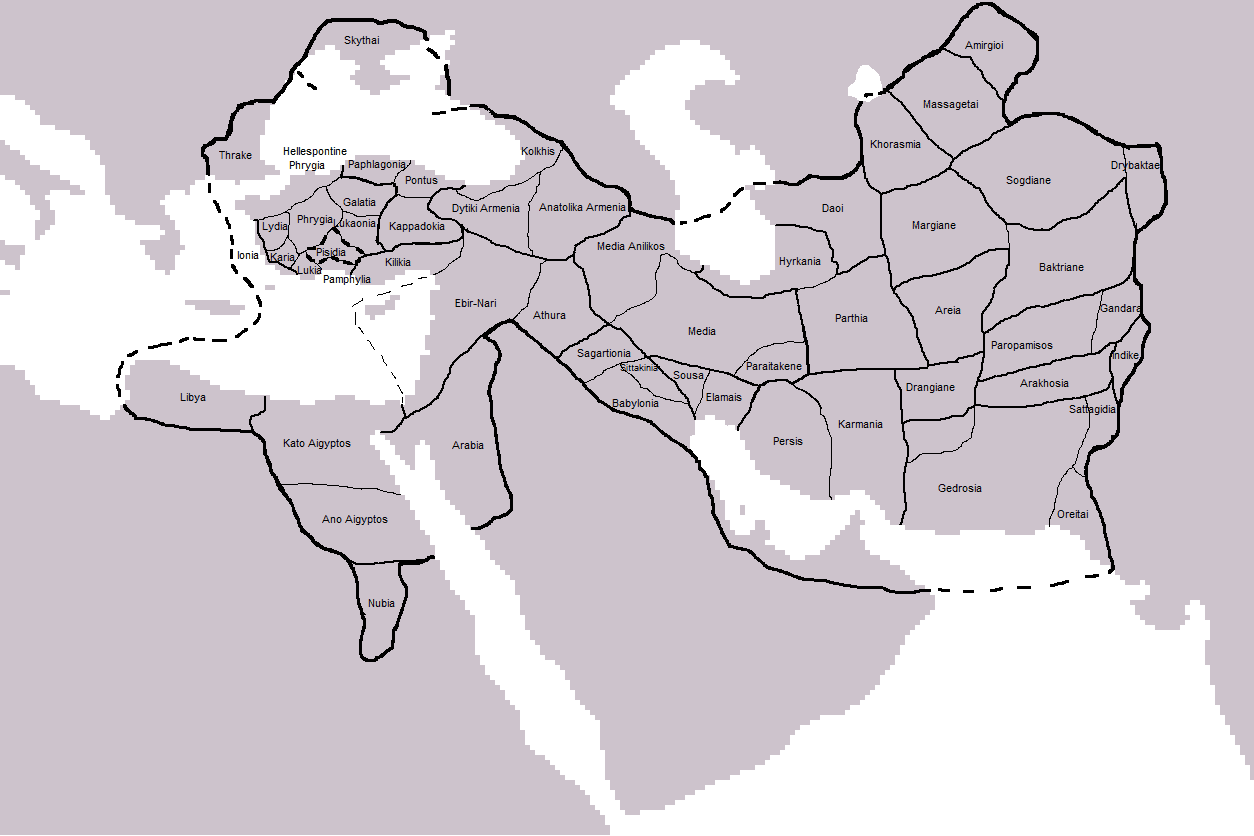
The Persian Empire — formally known as the Achaemenid Empire — was the largest empire the ancient world had ever seen, stretching from the Balkans and Egypt in the west to the Indus Valley in the east. Founded by Cyrus the Great in 550 BC after he united the Persian and Median tribes, the empire at its peak under Darius I (522–486 BC) encompassed approximately 5.5 million square kilometres and governed an estimated 44% of the world's entire population — roughly 49.4 million people. It endured for over two centuries until Alexander the Great of Macedon extinguished its final flame at the Battle of Gaugamela in 331 BC.
What Were the Origins of the Persian Empire?
The roots of the Persian Empire lie in the ancient region of Persis (modern Fars province, southwestern Iran), where the Achaemenid clan — named after the semi-legendary ancestor Achaemenes — led a confederation of Iranian tribes. For much of the early first millennium BC, the Persians were vassals of the powerful Median Empire, which dominated the Iranian plateau. The transformation began with Cyrus II, known to history as Cyrus the Great, born around 600 BC. In 550 BC, Cyrus launched a revolt against the Median king Astyages, his own maternal grandfather, and after decisively defeating him at the Battle of Pasargadae, united the Medes and Persians under a single Persian crown. This moment is traditionally recognised as the founding of the Achaemenid Persian Empire. Cyrus proved immediately that this was no ordinary conqueror — he established an imperial philosophy rooted in tolerance, cultural respect, and pragmatic administration that would define Persian rule for generations.
How Did Cyrus the Great Build the Empire?
Cyrus the Great expanded the Persian Empire with extraordinary speed and strategic brilliance across two decades. In 547 BC he defeated Croesus, the legendarily wealthy king of Lydia, capturing the city of Sardis and adding the entirety of Anatolia (modern Turkey) to his dominion. By 539 BC, Cyrus had turned his gaze to the most ancient prize of all — Babylon, the jewel of Mesopotamia. Exploiting internal discontent with the Babylonian king Nabonidus, Cyrus entered the city virtually without a fight. His treatment of the conquered Babylonians was revolutionary: rather than enslaving populations or destroying temples, he reversed the policies of previous conquerors. The Cyrus Cylinder — a clay barrel inscription dating to 539 BC, now housed in the British Museum — records how he freed captive peoples, including the Jewish exiles held since Nebuchadnezzar's conquest of Jerusalem, allowing them to return to their homelands. This document is often cited as one of history's earliest declarations of religious tolerance and human rights. By his death in battle against the Massagetae tribe in 530 BC, Cyrus ruled a domain stretching from the Aegean to Central Asia, leaving his son Cambyses II an empire of staggering breadth.
How Did Darius I Organise the Persian Empire?
The true architect of Persian imperial administration was Darius I, who seized power in 522 BC after a period of civil strife following Cambyses II's death. Darius transformed a collection of conquered territories into a coherent, rationally governed state. His most critical innovation was the satrapy system: he divided the empire into 20 administrative provinces called satrapies, each governed by a satrap (a Persian governor) who collected taxes, maintained order, and commanded local troops. To prevent satraps from becoming too powerful, Darius appointed independent military commanders and royal inspectors — the 'King's Eyes and Ears' — to audit each province. He standardised currency with the gold daric and silver siglos coins, facilitating trade across the empire's vast breadth. Darius also oversaw the construction of the Royal Road, a 2,699-kilometre (1,677-mile) highway running from Sardis in western Anatolia to Susa in Persia, equipped with 111 relay stations where royal couriers could travel the entire length in roughly seven days — a journey that took ordinary travellers three months. He moved the imperial capital to Persepolis, the magnificent ceremonial city whose ruins still stand near Shiraz, Iran, where 23 subject nations are depicted in relief bringing tribute to the Great King. Under Darius, the empire's annual tax revenue reportedly reached 14,560 Babylonian talents of silver — an almost incomprehensible sum that funded armies, monuments, and one of the ancient world's most sophisticated bureaucracies.
What Caused the Greco-Persian Wars?
The collision between Persia and the Greek city-states was, in many ways, inevitable. When Darius I extended Persian control over the Greek-speaking cities of Ionia (western Anatolia) in the 510s BC, he inherited a volatile situation. In 499 BC, the Ionian cities — led by Miletus and its tyrant Aristagoras — launched the Ionian Revolt, burning the Persian provincial capital of Sardis with military support from Athens and Eretria. Although Persia crushed the rebellion by 494 BC, destroying Miletus and enslaving its population, Darius never forgave Athens for its intervention. In 490 BC, he dispatched a naval expedition under generals Datis and Artaphernes. The Persian force landed on the plain of Marathon, 42 kilometres north of Athens. In one of history's most celebrated upsets, approximately 10,000 Athenian hoplites, commanded by Miltiades, routed the Persian army — killing an estimated 6,400 Persians while losing only 192 Athenians. A second, far larger invasion came under Darius's son Xerxes I in 480 BC. Xerxes assembled one of antiquity's greatest armies — ancient sources claim two million soldiers, though modern historians estimate 100,000–300,000 — and bridged the Hellespont with a pontoon of boats to march into Europe. After the famous last stand of 300 Spartans under Leonidas at Thermopylae, Xerxes sacked and burned Athens. But the tide turned decisively at the naval Battle of Salamis in September 480 BC, where the Athenian general Themistocles lured the Persian fleet into narrow straits, destroying 200 ships. Xerxes retreated, and his land forces were finally crushed at Plataea in 479 BC. Greece had survived, and the dream of Persian domination of Europe was permanently abandoned.
| Key Battle | Date | Opposing Forces | Outcome |
|---|---|---|---|
| Battle of Marathon | 490 BC | Athens vs. Persia (Darius I) | Greek victory; 6,400 Persians killed vs. 192 Athenians |
| Battle of Thermopylae | 480 BC | Sparta (300) + allies vs. Xerxes I | Persian victory; 300 Spartans killed, but Persia delayed |
| Battle of Salamis | 480 BC | Greek fleet vs. Persian fleet | Greek victory; ~200 Persian ships destroyed |
| Battle of Plataea | 479 BC | Greek alliance vs. Mardonius | Decisive Greek victory; Persia expelled from Europe |
| Battle of Gaugamela | 331 BC | Alexander the Great vs. Darius III | Macedonian victory; effectively ended Achaemenid Empire |
What Was Persian Culture and Religion Like?
The Persian Empire was far more than a military machine — it was a sophisticated, multicultural civilisation with a rich spiritual and artistic heritage. The official religion of the Achaemenid court was Zoroastrianism, founded by the prophet Zarathustra (Zoroaster), whose teachings in the sacred text the Avesta posited a cosmic struggle between the supreme god Ahura Mazda (the Wise Lord) and the destructive spirit Angra Mainyu. Zoroastrian concepts of a single supreme deity, judgment after death, heaven and hell, and an apocalyptic final battle had profound influence on later Abrahamic religions — Judaism, Christianity, and Islam all bear traces of Zoroastrian thought absorbed during the Babylonian exile and subsequent Persian rule. Persian art, showcased most spectacularly at Persepolis, blended motifs from Egypt, Babylon, Greece, and Anatolia into a distinctive imperial style. Persian craftsmen created extraordinary metalwork, intricate carpets (the Pazyryk carpet, dating to around 500 BC and found in Siberia, is the world's oldest surviving pile rug), and polychrome glazed brick reliefs. Persian literature, including epic poetry and royal inscriptions such as the Behistun Inscription — Darius I's monumental trilingual account of his rise to power, carved 100 metres up a cliff face in western Iran — provided crucial keys to deciphering ancient cuneiform scripts in the 19th century. The Persian language itself, written in the Aramaic script adopted as the empire's administrative lingua franca, laid the linguistic foundation for modern Farsi/Persian, spoken today by over 110 million people.
Why Did the Persian Empire Decline After the Greek Wars?
The failed Greek invasions of 490–479 BC marked the beginning of a long imperial twilight. Successive Achaemenid kings became embroiled in debilitating court intrigues and succession crises. Xerxes I, humiliated by his Greek defeats, turned to grandiose building projects and harem politics, and was assassinated in 465 BC. His son Artaxerxes I (465–424 BC) faced a serious revolt in Egypt (460–454 BC), nearly losing that wealthy province to an Athenian-backed rebellion. The later Achaemenid monarchs — Artaxerxes II and III, and finally Darius III — ruled an empire riddled with satrap rebellions, mercenary armies replacing loyal Persian warriors, and catastrophic depletion of the treasury. Artaxerxes III temporarily reversed decline by reconquering Egypt in 343 BC, but he was poisoned by his own vizier Bagoas in 338 BC. By 336 BC, when the young Macedonian king Alexander III took the throne, the once-mighty Achaemenid machine was structurally weakened — though still formidably wealthy and populous.
How Did Alexander the Great Conquer Persia?
Alexander's campaign against Persia stands as one of the most audacious military ventures in human history. Crossing the Hellespont with approximately 37,000 troops in 334 BC, Alexander first defeated a Persian provincial force at the Battle of the Granicus River in modern Turkey, then swept through Anatolia, liberating Ionian Greek cities. At the Battle of Issus in 333 BC, he routed a Persian army personally commanded by Darius III — who fled, abandoning his mother, wife, and children on the battlefield. Alexander treated them with conspicuous respect, a gesture that echoed Cyrus's own famous clemency. After taking the Phoenician cities and Egypt — where he founded Alexandria in 331 BC — Alexander met Darius III's last great army at Gaugamela in modern Iraq on October 1, 331 BC. Though heavily outnumbered (Darius fielded perhaps 100,000 troops versus Alexander's 47,000), Alexander's oblique cavalry charge shattered the Persian centre. Darius fled again and was murdered by his own satrap Bessus in 330 BC. Alexander burned Persepolis, likely as symbolic revenge for Xerxes's destruction of Athens 150 years earlier, and declared himself the rightful heir of the Achaemenid throne. The 2,200-year-old Achaemenid Empire had ceased to exist.
What Was the Legacy of the Persian Empire?
The Persian Empire's legacy extends far beyond its 220-year lifespan. Its model of tolerant, multi-ethnic governance — allowing subject peoples to maintain their languages, religions, and local customs provided they paid tribute and kept peace — was revolutionary in the ancient world and influenced Alexander's own imperial ideology. The satrapy administrative system was adapted by the Seleucid Greeks, Parthian Iranians, and later the Sasanian Persian Empire (224–651 AD), which consciously revived Achaemenid traditions and ruled for another four centuries. Persian language and culture proved extraordinarily durable: Persian became the prestige literary language of the Islamic world after the Arab conquest of 651 AD, and Persian poetry — Rumi, Hafez, Ferdowsi — remains among the world's great literary traditions. Zoroastrianism, though reduced to a minority faith after Islamisation, survives today among Parsi communities in India and Zoroastrian communities in Iran, numbering approximately 100,000–200,000 adherents. Cyrus the Great's reputation has only grown with time: the United Nations displayed a replica of the Cyrus Cylinder in its New York headquarters, recognising it as an early statement of universal rights. Modern Iran draws heavily on Achaemenid imagery and mythology for national identity. The Persian Empire, in short, did not simply end — it transformed, dispersed, and persisted through languages, religions, administrative systems, and cultural memory that continue to shape the world today.