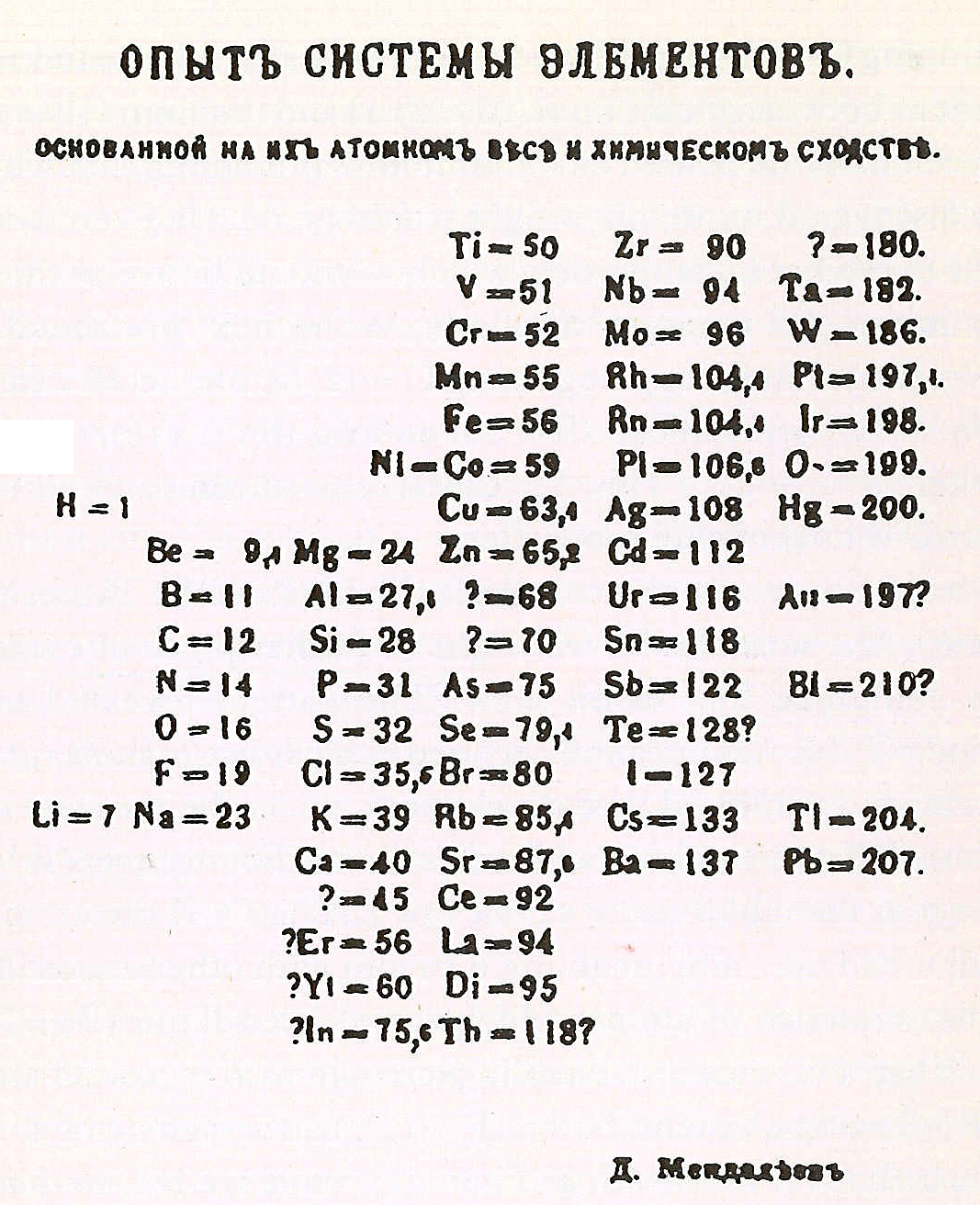
The periodic table is a systematic arrangement of all 118 known chemical elements, organised by increasing atomic number and grouped by shared chemical properties. Russian chemist Dmitri Mendeleev published the first widely recognised version in 1869, and his design was so accurate that it predicted the existence of undiscovered elements decades before they were found in nature. Today, the periodic table is the single most important reference tool in chemistry and physics.
Who Invented the Periodic Table and When?
Dmitri Mendeleev, a professor at Saint Petersburg University, published his 'Periodic Law' on 6 March 1869, arranging the 63 then-known elements by atomic weight and chemical behaviour. Crucially, he left deliberate gaps for elements he predicted had not yet been discovered. His predictions proved spectacularly correct: gallium (1875), scandium (1879), and germanium (1886) all matched his forecasts within a fraction of a unit. German chemist Lothar Meyer independently produced a similar table around the same time, but Mendeleev's predictive boldness earned him lasting credit. In 1913, English physicist Henry Moseley refined the table by reordering elements by atomic number — the count of protons in the nucleus — rather than atomic weight, resolving several inconsistencies and giving the modern periodic table its definitive logic.
How Is the Periodic Table Structured?
The table is arranged in 18 vertical columns called groups and 7 horizontal rows called periods. Elements in the same group share the same number of outer (valence) electrons, which determines how they bond and react. Period 1 contains just hydrogen and helium; Period 7 — completed in 2016 with the naming of nihonium, moscovium, tennessine, and oganesson — holds the heaviest synthetic elements. The table is divided into blocks: s-block metals (Groups 1–2), p-block including non-metals and noble gases (Groups 13–18), d-block transition metals (Groups 3–12), and the f-block lanthanides and actinides displayed as two separate rows at the bottom. Metals make up roughly 75% of all elements; non-metals and metalloids account for the rest.
| Block | Groups | Typical Elements | Shared Property |
|---|---|---|---|
| s-block | 1–2 | Lithium, Calcium | Highly reactive metals |
| p-block | 13–18 | Carbon, Oxygen, Neon | Includes non-metals & noble gases |
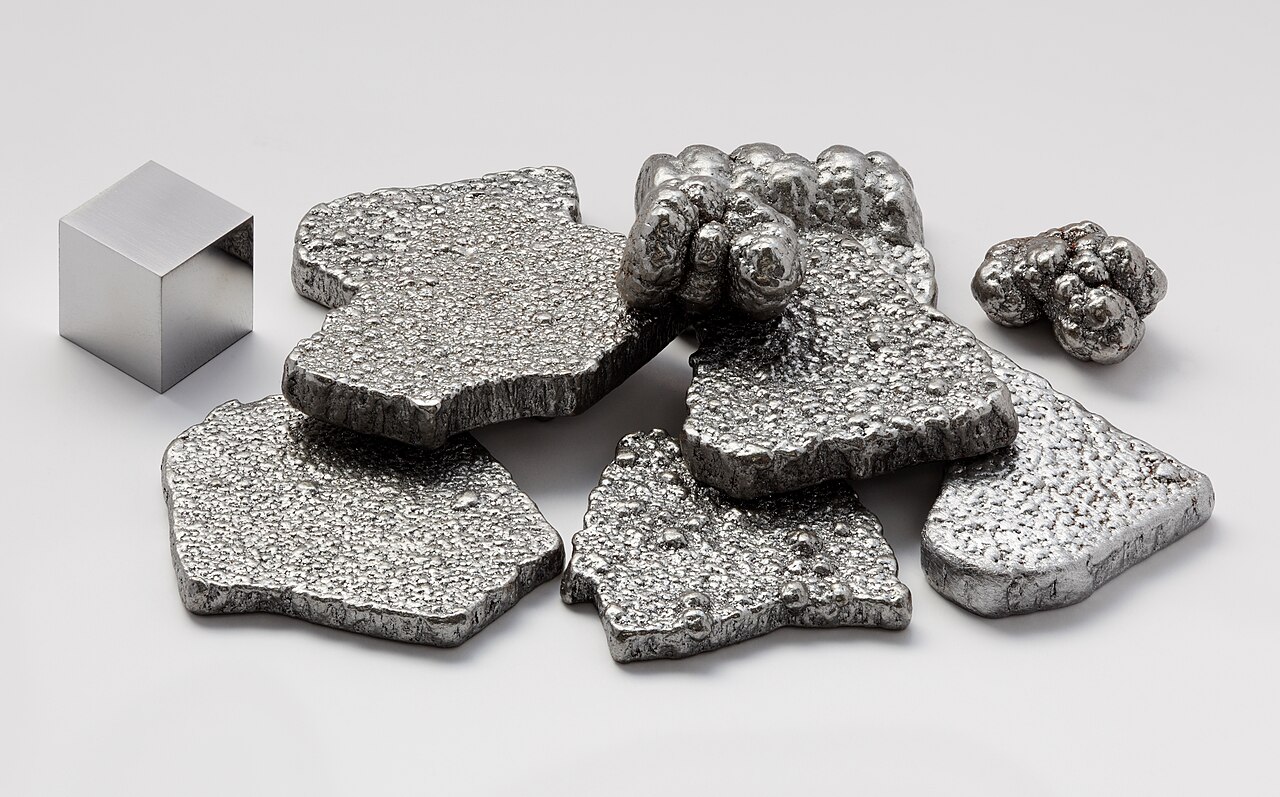
| d-block | 3–12 | Iron, Copper, Gold | Transition metals, variable valence |
| f-block | — | Uranium, Cerium | Lanthanides & actinides, radioactive |
Why Does the Periodic Table Matter Today?
The periodic table underpins virtually every branch of modern science. Pharmaceutical chemists use elemental trends to design drug molecules; materials scientists exploit the properties of transition metals to build semiconductors and batteries; nuclear engineers work with actinides like uranium-235 and plutonium-239 to generate energy. Element 118, oganesson, was first synthesised in 2002 at the Joint Institute for Nuclear Research in Dubna, Russia, by bombarding californium-249 with calcium-48 ions — producing just four atoms in total. Scientists are now attempting to synthesise elements 119 and 120, which would begin an eighth period and potentially reveal entirely new chemical behaviours. The table is not merely a historical artefact; it is an active map of matter.