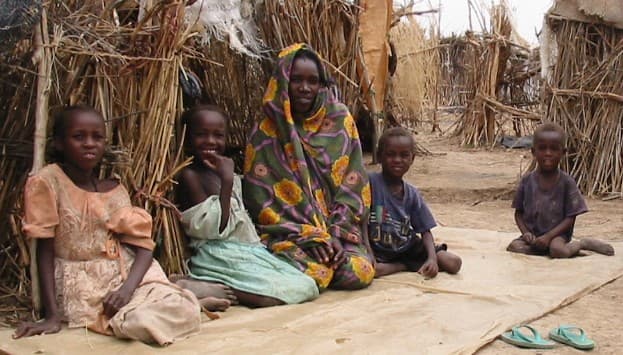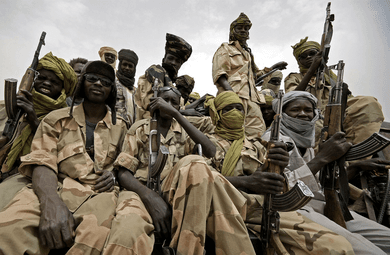
The Janjaweed are Arab militias recruited and armed by the Sudanese government in the early 2000s to crush a rebellion in the Darfur region of western Sudan. Between 2003 and 2010, they carried out a systematic campaign of murder, rape, and forced displacement against non-Arab African communities — primarily the Fur, Masalit, and Zaghawa peoples — killing an estimated 200,000 to 400,000 people and displacing over 2.5 million. The International Criminal Court (ICC) and multiple UN bodies classified these acts as genocide and crimes against humanity.
What Are the Origins of the Janjaweed?
The word 'Janjaweed' is Arabic slang roughly meaning 'devils on horseback' or 'evil men on horses.' The militia drew from Arab nomadic tribes in the Sahel — particularly the Rizeigat and other Baggara Arab groups — who had long-standing land disputes with sedentary African farming communities over grazing rights and water access. Tensions were amplified by severe droughts in the 1980s. When the Sudan Liberation Army (SLA) and the Justice and Equality Movement (JEM) launched an insurgency against Khartoum in February 2003, President Omar al-Bashir's government responded by unleashing the Janjaweed as a proxy force. Khartoum supplied them with weapons, horses, camels, salaries, and air support, while publicly denying involvement.
How Did the Janjaweed Carry Out the Darfur Genocide?
Operating in coordination with Sudanese air force bombing runs, Janjaweed fighters swept into villages, killing men and boys, raping women and girls as a weapon of war, and burning crops, livestock, and homes. The UN estimated that by 2004, 50,000 people had already died and over one million had fled. Attacks were ethnically targeted: raiders shouted racial slurs and told survivors they had 'no place in Sudan.' The violence peaked between 2003 and 2005, and the UN Security Council referred the situation to the ICC in 2005. In 2009, the ICC issued an arrest warrant for President al-Bashir on charges of genocide — the first such warrant ever issued against a sitting head of state.
| Year | Key Event |
|---|---|
| Feb 2003 | SLA launches insurgency; Sudanese government mobilises Janjaweed |
| 2003–2005 | Peak violence — mass killings, rape, and burning of villages across Darfur |
| 2004 | African Union deploys first monitoring mission; 50,000+ already dead |
| 2005 | UN Security Council refers Darfur to the ICC (Resolution 1593) |
| 2009 | ICC issues arrest warrant for President Omar al-Bashir for genocide |
| 2013 | Janjaweed formally incorporated into the Rapid Support Forces (RSF) |
| 2019 | Al-Bashir ousted in coup; RSF commander Mohamed Hamdan Dagalo gains power |
| 2023 | RSF (former Janjaweed) fights Sudanese Armed Forces in new civil war |
What Happened to the Janjaweed After Darfur?
In 2013, President al-Bashir formally incorporated the Janjaweed into a new paramilitary organisation called the Rapid Support Forces (RSF), commanded by Mohamed Hamdan Dagalo — known as 'Hemeti' — himself a former Janjaweed commander. Rather than being dismantled or held accountable, the militia gained uniforms, a chain of command, and state legitimacy. When al-Bashir was overthrown in April 2019, Hemeti and the RSF became a dominant force in Sudan's transitional politics. In April 2023, fighting erupted between the RSF and the Sudanese Armed Forces, plunging Sudan into a new civil war. Human rights groups documented RSF atrocities in Darfur that mirrored the 2003–2005 genocide, leading the United States to formally declare in 2024 that genocide was again occurring in Sudan.