When the Western Roman Empire collapsed in 476 AD, Rome did not truly die — it simply moved east. For the next 977 years, the Byzantine Empire carried the Roman flame from its resplendent capital Constantinople, blending Greek culture, Christian theology, and Roman law into one of history's most enduring and sophisticated civilizations. At its zenith, it commanded the crossroads of Europe and Asia, and even in its twilight, it seeded the Renaissance that would transform the West. To dismiss Byzantium as merely 'Late Rome' is to misunderstand one of history's greatest empires on its own remarkable terms.
The Founding of a New Rome
The Byzantine Empire's origins lie with Emperor Constantine I, who in 330 AD consecrated the city of Byzantium — renamed Constantinople — as the empire's new capital on the strategic strait of the Bosphorus. Constantine's choice was deliberate: the site was nearly impregnable, flanked by water on three sides and, later, shielded by the legendary Theodosian Walls. When Theodosius I died in 395 AD and permanently divided the empire between his two sons, the eastern half retained the wealthiest provinces, the most urbanized populations, and the administrative machinery to survive what the West could not. While Rome fell to Odoacer's Germanic forces, Constantinople thrived, its tax base intact and its trade routes humming.
Justinian's Gamble: Reconquering the Lost West
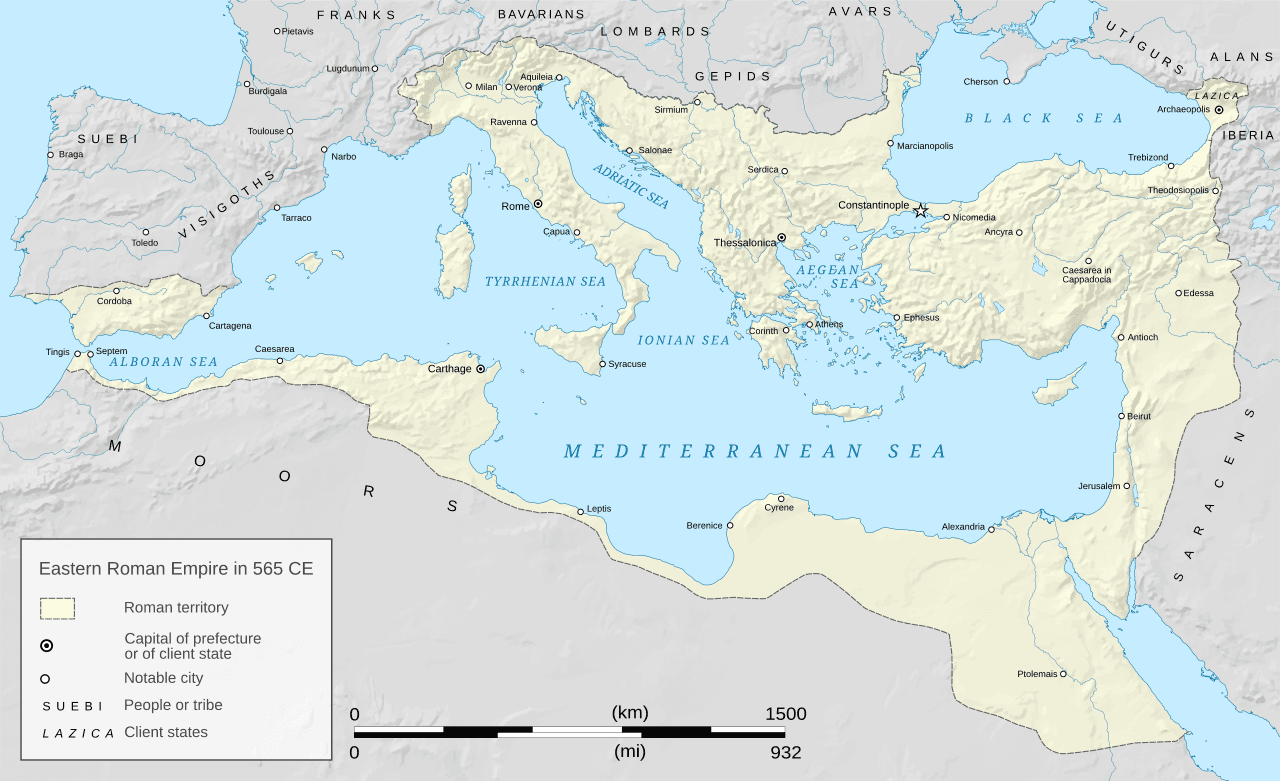
The reign of Emperor Justinian I (527–565 AD) represents perhaps Byzantium's most ambitious chapter. Aided by his brilliant general Belisarius and his formidable empress Theodora, Justinian launched campaigns that temporarily recaptured North Africa from the Vandals, Italy from the Ostrogoths, and parts of southern Spain. His legal reforms were equally monumental: the Corpus Juris Civilis, a comprehensive codification of Roman law, became the foundation of legal systems across medieval Europe and remains influential in civil law traditions to this day. Yet Justinian's reign also brought catastrophe. The Plague of Justinian — likely bubonic plague — swept the empire beginning in 541 AD, killing an estimated 25 to 50 million people across the Mediterranean world and fatally weakening the finances and manpower needed to hold his conquests.
Faith, Schism, and the Sword: Religion as the Empire's Heartbeat
Byzantine civilization was inseparable from Orthodox Christianity. The emperor was not merely a political ruler but a representative of God on Earth, presiding over both church and state in a system historians call Caesaropapism. Theological controversies were matters of life and death: disputes over Iconoclasm — whether the veneration of religious images was idolatry — convulsed the empire for over a century between 726 and 843 AD, producing exile, violence, and the blinding of emperors. Byzantine missionaries Cyril and Methodius carried Orthodox Christianity and the Cyrillic alphabet to the Slavic peoples in the ninth century, an act of cultural transmission whose consequences reverberate across Eastern Europe and Russia to the present day. The Great Schism of 1054, which formally split Christianity into Roman Catholic and Eastern Orthodox branches, cemented Byzantium's spiritual identity in opposition to Rome.
Enemies at Every Gate: The Perils of a Thousand-Year Survival
Byzantium's longevity is astonishing precisely because its enemies were relentless and varied. Sassanid Persia gnawed at the eastern frontier for centuries. The Arab conquests of the seventh century stripped away Egypt, Syria, and Palestine — the empire's richest provinces — in a generation. Bulgars and Slavs pressed from the north, and Viking mercenaries paradoxically served as the empire's elite Varangian Guard. The Seljuk Turks delivered a devastating blow at the Battle of Manzikert in 1071, seizing most of Anatolia and triggering the decline the empire would never fully reverse. Yet perhaps the cruelest wound came from fellow Christians: the Fourth Crusade of 1204, instigated partly by Venetian commercial interests, resulted in the sack of Constantinople by Latin crusaders. The city was looted, its treasures dispersed across Western Europe, and a short-lived Latin Empire established on Byzantine soil. The psychological and material damage was irreparable.
Art, Architecture, and the Life of the Mind
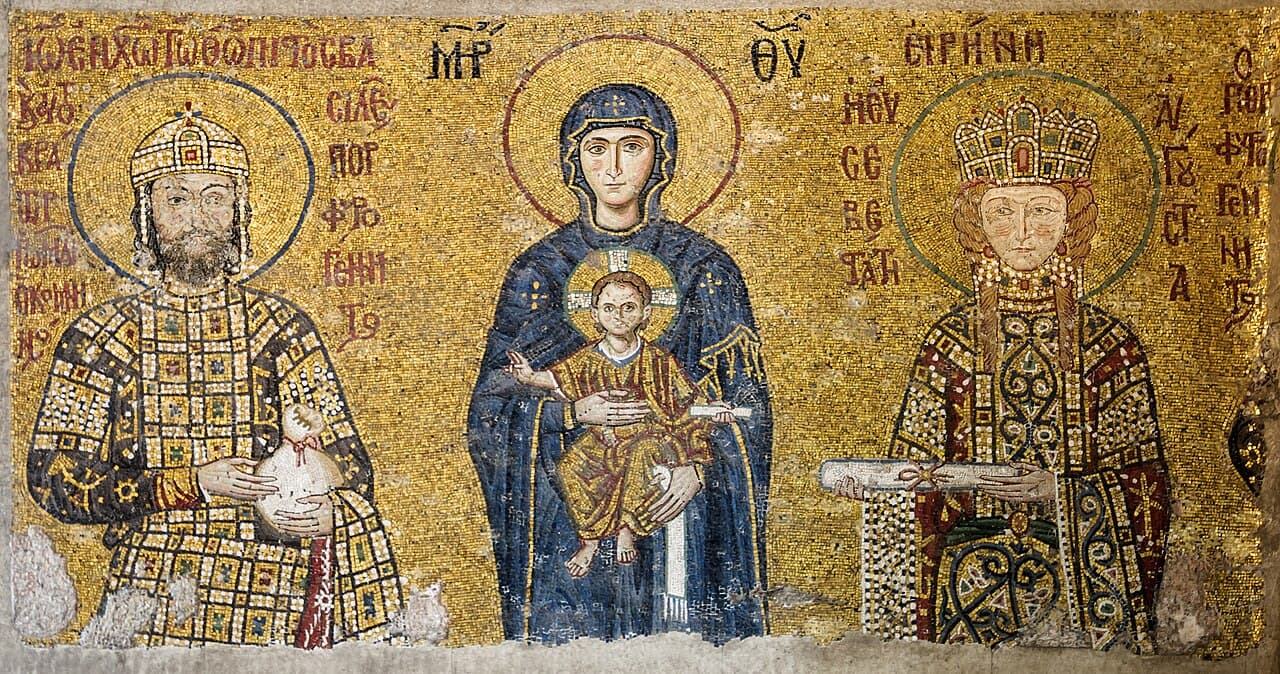
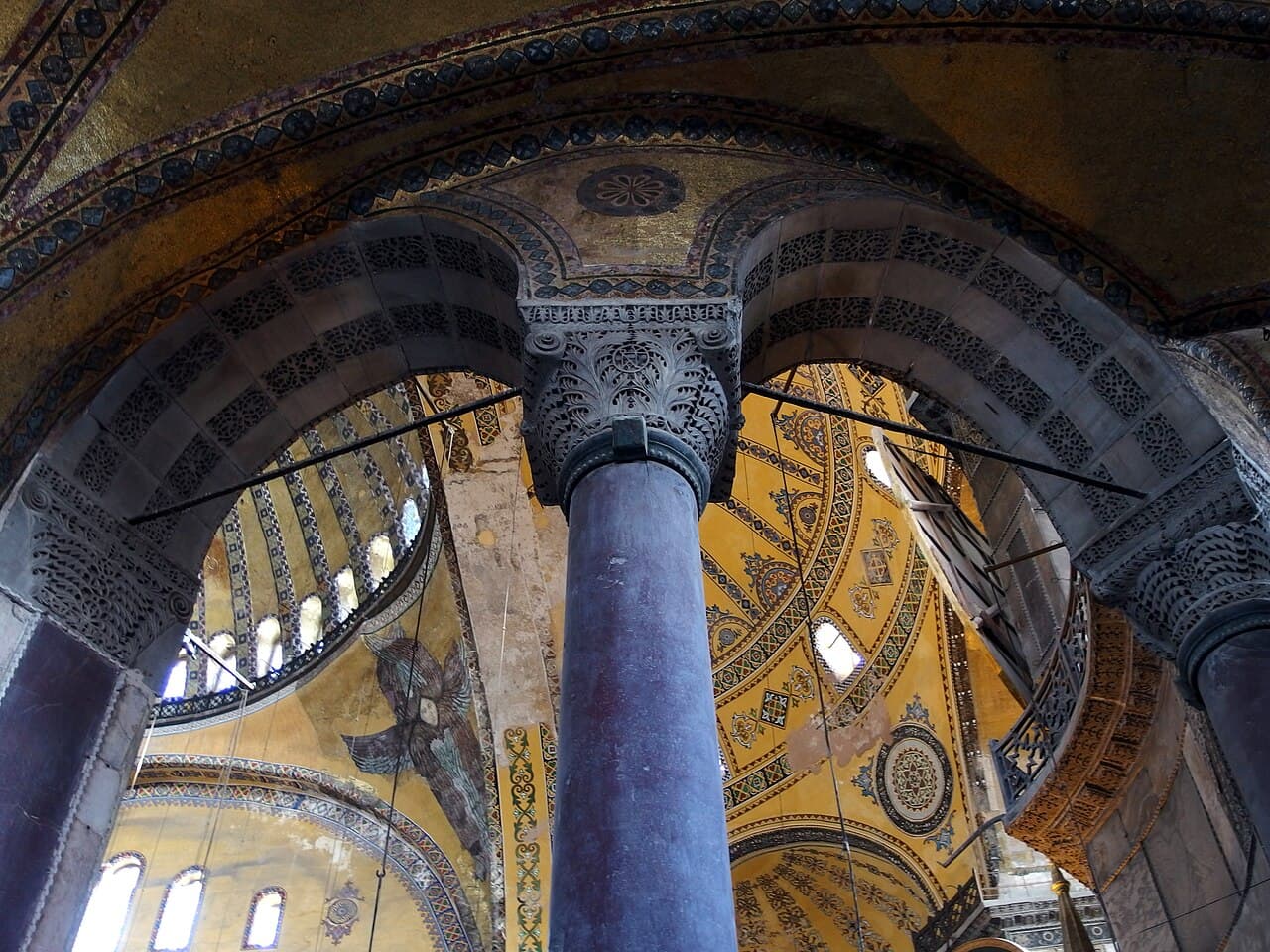
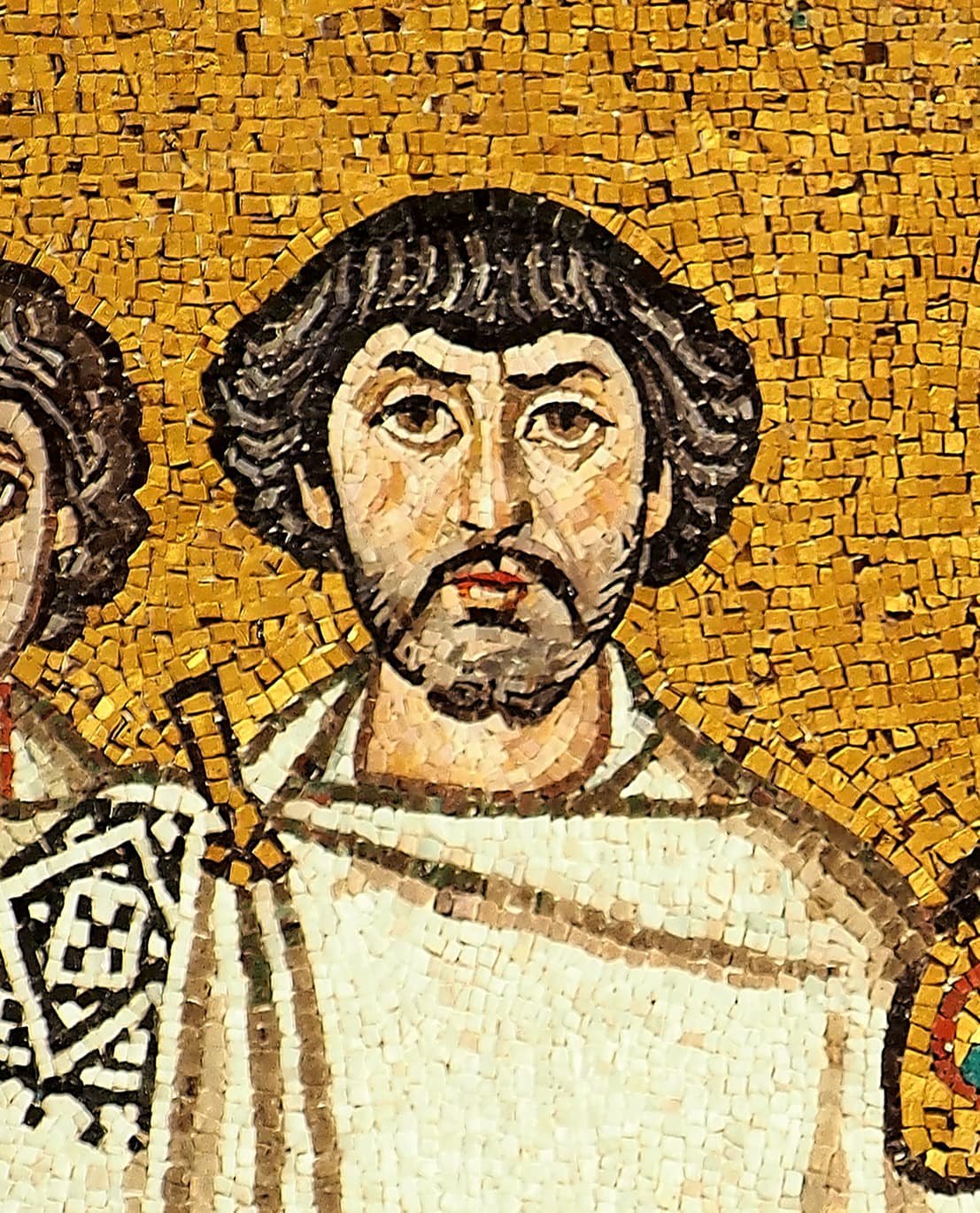
Beyond warfare and theology, Byzantium was a civilization of breathtaking cultural achievement. The Hagia Sophia, completed in 537 AD under Justinian, remains one of the greatest architectural achievements in human history — its vast dome appearing to float on a ring of light, astonishing visitors for fifteen centuries. Byzantine mosaics, with their golden backgrounds and otherworldly spiritual intensity, defined the visual language of the medieval world. Constantinople preserved and transmitted the classical Greek texts that Western Europe had largely forgotten; when Byzantine scholars fled to Italy after the empire's fall, they carried manuscripts that helped ignite the Renaissance. The university founded in Constantinople in 425 AD is among the oldest institutions of higher learning in European history.
| Emperor | Reign | Key Achievement |
|---|---|---|
| Constantine I | 306–337 AD | Founded Constantinople; Edict of Milan legalizing Christianity |
| Justinian I | 527–565 AD | Corpus Juris Civilis; temporary reconquest of the West |
| Heraclius | 610–641 AD | Defeated Sassanid Persia; reorganized empire into themes |
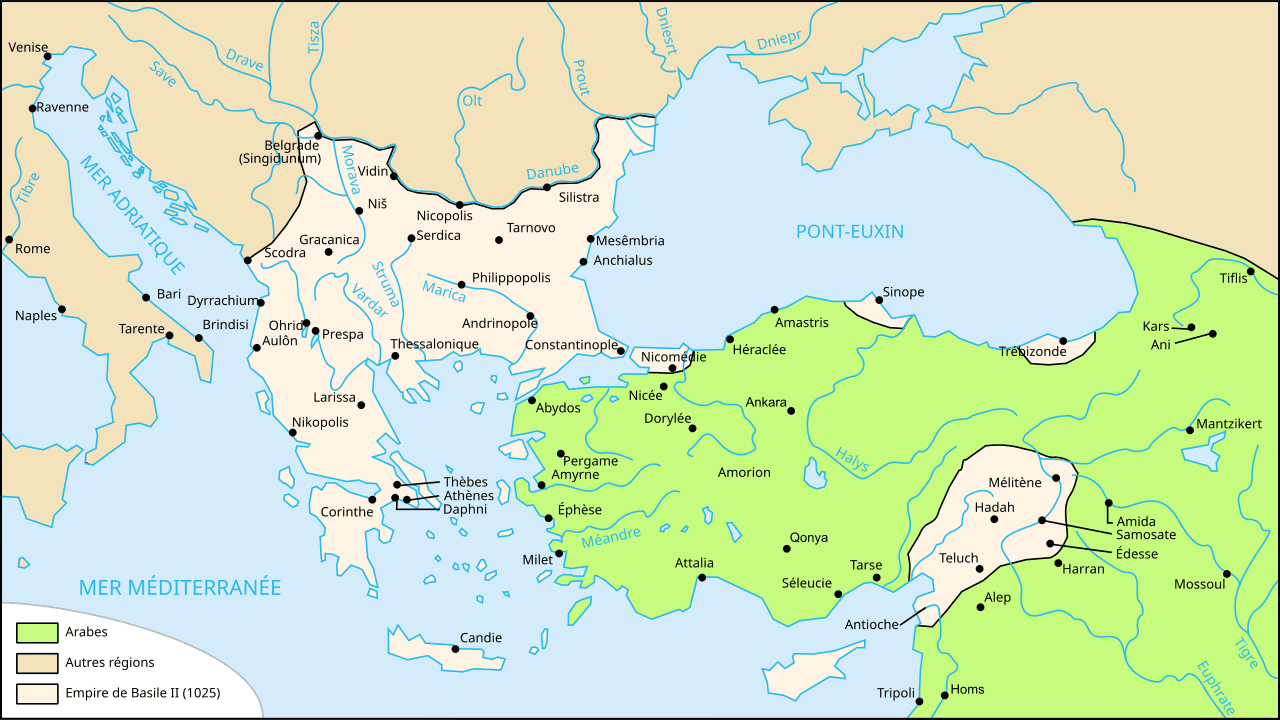
| Basil II | 976–1025 AD | Subdued the Bulgars; empire reached its medieval zenith |
| Alexios I Komnenos | 1081–1118 AD | Stabilized empire; appealed to Pope, triggering First Crusade |
| Constantine XI | 1449–1453 AD | Last emperor; died defending Constantinople |
The Fall of Constantinople: 1453 and the End of an Era
By the fifteenth century, the Byzantine Empire had shrunk to little more than Constantinople and a few scattered territories. The Ottoman Sultan Mehmed II, just twenty-one years old, massed an army of perhaps 80,000 men and deployed massive cannons — a new technology — against the ancient Theodosian Walls in the spring of 1453. Emperor Constantine XI Palaiologos refused offers of safe passage and died fighting on the walls as the city fell on May 29, 1453. Mehmed converted the Hagia Sophia into a mosque and declared himself heir to the Roman caesars. The fall sent shockwaves across Christendom and is often cited as one of the conventional markers of the end of the Middle Ages. It was the close of a civilization that had endured for over eleven centuries.
Byzantium's Invisible Legacy
The Byzantine Empire's legacy is embedded so deeply in modern civilization that it often goes unrecognized. Roman law, transmitted through Justinian's code, underpins legal systems from France to Louisiana. Orthodox Christianity shapes the spiritual lives of hundreds of millions across Greece, Russia, Serbia, Bulgaria, and beyond. The Cyrillic alphabet, born of Byzantine missionary work, is used by over 250 million people today. The very idea of a Christian emperor as God's viceroy influenced European political theology for centuries. And the Greek manuscripts preserved in Constantinople fed the Renaissance minds of Petrarch, Erasmus, and Leonardo's intellectual world. Byzantium did not merely survive — it transformed everything it touched.