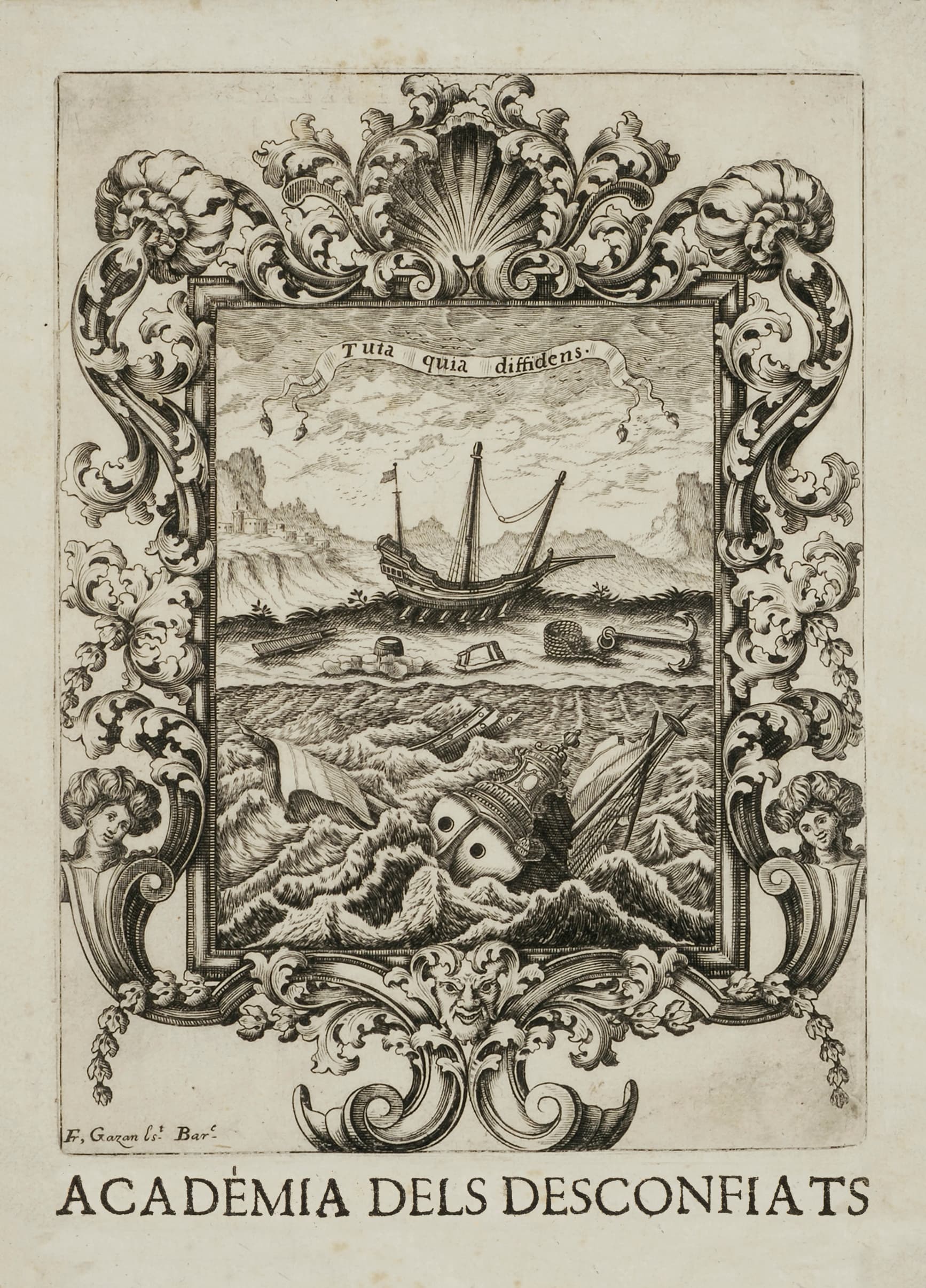
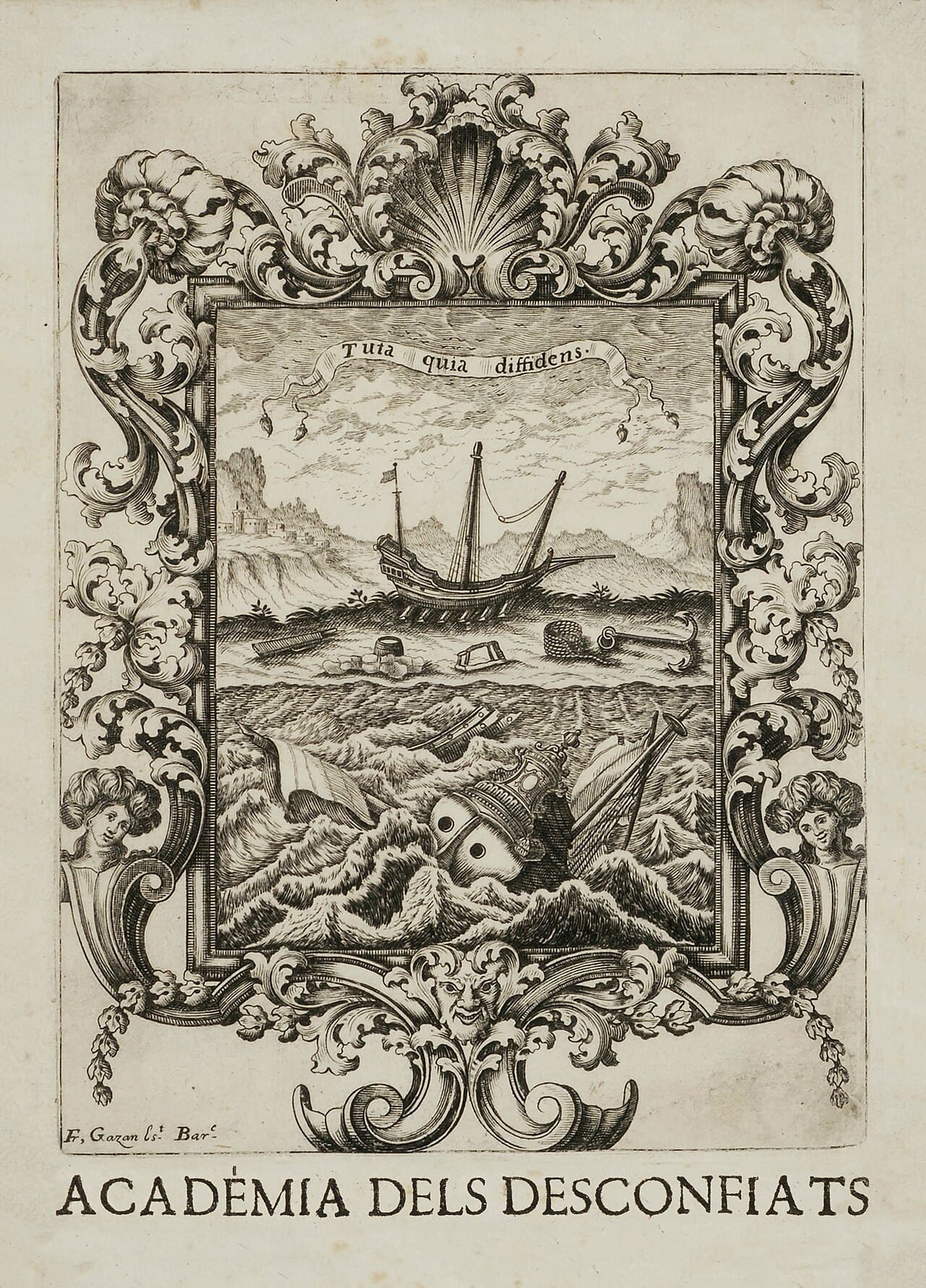
The Academy of the Distrustful — formally the Accademia degli Investiganti — was a learned society founded in Naples in 1663 dedicated to empirical inquiry and principled scepticism toward ancient authority. Its members refused to accept Aristotelian dogma without experimental proof, making it one of the earliest institutional champions of the scientific method in southern Italy. Patronised by the nobleman Andrea Concublet, Marquis of Arena, it united physicians, philosophers, and jurists in a shared mission to test every claim against observation and reason.
What Was the Academy of the Distrustful and When Was It Founded?
The Accademia degli Investiganti was established in Naples in 1663 under the patronage of Andrea Concublet, Marquis of Arena. Its founding members included the physician Tommaso Cornelio, the philosopher Leonardo di Capua, and the jurist Francesco d'Andrea. The group adopted a stance of deliberate intellectual suspicion: they would trust no authority — not Aristotle, not Galen, not the Church's favoured ancient texts — unless verified by observation and experiment. Meeting regularly in private palaces, they discussed the new mechanical philosophy of René Descartes and Pierre Gassendi, debated the atomism of Epicurus, and corresponded with leading thinkers across Europe.
Why Was the Academy Important to the History of Science?
In Counter-Reformation Naples, challenging Aristotelian natural philosophy was not merely intellectually bold — it was dangerous. The Inquisition had burned Giordano Bruno in 1600 and silenced Galileo by 1633. Against this backdrop, the Investiganti's willingness to embrace atomism, mechanistic physics, and William Harvey's discovery of blood circulation was remarkable. Tommaso Cornelio introduced Cartesian and Gassendist ideas to a southern Italian audience, while Leonardo di Capua's 1681 work Parere systematically dismantled Galenic medicine. The academy transplanted the new science of northern Europe into the Kingdom of Naples, planting seeds that bore fruit in the Neapolitan Enlightenment of the following century.
| Member | Discipline | Key Contribution |
|---|---|---|
| Andrea Concublet | Patron / Nobleman | Provided institutional protection and meeting space |
| Tommaso Cornelio | Medicine and Philosophy | Introduced Cartesian and atomist thought to Naples |
| Leonardo di Capua | Medicine | Authored Parere (1681), a landmark anti-Galenic treatise |
| Francesco d'Andrea | Law and Philosophy | Linked legal empiricism to natural philosophy reform |
What Was the Academy's Legacy and How Did It End?
The Investiganti operated actively through the 1670s before fading under sustained pressure from ecclesiastical authorities and the conservative University of Naples. Several members faced Inquisition scrutiny, and the intellectual climate grew increasingly hostile after 1693, when a catastrophic earthquake in Sicily was used by clerics to argue that impious new philosophy had provoked divine wrath. Despite its relatively short active life, the academy's legacy was profound. It established Naples as a centre of progressive thought, directly influenced the next generation of Neapolitan reformers, and demonstrated that rigorous empirical inquiry could survive even in the most politically constrained corners of early modern Europe. Thinkers such as Giambattista Vico and Pietro Giannone built directly on its sceptical, anti-dogmatic foundations.