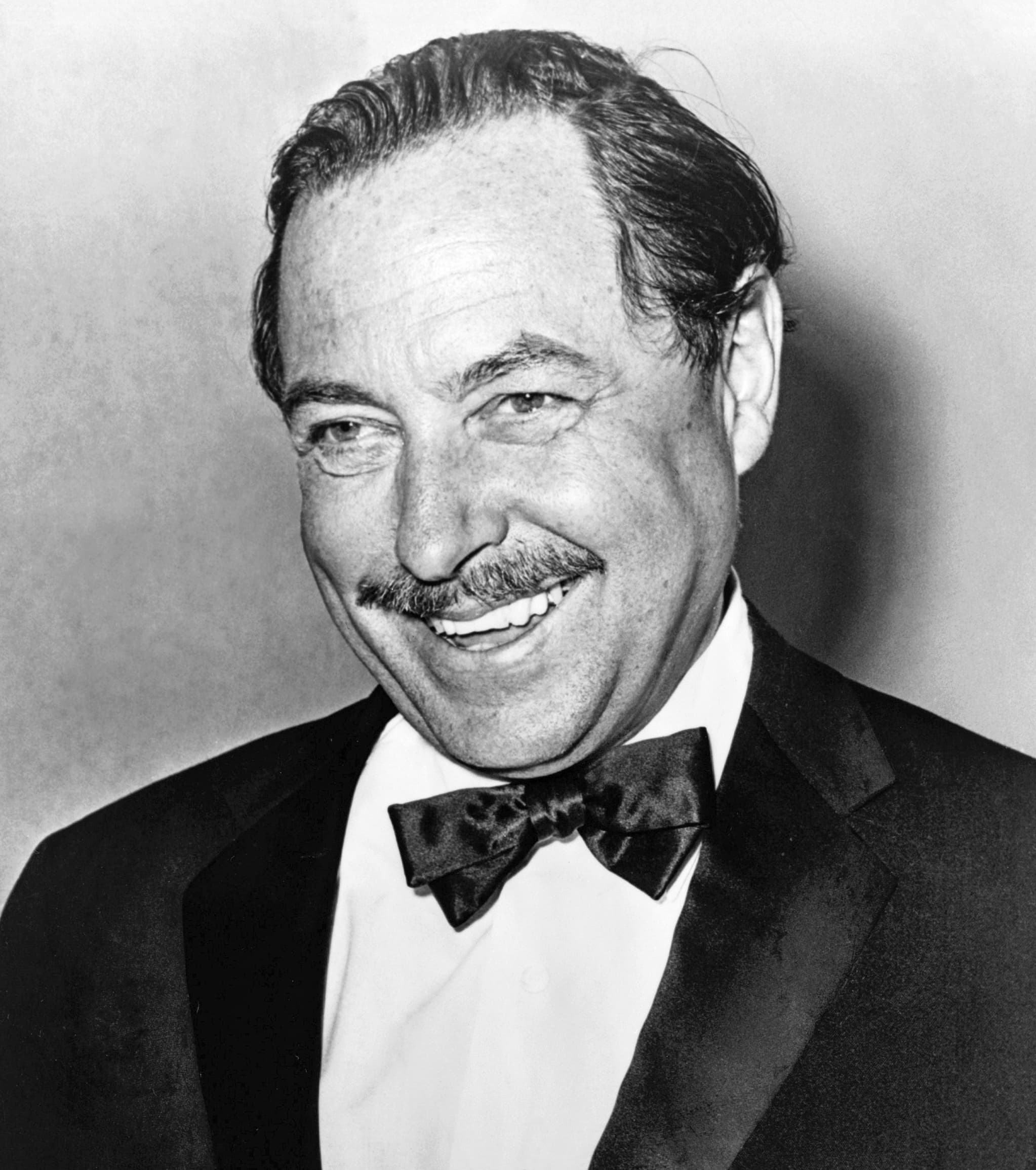
Tennessee Williams (1911–1983) was one of the most influential American playwrights of the 20th century, best known for A Streetcar Named Desire (1947) and The Glass Menagerie (1944). Born Thomas Lanier Williams III in Columbus, Mississippi, he won two Pulitzer Prizes for Drama and transformed American theatre by bringing raw psychological realism, Southern Gothic atmosphere, and deeply personal anguish to the stage. His plays explored desire, delusion, and decay with an intensity that no contemporary could match.
What Were Tennessee Williams's Early Life and Influences?
Williams was born on March 26, 1911, in Columbus, Mississippi, to Cornelius Coffin Williams, a travelling shoe salesman, and Edwina Dakin Williams, a genteel minister's daughter. The household was volatile — his father was alcoholic and emotionally abusive, while his mother was anxious and domineering. His beloved sister, Rose, was diagnosed with schizophrenia and lobotomised in 1943, an act that haunted Williams for the rest of his life and directly inspired the fragile Laura Wingfield in The Glass Menagerie. The family relocated to St. Louis in 1918, a move Williams resented. He studied at the University of Missouri, Washington University, and finally graduated from the University of Iowa in 1938. He adopted the nickname 'Tennessee' around this time, partly to honour his father's home state and partly to reinvent himself as a writer.
Which Plays Made Tennessee Williams Famous?
The Glass Menagerie (1944) launched Williams to national fame when it opened in Chicago and then on Broadway, running for 563 performances. Three years later, A Streetcar Named Desire (1947) cemented his greatness: it ran for 855 Broadway performances, won the Pulitzer Prize for Drama and the New York Drama Critics' Circle Award, and made Marlon Brando a star. Cat on a Hot Tin Roof (1955) earned Williams his second Pulitzer. Other major works include Suddenly Last Summer (1958), Sweet Bird of Youth (1959), and The Night of the Iguana (1961). His plays were notable for pioneering what he called 'plastic theatre' — using music, lighting, and staging as expressive tools alongside dialogue.

| Play | Year | Award |
|---|---|---|
| The Glass Menagerie | 1944 | New York Drama Critics' Circle Award |
| A Streetcar Named Desire | 1947 | Pulitzer Prize for Drama |
| Cat on a Hot Tin Roof | 1955 | Pulitzer Prize for Drama |
| The Night of the Iguana | 1961 | New York Drama Critics' Circle Award |
How Did Personal Struggles Shape His Work and Later Life?
Williams was openly gay at a time when homosexuality was criminalised and stigmatised in the United States. His long-term partner, Frank Merlo, died of lung cancer in 1963, plunging Williams into a decade-long depression fuelled by alcohol and prescription drug dependency. His output after the mid-1960s was uneven, and critics largely dismissed his later plays. Yet he never stopped writing. He converted to Roman Catholicism in 1969 and continued to produce memoirs, fiction, and experimental theatre until his death. He died on February 25, 1983, in New York City, after choking on a bottle cap in his room at the Hotel Elysée — an end as strange and tragic as any he had written.
What Is Tennessee Williams's Legacy in American Literature?
Williams is credited with reshaping American drama alongside Arthur Miller and Eugene O'Neill, bringing Freudian psychology, Southern Gothic decay, and lyrical dialogue to the mainstream stage. His characters — Blanche DuBois, Stanley Kowalski, Tom Wingfield — are among the most recognisable in world theatre. His works have been adapted into Oscar-winning films, revived on Broadway repeatedly, and taught in universities worldwide. The Tennessee Williams Festival in New Orleans attracts thousands annually. His influence is visible in the work of playwrights from Sam Shepard to Tony Kushner. The Pulitzer board and the Library of America have both honoured his complete works as cornerstones of the national literary canon.