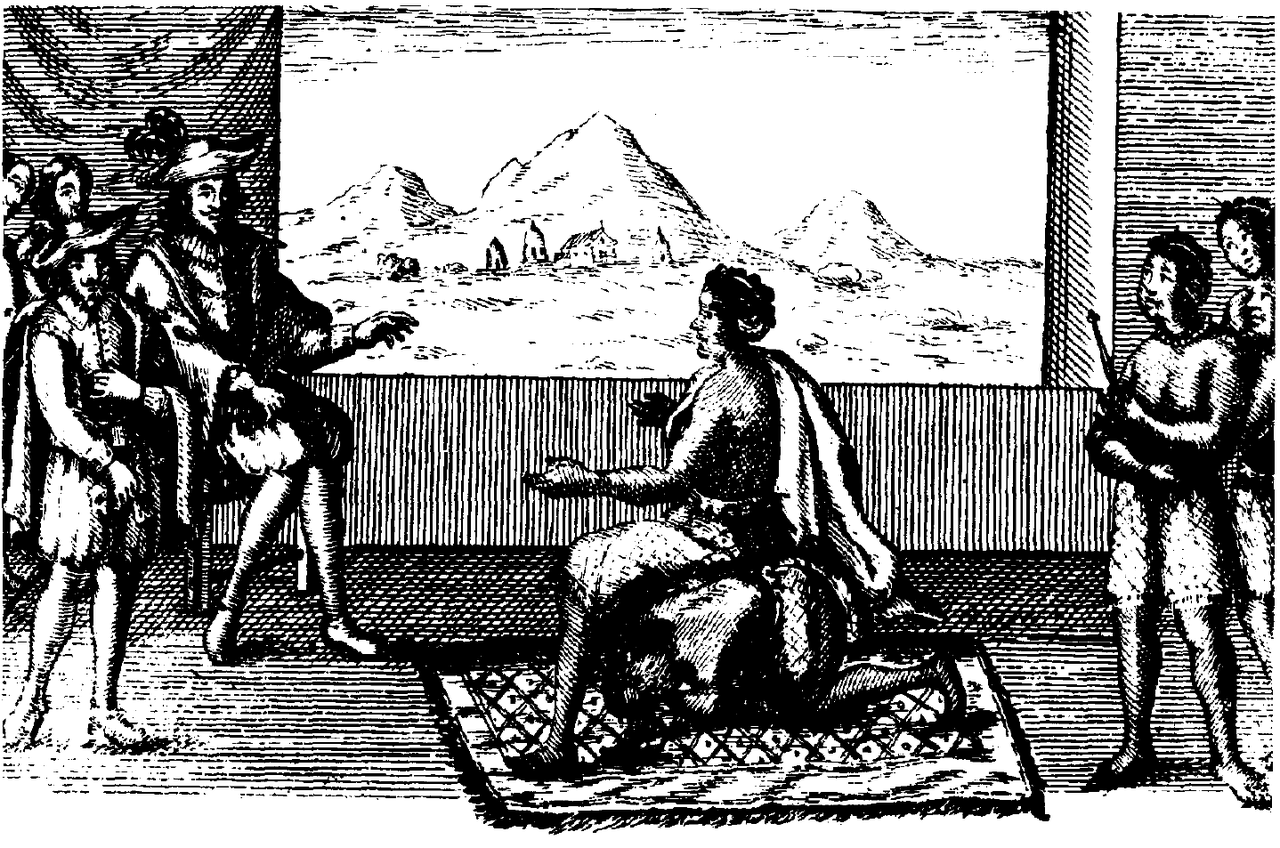
Queen Nzinga of Ndongo (c. 1583–1663) was the ruler of the Ndongo and Matamba kingdoms in present-day Angola, celebrated as one of history's most formidable anti-colonial leaders. For nearly four decades she outmanoeuvred Portuguese governors, forged military alliances, and negotiated treaties to preserve her people's sovereignty. Her reign stands as a defining chapter in African resistance to European imperialism.
Who Was Queen Nzinga? Origins and Rise to Power
Born around 1583 to King Kiluanji of Ndongo, Nzinga grew up in the royal court of the Mbundu-speaking Ndongo kingdom, located in the interior of modern Angola. Her father reportedly involved her in royal affairs from childhood, giving her an unusually strong education in statecraft and military strategy. When her brother Ngola Mbandi became king, relations with the encroaching Portuguese — who had established Luanda as a slave-trading hub in 1575 — grew increasingly desperate. After Mbandi died in 1624 under murky circumstances, Nzinga assumed power, ruling first as regent and then as queen regnant. She legitimised her rule both through Mbundu tradition and through her extraordinary political skill, commanding loyalty that outlasted every Portuguese attempt to dislodge her.
How Did Nzinga Resist Portuguese Colonisation?
Nzinga's resistance combined diplomacy and warfare in equal measure. In 1622 she travelled to Luanda to negotiate with Portuguese Governor João Correia de Sousa — the meeting famous for the governor offering her no chair, forcing her to sit on a servant's back in a calculated act of dominance. Nzinga simply turned the moment into a display of regal composure. She converted to Christianity (taking the baptismal name Ana de Sousa) to build political credibility with Lisbon, while simultaneously recruiting runaway slaves and Portuguese-trained soldiers called 'Imbangala' into her army. After losing Ndongo's capital Kabasa to Portuguese forces in 1626, she conquered the neighbouring Matamba kingdom in 1631, transforming it into a formidable base of operations. Through the 1640s she allied with the Dutch, who briefly captured Luanda in 1641, pressuring Portugal on two fronts. Even after the Dutch withdrew in 1648, Nzinga continued guerrilla warfare into her seventies, finally negotiating a favourable peace treaty with Portugal in 1657.

| Year | Event | Significance |
|---|---|---|
| 1583 | Nzinga born into Ndongo royal family | Future queen and military strategist |
| 1622 | Negotiates with Portuguese governor in Luanda | Iconic meeting; she converts to Christianity |
| 1624 | Assumes power after brother's death | Begins her reign as queen regnant |
| 1626 | Portuguese capture Ndongo capital Kabasa | Nzinga retreats and reorganises resistance |
| 1631 | Conquers Matamba kingdom | Establishes new power base for continued resistance |
| 1641 | Allies with Dutch against Portugal | Portugal loses Luanda temporarily |
| 1657 | Peace treaty with Portugal | Ndongo-Matamba sovereignty partially recognised |
| 1663 | Nzinga dies at approximately age 80 | Legacy as Africa's greatest anti-colonial queen secured |
What Is Queen Nzinga's Legacy Today?
Nzinga died on 17 December 1663, aged around 80, having ruled for nearly four decades. Angola's capital Luanda honours her with a prominent statue in Kinaxixi Square, depicting her in battle dress. She appears in school curricula across Africa and is studied in universities worldwide as a pioneer of anti-imperial resistance. Historians note that her kingdom of Matamba remained effectively independent until the late 19th century, a testament to the state structures she built. For scholars of gender history, she is equally significant — a woman who commanded armies, governed kingdoms, and demanded equality at the negotiating table in an era when European monarchs routinely dismissed African rulers as savages.