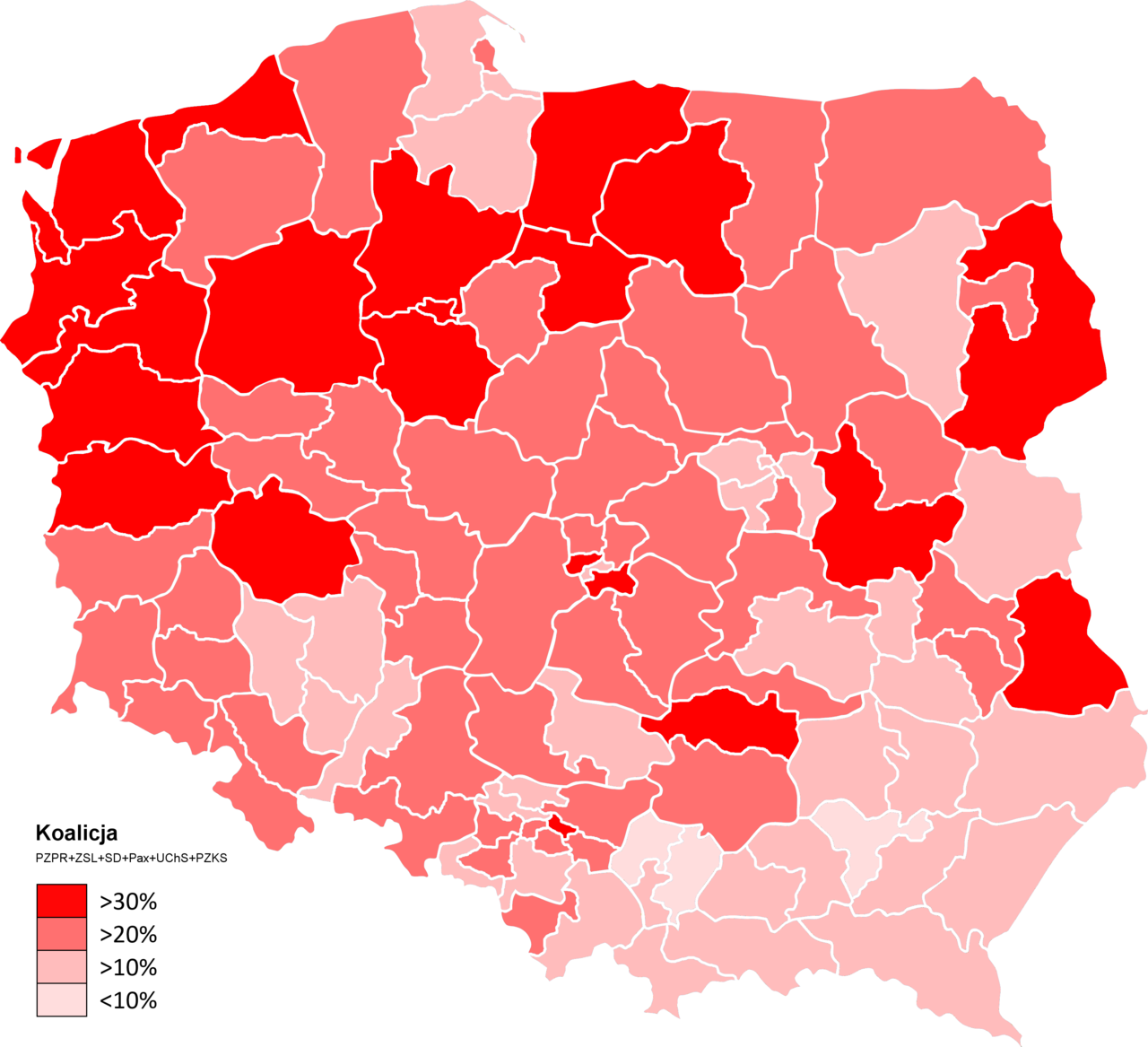
The 1989 Polish parliamentary election, held on 4 and 18 June 1989, was the first partly free vote in communist Poland since 1947. The trade-union movement Solidarity, led by Lech Wałęsa, won 99 of 100 Senate seats and every freely contested Sejm seat, delivering a catastrophic blow to the ruling Polish United Workers' Party (PZPR) and triggering a chain of democratic revolutions across Eastern Europe.
What Caused the 1989 Election? The Road to the Round Table
By the mid-1980s, Poland's communist government faced simultaneous crises: a debt of roughly $40 billion, chronic food shortages, and a strike wave it could not suppress. General Wojciech Jaruzelski, who had declared martial law in 1981 to crush Solidarity, now needed the movement's cooperation to stabilise the economy. Between 6 February and 5 April 1989, government officials and Solidarity negotiators held the Round Table Talks in Warsaw. The resulting agreement legalised Solidarity, restored the Senate (abolished in 1946) as a fully free chamber, and reserved 65 percent of Sejm seats for the PZPR and its allied parties — leaving 35 percent open to genuine competition. Both sides assumed the communists would retain enough power to govern; neither anticipated the scale of what followed.
How Did Solidarity Win So Decisively?
Solidarity's campaign was simple but devastating. The movement produced a now-iconic poster showing Gary Cooper from 'High Noon' wearing a Solidarity badge — a visual shorthand for moral courage against an armed opponent. Voters were instructed to cross out the names of every communist candidate on the reserved-seat list. Turnout reached 62 percent in the first round. On election night, Solidarity won 160 of 161 contested Sejm seats and 99 of 100 Senate seats. Even more damaging for the regime, 33 of 35 PZPR candidates on the 'national list' — guaranteed seats requiring only 50 percent voter approval — failed to reach that threshold, having been mass-crossed-out by an electorate expressing open contempt. The result was not a victory; it was a rout.

| Chamber | Seats Available to Solidarity | Seats Won | Communist Bloc Seats (Reserved) |
|---|---|---|---|
| Sejm (lower house) | 161 of 460 | 160 | 299 |
| Senate (upper house) | 100 of 100 | 99 | 1 |
What Were the Consequences for Poland and Eastern Europe?
The political arithmetic made communist government impossible. On 24 August 1989, Tadeusz Mazowiecki became Prime Minister — the first non-communist head of government in the Eastern Bloc since the late 1940s. Jaruzelski was elected president by the National Assembly by a margin of just one vote, a symbolic fig leaf that disguised total PZPR collapse. Within months, the Berlin Wall fell (9 November 1989), Czechoslovakia's Velvet Revolution succeeded, and Romania's Nicolae Ceaușescu was executed. Poland's election did not cause those events directly, but it proved that a communist government could lose power peacefully, providing a template every neighbouring opposition movement studied closely. By 1990, Wałęsa himself had won the Polish presidency, and the PZPR had dissolved itself.
Legacy: Why the 1989 Election Still Matters
The June 1989 election is remembered in Poland as 'the contract election' (wybory kontraktowe) — a negotiated transition that avoided the violence seen in Romania. It demonstrated that civil society, patient organisation, and moral authority could defeat a heavily armed state apparatus. The date, 4 June, is now marked as Freedom and Civil Rights Day in Poland. Globally, the election is studied as a textbook case of negotiated democratic transition, influencing scholarship on how authoritarian regimes end and how opposition movements can institutionalise popular support into durable political power.