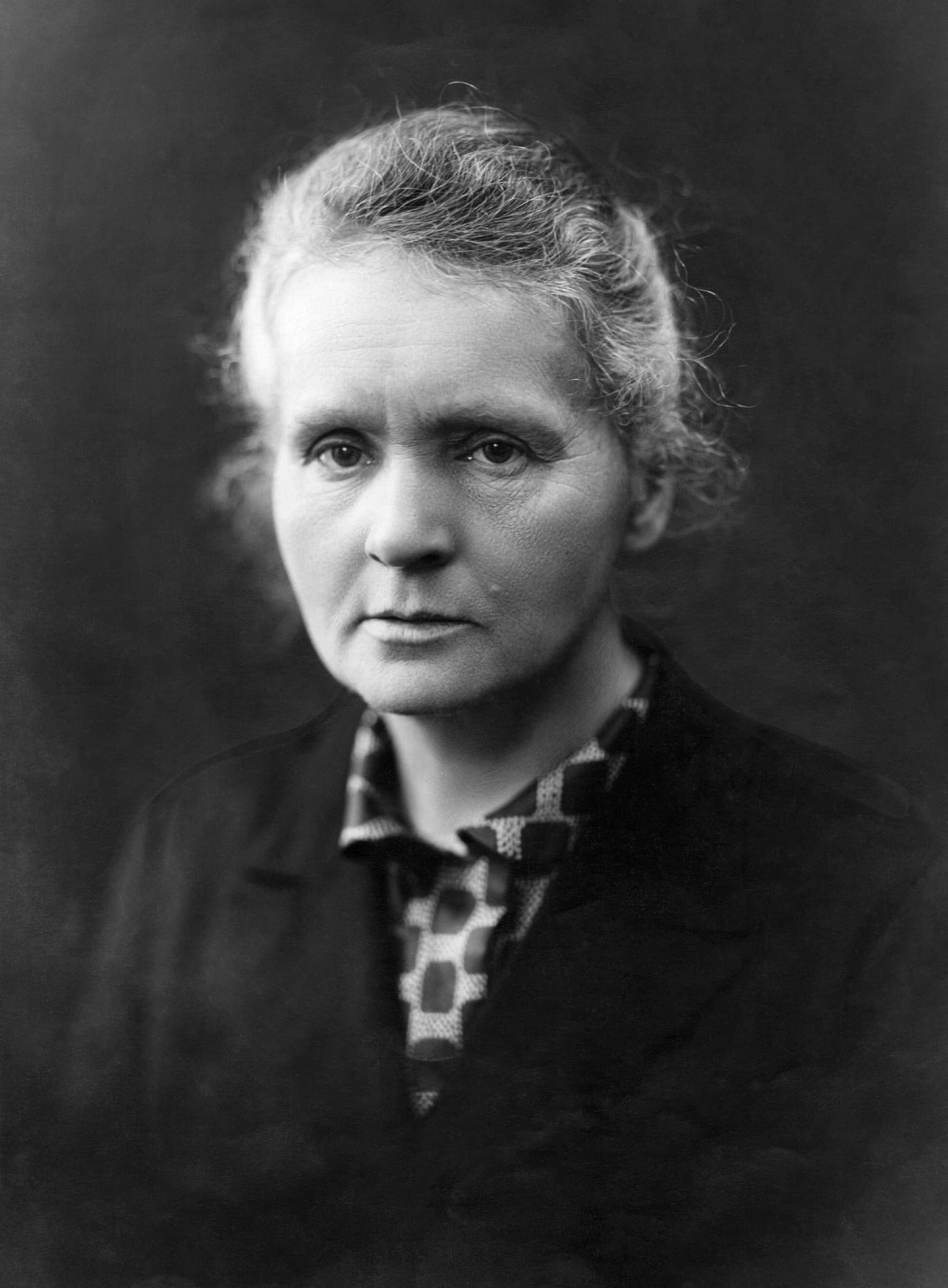
In the damp, leaking shed that served as her laboratory in Paris, Marie Curie stirred boiling, radioactive slag with an iron rod for hours on end, her fingertips perpetually burned, her lungs full of chemical fumes. She did not know, in those long nights of the late 1890s, that the invisible force she was chasing would eventually kill her. What she did know — with a certainty that bordered on obsession — was that something extraordinary was hiding inside pitchblende ore, and she intended to find it. That relentless conviction transformed not just her own life, but the entire trajectory of modern science.
A Mind Forged in Adversity
Maria Sklodowska was born on November 7, 1867, in Warsaw, then under the iron grip of Russian imperial rule. Higher education for women was effectively banned in Russian-controlled Poland, yet the young Maria was brilliant in ways that could not be suppressed. She and her sister Bronya struck a pact rooted in sacrifice: Maria would work as a governess to finance Bronya's medical studies in Paris, and Bronya would in turn support Maria's own education once she was established. It was a sisterly compact of extraordinary foresight. Maria arrived in Paris in 1891, enrolled at the Sorbonne, and immediately plunged herself into physics and mathematics with a ferocity that astonished her professors. She graduated first in her physics degree in 1893, then added a mathematics degree the following year — extraordinary achievements for any student, let alone a foreign woman living in near-poverty in a rented attic room.
Partnership, Science, and the Discovery of Radioactivity
In 1894, Maria met Pierre Curie, a quietly brilliant physicist eight years her senior. Their intellectual attraction quickly deepened into romantic partnership, and they married in July 1895. Where many women of the era found marriage a door closing on ambition, Marie — as she now called herself — found in Pierre a rare equal who championed her work. Together they formed one of history's great scientific partnerships, though the world would often try to minimize her individual contribution.
The catalyst for her defining discovery came from the work of Wilhelm Röntgen, who had identified X-rays in 1895, and Henri Becquerel, who detected mysterious rays emanating from uranium in 1896. While other scientists treated Becquerel's finding as a curiosity, Marie recognized it as a doorway. She coined the term 'radioactivity' to describe the phenomenon — the spontaneous emission of energy from certain elements — and set out to understand it systematically. Using a sensitive electrometer partly designed by Pierre, she measured the ionizing power of uranium rays with extraordinary precision. Her crucial early insight was that radioactivity was an atomic property, not the result of any chemical interaction between molecules. This was a paradigm-shattering idea: it implied that atoms themselves had internal structure, fundamentally contradicting the then-prevailing assumption that atoms were indivisible.
Polonium and Radium: New Elements from Stubborn Ore
Testing pitchblende — a uranium-rich ore — Marie discovered it was far more radioactive than uranium alone could account for. There had to be something else inside it. In 1898, working in cramped conditions with minimal institutional support, she and Pierre announced the existence of not one but two previously unknown elements. The first, named polonium in honor of Marie's occupied homeland, was announced in July 1898. The second, radium — from the Latin radius, for ray — was announced in December of the same year. Isolating these elements in measurable quantities required processing literally tons of pitchblende. To isolate just one gram of radium chloride, Marie processed approximately ten tons of ore over four years of back-breaking work. Her doctoral thesis, completed in 1903, was described by the examining committee as the greatest contribution to science ever made in a PhD dissertation.
Nobel Prizes, Tragedy, and Resilience
In 1903, Marie and Pierre Curie, along with Henri Becquerel, were awarded the Nobel Prize in Physics — making Marie the first woman ever to receive a Nobel Prize. The Swedish Academy had initially intended to award only Pierre and Becquerel; it was Pierre who insisted, firmly, that Marie be included. The recognition brought fame, but also scrutiny and persistent skepticism. French academic culture remained deeply hostile to women scientists, and the French Academy of Sciences never admitted her as a member despite her towering achievements.
Tragedy struck in April 1906 when Pierre was killed instantly by a horse-drawn wagon on a Paris street. Marie was devastated. Yet she channeled her grief into work, accepting Pierre's professorship at the Sorbonne — becoming its first female professor in history — and continuing their shared research alone. In 1911, she was awarded a second Nobel Prize, this time in Chemistry, for the isolation of pure radium and her study of its properties. She remains the only person in history to have won Nobel Prizes in two different sciences.
War, Legacy, and a Quiet Reckoning with Danger
During World War I, Marie demonstrated the practical power of her discoveries by developing mobile X-ray units — nicknamed 'petites Curies' — that brought radiographic imaging to field hospitals, helping surgeons locate shrapnel and bullets in wounded soldiers. She personally trained operators and drove some of the units herself. Historians estimate these mobile stations assisted in the treatment of over one million soldiers.
The ultimate price of Marie's life's work was her health. Decades of unprotected exposure to radioactive materials — she routinely carried test tubes of isotopes in her pockets and stored them in her desk drawer — resulted in severe bone marrow damage. She died on July 4, 1934, in a sanatorium in the French Alps, of aplastic anemia caused by radiation exposure. She was 66. Even today, her personal notebooks from the 1890s are stored in lead-lined boxes in the Bibliothèque nationale de France, accessible to researchers only with signed waivers acknowledging their radioactivity — a haunting testament to the invisible forces she spent her life illuminating.
An Enduring Measure of Greatness
Marie Curie's legacy is embedded in both the periodic table — element 96, curium, is named for her and Pierre — and in the very foundations of nuclear physics, cancer radiotherapy, and medical imaging. Institutions bearing her name span continents. She was the first woman to be interred on her own merits in France's Panthéon, when her remains were transferred there in 1995 alongside Pierre's. But perhaps her most enduring legacy is simpler than any accolade: she proved, in the most demanding arena imaginable, that genius has no gender, and that the pursuit of truth is worth any cost.
| Achievement | Year | Significance |
|---|---|---|
| Coins the term 'radioactivity' | 1898 | Redefines atomic theory |
| Discovers Polonium | 1898 | First element named for a country |
| Discovers Radium | 1898 | Key to future nuclear medicine |
| Nobel Prize in Physics | 1903 | First woman to win a Nobel Prize |
| Sorbonne Professorship | 1906 | First female professor at the Sorbonne |
| Nobel Prize in Chemistry | 1911 | Only person to win Nobel in two sciences |
| Mobile X-ray units, WWI | 1914–18 | Over 1 million soldiers treated |
| Interred in the Panthéon | 1995 | First woman honored on own merit |