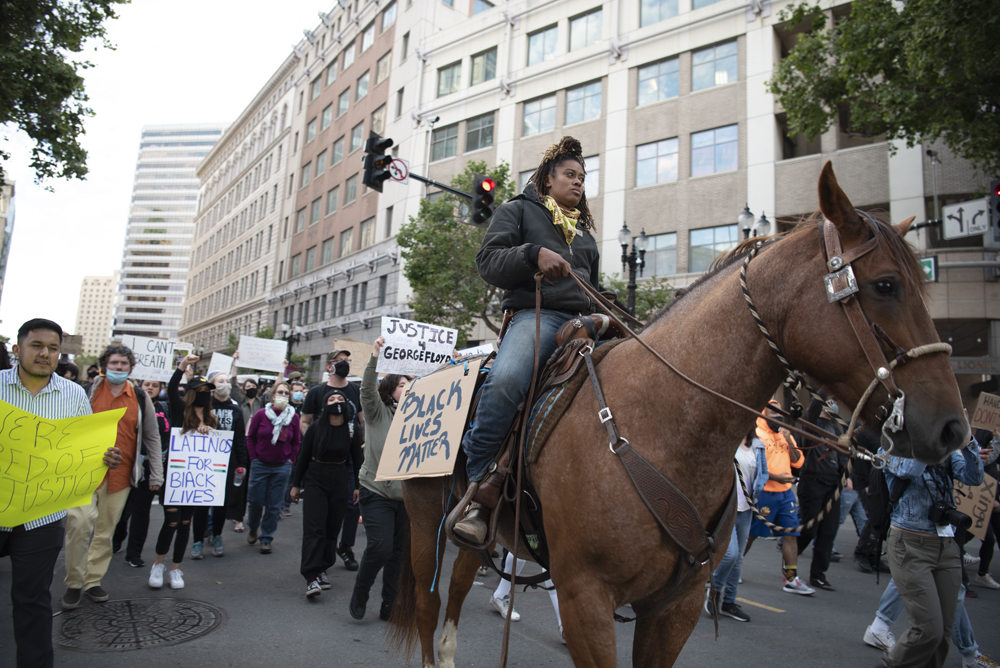
The George Floyd protests were a wave of demonstrations that erupted across the United States and more than 60 countries after Minneapolis police officer Derek Chauvin knelt on 46-year-old George Floyd's neck for 9 minutes and 29 seconds on May 25, 2020, killing him. Sparked by a bystander video that spread globally within hours, the protests became the largest civil rights movement in American history, with an estimated 15–26 million people participating in the U.S. alone between late May and early June 2020. They forced urgent debates on police brutality, systemic racism, and criminal justice reform at every level of government.
What Caused the George Floyd Protests?
George Floyd died after Minneapolis police were called to a convenience store over a suspected counterfeit $20 bill. Officers restrained Floyd face-down on the pavement; Chauvin pressed his knee into Floyd's neck while Floyd repeatedly said 'I can't breathe.' A 17-year-old bystander, Darnella Frazier, filmed the encounter, and her video was shared millions of times online within 24 hours. Floyd's death was not an isolated incident — it came amid a series of high-profile killings of Black Americans, including Ahmaud Arbery (February 2020) and Breonna Taylor (March 2020), intensifying existing outrage over racial disparities in policing. The Minneapolis Police Department's initial statement, which described Floyd as having 'medical distress' and omitted Chauvin's role, further inflamed public anger.
How Did the Protests Spread and What Did They Look Like?
Protests began in Minneapolis on the evening of May 26, 2020, and spread to all 50 U.S. states within days. Major demonstrations took place in New York, Los Angeles, Chicago, Washington D.C., and hundreds of smaller cities. Internationally, marches occurred in London, Paris, Berlin, Sydney, and Tokyo. The vast majority of protests were peaceful; researchers at the Armed Conflict Location and Event Data Project (ACLED) found that over 93% of demonstrations involved no violence or property destruction. However, looting and clashes with police did occur in some cities, prompting curfews in more than 200 jurisdictions and the deployment of National Guard troops in 30 states. The phrase 'Black Lives Matter,' originally coined by activist Patrisse Cullors in 2013, became the dominant rallying cry. Statues of Confederate generals, colonial figures, and slave traders were toppled in the U.S. and Europe.

| Location | Notable Event | Date |
|---|---|---|
| Minneapolis, MN | George Floyd killed; protests begin | May 25–26, 2020 |
| Washington D.C. | Protesters cleared from Lafayette Square; Trump photo-op | June 1, 2020 |
| Seattle, WA | Capitol Hill Autonomous Zone (CHAZ) established | June 8, 2020 |
| Bristol, UK | Statue of slave trader Edward Colston toppled | June 7, 2020 |
| Minneapolis, MN | Derek Chauvin convicted of murder | April 20, 2021 |
What Policy Changes Did the Protests Produce?
The protests generated swift and wide-ranging legislative responses. The Minneapolis City Council pledged to defund and dismantle its police department, though that measure ultimately failed. More than 30 U.S. states enacted police reform laws in 2020–2021, including bans on chokeholds and requirements for body cameras. The George Floyd Justice in Policing Act passed the U.S. House of Representatives in March 2021 but stalled in the Senate. New York repealed a law shielding police disciplinary records. Internationally, the UK, France, and Canada launched reviews of police use-of-force policies. On April 20, 2021, Derek Chauvin was convicted of second-degree murder, third-degree murder, and second-degree manslaughter — a verdict hailed as a landmark in police accountability. He was sentenced to 22.5 years in prison.