
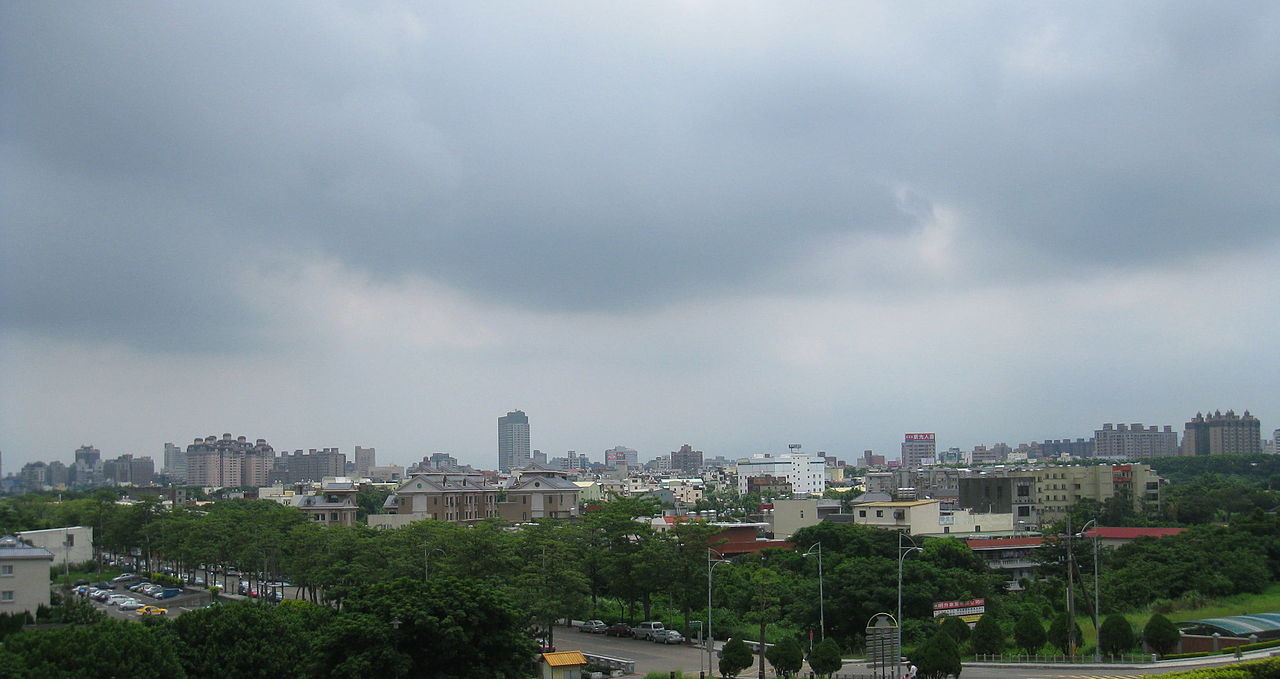
Zhongli District (Chinese: 中壢區; pinyin: Zhōnglì Qū) is a district in Taoyuan City, Taiwan. Zhongli is spelled variously as Jungli, Jongli, Jhongli or Chungli on railway stations, bus stops and road signs. Historically, the city is the site of the Zhongli Incident of 1977, the most significant event of the democratization movement prior to the 1980s. Ethnically, it is considered a capital city for Hakka Taiwanese, who live in great numbers here and in surrounding areas; many elderly persons can speak Hakka in addition to Mandarin and Taiwanese Hokkien. In recent years many foreign workers (mainly from the Philippines and Thailand) have also settled in and around the city due to the heavy industry in the suburbs of the city, making it a center for foreign laborers. The district of Zhongli has three large parks and over 70 green reserves.
Zhongli District is the busiest district in Southern Taoyuan (南桃園), as well as the location of the Taoyuan HSR station.
History
Qing dynasty
In the 19th century, the area was home to Plains aborigines. During the Qing dynasty, immigrants from Fujian and Guangdong provinces arrived along with Hakka. The original name of the area was Kan-a-lek (Chinese: 澗仔壢; Pe̍h-ōe-jī: Kán-á-le̍k) due to its location between Tamsui and Hsinchu.

During Japanese rule, the town was administered as Chūreki Town (中壢庄), Chūreki District, Shinchiku Prefecture.
Republic of China
After the handover of Taiwan from Japan to the Republic of China in 1945, Zhongli was reorganized as Zhongli Town. In October 1950, it was placed under Taoyuan County. On 1 July 1967, Zhongli was promoted to a county-administered city and became Zhongli City. On 25 December 2014, as Taoyuan County was upgraded to a special municipality named Taoyuan City, Zhongli became a district of the municipality.
Demographics
Zhongli's population was estimated at 426,326 in March 2023, including 10,084 Taiwanese aborigines. Zhongli is subdivided into 85 villages, with the eight biggest but least populated villages on the western side of the district (39 square kilometers but with 35,000 people), while the eastern side is occupied by industrial factories and the heart of the metropolitan area. This reflects the imbalance of development of western and eastern Zhongli.

Administrative divisions
The district comprises 88 villages: Chenggong (成功), Deyi (德義), Duxing (篤行), Fude (福德), Fuhua (復華), Fuxing (復興), Guangming (光明), Guoling (過嶺), Heping (和平), Houliao (後寮), Huaai (華愛), Huaxun (華勛), Jianxing (健行), Jinhua (金華), Jiuming (舊明), Linsen (林森), Longan (龍安), Longchang (龍昌), Longci (龍慈), Longde (龍德), Longgang (龍岡), Longping (龍平), Longdong (龍東), Longxing (龍興), Mingde (明德), Neicuo (內厝), Neiding (內定), Neili (內壢), Puqiang (普強), Puqing (普慶), Puren (普仁), Puyi (普義), Puzhong (普忠), Qiaxi (洽溪), Qingpu (青埔), Qingxi (青溪), Renai (仁愛), Rende (仁德), Renfu (仁福), Renhe (仁和), Renmei (仁美), Renxiang (仁祥), Renyi (仁義), Sanmin (三民), Shandong (山東), Shitou (石頭), Shuiwei (水尾), Dongxing (東興), Wenhua (文化), Wufu (五福), Wuquan (五權), Xingfu (幸福), Xingfu (興福), Xingguo (興國), Xinghe (興和), Xinghua (興華), Xingnan (興南), Xingping (興平), Xingren (興仁), Xinjie (新街), Xinming (新明), Xinxing (新興), Xinyi (信義), Yongfu (永福), Yongguang (永光), Yongxing (永興), Yuemei (月眉), Zhengyi (正義), Zhenxing (振興), Zhiba (芝芭), Zhishan (至善), Zhongfu (中福), Zhongjian (中堅), Zhongjian (中建), Zhongli (中壢), Zhongrong (中榮), Zhongshan (中山), Zhongxiao (忠孝), Zhongxing (中興), Zhongyang (中央), Zhongyi (忠義), Zhongyuan (中原), Zhongzheng (中正), Zhuangjing (莊敬), Ziqiang (自強), Zili (自立), Zixin (自信) and Zizhi (自治).
Economy
Department Store and Shops
Zhongli TRA Station is surrounded by shops on the street, and Zhongli also has a SOGO-branched department store. Zhongli Night Market opens daily, usually from 6 p.m. to 1 a.m. In addition, there are two shopping districts: Ta-tung (大同商圈) and Jung-ping (中平商圈), both within half an hour's walk from the Zhongli train station.
Industry
The Zhongli–Neili Industrial Park was established in December 1976. This is a combined multipurpose industrial park, controlled by Taiwan's Economic Bureau, with a total area of 433 sq. yards. There are currently 480 companies that have built either factories or offices here, belonging to electronic, metal, chemical, mechanical, food, textile and plastic manufacturers.

Education
Library
Zhongli District Library, four floors of books, allowed to be borrowed for a month
Neili Library
Longgang Library
Universities
National Central University
Chung Yuan Christian University
Yuan Ze University

Chien Hsin University of Science and Technology
Vanung University
Nanya Institute of Technology

Sheng-te Christian College
Academies and institutes
Yuan Kwang Buddhist Academy
Army Academy R.O.C.
Public high schools
The Affiliated Jhongli Senior High School of National Central University
National Neili Senior High School
National Zhongli Commercial High School
Religious organizations
Taoist and folk religion Temples
Ren Hai Temple
San Jiao Zi Yun Temple
Ci Hui Temple
Buddhist Temples
Yuan Hua Yuan
Yong Ping Temple
Yuan Kuang Ch'an Monastery
Christian Churches
Taiwan Lutheran Zhongli Truth Church
Taiwan Presbyterian Church Chungli Church
Zhongli Church of Christ
Zhongli Christian Bible Church
Zhongli Catholic Sacred Heart Church
Mosque
Longgang Mosque
Tourist attractions
Action Museum
HeySong Beverage Museum
Matsu New Village
Laojie River
Shengchi Pavilion