
Tristan da Cunha (), colloquially known as Tristan, is a remote group of volcanic islands in the South Atlantic Ocean. It is one of three constituent parts of the British Overseas Territory of Saint Helena, Ascension and Tristan da Cunha, with its own constitution.
The territory consists of the inhabited island Tristan da Cunha, which has a diameter of roughly 11 kilometres (6.8 mi) and an area of 98 square kilometres (38 sq mi); the wildlife reserves of Gough Island and Inaccessible Island; and the smaller, uninhabited Nightingale Islands. As of October 2018, the main island had 250 permanent inhabitants, all of whom hold British Overseas Territories citizenship. The other islands are uninhabited, except for the South African personnel at a weather station on Gough Island.
There is no airstrip on the island; the only way to travel to or from Tristan is by ship. It is a six-day journey from Cape Town, South Africa, and some cruises depart from Ushuaia, Argentina. The island of Tristan da Cunha is considered to be the remotest inhabited place in the world.
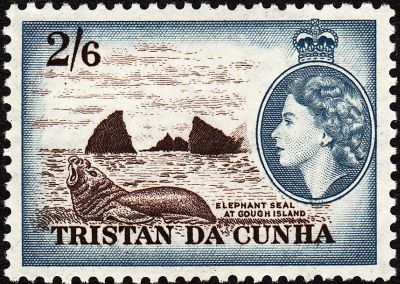
History
Discovery
The islands were first recorded as sighted in 1506 by Portuguese explorer Tristão da Cunha, though rough seas prevented a landing. He believed them to be uninhabited and named the main island after himself, Ilha de Tristão da Cunha. It was later anglicised from its earliest mention on British Admiralty charts to Tristan da Cunha Island. Some sources state that the Portuguese made the first landing in 1520, when Lás Rafael, captained by Ruy Vaz Pereira, called at Tristan for water.
The first undisputed landing was made on 7 February 1643 by the crew of the Dutch East India Company ship Heemstede, captained by Claes Gerritsz Bierenbroodspot. The Dutch stopped at the island four more times in the next 25 years, and in 1656 created the first rough charts of the archipelago.
The first full survey of the archipelago was made by the crew of the French corvette L'Heure du Berger (The Shepherd's Hour) in 1767. Measurements were taken and a rough sounding of the coast was carried out. The presence of water at the great waterfall of Big Watron and in a lake on the north coast was noted, with the survey results later published by a Royal Navy hydrographer in 1781.
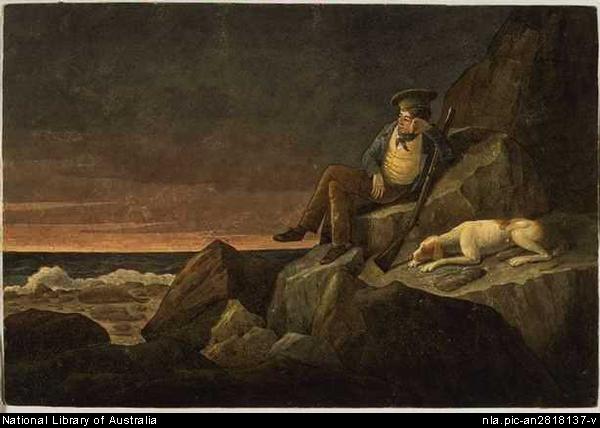
On his voyage out from Europe to East Africa and India in command of the Imperial Asiatic Company of Trieste and Antwerp ship, Joseph and Theresa, William Bolts sighted Tristan da Cunha, put a landing party ashore on 2 February 1777 and hoisted the flag of the Holy Roman Empire, naming it and its neighbouring islets the Brabant Islands. However, no settlement or facilities were ever set up there by the company.
After the outbreak of the American Revolutionary War halted penal transportation to the Thirteen Colonies, British prisons became overcrowded. As several stopgap measures proved ineffective, the British Government announced in December 1785 that it would proceed with the settlement of New South Wales. In September 1786 Alexander Dalrymple, presumably goaded by Bolts's actions, published a pamphlet with an alternative proposal of his own for settlements on Tristan da Cunha, St. Paul and Amsterdam islands in the Southern Ocean.
Royal Navy Captain John Blankett also suggested independently to his superiors in August 1786 that convicts be used to establish a British settlement on Tristan. In consequence, the Admiralty received orders from the government in October 1789 to examine the island as part of a general survey of the South Atlantic and the coasts of southern Africa. That did not happen, but an investigation of Tristan, Amsterdam and St. Paul was undertaken in December 1792 and January 1793 by George Macartney, Britain's first ambassador to China. During his voyage to China, he established that none of the islands were suitable for settlement.

Later in the same month, the first scientific exploration on the island was conducted by French botanist Louis-Marie Aubert du Petit-Thouars, who stayed on the island for three days during a French mercantile expedition from Brest, France, to Isle de France (Mauritius). Thouars made botanical collections and reported traces of human habitation, including fireplaces and overgrown gardens, probably left by Dutch explorers in the 17th century.
19th century
The first permanent settler was Jonathan Lambert of Salem, Massachusetts, United States, who arrived in December 1810 with two other men, later joined by a fourth. Lambert declared the islands his property and named them the Islands of Refreshment. Three of the four men died in 1812, leaving Thomas Currie (Tommaso Corri, from Livorno, Italy) as the sole survivor, who remained as a farmer on the island.
On 14 August 1816, the United Kingdom annexed the islands by dispatching a garrison to secure possession, making them a dependency of the Cape Colony in South Africa. This was intended to prevent the islands' use as a base for any attempt to free Napoleon Bonaparte from his imprisonment on Saint Helena. The occupation also deterred the United States from using Tristan da Cunha as a base for naval cruisers, as it had during the War of 1812. The garrison departed in November 1817, though some members, notably William Glass, stayed and formed the nucleus of a permanent population.
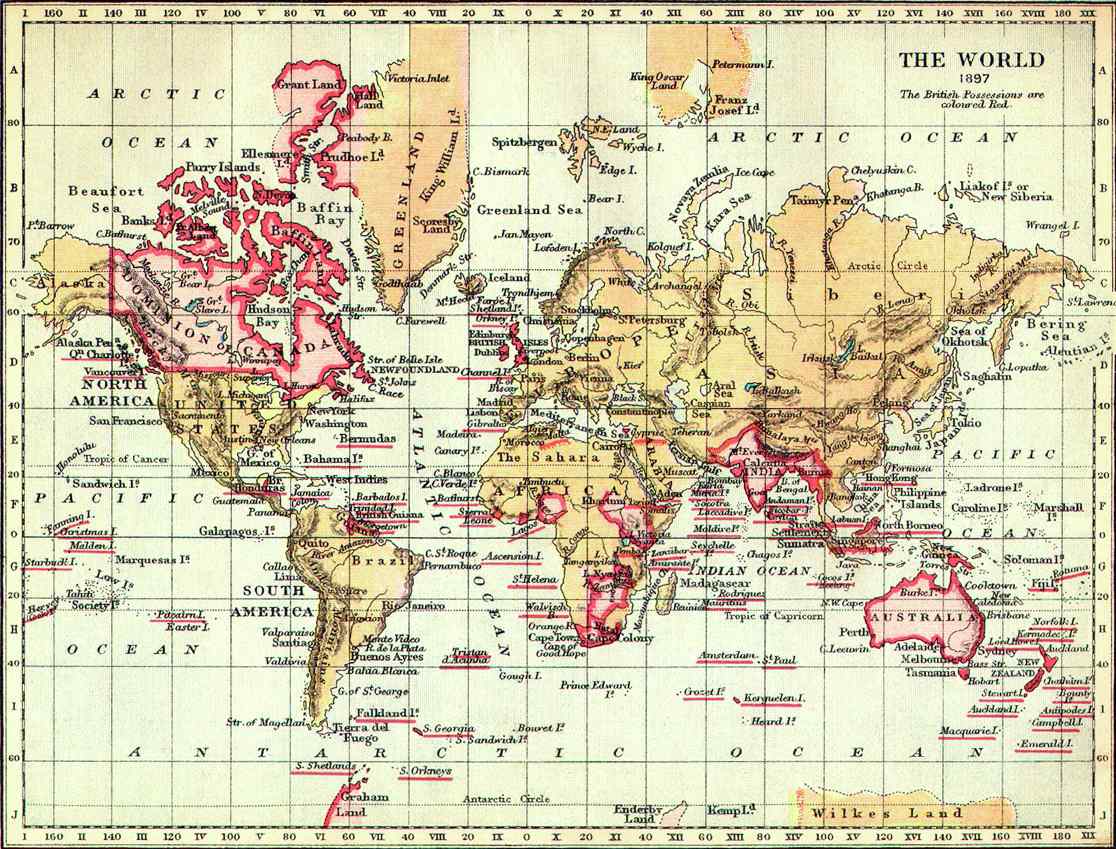
By 1824, a small civilian community had developed alongside the British Marines' garrison. When Berwick stopped there on 25 March 1824, it reported twenty-two men and three women, including the artist Augustus Earle, stranded on the island for eight months when his ship, the aging Duke of Gloucester, anchored there due to a storm and sailed without him and a crew member. Earle tutored local children and painted until his supplies ran out, before being rescued in November by Admiral Cockburn en route to Hobart. The barque South Australia visited between 18 and 20 February 1836, when a Mr. Glass was described as the settlement’s governor. That same year, the schooner Emily was wrecked there; one survivor, Dutch fisherman Pieter Groen from Katwijk, remained, married, and changed his name to Peter Green. He later became the spokesman (governor) of the community in 1865. By 1856, the population had grown to 97 residents.
A resident parson arrived in February 1851, and Tristan was formally included in the Anglican Diocese of Cape Town when its bishop, Robert Gray, visited in March 1856. In 1869, it was transferred to the new Diocese of St Helena. In 1867, Prince Alfred, Duke of Edinburgh, second son of Queen Victoria, visited the islands. The only settlement was renamed Edinburgh of the Seven Seas in his honour. On 15 October 1873, the Royal Navy survey vessel HMS Challenger called at Tristan to conduct geographic and zoological surveys on the island group. Captain George Nares recorded fifteen families and eighty-six inhabitants at that time.
In 1875, Henry Herbert, 4th Earl of Carnarvon, as Secretary of State for the Colonies decided against annexing Tristan to the Cape Colony, or making it a colony in its own right, or giving magistrate powers to any resident. Instead, an order in council was drafted under the British Settlements Act 1843 (6 & 7 Vict. c. 13) to give magistrate powers to the officer commanding any Royal Navy vessel while touching at Tristan, with jurisdiction in graver cases reserved to the Cape Colony courts under the West Coast of Africa and Falkland Islands Act 1860 (23 & 24 Vict. c. 121). The Law Officers of the Crown reviewed the draft order and decided that it was valid on the basis that Tristan was part of the British Empire. The government gave £200 to provide "useful presents" for the islanders, including a flag.

Whalers established bases on the islands during the mid-19th century, but the opening of the Suez Canal in 1869 and the transition from sail to coal-fired steamships increased Tristan’s isolation. The islands were no longer needed as a stopover point for long sailing voyages or as a haven on routes from Europe to East Asia.
On 27 November 1885, the island suffered one of its worst tragedies when the iron barque West Riding, en route from Bristol to Sydney, approached the island. Because trading opportunities were rare, almost all able-bodied men launched a lifeboat to trade with the ship despite rough seas. The lifeboat, recently donated by the British government, was last seen sailing alongside the West Riding before disappearing. Reports varied—some claimed the men drowned, while others speculated they were taken to Australia and sold as slaves. Fifteen men were lost, leaving behind an island of widows. A plaque in St Mary’s Church commemorates the tragedy.
In 1892 the Italian brig Italia, having caught fire with a cargo of coal, beached on the eastern shore of Tristan da Cunha. Two of her crew, Andrea Repetto and Gaetano Lavarello of the Ligurian town of Camogli, stayed on the island to settle and found families.

20th century
Hard winter of 1906
After years of hardship since the 1880s and an especially difficult winter in 1906, the British government offered to evacuate the island in 1907. The Tristanians held a meeting and decided to refuse, despite the government's warning that it could not promise further help in the future.
Resilience
In the early 20th century, particularly around 1906–1908, the Tristan da Cunha community survived extreme isolation through self-sufficiency. Italian shipwreck survivor Gaetano Lavarello provided essential carpentry skills for building longboats, which made it possible for the community to travel to neighbouring Inaccessible Island and access vital resources such as albatrosses, shearwaters, and penguins for food. In 1906, unusually dry weather led to poor potato crops, and an estimated 400 head of cattle were lost, but the community did not starve. Rev. and Mrs Barrow provided ministry, landing at "Down-Where-The-Minister-Landed-His-Things," where they brought a harmonium. In 1908, the return of two Glass brothers and their marriage to Irish sisters Elizabeth and Agnes Smith brought significant influence to teaching and the Roman Catholic faith on the island.
Occasional pre-war visits
No ships called at the islands from 1909 until 1919, when HMS Yarmouth stopped to inform the islanders of the outcome of World War I.
The Shackleton–Rowett Expedition stopped in Tristan for five days in May 1922, collecting geological and botanical samples before returning to Cape Town. Among the few ships that visited in the coming years were RMS Asturias, a Royal Mail Steam Packet Company passenger liner, in 1927, and the Canadian Pacific ocean liners RMS Empress of France in 1928, RMS Duchess of Atholl in 1929, and RMS Empress of Australia in 1935.
In 1936, The Daily Telegraph of London reported that the population of the island was 167 people, with 185 cattle and 42 horses.
From December 1937 to March 1938, a Norwegian party made a dedicated scientific expedition to Tristan da Cunha, and sociologist Peter A. Munch extensively documented island culture; he visited the island again in 1964–1965. The island was also visited in 1938 by W. Robert Foran, reporting for the National Geographic Society. His account was published that same year.
On 12 January 1938 by letters patent, Britain declared the islands a dependency of Saint Helena, creating the British Crown Colony of Saint Helena and Dependencies, which also included Ascension Island.
World War II military development
During the Second World War, Tristan was commissioned by the Royal Navy as the so-called "stone frigate" HMS Atlantic Isle and used as a secret signals intelligence station, to monitor German U-boats (which were required to maintain radio contact) and shipping in the South Atlantic Ocean. The weather and radio stations led to extensive new infrastructure being built on the island, including a school, a hospital, and a cash-based general store.
The first colonial official sent to rule the island was Sir Hugh Elliott in the rank of administrator (because the settlement was too small to merit a governor) 1950–1953. Development continued as the island's first canning factory expanded paid employment in 1949.
Rare post-war ship visits
On 2 January 1954, Tristan da Cunha was visited by the Dutch ship Willem Ruys, a passenger-cargo liner, carrying science fiction writer Robert A. Heinlein, his wife Ginny and other passengers. The Ruys was travelling from Rio de Janeiro, Brazil, to Cape Town, South Africa. The visit is described in Heinlein's book Tramp Royale. The captain told Heinlein the island was the most isolated inhabited spot on Earth and ships rarely visited. Heinlein mailed a letter from there to L. Ron Hubbard, a friend who also liked to travel, "for the curiosity value of the postmark". Biographer William H. Patterson Jr., in his two-volume Robert A. Heinlein In Dialogue with his Century, wrote that lack of "cultural context" made it "nearly impossible to converse" with the islanders, "a stark contrast with the way they had managed to chat with strangers" while travelling in South America. Members of the crew bought penguins during their brief visit to the island.
Prince Philip, Duke of Edinburgh, Queen Elizabeth II's consort, visited the islands in 1957 as part of a world tour on board the royal yacht HMY Britannia.
1961 eruption of Queen Mary's Peak
On 10 October 1961, the eruption of a parasitic cone of Queen Mary's Peak, very close to Edinburgh of the Seven Seas, forced the evacuation of all 264 people. The evacuees took to the water in open boats, taken by the local lobster-fishing boats Tristania and Frances Repetto to uninhabited Nightingale Island.
The next day, they were picked up by the diverted Dutch passenger ship Tjisadane that took them to Cape Town. The islanders later arrived in the U.K. aboard the liner M.V. Stirling Castle to a big press reception and, after a short period at Pendell Army Camp in Merstham, Surrey, were settled in an old Royal Air Force camp near Calshot, Hampshire.
The following year, a Royal Society expedition reported that Edinburgh of the Seven Seas had survived. Most families returned in 1963.
Gough and Inaccessible Islands wildlife reserves
Gough Island was inscribed as a UNESCO World Heritage Site in 1995 as Gough Island Wildlife Reserve. This was further extended in 2004 as Gough and Inaccessible Islands, with its marine zone extended from 3 to 12 nautical miles.
These islands have been Ramsar sites – wetlands of international importance – since 20 November 2008.
21st century
On 21 May 2001, the islands were hit by an extratropical cyclone that generated winds up to 190 kilometres per hour (120 mph). Several structures were severely damaged, and numerous cattle were killed, prompting emergency aid provided by the British government.
In 2005 the islands were given a United Kingdom post code (TDCU 1ZZ), to make it easier for the residents to order goods online.
On 13 February 2008, a fire destroyed the island's four power generators and fish canning factory, severely disrupting the economy. On 14 March 2008, new generators were installed and power restored, and a new factory opened in July 2009. While the replacement factory was being built, MV Kelso came to the island as a factory ship. The St. Helena, Ascension, and Tristan da Cunha Constitution Order 2009 reorganized Tristan da Cunha as a constituent of the new British Overseas Territory of Saint Helena, Ascension and Tristan da Cunha, giving Tristan and Ascension equal status with Saint Helena.
On 16 March 2011, the freighter MS Oliva ran aground on Nightingale Island, spilling tons of heavy fuel oil into the ocean. The resulting oil slick threatened the island's population of rockhopper penguins. Nightingale Island has no fresh water, so the penguins were transported to Tristan da Cunha for cleaning.
COVID-19
Tristan da Cunha recorded zero community cases of COVID-19. On 16 March 2020, the local Island Council enacted a total ban on all outside visitors. Because the island has no airport and relies on a six-day boat journey from South Africa, managing entry points was simple. While the rest of the world locked down, daily life in the lone settlement of Edinburgh of the Seven Seas continued as usual, without masks, social distancing, or closures. The island’s isolation posed a unique challenge for vaccine delivery. In April 2021, the UK Royal Navy vessel HMS Forth completed a complex multi-leg military relay from Oxfordshire via the Falkland Islands. It successfully delivered enough Oxford-AstraZeneca doses to fully vaccinate the entire adult population within days of arrival. The territory’s strict defences faced only one major test. In July 2021, two crew members tested positive aboard the visiting offshore fishing vessel MFV Edinburgh. The local government immediately turned the ship back to Cape Town and placed the island into a strict 10-day precautionary lockdown. The virus never breached the shore. On 2 March 2023, following a comprehensive booster campaign, the Island Council officially lifted all remaining travel restrictions and vaccine requirements. Today, the territory remains entirely COVID-free, standing as a unique historical example of a perfect geographic quarantine.
Marine Protection Zone
On 13 November 2020, it was announced that the 687,247 square kilometres (265,348 sq mi) of the waters surrounding the islands will become a Marine Protection Zone. The move will make the zone the largest no-take zone in the Atlantic and the fourth largest on the planet. The move follows 20 years of conservation work by the RSPB and the island government, and 5 years of support from the UK government's Blue Belt Programme.
Hantavirus
In April–May 2026, the island was affected by the MV Hondius hantavirus outbreak after a resident disembarked from the ship during its 13–15 April stop, while four other island residents boarded. The disembarked passenger (former police chief Conrad Glass) subsequently became ill, quickly consumed most of the oxygen supply at the island's small hospital, and exhausted its limited staff.
On 9 May 2026, a specialist UK military team executed a historic emergency mission, parachuting onto Tristan da Cunha with medical assistance for the suspected hantavirus case. The team comprised six paratroopers from the British Army Pathfinder Platoon of the 16 Air Assault Brigade, one specialist doctor and one military intensive care nurse. Due to the critical care required, specialist doctor Officer Toby Kington and an intensive care nurse were strapped to paratroopers for tandem jumps. The nurse had done a civilian tandem jump before, but it was Kington's first. An RAF A400M transport aircraft flew the team 6,788 km from RAF Brize Norton to Ascension Island, before flying another 3,000 km south, sustained by mid-air refuelling from an RAF Voyager tanker. Arriving at the drop zone 5 km northeast of the island, the team jumped from about 2100 m so that strong winds would blow them over land. A local police RIB patrolled below as a safety precaution. The operation was completed in two phases. The first group of four paratroopers landed near the "Back Fence" and set up radio guidance at "The Patches". The second group, two paratroopers and the two clinicians, landed safely via tandem parachutes onto the island’s 9-hole golf course. Once the personnel were on the ground, the A400M air-dropped 3.3 tonnes of vital medical cargo and oxygen cylinders across three subsequent runs, successfully stabilising the island's healthcare emergency before returning to Ascension.
The four Tristanian residents who had embarked on the same vessel—Paul Repetto, Geraldine Repetto, their daughter Katie, and Linda Green—were placed in a 45-day preventive quarantine at its next stop, Saint Helena. The Repettos are descendants of one of the Italian sailors who settled on Tristan da Cunha after the shipwreck of the Italia in 1892.
HMS Medway was dispatched from her post in the Falkland Islands on 14 May 2026. She sailed for seven days through notoriously rough waters to reach Tristan da Cunha. HMS Medway arrived off the coast at Calshot Harbour on 22 May. Her primary objectives are to deliver six fresh civilian clinicians and heavy medical provisions to ensure long-term healthcare resilience on the island and extract the paratroopers and military medics to the Falklands who have been stationed on the island for two weeks. Four of the arriving medics were from the UK and two from the Falkland Islands. On 24 May, sea conditions allowed them to get the civilian medics and one crew member off first, and then the military medics and paratroopers boarded the ship using a Tristan Fisheries RIB, although some of the paratroopers' kit remained on the island and will be shipped at a later date. HMS Medway then set sail for the Falklands.
Solar eclipse
A total solar eclipse will pass over the island on 5 December 2048. The island is calculated to be on the centre line of the umbra's path for nearly three and a half minutes of totality.