
Tower Hill is the area surrounding the Tower of London in the London Borough of Tower Hamlets. It is infamous for the public execution of high status prisoners from the late 14th to the mid 18th century. The execution site on the higher ground north-west of the Tower of London moat is now occupied by Trinity Square Gardens.
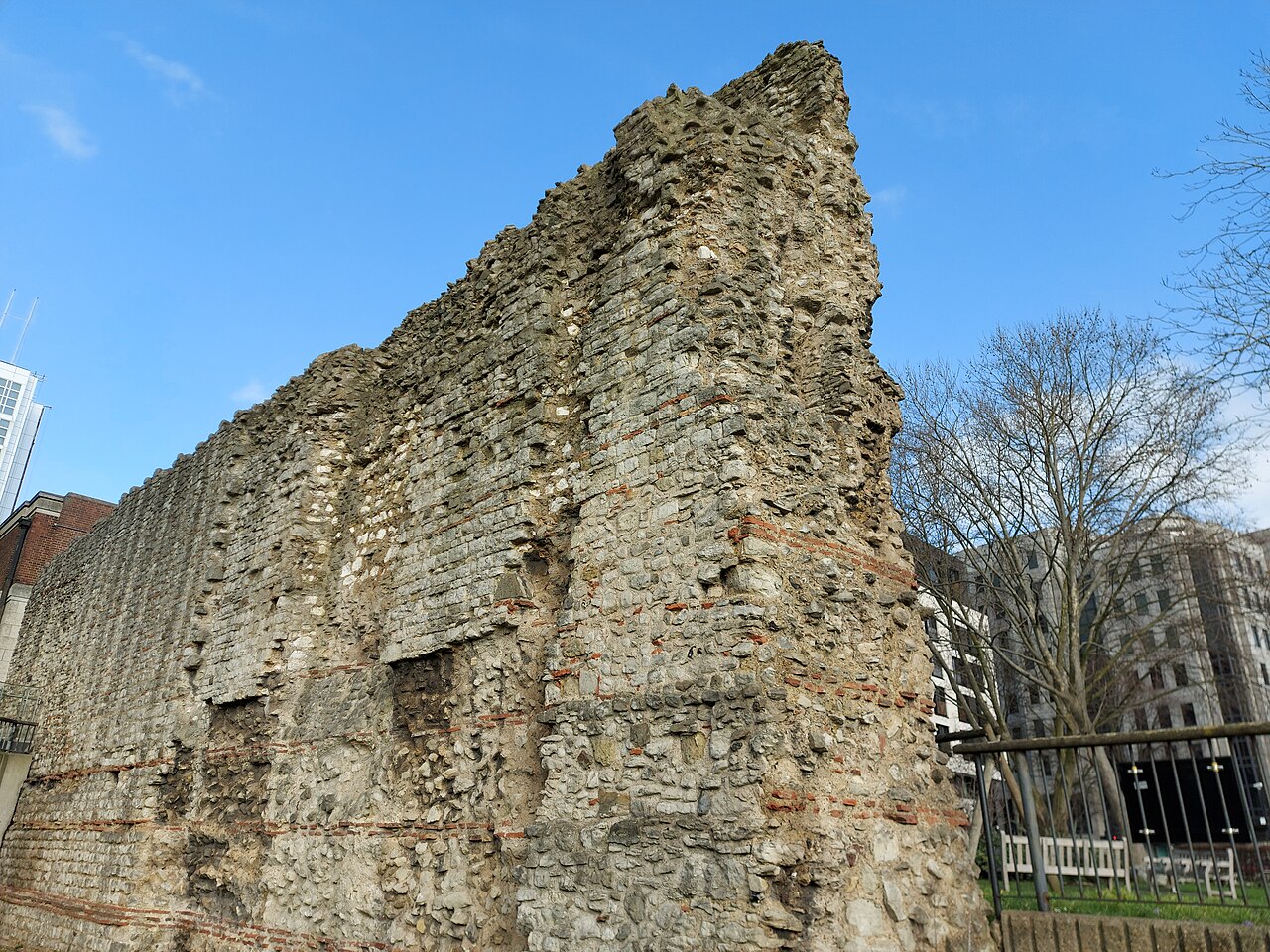
Tower Hill rises from the north bank of the River Thames to reach a maximum height of 14.5 metres (48 ft) Ordnance Datum. The land was historically part of the Liberties of the Tower of London, an area the Tower authorities controlled to keep clear of any development which would reduce the defensibility of the Tower. Building has encroached to a degree, but a legacy of this control is that much of the hill is still open. The hill includes land on either side of the London Wall, a large remnant of which is visible.
Definition
Generally speaking, the name Tower Hill informally applies to those parts of the Tower Liberty that are outside the Tower of London and its moat. Great Tower Hill is the land lying inside (or west) of the line of the London Wall whereas Little Tower Hill is the land outside (or east) of the wall.

Public executions
Public executions of high-profile traitors and criminals, often attainted peers, as well as innocent Catholics in the 16th century, were carried out on Tower Hill (some others were carried out within the confines of the Tower of London itself). The backgrounds to those carried out at Tower Hill ranged from the Peasants' Revolt of 1381 to the Wars of the Roses; Lollardism; claims to the throne by Perkin Warbeck and Lambert Simnel; the English Reformation; the Pilgrimage of Grace; the Monmouth Rebellion; the Jacobite Rising; and the Gordon Riots of 1780. Lord Lovat's execution for high treason in 1747 was the last judicial beheading in England while the final executions on Tower Hill were hangings in 1780. Some 120 executions are chronicled and they include:-
1381 – Simon Sudbury, Archbishop of Canterbury (beheaded by an angry mob)
1381 – Sir Robert Hales
1388 – Sir Simon de Burley
1388 – John de Beauchamp, 1st Baron Beauchamp (fourth creation)
1397 – Richard Fitzalan, 11th Earl of Arundel

1440 – Rev. Richard Wyche, Vicar of Deptford
1462 – John de Vere, 12th Earl of Oxford
1462 – Aubrey de Vere, eldest son and heir of John de Vere, 12th Earl of Oxford

1462 – Sir Thomas Tuddenham
1462 – William Tyrrell
1462 – John Montgomery

1470 – John Tiptoft, 1st Earl of Worcester
1495 – Sir William Stanley
1497 – James Tuchet, a commander of the Cornish Rebellion of 1497
1499 – Edward Plantagenet, 17th Earl of Warwick
1502 – James Tyrrell
1510 – Edmund Dudley
1510 – Sir Richard Empson
1513 – Edmund de la Pole, 3rd Duke of Suffolk
1521 – Edward Stafford, 3rd Duke of Buckingham
1535 – John Fisher, Bishop of Rochester
1535 – Sir Thomas More, ex-Lord Chancellor
1536 – George Boleyn, brother of Anne Boleyn
1537 – Thomas Darcy, 1st Baron Darcy de Darcy
1538 – Henry Courtenay, Earl of Devon
1538 – Edward Neville
1539 – Sir Nicholas Carew
1539 – Henry Pole, 1st Baron Montagu
1540 – Thomas Cromwell, Earl of Essex
1540 – Walter Hungerford, 1st Baron Hungerford of Heytesbury
1547 – Henry Howard, Earl of Surrey
1549 – Thomas Seymour, 1st Baron Seymour of Sudeley
1552 – Sir Ralph Vane
1552 – Sir Thomas Arundell of Wardour Castle
1552 – Sir Michael Stanhope
1552 – Edward Seymour, 1st Duke of Somerset
1553 – John Dudley, 1st Duke of Northumberland
1554 – Sir Thomas Wyatt
1554 – Lord Guildford Dudley
1554 – Henry Grey, 1st Duke of Suffolk
1572 – Thomas Howard, 4th Duke of Norfolk
1601 – Sir Christopher Blount
1615 – Sir Gervase Helwys
1631 – Mervyn Tuchet, 2nd Earl of Castlehaven
1641 – Thomas Wentworth, 1st Earl of Strafford
1645 – William Laud, Archbishop of Canterbury
1651 – Christopher Love, Presbyterian minister
1662 – Sir Henry Vane
1683 – Col. Algernon Sidney
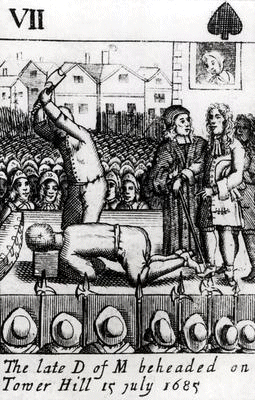
1685 – James Scott, 1st Duke of Monmouth
1716 – James Radclyffe, 3rd Earl of Derwentwater
1716 – William Gordon, 6th Viscount of Kenmure
1746 – William Boyd, 4th Earl of Kilmarnock
1746 – Robert Boyd (of Clan Boyd)