
In June 2018, a junior football team became trapped in Tham Luang Nang Non, a cave system in Chiang Rai province, northern Thailand. Twelve members of the team, aged 11 to 16, and their 25-year-old assistant coach entered the cave on 23 June after a practice session. Shortly after they entered, heavy rainfall began and partially flooded the cave system, blocking their way out and trapping them deep within.
Efforts to locate the group were hampered by rising water levels and strong currents, and the team were out of contact with the outside world for more than a week. The cave rescue effort expanded into a massive operation amid intense worldwide public interest and involved international rescue teams. On 2 July, after advancing through narrow passages and muddy waters, British divers John Volanthen and Rick Stanton found the group alive on an elevated rock about 2 kilometres (1.2 mi) from the cave entrance.
Rescue organisers discussed various options for extracting the group, including whether to teach them basic underwater diving skills to enable their early rescue, to wait until a new entrance to the cave was found or drilled or to wait for the floodwaters to subside by the end of the monsoon season several months later. After days of pumping water from the cave system and a respite from the rainfall, the rescue teams worked quickly to extract the group from the cave before the next monsoon rain, which was expected to bring additional downpours on 11 July. Between 8 and 10 July, all 12 boys and their coach were rescued from the cave by an international team.

The rescue effort involved as many as 10,000 people, including more than 100 divers, scores of rescue workers, representatives from about 100 governmental agencies, 900 police officers and 2,000 soldiers. Ten police helicopters, seven ambulances, more than 700 diving cylinders and the pumping of more than one billion liters (260,000,000 U.S. gal) of water from the caves were required.
Saman Kunan, a 37-year-old former Royal Thai Navy SEAL, died of asphyxiation during an attempted rescue on 6 July while returning to a staging base in the cave after delivering diving cylinders to the trapped group. The following year, in December 2019, rescue diver and Thai Navy SEAL Beirut Pakbara died of a blood infection contracted during the operation. Following the rescue, cave-diving was incorporated into the training regime for Thailand's Navy SEALs to better prepare them for similar emergencies.
Background and disappearance
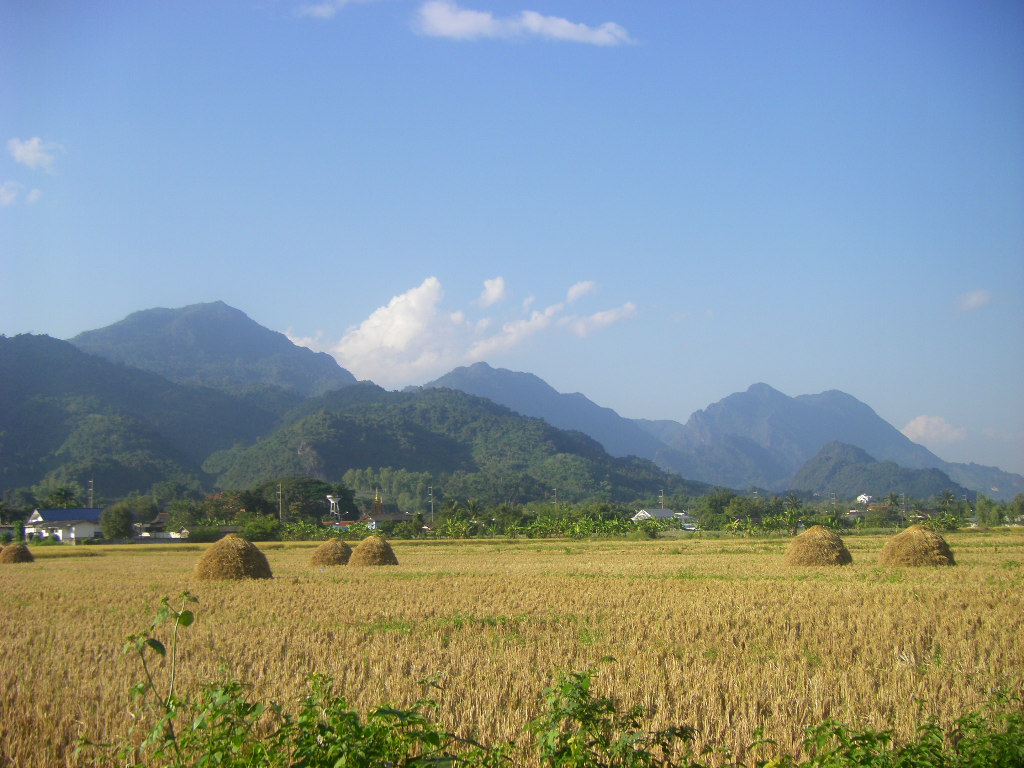
Tham Luang Nang Non is a karstic cave complex beneath Doi Nang Non, a mountain range on the border between Thailand and Myanmar. The cave system is 10 kilometres (6.2 mi) long and has many deep recesses, narrow passages and tunnels winding under hundreds of metres of limestone strata. Since part of the system is seasonally flooded, a sign advising against entering the caves during the rainy season (July to November) is posted at the entrance.

On Saturday 23 June 2018, a group of 12 boys aged between 11 and 16, from a local junior football team named the Wild Boars, and their 25-year-old assistant coach, Ekkaphon Kanthawong, went missing after exploring the caves. According to early news reports, they planned to have a birthday party in the cave after the football practice and spent a significant sum of money on food, but they denied this in a news conference after the rescue. The team was stranded in the tunnels by sudden and continuous rainfall after they had entered the cave system. They were forced to leave some food supplies behind when fleeing the rising water.
At around 7 pm that evening, the head coach and founder of the team, Nopparat Kanthawong (Thai: นพรัตน์ กัณฑะวงษ์), checked his phone and found about 20 missed calls from parents worried that their children had not returned. Nopparat dialled assistant coach Ekkaphon and a number of the boys, but he was unable to reach them. He eventually contacted Songpon Kanthawong, a 13-year-old member of the team who said that he had separated from the team after practice and that the rest of the boys had entered the Tham Luang caves. The coach raced to the caves, finding abandoned bicycles and bags near the entrance and water seeping from the muddy pathway. He alerted authorities to the missing group after seeing the team's unclaimed belongings.
Team members
There were 12 children and one adult trapped in the cave, as follows:
At the time of the rescue, the assistant coach and three of the boys had no nationality. Head coach Nopparat explained that they are from tribes in an area known as the "Golden Triangle", which extends across parts of Thailand, Myanmar, Laos and Southwestern China. This region has no clear borders and the people are not assigned passports. Their statelessness deprived them of basic benefits and rights, including the liberty to leave Chiang Rai province. "To get nationality is the biggest hope for the boys", head coach Nopparat said. "In the past, these boys have problems travelling to play matches outside of Chiang Rai because of their nationless status." Following the team's rescue, Thai officials promised to provide the three boys and the coach with legal assistance in obtaining Thai citizenship, a process that could take up to six months. The four were granted Thai citizenship on 26 September 2018.
Search
British caver Vernon Unsworth, who lives in Chiang Rai and has knowledge of the cave complex, was scheduled to make a solo venture into the cave on 24 June when he received a call about the missing boys. Unsworth advised the Thai government to request assistance from the British Cave Rescue Council (BCRC). On 25 June, Thai Navy SEALs divers arrived and began searching the cave. A Thai Navy SEAL said the water was so murky that even with lights they could not see where they were going underwater. After continuous rain, which further flooded the entrance, the search had to be temporarily interrupted. On 27 June, three BCRC cave divers arrived with specialist equipment including HeyPhone radios, followed by separate teams of open-water divers. On 28 June, a United States Air Force team—reportedly United States Air Force Pararescuemen from the 320th Special Tactics Squadron, the 31st Rescue Squadron, and the 353rd Special Operations Group—joined them. By 29 June, an Australian Federal Police team of Specialist Response Group divers had arrived, followed by a Chinese team of divers from the Beijing Peaceland Foundation on Sunday, 1 July.
Meanwhile, policemen with sniffer dogs searched the surface above for shaft openings that could provide alternative entrances to the cave system below. Drones and robots were also used in the search, but no technology existed to scan for people deep underground.
BCRC divers Richard Stanton and John Volanthen advanced through the cave complex placing diving guidelines, supported by Thailand-based Belgian cave diver Ben Reymenants and French diver Maksym Polejaka. The search had to be suspended due to the weather, as rainfall increased the flow of water in the cave where the divers were battling strong currents and poor visibility. The search resumed on 2 July after the weather improved. The twelve boys and the coach were discovered at approximately 22:00 by Stanton and Volanthen, whose efforts were overseen from outside by BCRC diver Robert Harper. The boys and coach were on a narrow rock shelf about 400 metres (1,300 ft) beyond the "Pattaya Beach" chamber, named after an above-ground beach in Thailand. Volanthen had been placing guidelines in the cave to assist others in navigation when he ran out of line. He then swam to the surface and soon found the missing group, smelling them before hearing or seeing them. A video of the encounter, showing the boys and their interactions with the divers, was posted on Facebook by the Thai Navy SEALs. Former Chiang Rai provincial governor Narongsak Osatanakorn, who was in charge of rescue work, said, "We found them safe. But the operation isn't over." The Thai, US, Australian and Chinese diving teams supported by the BCRC divers began transporting diving bottles into the cave system and established an air supply storage area in Chamber 3.
On 3 July, the trapped group was joined by three Thai Navy SEALs who supported them until the rescue. The SEALs included Thai Army doctor Lt. Col. Pak Loharachun of the 3rd Medical Battalion, who had completed the Navy SEALs course. Thai officials told reporters that rescuers were providing health checks and treatment and keeping the boys entertained and that none of those trapped were in serious condition. "They have been fed with easy-to-digest, high-energy food with vitamins and minerals, under the supervision of a doctor", Rear Admiral Apagorn Youkonggaew, head of the Thai Navy's Special Forces, told reporters. A video made by the rescuers, and shared a few hours later by the Thai Navy SEALs, showed all twelve boys and their coach introducing themselves and stating their age. Wrapped in emergency blankets and appearing frail, they all said hello to the outside world. "Sawatdi khrap", each boy said with his palms together in wai, the traditional Thai greeting. A second video shows a medic treating them. It was believed that some of the group could not swim, complicating what would already be a difficult rescue. The Army doctor discovered that they had attempted to dig their way out of the cave. The team members had used rock fragments to dig every day, creating a hole five metres deep.
BCRC diver Jason Mallinson offered the boys and coach an opportunity to send messages to relatives by using his wet notes pad. Many of the notes said they were safe, reassured family members that everything was fine, and included words of love, reassurance and encouragement.

Planning and preparation
A logistics camp was established at the cave entrance, which accommodated hundreds of volunteers and journalists in addition to the rescue workers. The site was divided into several zones: restricted areas for the Thai Navy SEALs, other military personnel, and civilian rescuers; an area for the relatives to give them privacy; and areas for the press and the general public.
An estimated 10,000 people contributed to the rescue effort, including more than 100 divers, representatives from about 100 government agencies, 900 police officers, 2,000 soldiers and numerous volunteers. Equipment included ten police helicopters, seven police ambulances, and more than 700 diving cylinders, of which more than 500 were in the cave at any time while another 200 were in the queue to be refilled. More than a billion litres of water (the equivalent of 400 Olympic-size swimming pools) was removed.
Challenges
The place where the boys became stranded was about 2 kilometres (1.2 mi) from the entrance and 800–1,000 metres (2,600–3,300 ft) below the top of the mountain. The route to their location was blocked by several flooded sections, some with strong currents and zero visibility, and there were some extremely narrow parts, the smallest measuring only 38 by 72 centimetres (15 in × 28 in). The journey through the cave to reach the boys took six hours against the current and five hours to exit with the current, even for experienced divers.

The rescue workers battled rising water levels from the outset. In an effort to drain the cave, a stone diversion dam was built upstream, and systems were installed to pump water out of the cave and divert flows that were entering it. On 4 July, it was estimated that the pumps were removing 1,600,000 L/h (420,000 US gal/h) from the cave, ruining nearby farm fields in the process. For a time, well-meaning volunteers were inadvertently pumping water back into the groundwater supply. Helped by a spell of unseasonably dry weather, these efforts reduced water levels by 1.5 centimetres (0.6 in) per hour on 5 July, enabling the rescue teams to walk 1.5 kilometres (0.93 mi) into the cave. However, heavy rains forecast for 8 July were expected to halt or reverse the process and could even flood the position where the boys and their coach were trapped.
On 6 July, the oxygen level in the cave was detected to have dropped, raising fears that the boys might develop hypoxia if they remained there for a prolonged time. By 8 July, the oxygen level was measured to be 15%; the level needed to maintain normal function for humans is between 19.5% and 23.5%. Thai military engineers attempted to install an air supply line to the boys, but the effort was abandoned as impractical.
Options
As the crisis unfolded, rescuers planned several different methods to save the team and coach. The principal options were to:
Wait until the end of the monsoon season; with divers providing food and water.
Teach the group basic diving skills.
Find an alternative entrance to the cave which could allow for an easier escape; one shaft was discovered that went down 900 metres.
Drill a rescue shaft; more than 100 shafts were bored into the limestone, but no suitable location was found.
The diving option
Multiple dangers—the threat of more heavy rain, dropping oxygen levels, and the difficulty or impossibility of finding or drilling an escape passage—forced rescuers to make the decision to bring out the team and coach with experienced divers. The Thai Navy SEALs and US Air Force rescue experts met with the Thai Minister of the Interior who approved the plan. 90 divers worked in the cave system, 40 from Thailand and 50 from other countries. The media initially reported that the Thai military had said rescuers would teach the boys basic diving skills to enable them to make the journey. However this was quietly deemed too risky and instead the boys were fully sedated and were unconscious for the journey. Organisers built a mock-up of a tight passage with chairs, and divers practised with local boys in a school swimming pool. Thai SEALs and US Air Force experts then refined the plan to use teams of divers to bring out the weakened boys.
Rescue diver fatalities
On 5 July, at 8:37 pm, Saman Kunan (Thai: สมาน กุนัน; born 23 December 1980), a 37-year-old former Thai Navy SEAL, made a dive from Chamber 3 to the T-junction close to Pattaya Beach to deliver three air tanks. During his return dive, he lost consciousness underwater. His dive buddy attempted CPR without success. Kunan was brought to Chamber 3 where CPR was attempted again, but he could not be resuscitated and was pronounced dead at about 1 am on 6 July.
Formerly a member of Thai Navy SEALs class 30, Kunan had left the SEALs in 2006 at the rank of petty officer 1st class; he was working in security at Bangkok's Suvarnabhumi Airport when he volunteered to assist with the cave rescue. He was posthumously promoted to lieutenant commander by the Commander-in-Chief of the Royal Thai Navy, an unprecedented rise of seven ranks. A funeral, sponsored and attended by the Thai royal family, was held on 14 July. On the same day, Kunan was awarded the Knight Grand Cross (first class) of the Most Exalted Order of the White Elephant by King Vajiralongkorn.
Another rescue diver and Thai Navy SEAL, Beirut Pakbara, died the following year from septic shock after acquiring an unspecified latent blood infection during the rescue operation.
Rescue operation
On the morning of 8 July, officials instructed the media and all non-essential personnel around the cave entrance to clear the area as a rescue operation was imminent, due to the threat of monsoon rains later in the week, which were expected to flood the cave until October.
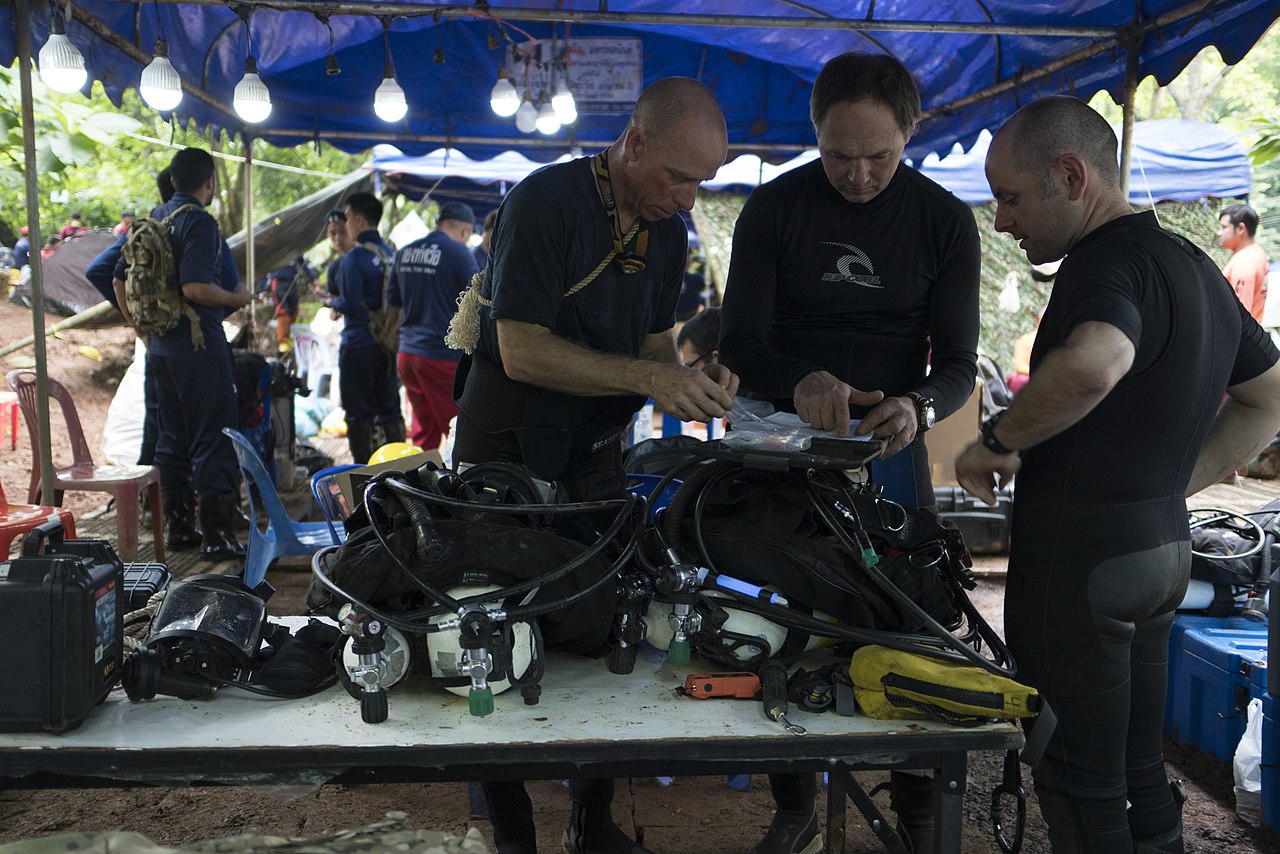
For the first part of the extraction, 18 rescue divers—13 international cave divers and five Thai Navy SEALs—were sent into the caves to retrieve the boys, with one "lead diver" to accompany each boy on the dive out. The international cave diving team was led by four British divers: John Volanthen, Richard Stanton, Jason Mallinson, and Chris Jewell (each assigned a boy in turn), and two Australians: Richard Harris, an anaesthetist, and his friend Craig Challen, a veterinarian. Irishman Jim Warny became an additional lead diver on the final day of the rescue to bring back assistant coach Ekkaphon, and physician Harris took over the lead rescue of Pong. The lead divers' portion of the journey would stretch over one kilometre, going through narrow, fully submerged passages. The remainder of the route was supported by 90 Thai and foreign divers at various points performing medical check-ups, resupply of air tanks, and other emergency roles.
There were conflicting reports about whether the boys were rescued from the cave in a weakest-to-strongest or strongest-to-weakest order. In reality, the sequence was determined by the boys themselves. "I talked with Dr. Harris. Everyone was strong and no one was sick," Ekkaphon told the press. "Everybody had a strong mental state. Dr. Harris said ... there's no preference." The team decided as a group that the boys who lived the farthest away should leave first. Ekkaphon also stated in their 18 July press conference, not realising at the time that their story had attracted global media attention: "We were thinking, when we get out of the cave, we would have to ride the bicycle home ... so the persons who live the furthest away would be allowed to go out first ... so that they can go out and tell everyone that we were inside, we were okay."
Each boy was dressed in a wetsuit, with a buoyancy aid, harness, and a positive pressure full-face mask. Harris administered the anaesthetic ketamine to the boys before the journey, rendering them "fully unconscious." This was to prevent them from panicking on the journey, which would risk their lives and those of their rescuers. They were also given the anti-anxiety drug alprazolam, and the drug atropine to steady their heart rates and reduce saliva production to prevent choking. A cylinder with 80% oxygen was clipped to their front, a handle was attached to their back, and they were each tethered to a diver in case they were lost in the poor visibility. The rescue divers described each child as "a package". The Thai government granted Harris and two medical assistants diplomatic immunity against judicial action, in case something went wrong.
The anaesthetic lasted between 45 minutes and one hour, requiring divers, whom Harris had trained, to administer "top-up" ketamine injections during the three-hour journey. Each boy was manoeuvred out by a swimming lead diver who held on by the back or chest—or towards his right or left side—depending on the guideline position; in narrow spots the diver could push the boy from behind. The boy was carefully navigated through tight passages to avoid dislodging his face mask against rocks. The diver kept his head higher than the boy's, so that in poor visibility it would be his own head that hit any obstacles first. The diver ensured that the boy remained breathing by checking for exhaust bubbles, which he could see and feel.
After completing the restricted first dive and arriving at a dry section, the lead diver transferred the boy to three support rescue divers. The boy's dive gear was removed and the boy was transported on a drag stretcher over 200 m (660 ft) of rocks and sand hills. Craig Challen performed a medical assessment, and the boy's dive gear was put back on before being re-submerged for the next section. The boys arrived at 45-minute intervals.
After being delivered by the divers into the staging base in Chamber 3, the boys were passed along a "daisy chain" by hundreds of rescuers stationed along the treacherous path out of the cave. Wrapped in "sked" rescue stretchers, the boys were alternately carried, slid and zip-lined along a complex arrangement of pulleys installed by rock climbers. Many areas from Chamber 3 to the entrance of the cave were still partially submerged and rescuers described having to transport the boys over slippery rocks and through muddy water for hours. The journey from Chamber 3 to the cave entrance had initially taken about four to five hours, but this was reduced to less than an hour after a week of draining and clearing the mud path using shovels.
The authorities warned that the extraction would take several days to complete because crews had to replace air tanks, gear, and other supplies, requiring ten to twenty hours between each run. Shortly after 19:00, local officials confirmed that two of the boys had been rescued and taken to Chiangrai Prachanukroh Hospital. Shortly afterwards, two more boys exited the cave and were assessed by medical officials. Low water levels had reduced the time required for the rescues. The lower water was due to improved weather and the construction of a weir outside the cave to help control the water.
On 9 July, four more boys were rescued from the cave. On 10 July, the last four boys and their coach were rescued from the cave. The rescue procedure was streamlined with practice, so the total time to extract a boy was reduced from three hours on the first day to just over two hours on the final day, allowing four boys and the coach to be rescued. The three Thai Navy SEALs and the Army doctor who had stayed with the boys the entire time were the last to dive out. Three of these divers made it to Chamber 3, joining waiting rescuers when the pumps shut off for an uncertain reason, possibly due to a burst water pipe. The water levels in Chamber 3 started to rise, which would have cut off their access to the first two chambers and the cave entrance. "All of a sudden a water pipe burst and the main pump stopped working," a diver stated. "We really had to run from the third chamber to the entrance because the water level was rising very quickly—like 50 cm every 10 minutes." This forced up to 100 rescuers still located more than 1.5 kilometres (0.93 mi) inside the cave to evacuate in a hurry, abandoning the rescue equipment inside the cave. The last diver made it back to Chamber 3 as everyone was preparing to leave. The rescuers managed to rush to the cave exit in under an hour.
A number of news outlets reported on the role of assistant coach Ekkaphon during the rescue. Previously a Buddhist monk, he had calmed the boys by guiding them in meditation during the ordeal. He also passed on a message in which he apologised for putting the children in danger.
Recovery
Thai authorities reported that the rescued boys were able to eat rice porridge, but more complex foods would be withheld for ten days. The Thai Health Ministry said the boys had lost an average of 2 kilograms (4.4 lb) each, but they were in "good condition". They were placed in quarantine while health workers determined whether they had caught any infectious diseases, and they were expected to remain hospitalised for at least one week. Because of the prolonged stay in a damp cave environment, officials were worried about potential infections such as histoplasmosis or leptospirosis. Parents of the team members initially visited their children by looking through a window, but as soon as laboratory results proved negative, they were allowed to visit in person while wearing a medical gown, face mask and hair cap.
The boys wore sunglasses as a precaution while their eyes adjusted to the daylight. Detailed tests of their eyes, nutrition, mental health and blood were carried out. A Health Ministry physician said all the boys showed an increase in white blood cells, so preventive antibiotic doses were given to the entire team.
Responses
Local
Residents of Chiang Rai province volunteered to cook, clean for, and otherwise support the missing team's families and the rescue teams at the encampment by the cave mouth. Social media was used to draw attention to the rescue attempts. Classmates and teachers of the team spent time chanting and praying for the missing boys. Classmates of one of the boys made 1,000 paper cranes for him, while praying for his safe return. Local schools donated money to help the parents with living costs, as many of them stopped working in order to follow the rescue attempts.
On 29 June, Prime Minister Prayut Chan-o-cha visited the search site and told the families of the boys not to give up hope. Following the death of Saman Kunan, King Vajiralongkorn announced that he would sponsor his funeral.
After the rescue was completed, the boys' families, the rescue commander, military officials, and thousands of volunteers gathered at the cave entrance. The group gave thanks for the lives saved and asked forgiveness from the cave goddess "Jao Mae Tham" for the intrusion of pumps, ropes and people during the rescue.
Opinions about the assistant coach
Some observers, primarily in Western media, questioned whether assistant coach Ekkaphon Kanthawong should face criminal charges for leading the group into the caves, despite the warning sign at the entrance stating that it is dangerous to enter between July and November. The boys had entered the cave on 23 June.
Local communities, as well as the boys' parents, emphasised that they did not blame the boys or their coach, as the rain had arrived a month earlier than usual. Vernon Unsworth said "Nobody's to blame, not the coach, not the boys. They were just very unlucky … It wasn't just the rain that day, the mountain is like a sponge and waters from earlier rain were raising the levels." Unsworth said that he himself had been planning to make a solo venture into the complex on 24 June, when he received a telephone call saying the boys were missing there.
While the police chief told newspaper Khaosod that he "hadn't ruled out" pressing negligence charges against the coach for putting the team in danger, no calls were made to take legal action against him. A number of lawyers stated that the coach would probably not face criminal charges, since Thai law also takes into consideration whether a person has malicious intent. In mainstream media, Ekkaphon has widely been held "a hero" and was a "calm voice [that] helped boys to beat despair in the darkness." The coach was reported to have treated the boys with care, giving them his food, helping them remain calm, and instructing them to drink the relatively clean water dripping from the cave walls instead of the murky floodwaters that trapped them.