
The Suez Crisis, also known as the second Arab–Israeli war, the Tripartite Aggression in the Arab world and the Sinai War in Israel, was a British–French–Israeli invasion of Egypt in 1956. Israel invaded on 29 October, with the primary objective of re-opening the Straits of Tiran and the Gulf of Aqaba as the recent tightening of the eight-year-long Egyptian blockade further prevented Israeli passage. After issuing a joint ultimatum for a ceasefire, the United Kingdom and France joined the Israelis on 31 October, seeking to depose Egyptian president Gamal Abdel Nasser and regain control of the Suez Canal, which Nasser had nationalised earlier in the year.
Shortly after the invasion began, the three countries came under heavy political pressure from both the United States and the Soviet Union, as well as from the United Nations, eventually prompting their withdrawal from Egypt.
The crisis demonstrated that the United Kingdom and France could no longer pursue their independent foreign policy without consent from the United States. Israel's four-month-long occupation of the Egyptian-occupied Gaza Strip and Egypt's Sinai Peninsula enabled it to attain freedom of navigation through the Straits of Tiran, but the Suez Canal was closed from October 1956 to March 1957.

The crisis strengthened Nasser's standing and led to international humiliation for the British—with historians arguing that it signified the end of its role as a superpower—as well as the French amid the Cold War. As a result of the conflict, the UN established an emergency force to police and patrol the Egypt–Israel border. For his diplomatic efforts in resolving the conflict through UN initiatives, Canadian external affairs minister Lester B. Pearson received a Nobel Peace Prize.
Analysts have argued that the crisis may have emboldened the USSR, prompting the Soviet invasion of Hungary.
Background
The Suez Canal before 1945
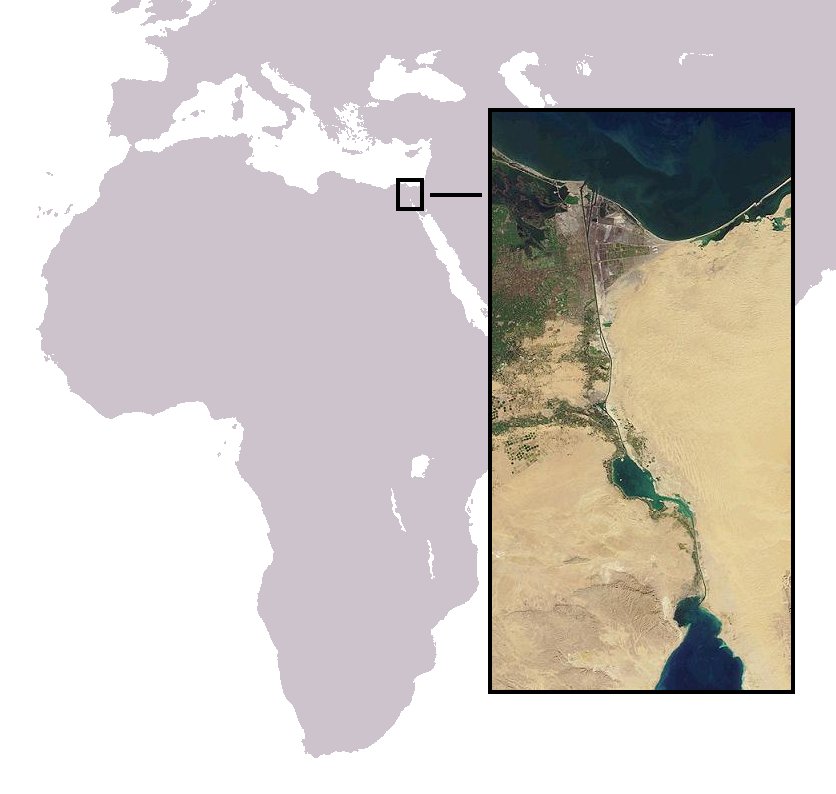
The Suez Canal opened in 1869, financed by the French and Egyptian governments. The canal was operated by the Suez Company, an Egyptian-chartered company; the area surrounding the canal remained sovereign Egyptian territory.
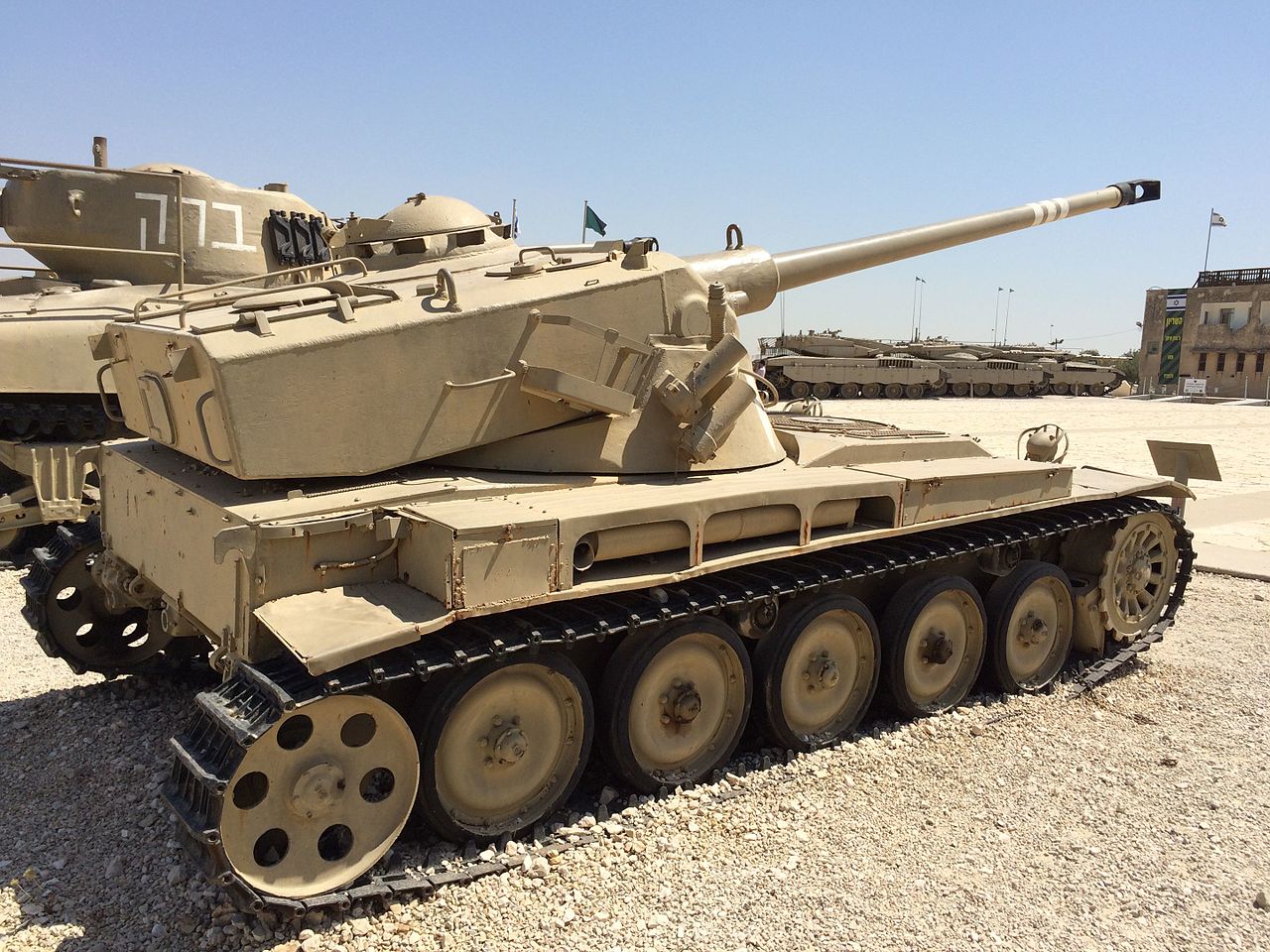
The canal was strategically important, as it provided the shortest ocean link between the Mediterranean Sea and the Indian Ocean.
In 1875, as a result of debt and financial crisis, Egypt was forced to sell its shares in the operating company to the British government. They obtained a 44% share in the company for £4 million (equivalent to £399 million in 2025). With the 1882 invasion and occupation of Egypt, the UK took de facto control of the country as well as the canal, its finances and operations.
The 1888 Convention of Constantinople declared the canal a neutral zone under British protection. In ratifying it, the Ottoman Empire agreed to permit international shipping to pass freely through the canal, in time of war and peace.
Despite this convention, Britain closed the canal on several occasions. During the Russo-Japanese War of 1904–05, the British denied the Russian Baltic Fleet use of the canal after the Dogger Bank incident and forced it to sail around Africa, giving the Imperial Japanese Armed Forces time to consolidate their position. During the First World War, Britain and France closed the canal to non-Allied shipping.
1945–1952
In the aftermath of the Second World War, Britain's military complex at Suez was one of the largest military installations in the world. The Suez base was an important part of Britain's strategic position in the Middle East; however, it became a source of growing tension in Anglo-Egyptian relations.
The canal continued to be strategically important after the Second World War for oil shipment. Western Europe then imported two million barrels per day from the Middle East, 1,200,000 by tanker through the canal, and another 800,000 via pipeline from the Persian Gulf (Trans-Arabian Pipeline) and Kirkuk (Kirkuk-Baniyas pipeline) to the Mediterranean. These pipeline routes were prone to instability, which led British leaders to prefer to use the sea route through the canal.
Egypt's domestic politics were experiencing a radical change. Unrest began to manifest in the growth of radical political groups, such as the Muslim Brotherhood in Egypt, and an increasingly hostile attitude towards Britain and its presence. Added to this anti-British fervour was the role Britain had played in the creation of Israel.
In October 1951, the Egyptian government unilaterally abrogated the Anglo-Egyptian Treaty of 1936, the terms of which granted Britain a lease on the Suez base for 20 more years. Britain refused to withdraw from Suez, relying upon its treaty rights, as well as the presence of the Suez garrison. This resulted in an escalation in violent hostility towards Britain and its troops in Egypt.
The Egyptian Revolution
In January 1952, British forces attempted to disarm a troublesome auxiliary police force barracks in Ismailia, resulting in the deaths of 41 Egyptians. This led to anti-Western riots in Cairo resulting in damage to property and the deaths of foreigners. This proved to be a catalyst for the removal of the Egyptian monarchy. On 23 July 1952 a military coup by the Egyptian nationalist 'Free Officers Movement'—led by Muhammad Neguib and Gamal Abdul Nasser—overthrew King Farouk. After a brief regency under the nominal reign of the infant Fuad II, the monarchy was abolished and the Republic of Egypt established in its stead.

After the 1952 Egyptian Revolution
Egypt and the United States
American policy was torn between a desire to maintain good relations with NATO allies such as Britain and France who were major colonial powers, and to align Third World nationalists such as Nasser, who resented British and French influence, with the Free World camp.
The Eisenhower administration saw the Near East as a gap into which Soviet influence could be projected, and which accordingly required an American-supported NATO-type organisation (the Middle East Defense Organization, or MEDO). The CIA offered Nasser a $3 million bribe if he would join the proposed Middle East Defense Organization; Nasser took the money, but refused to join. Nasser wanted an Egyptian-dominated Arab League to be the principal defence organisation in the Near East, which might be informally associated with the United States.
Dulles told Eisenhower in May 1953 that the Arab states believed that the United States would back Israel in aggressive expansion, and that the prestige of Western democracy in the Middle East was very low. The immediate consequence was a new policy of "even-handedness" where the United States very publicly sided with the Arab states in disputes with Israel and Britain in 1953–55.
Most of all, Nasser wanted the United States to supply arms on a generous scale to Egypt. Nasser's anti-Zionism rendered it difficult for the Eisenhower administration to get the approval of Congress necessary to sell weapons to Egypt.
Egypt and Britain
Britain's desire to mend Anglo-Egyptian relations in the wake of the coup saw the country strive for rapprochement throughout 1953-54. In October 1954, Britain and Egypt concluded the Anglo-Egyptian Agreement on the phased evacuation of British Armed Forces troops from the Suez base. Great Britain would withdraw all troops within 20 months, maintain the base, and retain a right to return for seven years. The Suez Company would revert to the Egyptian government in 1968.
The Baghdad Pact
Egyptian foreign policy under Nasser saw the entire Middle East as Egypt's rightful sphere of influence, and opposed all Western security initiatives in the Near East. Nasser believed that neither his regime nor Egypt's independence would be safe until Egypt had established itself as head of the Arab world. There was a feud between Nasser and the prime minister of Iraq, Nuri al-Said, for Arab leadership. The creation of the Baghdad Pact, (later the Central Treaty Organization) a Middle Eastern anti-Communist alliance of Pakistan, Iran, Turkey, Iraq and the UK, in 1955 seemed to confirm Nasser's fears Britain was attempting to draw the Eastern Arab World into a bloc centred upon Iraq and sympathetic to Britain.
The conclusion of the Baghdad Pact occurred almost simultaneously with a dramatic Israeli reprisal operation on the Gaza Strip on 28 February 1955 in retaliation for Palestinian fedayeen raids into Israel.
The close occurrence of the two events was mistakenly interpreted by Nasser as part of coordinated Western effort to push him into joining the Baghdad Pact. The signing of the Baghdad Pact and the Gaza raid marked the beginning of the end of Nasser's good relations with the Americans. Throughout 1955 and 1956, Nasser pursued a number of policies that would frustrate British aims throughout the Middle East, and result in increasing hostility between Britain and Egypt. Nasser also began to align Egypt with the kingdom of Saudi Arabia—whose rulers were hereditary enemies of the Hashemites—in an effort to frustrate British efforts to draw Syria, Jordan and Lebanon into the orbit of the Baghdad Pact.
Egypt and the Communist World
Nasser had first broached the subject of buying weapons from the Soviet Union in 1954, as a way of pressuring the Americans into selling him the arms he desired. Instead of siding with either superpower, Nasser tried to have them compete in attempts to buy his friendship. During secret talks with the Soviets in 1955, Nasser's demands for weapons were more than amply satisfied. The news in September 1955 of the Egyptian purchase of a huge quantity of Soviet arms via Czechoslovakia was seen by the West as a major increase in Soviet influence in the Near East. In Britain, the increase of Soviet influence in the Near East was seen as an ominous development that threatened to put an end to British influence in the region.
Egypt and Israel
Prior to 1955, Nasser had pursued efforts to reach peace with Israel and had worked to prevent cross-border Palestinian attacks. After the February 1955 Israeli raid on the Egyptian Army headquarters in Gaza in retaliation for a Palestinian fedayeen attack that killed an Israeli civilian, Nasser began allowing raids into Israel by the Palestinian militants. Egypt established fedayeen bases not just in Gaza but also in Jordan and Lebanon. The raids triggered a series of Israeli reprisal operations.
Israel wanted to occupy and annex both the Gaza Strip and the Sinai and exercise control over the Gulf of Aqaba.
The Israelis were concerned by Egypt's procurement of large amounts of Soviet weaponry. The influx of this advanced weaponry altered an already shaky balance of power. Israel believed it had only a narrow window of opportunity to hit Egypt's army. Additionally, Israel believed Egypt had formed a secret alliance with Jordan and Syria.
Egypt and France
France and Israel were allied against Egypt, in part due to Egyptian support of the Algerian National Liberation Front (FLN) rebels against the French. The French saw Nasser as a major threat. By early 1955, France was shipping large amounts of weapons to Israel, and by 1956 France agreed to disregard the Tripartite Declaration, and supply even more weapons to Israel. In 1956, Israeli director general of defense Shimon Peres informed the French that Israel had decided upon war with Egypt in 1956. Peres claimed that Nasser was a genocidal maniac intent upon not only destroying Israel, but also exterminating its people, and as such, Israel wanted a war before Egypt received even more Soviet weapons, and there was still a possibility of victory for the Jewish state.
Egyptian policies in 1956
In January 1956, to end the incipient arms race between Egypt, armed by the Soviet Union, and Israel, armed by France, which he saw as opening the Near East to Soviet influence, Eisenhower launched a major effort to make peace between Egypt and Israel. Eisenhower sent his close friend Robert B. Anderson to serve as a secret envoy, who offered large quantities of American aid in exchange for a peace treaty with Israel. Nasser and Israeli prime minister David Ben-Gurion had conflicting demands and the meetings were unsuccessful.
A second round of secret diplomacy by Anderson in February 1956 was equally unsuccessful. It is not clear if Nasser was sincerely interested in peace, or just merely saying what the Americans wanted to hear in the hope of obtaining American funding for the Aswan High Dam and American weapons. However, the British historian P. J. Vatikitos noted that Nasser's determination to promote Egypt as the world's foremost anti-Zionist state as a way of reinforcing his claim to Arab leadership meant that peace was unlikely.
Nasser sponsored demonstrations in Amman which led King Hussein of Jordan to dismiss the British Commander of the Arab Legion, John Bagot Glubb (known to the Arabs as Glubb Pasha) in March 1956. After the sacking of Glubb Pasha, British prime minister Anthony Eden became consumed with an obsessional hatred for Nasser, and from March 1956 onwards, was in private committed to the overthrow of Nasser. As one British politician recalled:
For Eden ... this was the last straw.... This reverse, he insisted was Nasser's doing.... Nasser was our Enemy No. 1 in the Middle East and he would not rest until he destroyed all our friends and eliminated the last vestiges of our influence.... Nasser must therefore be ... destroyed.
The American historian Donald Neff wrote that Eden's often hysterical and overwrought views towards Nasser reflected the influence of the amphetamines to which Eden had become addicted following a botched operation in 1953 together with the related effects of sustained sleep deprivation (Eden slept on average about 5 hours per night in early 1956).
On 16 May 1956, Nasser officially recognised the People's Republic of China, which angered the US and Secretary Dulles. This move, coupled with the impression that the project was beyond Egypt's economic capabilities, caused Eisenhower to withdraw all American financial aid for the Aswan Dam project on 19 July.
Nationalisation of the Suez Canal
On 26 July 1956, in a speech in Alexandria, Nasser announced the nationalisation of the canal. During his speech he used the name of Ferdinand de Lesseps, the builder of the canal, as a code-word for Egyptian forces to seize control of the canal. Egypt closed the canal (and the Straits of Tiran) to Israeli shipping. They also blockaded the Gulf of Aqaba, which was in contravention of the Constantinople Convention of 1888. Many argued that this was also a violation of the 1949 Armistice Agreements.
The Egyptian historian Abd al-Azim Ramadan notes Nasser's decision to nationalise the Suez Canal without political consultation as an example of his predilection for solitary decision-making.
British response
The nationalisation surprised Britain and its Commonwealth. There had been no discussion of the canal at the Commonwealth Prime Ministers' Conference in London in late June and early July. Egypt's action threatened British economic and military interests in the region.
Prime Minister Eden was under immense domestic pressure from Conservative MPs who drew direct comparisons between the events of 1956 and those of the Munich Agreement in 1938. Since the US government did not support the British protests, the British government decided in favour of military intervention against Egypt to keep the oil supply flowing and avoid the complete collapse of British influence in the region.
Eden was hosting a dinner for King Feisal II of Iraq and his prime minister. Leader of the Opposition Hugh Gaitskell was also at the dinner. He immediately agreed that military action might be inevitable, but warned Eden would have to keep the Americans closely informed. Eden believed that Parliament would support him; Gaitskell spoke for the Labour Party when he called the nationalisation a "high-handed and totally unjustifiable step". When Eden made a ministerial broadcast on the nationalisation, Labour declined its right to reply.
However, Gaitskell's support became more cautious as time went on. In two letters to Eden sent on 3 and 10 August 1956, Gaitskell condemned Nasser but warned that he would not support any action that violated the United Nations Charter, including an armed attack.
Two dozen Labour MPs issued a statement on 8 August stating that forcing Nasser to denationalise the canal against Egypt's wishes would violate the UN charter. Former Labour Foreign Minister Herbert Morrison hinted that he would support unilateral action by the government. Jo Grimond, who became Leader of the Liberal Party that November, thought if Nasser went unchallenged the whole Middle East would go his way.
The nationalisation was perceived as a direct threat to British interests. In a letter to the British Ambassador on 10 September 1956, Ivone Kirkpatrick, the Permanent Under-Secretary at the Foreign Office wrote:If we sit back while Nasser consolidates his position and gradually acquires control of the oil-bearing countries, he can and is, according to our information, resolved to wreck us. If Middle Eastern oil is denied to us for a year or two, our gold reserves will disappear. If our gold reserves disappear, the sterling area disintegrates. If the sterling area disintegrates and we have no reserves, we shall not be able to maintain a force in Germany, or indeed, anywhere else. I doubt whether we shall be able to pay for the bare minimum necessary for our defence. And a country that cannot provide for its defence is finished.Direct military intervention, however, ran the risk of angering Washington and damaging Anglo-Arab relations. As a result, the British government concluded a secret military pact with France and Israel that was aimed at regaining control over the Suez Canal.
French response
The French prime minister Guy Mollet, outraged by Nasser's move, determined that Nasser would not get his way. French public opinion very much supported Mollet, and apart from the French Communist Party, all of the criticism of his government came from the right, who very publicly doubted that a socialist like Mollet had the guts to go to war with Nasser.
On 29 July 1956, the French Cabinet decided upon military action against Egypt in alliance with Israel. Britain was informed, and invited to co-operate if interested. At the same time, Mollet felt very much offended by what he considered to be the lackadaisical attitude of the Eisenhower administration to the nationalisation. This was especially the case because France had remained loyal to NATO even after the USSR had offered the French a deal earlier that year in which Paris would remain in NATO but become "semi-neutralist" in the Cold War if Moscow ended its support of the FLN in Algeria. In Mollet's view, his fidelity to NATO had earned him the right to expect firm American support against Egypt, and when that support proved not forthcoming, he became even more determined that if the Americans were not willing to do anything about Nasser, then France would act.
Commonwealth response
By 1956 the Panama Canal was much more important than the Suez to Australia and New Zealand. However, many still called the Suez Canal their "lifeline" to Britain or "jugular vein". Australian prime minister Robert Menzies and New Zealand Prime Minister Sidney Holland both supported Britain in the early weeks following the seizure. Menzies travelled to London from the United States after hearing of the nationalisation and became an informal member of the British Cabinet discussing the issue.