
La Santa María de la Inmaculada Concepción (Spanish: [la ˈsãn̪.t̪a maˈɾi.a ð̞e̞ la ĩm.ma.kuˈla.ð̞a kõn̟.θeβ̞ˈθjõn] lit. 'The Holy Mary of the Immaculate Conception'), or La Santa María (Spanish: [la ˈsãn̪.t̪a maˈɾi.a]), originally La Gallega (Spanish: [la ɡaˈʝe.ɣ̞a]), The Galician, was the largest of the three small ships sailed by Christopher Columbus in his first expedition across the Atlantic Ocean in 1492, with the backing of the Spanish monarchs. Her master and owner was Juan de la Cosa.
In 1492, the ship ran aground on a sand bar near modern-day Cap-Haïtien of the island of Hispaniola. The ship's wood was stripped and then utilized in the construction of a wooden fort at Limonade. One of her anchors survives to the present day in a museum in Haiti. In the 19th and 20th century, several replicas were created with varying attributes and dimensions, as the size and details of the original ship are unknown.
History
Built in Pontevedra, Galicia, Santa María was a medium-sized commercial nau or carrack, with a single 62-foot (18.9-metre)-long deck and three small masts. According to Juan Escalante de Mendoza in 1575, she was "very little larger than 100 toneladas" (about 100 tons) burthen and was considered the expedition's flagship.

The other ships of the Columbus expedition were the smaller caravel-type ships Santa Clara, nicknamed La Niña ("The Girl"), and La Pinta ("The Painted"). All three ships had previous owners and were not intended for exploration. Niña, Pinta and Santa María were modest-sized merchant vessels comparable in size to a modern cruising yacht. The exact measurements of the three ships have not survived, but reliable estimates of their burden capacity may be determined from contemporary anecdotes written by Columbus's crewmembers as well as from examination of wrecks of similar Spanish and Portuguese ships from the 15th and 16th centuries. These include the ballast piles and keel lengths of the Molasses Reef Wreck and Highborn Cay Wreck in the Bahamas, both of which involved caravel vessels 19 m (62 ft) in length overall, 12.6 m (41 ft) keel length and 5 to 5.7 m (16 to 19 ft) in width, and rated between 100 and 150 tons burden. Santa María, Columbus's largest ship, was of similar size, and Niña and Pinta were smaller, at only 50 to 75 tons burden and perhaps 15 to 18 metres (49 to 59 ft) on deck.
Shipwreck
With three masts, Santa María was the slowest of Columbus's vessels but performed well in the Atlantic Ocean crossing. During the return trip on 24 December 1492, with Columbus and his steersman asleep, the cabin boy was steering the ship when currents carried her onto a sandbank, running her aground at the present-day site of Cap-Haïtien, Haiti, and she sank the next day. Realizing that the ship was beyond repair, Columbus ordered his men to strip the timbers from the ship. The timbers were later used to build a fort near the modern town of Limonade that Columbus named La Navidad (Christmas) because the wreck occurred on Christmas Day.
Santa María carried several anchors, possibly six. One of the anchors now rests in the Musée du Panthéon National Haïtien in Port-au-Prince, Haiti.

On 13 May 2014, underwater archaeological explorer Barry Clifford claimed that his team had found the wreck of Santa María. The following October, UNESCO's expert team published its final report, concluding that the wreck could not be that of Santa María. Fastenings used in the hull and possible copper sheathing dated the ship to the 17th or 18th century.
Crew
Contrary to common belief, Columbus's crew was not composed of criminals. Many were experienced seamen from the port of Palos in Andalusia and its surrounding countryside, as well as from the region of Galicia in northwest Spain. The Spanish rulers did offer amnesty to convicts who enlisted for the voyage, but only four convicts accepted the offer. One of the convicts had killed a man in a fight, and the other three were his friends who had helped him escape from jail.
Despite the romantic legend that the queen of Spain had offered her valuable necklace as collateral for a loan, the voyage was principally financed by a syndicate of seven noble Genovese bankers residing in Seville (the group was linked to Amerigo Vespucci and funds belonging to Lorenzo di Pier Francesco de Medici). Hence, all of the accounting and recording of the voyage was kept in Seville. This also applies to the second voyage, although the syndicate had disbanded by that point.

Although the first names of the crew of Santa María are known, some of their surnames are unknown, so their places of origin have traditionally been added to differentiate them from others sharing the same first name.
Crew list
Cristoforo Colon (Christopher Columbus), captain-general
Juan de la Cosa, owner and master
Pedro Alonso Niño, pilot
Diego de Arana, master-at-arms
Pedro de Gutierrez, royal steward
Rodrigo de Escobedo, secretary of the fleet
Rodrigo Sanchez, comptroller
Luis de Torres, interpreter
Bartolome Garcia, boatswain
Chachu, boatswain
Cristobal Caro, goldsmith
Juan Sanchez, physician
Antonio de Cuéllar, carpenter
Diego Perez, painter
Lope, joiner
Rodrigo de Triana
Maestre Juan
Rodrigo de Jerez
Alonso Chocero
Alonso Clavijo
Andres de Yruenes
Bartolome Biues
Bartolome de Torres
Diego Bermudez
Domingo de Lequeitio
Gonzalo Franco
Jacomel Rico
Juan (Horacio Crassocius from La Rabida Friary)
Juan de Jerez
Juan de la Placa
Juan Martines de Acoque
Juan de Medina
Juan de Moguer
Juan Ruiz de la Pena
Marin de Urtubia
Pedro Yzquierdo
Pedro de Lepe
Pedro de Salcedo, servant of Columbus and ship's boy
Rodrigo de Gallego
Pedro de Terreros, cabin boy
Diego García
Replicas
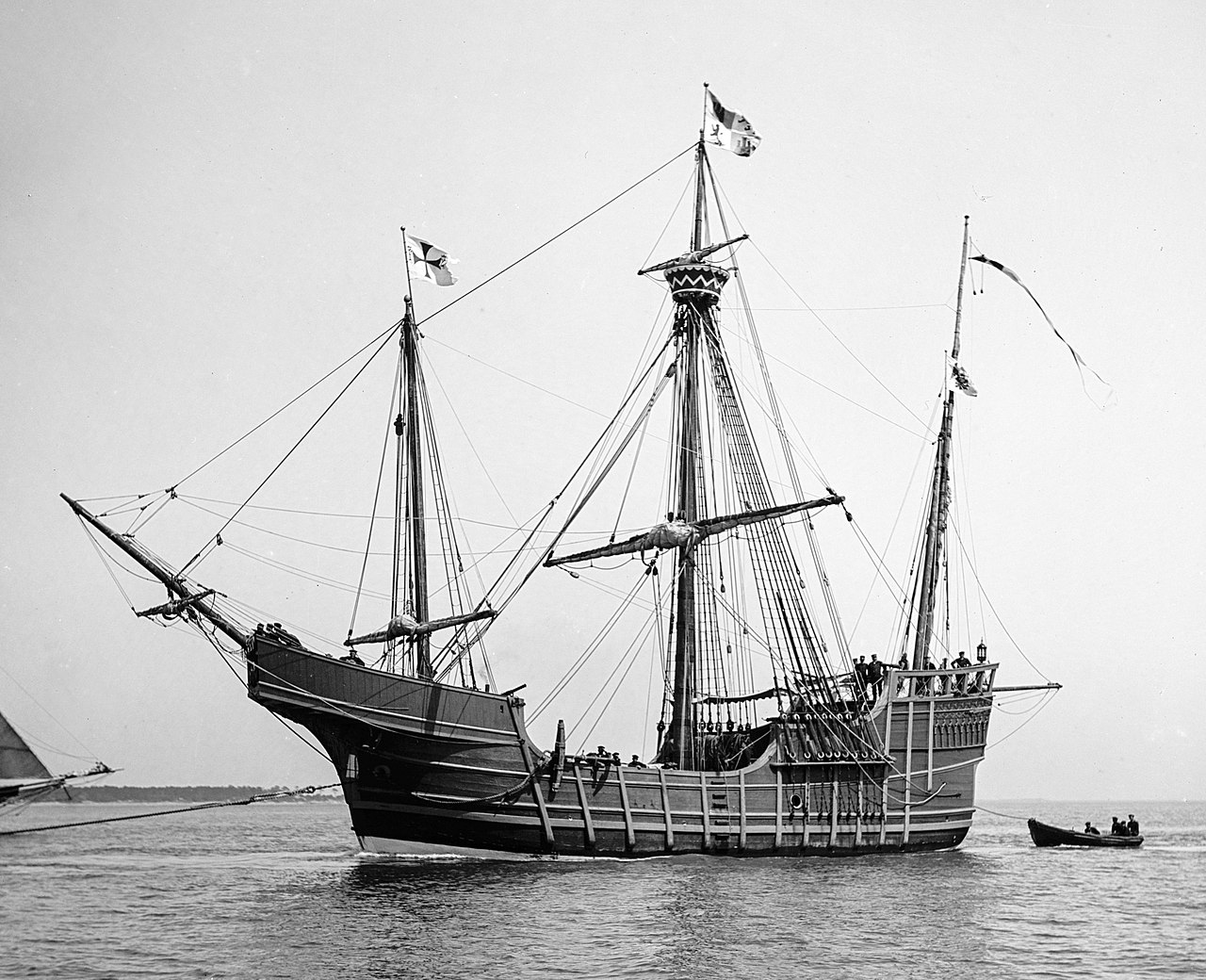
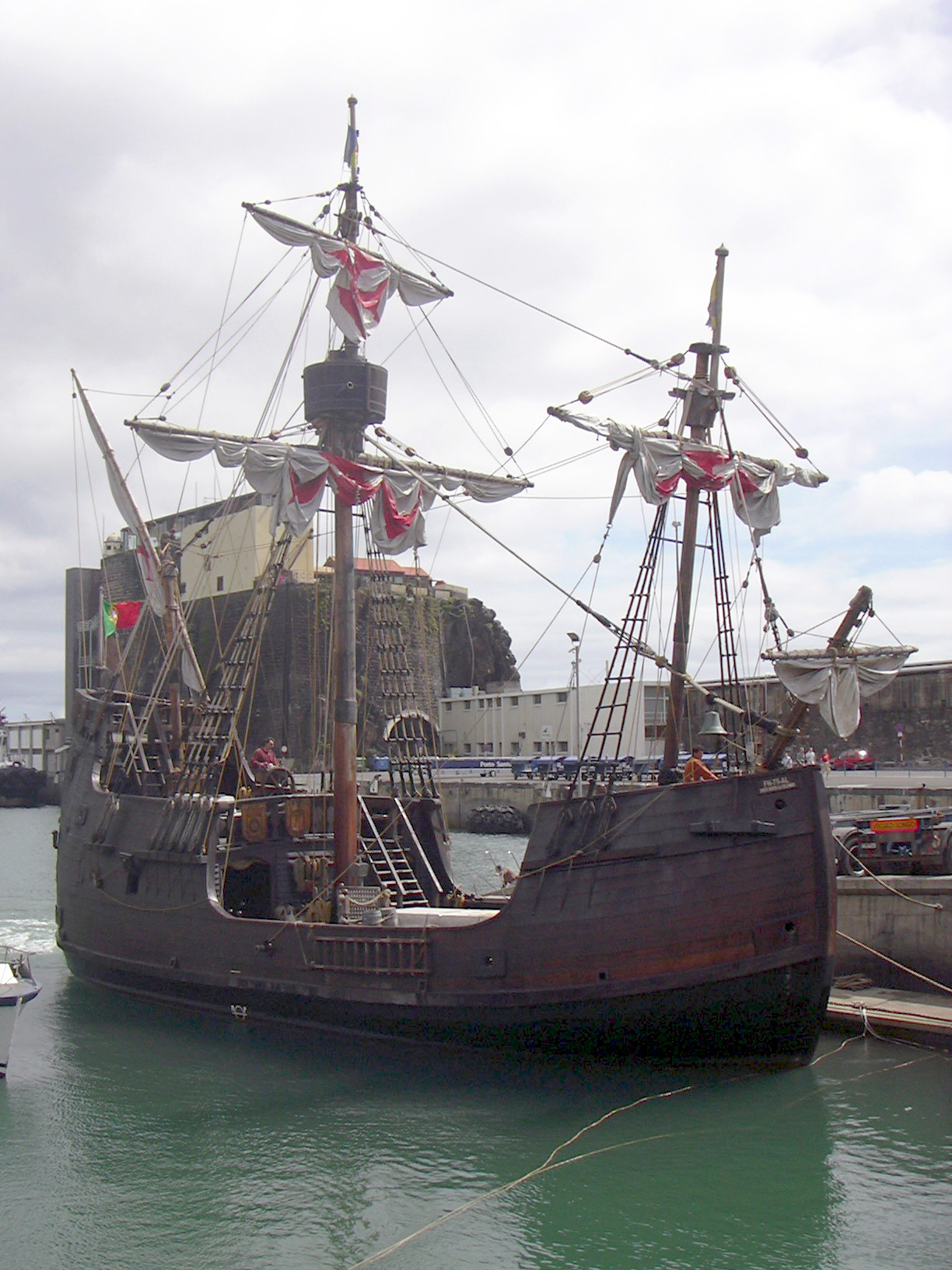
Little is definitively known about the actual dimensions of Santa María, since no documentation or illustration has survived from that era. Since the 19th century, various notable replicas have been publicly commissioned or privately constructed.
Quadricentennial (1892)
Interest in reconstructing Santa María started in Spain at around 1890 for the 400th anniversary of Columbus's voyage. An 1892 reconstruction by the Spanish government depicted the ship as a nau (Carrack). The replica vessel including her two sister ships, the Nina and the Pinta, sailed to North America where they were present at the Chicago World's Fair of 1893. On their way through the Great Lakes they visited several ports including Toronto, Ontario.
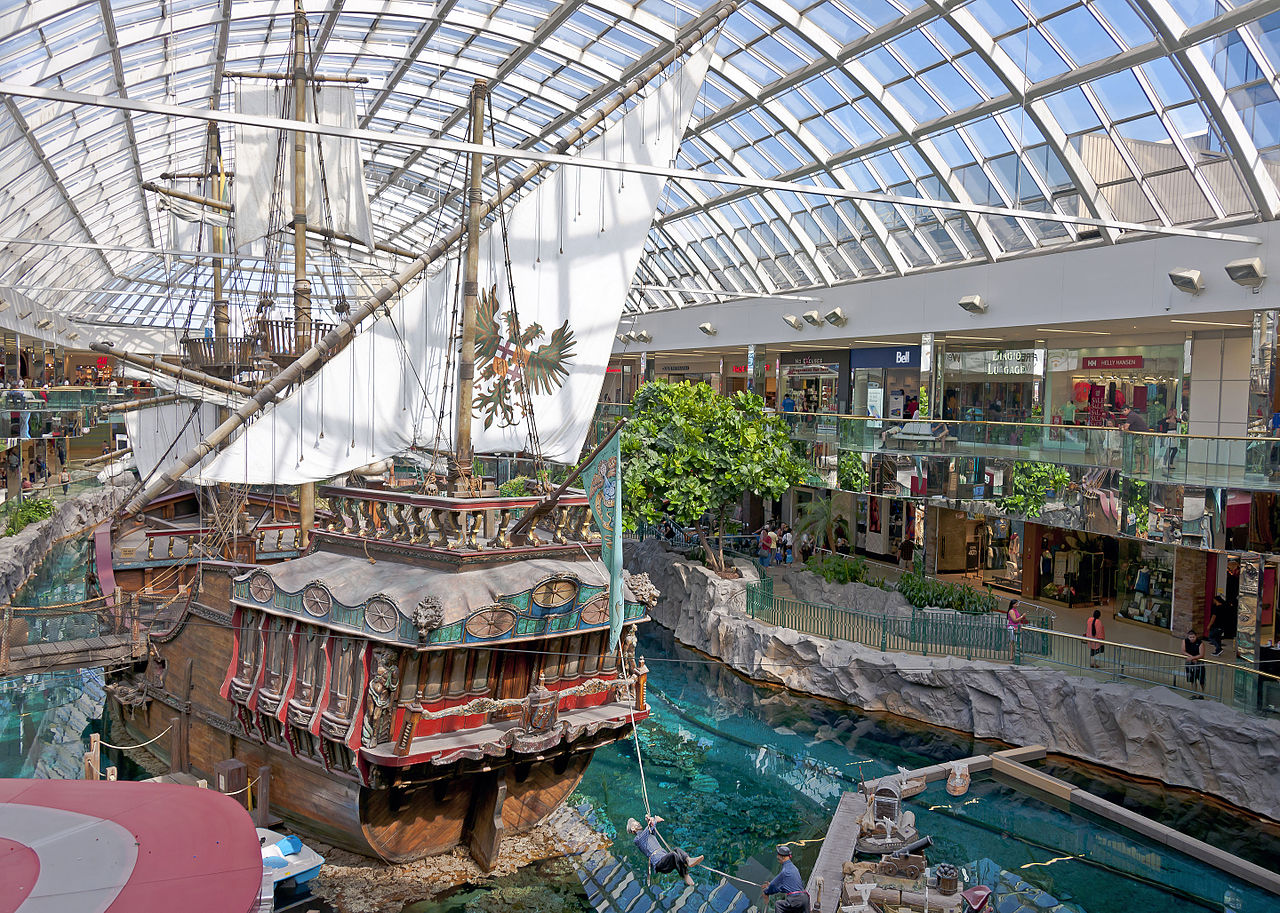
West Edmonton Mall (1986)
A replica was built during Expo 1986 and anchored in "Deep Sea Adventure Lake" at West Edmonton Mall in Alberta, Canada. Built at False Creek in Vancouver, British Columbia, the ship was hand-carved and hand-painted, and then transported by flatbed trucks across the Rocky Mountains to Edmonton, Alberta.