
Poland was ruled at various times either by dukes and princes (10th to 14th centuries) or by kings (11th to 18th centuries). During the latter period, kings were elected by the nobility (14th to 18th centuries).
Duke Mieszko I adopted Christianity under the authority of Rome in the year 966. He was succeeded by his son, Bolesław I the Brave, who greatly expanded the boundaries of the Polish state and ruled as the first king in 1025. The following centuries gave rise to the mighty Piast dynasty, consisting of both kings such as Mieszko II Lambert, Przemysł II or Władysław I the Elbow-high and dukes like Bolesław III Wrymouth. The dynasty's rule over Poland ceased with the death of Casimir III the Great in 1370. In the same year, the Capetian House of Anjou became the ruling house with Louis I of Hungary as king of both Poland and Hungary. His daughter, Jadwiga, later married Jogaila, the pagan Grand Duke of Lithuania, who in 1386 was baptised and crowned as Władysław II Jagiełło. After Jadwiga had died in 1399 without surviving children, the Polish hereditary monarchy ended. Władysław remained on the throne as elected king. His descendants continued to be chosen as monarchs by noblemen, creating the Jagiellonian dynasty, and during this time, a personal union between Poland and Lithuania took place.
During the reign of Casimir IV Jagiellon and Sigismund I the Old, culture flourished and cities developed. This era of progress, also known as the Polish Renaissance, continued until the Union of Lublin under Sigismund II Augustus, which unofficially marked the end of the Polish Golden Age. After the death of the last Jagiellonian king, the united Polish–Lithuanian Commonwealth continued the policy of elective monarchy, with mostly foreigners elected as monarchs, such as Henry III of France, who witnessed the introduction of the Golden Liberty system, and Stephen Báthory, a capable military commander who strengthened the nation. The Vasa dynasty, which descended from Jagiellons, initially expanded the Polish–Lithuanian Commonwealth as the arts and crafts developed, as well as trade and commerce. King Sigismund III Vasa, a talented but somewhat despotic ruler, involved the country in many wars, which subsequently resulted in the successful capture of Moscow and the loss of Livonia to Sweden. His son, Władysław IV Vasa, fiercely defended the Commonwealth's borders and continued the policy of his father until his death, unlike John II Casimir, whose tragic rule resulted in his abdication.
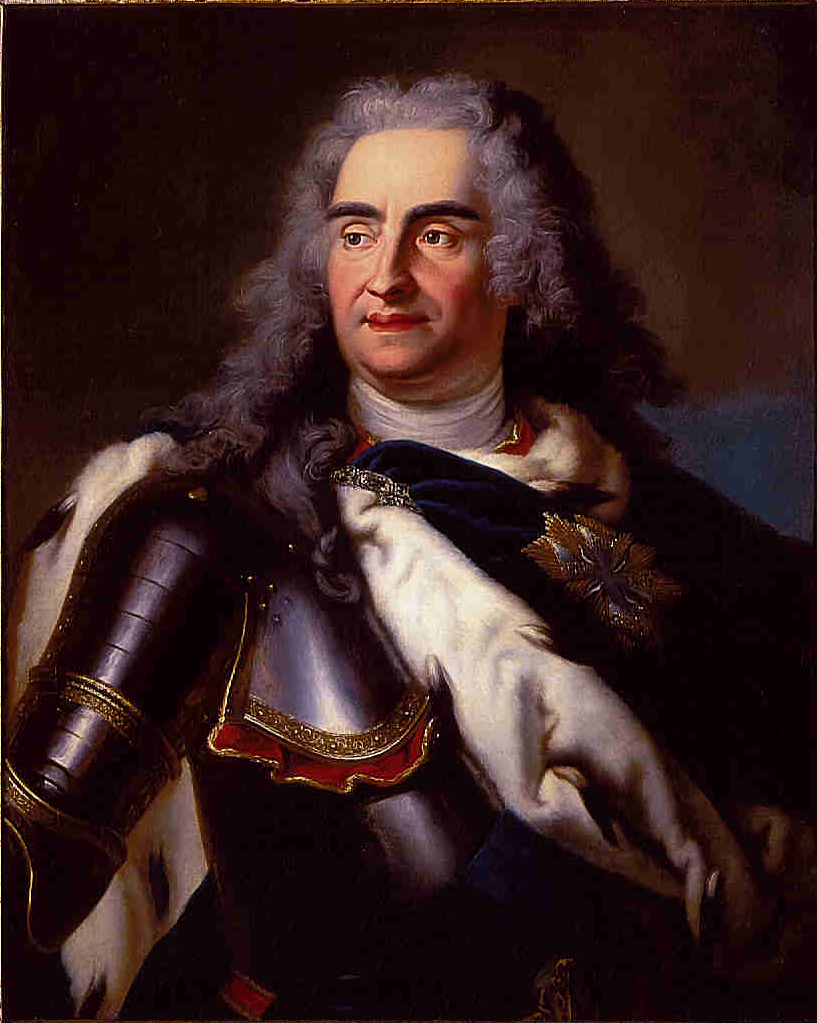
The election of John III Sobieski to the Polish throne proved to be beneficial for the Commonwealth. A brilliant military tactician, John III led the coalition forces to victory at Vienna in 1683 and he partially recaptured land from the Ottoman Empire. However, in the following years, the contested rule of the Wettin dynasty (Augustus II the Strong and Augustus III of Poland) placed the Commonwealth under the influence of Saxony and the Russian Empire. Additional feuds with rebel nobility (szlachta) and most notably Stanislaus I Leszczyński and France diminished the influence of Poland–Lithuania in the region, which led to the partitions that occurred under King Stanisław August Poniatowski, yet another enlightened but ineffective monarch.
During the Napoleonic Wars, Frederick Augustus I of Saxony, ruled as Duke of Warsaw and attempted to rehabilitate the Polish state. After the Congress of Vienna, the territory of Poland was again divided by the Prussia (with the Prussian King as Grand Duke of Posen), Russia (Congress Poland was founded in 1815 with the Emperor of Russia as King of Poland) and Austria (with the Austrian Emperors as Kings of Galicia and Lodomeria). A new Kingdom of Poland was proclaimed as an independent state in 1916 with a Regency Council but the monarchy was abolished and a parliamentary republican authority was established when Poland was re-constituted as a sovereign state in 1918.
Legendary
Most of the legendary Polish rulers appear for the first time in chronicles from the 13th century and their existence has not been determined.

House of Piast
The three direct predecessors of Mieszko I are known only from the account of Gallus Anonymus, who wrote the oldest Polish chronicle, Gesta principum Polonorum at the beginning of the 12th century. Though their historicity was once debatable, now historians tend to consider them as actually existing rulers.
Mieszko I started his reign as leader of the Polans, while other parts of future Poland were settled by other tribes, such as Masovians, Vistulans, Lendians, Silesians or Pomeranians. During his reign, Mieszko united Polish lands and adopted Christianity, connecting Poland with western Europe. His descendants ruled the state as natural lords and Poland was seen as their hereditary property. Because of that, the state was often divided between the sons of the deceased ruler and eventually united by one of them. Early Polish rulers were not considered equal to Western European kings, so their title is translated as a duke. Some of them managed to prepare a coronation and adopted the title of king, but the effects of those efforts were short lived.
Fragmentation of Poland (1138–1320)
After a period of fights between brothers and unstable inheritance, Bolesław III Wrymouth decided to formalize succession. According to his testament, the state was divided into provinces - one for every son and a Senioral Province with the capital city Kraków. The testament established two principles on which the new order in Poland was based: principate and seniorate. One duke, the princeps (also called in English high duke), had supreme authority over other dukes and ruled the senioral province. This princeps should be the oldest member of the dynasty, not necessarily the son of the predecessor. During the time of fragmentation, both principles were abolished. Seniorate was formally abolished in 1180 during the assembly of dukes and bishops in Łęczyca, when Casimir II the Just was made hereditary high duke. The Principate was de facto ended in 1227 with the assassination of Leszek I the White, after which local dukes no longer respected suzerainty of the high duke.

Attempt at restoration (1295–1296)
In the 13th century, the idea of the reunification of Poland under a single ruler started to gain popularity. It was often connected with the coronation and establishment of the hereditary kingdom. First attempts were made by Henry II the Pious and Henry Probus, but both of them died before they managed to achieve their goals. The first duke, who became king in this period, was Przemysł II. He ruled briefly as high duke but didn't manage to unite all Polish lands. He crowned himself when ruling in his hereditary province, Greater Poland, and in the province of Eastern Pomerania. His assassination in 1296 delayed the unification of Poland by 20 years.
Přemyslid House
The House of Přemyslid were kings of Bohemia and had many family connections with the Piast dynasty. In 1291, Wenceslaus II of Bohemia exploited the weakness of an internally divided Poland and conquered Kraków, basing his claim on loose family ties with one of the previous high dukes. He later legitimised his rule by marrying the daughter of Przemysł II, which also gave him claims to Polish kingship.
House of Piast (restored)
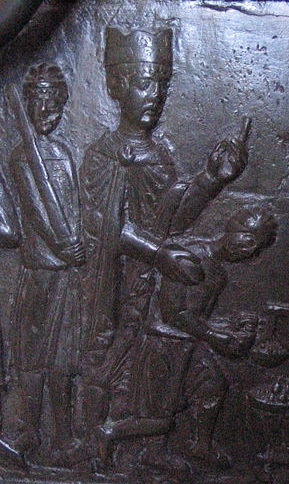
Near the end of the reign of Wenceslaus II of Bohemia, his rule over Poland was undermined by the remaining polish dukes - especially by Władysław I the Elbow-high, who had been exiled by Wenceslaus and had a strong claim to inheritance of Przemysł II, and by Henry III, Duke of Głogów, who also was an heir of Przemysł. The assassination of Wenceslaus III of Bohemia, which led to the extinction of the Přemyslid dynasty and a succession crisis in Bohemia, left Poland to Wenceslaus's opponents. His successors in Bohemia called themselves kings of Poland until 1335. Eventually, Władysław I the Elbow-high managed to unite the two main provinces of Poland - Greater Poland and Lesser Poland - and crowned himself king in 1320, ending the period of feudal fragmentation.
House of Anjou
Casimir III the Great died without male heir. According to previous agreements, his successor became his nephew, king of Hungary Louis I of Hungary, beginning the Polish-Hungarian personal union. After Louis death, his kingdoms were separated - his younger daughter, Jadwiga of Poland, became the female king of Poland after a brief interregnum. Mary, Queen of Hungary became queen of Hungary.
House of Jagiellon
Female king Jadwiga of Poland started her reign young and unmarried, which gave Poland a huge opportunity. She eventually married the pagan Grand Duke of Lithuania Jogaila, who adopted the name Władysław II Jagiełło after baptism. This event led to the creation of the Polish–Lithuanian personal union. After Jadwiga's death, Władysław remained king of Poland, but he and his successors were no longer considered natural lords of Poland and often had to give privileges to nobility in exchange for support of the succession of their children.
Polish–Lithuanian Commonwealth, 1569–1795
In 1569, King Sigismund II Augustus, knowing that he had no heir, united Poland and Lithuania into a single entity — the Polish–Lithuanian Commonwealth — to ensure that after his death both nations would remain under the same monarch. He also declared that after his death, the nobility would elect his successor, beginning the elective monarchy not constricted to members of one dynasty, like during the Jagiellons. He also ensured that all nobles would decide the next king, not only the richest and most powerful ones. The first post-Jagiellonic elective king, Henry III of France, signed the Henrician Articles, which guaranteed free elections and the rule of the nobility over the state. He, and every ruler after him, had to sign a "pacta conventa" — a document of policies that the king promised to implement. After the death of every king, the primate of Poland became an interrex; a temporary head of state, until a new king was elected.
Duchy of Warsaw, 1807–1815
After a long period of instability and anarchy, the Polish–Lithuanian Commonwealth was divided among its neighbours—Russia, Prussia and Austria. During the Napoleonic Wars, Napoleon created the Duchy of Warsaw from the lands of the Prussian partition. Some parts of the Austrian partition were later added to the Duchy. The Duchy had its own duke and government, but was fully dependent on France. After the fall of Napoleon, the duchy was divided between Russia and Prussia.
Poland from 1815 to 1918
After the fall of the Duchy of Warsaw, the Polish lands were reorganised. Prussia annexed Greater Poland and created the Grand Duchy of Posen, Kraków became a free city and the rest of the former Duchy of Warsaw became part of the Russian Empire, as Congress Kingdom of Poland. In 1846, Kraków was annexed by Austria, as Grand Duchy of Kraków, and in 1848, the Grand Duchy of Posen was dissolved. In 1867, after the failed January Uprising, the remaining autonomy of Congress Poland was abolished. During World War I, in German occupied Congress Poland, the Regency Kingdom was formed and lasted from 1917 to 1918. After Poland regained independence in 1918, a republican system with the president as head of state was established.
See the list of rulers of partitioned Poland.

Family tree of the rulers of Poland
This is a family tree of the Kings of Poland.
king of Poland
high duke
duke
Pretenders to the Polish throne
Vratislaus II of Bohemia (1085–1092)
Rudolf I of Bohemia (1306–1307)
Henry of Bohemia (1307–1310)
John of Bohemia (1310–1335)
William, Duke of Austria (1384–1406)
Archduke Charles Stephen of Austria (1916–1918)
Kiril, Prince of Preslav (1916–1918)
Modern
Alexander Prinz von Sachsen (2012–present), disputed
Rüdiger von Sachsen (2012–2022), disputed
Daniel von Sachsen (2022–present), disputed. Son of Rüdiger
Not recognized royal elections
Maxmilian II Habsburg (1575–1576), See: 1576 Free election
Maxmilian III Habsburg (1587–1589), See: 1587 Free election
François Louis de Bourbon (1697), See: 1697 Free election