
Negeri Sembilan (Malay pronunciation: [nəgəˈri səmbiˈlan], Negeri Sembilan Malay: Nogoghi Sombilan, Nismilan), historically spelled as Negri Sembilan and also known by the shorthand N9, is a state in Malaysia which lies on the western coast of Peninsular Malaysia. It borders Selangor on the north, Pahang in the east, and Malacca and Johor to the south. The Arabic honorific title of the state is Darul Khusus (دار الخصوص; "The Special Abode").
The capital of Negeri Sembilan is Seremban. The royal capital is Seri Menanti in Kuala Pilah District. Other important towns are Port Dickson, Bahau and Nilai. The name is believed to derive from the nine (sembilan) villages or nagari in the Minangkabau language (now known as luak) settled by the Minangkabau (or Menangkabau), a people originally from West Sumatra (in present-day Indonesia). Minangkabau features are still visible today in traditional architecture and the dialect of Malay spoken.
Unlike the hereditary monarchs of the other royal Malay states, the ruler of Negeri Sembilan is elected and is known as Yang di-Pertuan Besar instead of Sultan. He is elected by the council of Undangs who lead the four largest territories of Sungai Ujong, Jelebu, Johol, and Rembau, from the legitimate male members of the Pagaruyung dynasty, with the surviving sons of the previous Yamtuan coming first in the considerations but not being obligatory to be voted on, making it one of the more democratic monarchies. Negeri Sembilan is also the only state in Malaysia that is a coregency, where the Yang di-Pertuan Besar, the four Undangs and the Tunku Besar of Tampin together share the power as rulers of the state.
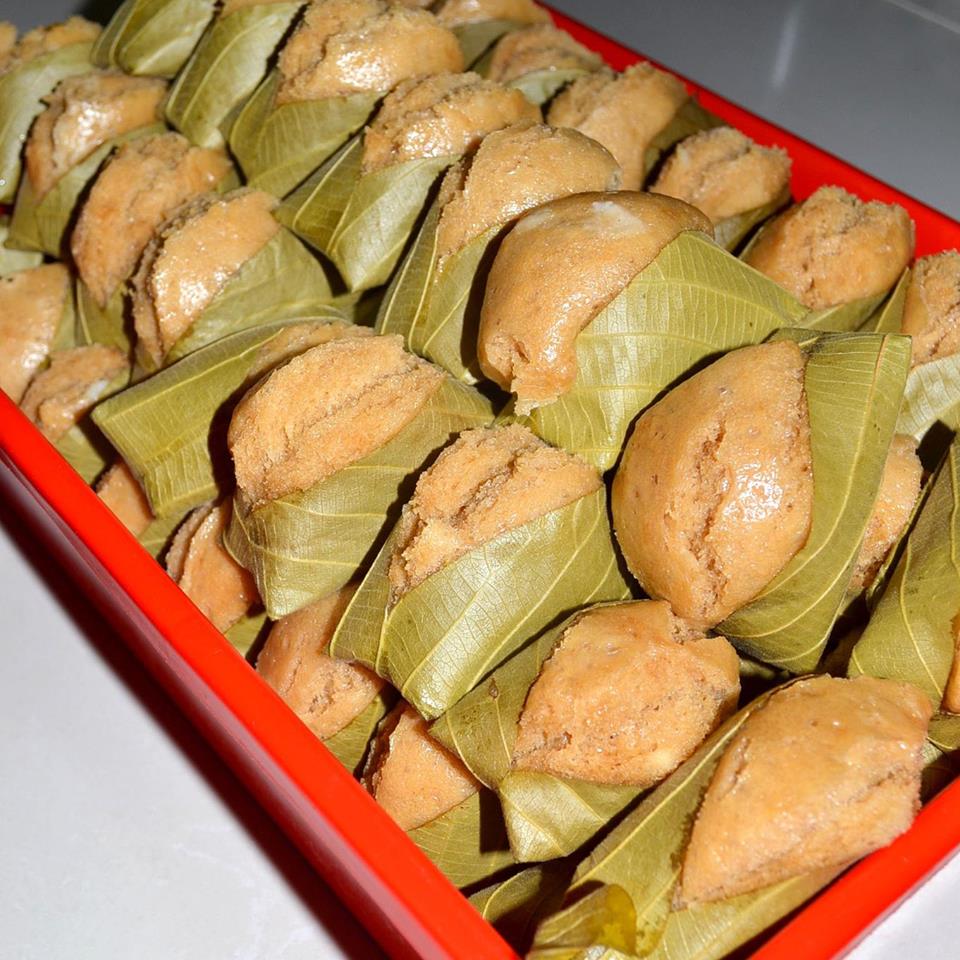
The economy of Negeri Sembilan is mainly based on agriculture, manufacturing and services. Seremban and Port Dickson districts are the state's major economic hubs, both constituting the Malaysia Vision Valley corridor.
Negeri Sembilan has diverse tropical rainforests and an equatorial climate. The state's mountain ranges belong to the Titiwangsa Mountains, a southern subrange of the Tenasserim Hills that span throughout southern Myanmar, southern Thailand and Peninsular Malaysia, with Mount Besar Hantu as the highest point. The Titiwangsa also ends here, at Mount Tampin, located south of the state.
Etymology
The name of Negeri Sembilan literally translates to "State (of the) Nine". It is believed to have been derived from the nine chiefdoms settled by the Minangkabau, known as Nogoghi in the Negeri Sembilan dialect, also known as luak (Minangkabau: luak, luhak). The size of modern Negeri Sembilan is smaller than its historical extent.

History
Precolonial history
The earliest possible human settlement in Negeri Sembilan can be traced back around 14,000 years to the Pasoh Caves, a complex of karst caves near Simpang Pertang in the Jelebu district. Artefacts found around the caves include stone tools and food remains, estimated to date from 12,000 BCE based on carbon dating. The early inhabitants of Negeri Sembilan were the ancestors of the Semelai, Semai, Semang, and Jakun peoples, who lived either as hunter-gatherer nomads or as subsistence farmers.
According to the Malay Annals, Parameswara reportedly visited the settlement of Sening Ujong, which was located in what is now Seremban.
The Minangkabaus from Sumatra settled in what is today Negeri Sembilan in the 15th century, under the protection of the Malacca Sultanate and later the Sultanate of Johor. They also brought their matrilineal custom, known as Adat Perpatih, which became the local custom.

The Linggi River along the western part of the state, and the Muar River were used as major trade routes since the time of the Malacca Sultanate. The former linked the tin-rich area of Sungai Ujong to the port city of Malacca; while the latter, along with the Pahang River via the Serting River in walking distance to the east, formed part of the Laluan Penarikan (lit. 'portage route' in Malay), facilitating access between the Strait of Malacca and the South China Sea.
As Johor weakened in the 18th century, attacks by the Bugis forced the Minangkabaus to seek protection from their homeland. The Minangkabau ruler, Sultan Abdul Jalil, obliged by sending his near relative, Raja Mahmud, also known as Raja Melewar.
When Raja Melewar arrived, he found that another royal, Raja Khatib had already established himself as ruler. He declared war against Raja Khatib and became the ruler of Negeri Sembilan. The Sultan of Johor confirmed his position by granting the title Yamtuan Seri Menanti ("He Who is Highest Lord of the Seri Menanti") in 1773.

Nine chiefdoms
At the time of its establishment, Negeri Sembilan was originally a loose confederation of nine chiefdoms (luaks), hence the name. During Raja Melewar's rule, it covered a larger area than its modern-day boundaries. In addition to the entire modern-day Negeri Sembilan, it also encompassed parts of what are now Selangor, Malacca, Pahang and Johor.
The original nine chiefdoms or domains that made up the first incarnation of Negeri Sembilan in 1773, and gave the state its name, were:
Historically, all luak concentrically revolved around Seri Menanti as a center flanked by four inner luak serambi and four outer luak akin to a mandala. Ulu Pahang, Naning, Segamat and Klang were annexed into neighbouring states in the 19th century; Naning was incorporated into the Straits Settlement of Malacca in 1832 following the Naning War.

Ulu Pahang became the Bera region of Pahang, Segamat was annexed by Johor, and Klang became part of the Kuala Langat region of Selangor.
After Raja Melewar's death in 1795, a series of disputes arose over the succession. For a considerable period, the local nobles appealed to the Minangkabau ruler in Sumatra for a new ruler. However, competing interests supported different candidates, often resulting in further instability and civil war.
Colonial history
In 1874, the British intervened militarily in a leadership tussle in Sungai Ujong to preserve British economic interests and placed the domain under the control of a British Resident. Jelebu followed in 1883 and Rembau in 1887. Their presence was detested by the locals, which eventually paved the way to a deadly civil war and subsequent breakup.

Battle of Paroi
In 1875, British forces, accompanied by Arab mercenaries and Gurkha, engaged Malay defenders in Paroi at the Battle of Paroi. Despite initial setbacks, the British ultimately prevailed, capturing the Malay stronghold. Casualties were heavy on both sides, with the British and Arab contingents suffering 37 killed and wounded, while the Malay had around 35 deaths and many wounded.
Battle of Bukit Putus
After the Battle of Paroi, the British waited for Gurkha reinforcements, which arrived on 10 December 1875. The Malays fortified Bukit Putus, a mountain pass on the boundary between Sungai Ujong and Terachi. The British attacked Bukit Putus from both the front and back. The Gurkhas successfully captured the Malay stockade at Bukit Putus. The Malays retreated after the surprise appearance of Sungai Ujong Resident P.J. Murray's forces from behind. The inhabitants of the Terachi Valley fled, villages were burned, and Yamtuan Antah's palace in Seri Menanti was destroyed.
Seri Menanti Confederation, modern Negeri Sembilan and statehood
The formation of modern Negeri Sembilan began in 1889, when the Seri Menanti domain, under the rule of Tuanku Muhammad (son of Yamtuan Antah), combined with the domains of Tampin and Rembau, forming the Seri Menanti Confederation as a single political entity.
The domains of Sungai Ujong and Jelebu joined this confederation in 1895, forming the state of Negeri Sembilan in its modern borders. Martin Lister became the new state's first Resident, and Negeri Sembilan became part of the Federated Malay States the same year.
Modern history
In the first half of the 20th century, rural Negeri Sembilan saw large deforestation due to demand for natural rubber (Hevea brasiliensis); 6,188 plantations were counted in 1903 and were 396,065 counted in 1939. It was occupied by the Japanese in World War II between 1942 and 1945, joined the Federation of Malaya in 1948 and became a state of Malaysia in 1963.
In the 1970s and 1980s, towns like Rembau grew rapidly from the migration of villagers who no longer farmed rice; rice farming disappeared from most villages across the state by the 1990s. In the 1990s and 2000s, Seremban and Nilai attracted people who migrated from the overcrowded towns of the Klang Valley area. These two cities also became home to new factories and industrial parks, contributing to the state's modern development.
On 9 September 2009, the Ministry of Housing and Local Government approved the state capital of Seremban's application to become a city (Bandar Raya), as it had experienced significant population growth. To make this possible, its city council had to be merged with the Nilai Municipal Council. After several postponements, Seremban officially attained city status on 20 January 2020.
Negeri Sembilan was placed under the Movement Control Order lockdown due to increasing COVID-19 infections.
Geography
Facing the Strait of Malacca, Negeri Sembilan is one of the West Coast states of Peninsular Malaysia. It is specifically part of the southern region, along with Malacca and Johor. However, some sources define Negeri Sembilan as a central region state with Selangor and the federal territories of Kuala Lumpur and Putrajaya.
The state is slightly smaller than Selangor, with a total land area of 6,686 km² (430 sq mi). It is the fourth smallest state in Malaysia by area and the second largest in the southern region behind Johor. Its shape is roughly pentagonal.
Topography
Topographically, Negeri Sembilan consists of two plains divided by a mountainous spine in the middle. This region is well drained by various rivers on both sides. The Titiwangsa Mountains, the southernmost extension of the Tenasserim Hills and the wider Indo-Malayan Cordillera, spans approximately 92 km (57.1 mi) through the middle of the state. The mountain range starts from the border tripoint with Pahang and Selangor near Kenaboi, Jelebu, and extends towards Tampin, close to the border with Malacca.
This geographical feature results in the state being bisected almost diagonally into two regions; western Negeri Sembilan, consisting of the Port Dickson, Seremban, and Rembau Districts; and eastern Negeri Sembilan, which includes the districts of Jelebu, Kuala Pilah, Jempol, and Tampin. The western half is more developed and has an intricate and concentrated road network compared to the latter, which is predominantly rural.
The Negeri Sembilan section of the Titiwangsa Mountains forms a division for four river basins. The Langat and Linggi Rivers flows through the western half, while the Muar and Pahang Rivers constitute the eastern side. The Linggi and Muar rivers are the two major rivers flowing through the state and serve as significant water sources for the population. Its rainforests form part of the Titiwangsa Forest Complex, a component of the Central Forest Spine conservation area that covers much of the heavily forested and mountainous interior of Peninsular Malaysia.
Highest point
Mount Besar Hantu, at 1,462 m (4,797 ft), located in Jelebu District and close to the border with Pahang, is the highest point in Negeri Sembilan. The nearby Mount Nuang, which is 31 metres taller, marks the tripoint with Selangor and Pahang at its northernmost point, of which it is the third tallest in the former; while in the south, Mount Ledang, an isolated mountain, marks the tripoint with Malacca and Johor, where it is the highest point of the latter at 1,276 m (4,186.3 ft).
Climate
Negeri Sembilan experiences equatorial climate (Köppen climate classification: Af), which is hot and humid all year round. Thunderstorms are mostly prevalent during the period of monsoonal transitions that occur twice a year.
Dry seasons usually starts shortly after the first monsoonal transition and lasts until August to September, as the moisture brought by the southwesterly Indo-Australian Monsoon are blocked by the Barisan Mountains in Sumatera, creating a rainshadow effect on the eastern coast of the island and the Malay Peninsula.
In the corresponding Borneo-Australian Monsoon that blows from the northeast, Negeri Sembilan, along with the states of Melaka, Johor, and the East Coast states of Kelantan, Terengganu and Pahang are the most affected by the monsoonal surge that brings persistently heavy rainfall and cause rough sea conditions in the South China Sea.
Governance and politics
Constitution
The Constitution of Negeri Sembilan came into force on 26 March 1959. It is divided into two sections. The constitution establishes that the state's form of government is constitutional monarchy and the world's only elective monarchy for a matrilineal society. The system was partially the basis for the federal monarchy.
The Ruler
The official constitutional title of the Ruler of the state are Duli Yang Maha Mulia Yang di-Pertuan Besar Negeri Sembilan, (currently Duli Yang Maha Mulia Yang di-Pertuan Besar Negeri Sembilan Darul Khusus Tuanku Muhriz ibni Almarhum Tuanku Munawir), Yang Teramat Mulia Undang of Sungei Ujong, Yang Teramat Mulia Undang of Jelebu, Yang Teramat Mulia Undang of Johol, Yang Teramat Mulia Undang of Rembau and Yang Teramat Mulia Tengku Besar Tampin and they hold office for life.
The state's constitution proclaims the Yang di-Pertuan Besar, Undang of Sungei Ujong, Undang of Jelebu, Undang of Johol, Undang of Rembau and Tengku Besar Tampin are vested with the Executive Power of the state, are the Head of the Religion of Islam in the state and are the fountain of all honour and dignity for the state. The current Yang di-Pertuan Besar is Muhriz of Negeri Sembilan. He succeeded Ja'afar of Negeri Sembilan who died on 27 December 2008.
Unlike Malaysia's eight other Royal Malay states, the Ruler of Negeri Sembilan is elected to his office by the territorial chiefs or Ruling Chiefs of the state. These Ruling Chiefs are titled Undang. Only four of the Undangs have the right to vote in the election for the Ruler of the State. They are:
The Undang of Sungai Ujong
The Undang of Jelebu
The Undang of Johol
The Undang of Rembau
The Undang themselves cannot stand for election, and their choice of Ruler is limited to a male Muslim who is Malay and also a "lawfully begotten descendant of Raja Radin ibni Raja Lenggang".