
Malaysia Airlines Flight 17 was a scheduled passenger flight from Amsterdam to Kuala Lumpur that was shot down by Russian-backed forces with a Buk 9M38 surface-to-air missile on 17 July 2014, while flying over eastern Ukraine. All 283 passengers and 15 crew were killed. Contact with the aircraft, a Boeing 777-200ER, was lost when it was about 50 kilometres (31 mi; 27 nmi) from the Ukraine–Russia border, and wreckage from the aircraft landed near Hrabove in Donetsk Oblast, Ukraine, 40 km (25 mi; 22 nmi) from the border. The shoot-down occurred during the war in Donbas over territory controlled by Russian separatist forces in Ukraine.
The responsibility for investigation was delegated to the Dutch Safety Board (DSB) and the Dutch-led joint investigation team (JIT), which in 2016 reported that the aircraft had been downed by a Buk surface-to-air missile launched from pro-Russian separatist-controlled territory in Ukraine. The JIT found that the Buk originated from the 53rd Anti-Aircraft Missile Brigade of the Russian Federation and had been transported from Russia on the day of the crash, fired from a field in a rebel-controlled area, and that the launch system returned to Russia the following day.
The findings by the DSB and JIT were consistent with earlier claims by American and German intelligence sources and by the Ukrainian government. On the basis of the JIT's conclusions, the governments of the Netherlands and Australia held Russia responsible for the deployment of the Buk installation and began pursuing legal remedies in May 2018. The Russian government denied involvement in the shooting down of the aircraft, and its account of how the aircraft was shot down has varied over time. Coverage in Russian media has also differed from that in other countries, which initially characterised it as separatist forces shooting down a "Ukrainian Air Force An-26 transport plane" before switching to blaming Ukrainian forces for shooting down MH17.
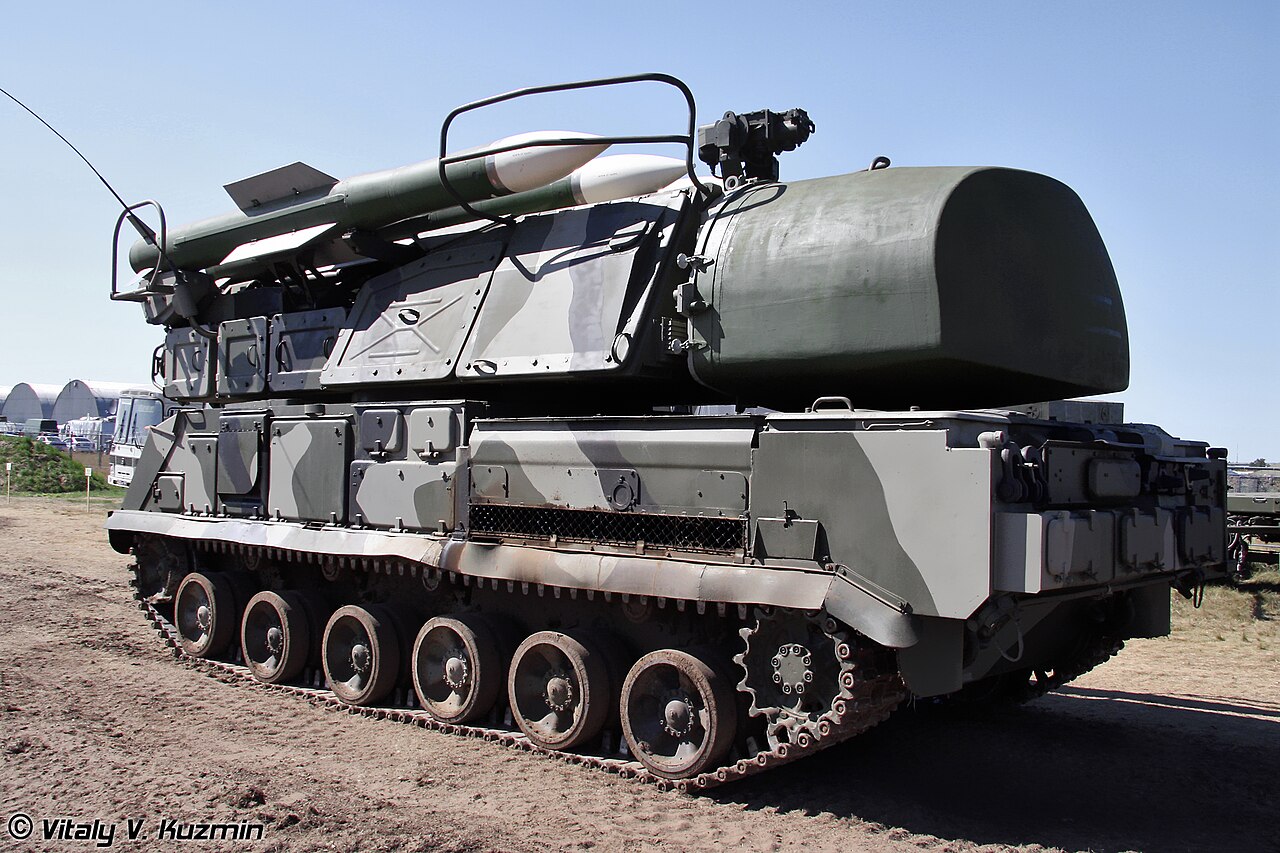
On 17 November 2022, following a trial in absentia in the Netherlands, two Russians and a Ukrainian separatist were found guilty of murdering all 298 people on board flight MH17. The Dutch court also ruled that Russia was in control of the separatist forces fighting in eastern Ukraine at the time.
MH17 was Malaysia Airlines' second aircraft loss during 2014, after the disappearance of Flight 370 four months prior on 8 March. It is also the deadliest aircraft shoot-down incident to date.
Aircraft
Flight 17, which was also marketed as KLM Flight 4103 (KL4103) through a codeshare agreement, was operated with a Boeing 777-2H6ER, serial number 28411, registration 9M-MRD. Powered by two Rolls-Royce Trent 892 engines and carrying 280 seats (33 business and 247 economy), the aircraft had recorded more than 76,300 hours in 11,430 cycles before the crash. The aircraft was in an airworthy condition at departure.
The Boeing 777, which entered commercial service on 7 June 1995, has one of the best safety records among commercial aircraft. In June 2014, there were about 1,212 aircraft in service, with 340 more on order.
Passengers and crew
The incident is the deadliest airliner shoot-down incident to date. All 283 passengers and 15 crew died. By 19 July, the airline had determined the nationalities of all 298 passengers and crew.
The crew were all Malaysian, while over two-thirds (68%) of the passengers were Dutch. Most of the other passengers were Malaysians and Australians; the remainder were citizens of seven other countries. At least twenty family groups were on the aircraft, and eighty passengers were under the age of 18.
Among the passengers were delegates en route to the 20th International AIDS Conference in Melbourne, including Joep Lange, a former president of the International AIDS Society, which organised the conference. Many initial reports had erroneously indicated that around 100 delegates to the conference were aboard, but this was later revised to six. Also on board were Dutch Senator Willem Witteveen, Australian author Liam Davison, and Malaysian actress Shuba Jay.
The flight crew were captains Wan Amran Wan Hussin (49) and Eugene Choo Jin Leong (44), and first officers Ahmad Hakimi Hanapi (29) and Muhamad Firdaus Abdul Rahim (26). Captain Wan had a total of 13,239 flight hours, including 7,989 in Boeing 777s. Captain Choo had a total of 12,385 flight hours, including 7,303 in Boeing 777s. First Officer Ahmad had a total of 3,190 flight hours, including 227 in Boeing 777s. First Officer Muhamad Firdaus had a total of 4,058 flight hours, including 296 in Boeing 777s.
Background
The armed conflict in Eastern Ukraine led some airlines to avoid eastern Ukrainian airspace in early March 2014 due to safety concerns. In the months prior to 17 July, reports circulated in the media on the presence of weapons, including surface-to-air missiles, in the hands of the rebels that were fighting the Ukrainian government in eastern Ukraine.

On 26 May, a spokesperson of the Ukrainian Armed Forces stated that a surface-to-air missile system that was being used by the rebels near Donetsk airport had been destroyed by a helicopter of the Ukrainian army. On 6 June 2014 The International New York Times reported that surface-to-air missiles had been seized from military bases. On 11 June, the newspaper Argumenty nedeli reported that a Buk-M1 missile launcher had been present in an area under the separatists' control. On 29 June the Russian news agencies reported that insurgents had obtained a Buk missile system after having taken control of Ukrainian military unit A-1402; and the Donetsk People's Republic claimed possession of such a system in a since-deleted tweet.
Such air defence systems cannot reliably identify and avoid civilian aircraft. The Ukrainian authorities declared in the media that this system was not operational. According to the subsequent statement of the Security Service of Ukraine, three Buk missile systems were located on militia-controlled territory at the time that Malaysia Airlines Boeing 777 was shot down. On the night following the downing of MH17, two Buk launcher vehicles, one of which carried three missiles, (out of a normal complement of four), was observed moving into Russia.
Several aircraft from the Ukrainian Air Force were shot down in the months and days preceding the MH17 incident. On 14 June 2014, a Ukrainian Air Force Ilyushin Il-76 military transport was shot down on approach to Luhansk International Airport, with loss of nine crew members and forty troops. On 14 July 2014, a Ukrainian Air Force An-26 transport aircraft flying at 6,500 m (21,300 ft) was shot down. The militia reportedly claimed via social media that a Buk missile launcher, which they had previously seized and made operational, had been used to bring down the aircraft. American officials later said evidence suggested the aircraft had been shot down from Russian territory.

On 16 July, the Ministry of Defence of Ukraine reported that at about 13:00 local time "terrorists" used MANPADs against a Su-25 jet which was performing a flight mission in the ATO zone. According to the report, the jet received minor damage and was forced to make a landing. Later, the Ministry of Defence of Ukraine reported on the second Su-25 that was attacked on the same day at about 19:00 local time near the Ukrainian-Russian border in the area of Amvrosiivka. According to the details reported by Ukraine's RNBO spokesperson Andriy Lysenko, the Ukrainian Su-25 was shot down by an R-27T medium range air-to-air missile fired by a MiG-29 jet from Russian territory while the Su-25 was at an altitude of 8,250 m. The Russian Defence Ministry said that the accusations were false. In response to additional questions by the Dutch Safety Board, the Ukrainian authorities reported that a "provisional investigation" had revealed that the aircraft had been shot down while flying at an altitude of 6,250 m. Ukrainian authorities also thought that the Su-25 could have been shot down with a Pantsir missile system from Russian territory, though they thought this less likely.
On 17 July, an Associated Press journalist saw a Buk launcher in Snizhne, in Donetsk Oblast, 16 kilometres (10 mi) southeast of the crash site. The reporter also saw seven separatist tanks near the town. Associated Press journalists reported that the Buk M-1 was operated by a man "with unfamiliar fatigues and a distinctive Russian accent" escorted by two civilian vehicles. The battle around Savur-Mohyla has been suggested as the possible context in which the missile that brought down MH17 was fired, as separatists deployed increasingly sophisticated anti-aircraft weaponry in this battle, and had brought down several Ukrainian jets in July.
In April, the International Civil Aviation Organization had warned governments that there was a risk to commercial passenger flights over south-eastern Ukraine. The American Federal Aviation Administration issued restrictions on flights over Crimea, to the south of MH17's route, and advised airlines flying over some other parts of Ukraine to "exercise extreme caution". This warning did not include the MH17 crash region. 37 airlines continued overflying eastern Ukraine and about 900 flights crossed the Donetsk region in the seven days before the Boeing 777 was shot down. Russian air traffic controllers issued a notice effective 17 July at 00:00 with two conflicting altitude restrictions in the airspace in the adjacent area over Russia below 32,000 feet (9,800 m) and below 53,000 feet (16,000 m). Long-distance flights typically travel at altitudes of 33,000 to 44,000 feet, so the second restriction would effectively close that airspace to civilian overflights, but the second restriction was not noted by the automated systems of Malaysian Airlines and the route was not changed. The reason given for the notice was "armed conflict in Ukraine". Russian authorities told the Dutch Safety Board the notice had been published "to create agreement with the adjoining Ukrainian airspace", but provided no clarification for the higher restriction.

The airspace above Donetsk was managed by Ukraine. The Ukrainian authorities imposed restrictions for flights under 32,000 feet (9,800 m), but did not consider closing the airspace to civil aviation completely. Like other countries, Ukraine receives overflight fees for commercial aircraft that fly over its territory and this may have contributed to the continued availability of civilian flight paths through the conflict zone. However, the Netherlands, where the main investigation was conducted, did not hold Ukraine accountable for not closing its airspace due to lack of evidence that it should have done so.
Flight and shoot-down
On Thursday, 17 July 2014, Malaysia Airlines Flight 17 departed from Amsterdam Airport Schiphol Gate G3 at 12:13 CEST (10:13 UTC), thirteen minutes later than the scheduled departure time, and took off at 12:31 local time (10:31 UTC). It was due to arrive at Kuala Lumpur International Airport at 06:10 MYT on Friday, 18 July (22:10 UTC, 17 July).
Cruise
According to the original flight plan, MH17 was to fly over Ukraine at flight level 330 (33,000 feet or 10,060 metres) and then change to FL 350 around the Ukrainian city of Dnipropetrovsk. When it reached the area as planned, at 15:53 local time (12:53 UTC), Dnipropetrovsk Air Control (Dnipro Control) asked MH17 if they could climb to FL 350 as planned, and also to maintain separation from another flight, Singapore Airlines Flight 351 (SQ351), also at FL 330. The crew asked to remain at FL 330 and the air traffic controller approved this request, moving the other flight to FL 350. At 16:00 local time (13:00 UTC), the crew asked for a deviation of 20 nautical miles [nmi] (37 km; 23 mi) to the left (north) off course, on airway L980, due to weather conditions. This request was also approved by Dnipro Control ATC. The crew then asked if they could climb to FL 340, which was rejected as this flight level was not available, so MH17 remained at FL 330. At 16:19 local time (13:19 UTC), Dnipro Control noticed that the flight was 3.6 nmi (6.7 km; 4.1 mi) north of the centreline of its approved airway and instructed MH17 to return to the track. At 16:19 local time (13:19 UTC), Dnipro Control contacted Russian ATC in Rostov-on-Don (RND Control) by telephone and requested clearance to transfer the flight to Russian airspace. After obtaining permission, Dnipro Control attempted to contact MH17 for handing them off to RND Control at 16:20 local time (13:20 UTC), but the aircraft did not respond. When MH17 did not respond to several calls, Dnipro Control contacted RND Control again to check if they could see the aircraft on their radar. RND Control confirmed that the airliner had disappeared.
Shoot-down
Flight data recordings
The Dutch Safety Board reported that both the cockpit voice recorder (CVR) and the flight data recorder (FDR) stopped recording at 16:20:03 local time (13:20:03 UTC). The last FDR data indicates that the plane was at the position of 48.12715 N 38.52630538 E located west of the urban-type settlement Rozsypne (Розсипне), near Hrabove, heading east-southeast (ESE, 115°) at an altitude of 32,998 feet (10,058 m) above sea level with a ground speed of 494 knots (915 km/h; 568 mph) and an indicated airspeed of 293 knots (543 km/h; 337 mph). The flight recorders show no sign of warning or unusual occurrence prior to the end of their recordings, but two sound peaks are heard in the last 20 milliseconds of the CVR recording.
Missile strike
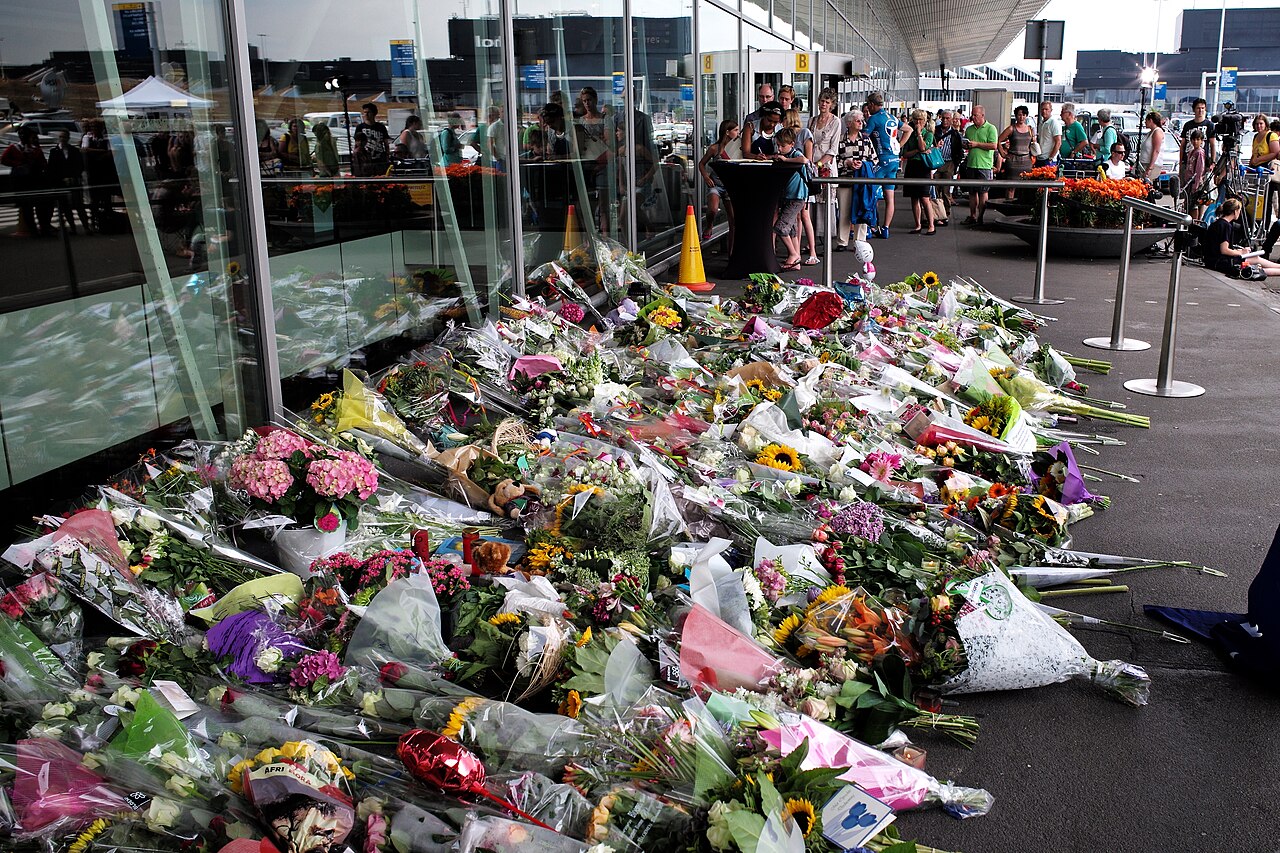
At 16:20:03 local time (13:20:03 UTC), a Buk ground-to-air missile, which had been launched from an area southeast of the aircraft, detonated outside the aircraft, just above and to the left of the cockpit. The blast and fragments of the missile severely damaged the cockpit and instantly killed three crew members in it. Evidence on the left engine intake ring and left wing tip suggests that the left wing and left engine had also been hit by shrapnel from the missile. An explosive decompression occurred, tearing the forward section of the aircraft into pieces, causing the middle and rear sections to tear into three sections and depressurizing the cabin. The explosive decompression could have incapacitated most occupants of the aircraft before the crash, though investigators never ruled out the possibility that some were still conscious when the aircraft hit the ground. Some occupants might have suffered serious injuries that contributed to their deaths before the crash. The aircraft fell rapidly and continued disintegrating before hitting the ground.
In-flight breakup
Investigators were able to determine how the aircraft disintegrated and crashed. The aircraft began disintegrating immediately after being struck by a missile. Investigators believed that the disintegration of the forward section of the fuselage started between the left-side cockpit windows and the forward, left-exit door. The cockpit section and the business class section of the aircraft began tearing into a number of pieces before the aircraft descended rapidly toward the ground. During that period of time, the left engine intake ring had also fallen off the engine and fell in the same place as where some of these pieces fell.
As the aircraft was falling, the instability and aerodynamic loads of the aircraft stressed its fuselage, resulting in further disintegration. Shortly before crashing into the ground, the rear section of the fuselage, just behind where the two wings were attached to the fuselage, was separated from the middle portion of the fuselage. At the same time, the two wing tips had fallen off from the wings of the aircraft. The tail section, which was just behind the aft exit doors, was also separated from the rear section. The pair of horizontal stabilizers and the vertical stabilizer were also separated from the tail section prior to impacting the ground. The middle portion, including the two wings and two engines, eventually crashed into farmland and its large volume of jet fuel exploded upon impact.
The positions of the aircraft wreckage suggest that the plane might have been upside down when the rear and middle sections disintegrated, and the middle portion probably crashed inverted while travelling rearward. Investigators could not specify the exact time when each major section of the plane hit the ground. However, they estimated that the middle portion of the aircraft had impacted the ground within 1–1+1⁄2 minutes after the beginning of the in-flight breakup.
Debris field
The disintegration of the plane had caused the seats, pieces of interior wall and floor, overhead compartments, and other interior structures of the aircraft to fall out. Some bodies, personal belongings, and other light objects had also fallen out of the plane. As a result of the mid-air disintegration, the debris of the plane landed in six different areas.
In the investigation report, the position where the plane was struck by a missile is identified as the "last FDR point" because it is where the flight data recorder stopped recording. A few parts of the business class and cockpit sections landed on farmland far north of the last FDR point. The business class section and the left engine intake ring landed in the large residential area of Petropavlivka, northeast of the last FDR point. The cockpit and the forward cargo section, including the nose landing gear, landed on farmland far southeast of the last FDR point and southwest of the village of Rozsypne. The tail and the rear fuselage sections landed farther east of the last FDR point, while the middle portion of the aircraft landed at 48°8′17″N 38°38′20″E, just northeast of them.
Most of the debris of the aircraft, which were the middle and rear sections, landed near the southwest of the village of Hrabove, north of Torez (now also known as Chystiakove). The wreckage had spread over a 50-square-kilometre (19 mi2) area in Donetsk Oblast, eastern Ukraine. The fireball on impact is believed to have been captured on video. Photographs from the site of the crash show scattered pieces of broken fuselage and engine parts, bodies, and passports. Some of the wreckage fell close to houses. Dozens of bodies fell into crop fields, and some fell into houses.
Nearby aircraft
Three other commercial aircraft were in the vicinity when the Malaysian airliner was shot down:
Air India Flight 113 (AI113), a flight from Delhi to Birmingham operated by a Boeing 787 Dreamliner with the aircraft registration VT-ANB.
EVA Air Flight 88 (BR88), a Boeing 777 en route from Paris to Taipei; and
Singapore Airlines Flight 351 (SQ351), a Boeing 777 en route from Copenhagen to Singapore which was 33 kilometres (21 mi) away, and thus the closest aircraft to MH17.
Recovery of bodies
A Ukraine Foreign Ministry representative said that the bodies found at the crash site would be taken to Kharkiv for identification, 270 kilometres (170 mi) to the north. By the day after the crash, 181 of the 298 bodies had been found. Some were observed being placed in body bags and loaded onto trucks.
Dutch Prime Minister Mark Rutte initially complained about looting of personal belongings from the dead and the careless handling of their bodies, but later stated they had been handled with more care than originally reported. Other media complained that credit and debit cards were being looted, and there were accusations that evidence at the crash site had been destroyed. The Guardian noted that tales of looting seemed to be exaggerated, but the chaos at the crash site risked the accidental destruction of evidence which, the paper contended, journalists were contributing to.
On 20 July, Ukrainian emergency workers, observed by armed pro-Russian separatists, began loading the remains of the passengers of MH17 into refrigerated railway wagons for transport and identification.
On 21 July, pro-Russian rebels allowed Dutch investigators to examine the bodies. By this time, 272 bodies had been recovered, according to Ukrainian officials. Remains left Torez on a train on the evening of 21 July, en route to Kharkiv to be flown to the Netherlands for identification. On the same day, Malaysian Prime Minister Najib Razak announced that the Malaysian government had reached a tentative agreement to retrieve the remains of the Malaysians who died in the crash, following any necessary forensic work.
It was reported on 21 July that with 282 bodies and 87 body fragments found, there were still 16 bodies missing. An agreement had been reached that the Netherlands would co-ordinate the identification effort. A train carrying the bodies arrived at the Malyshev Factory, Kharkiv on 22 July. Dutch authorities stated that they found 200 bodies on the train when it arrived at Kharkhiv, leaving almost 100 unaccounted for. In late July, the UK Metropolitan Police sent specialist officers to Ukraine to assist with the recovery, identification and repatriation of bodies.
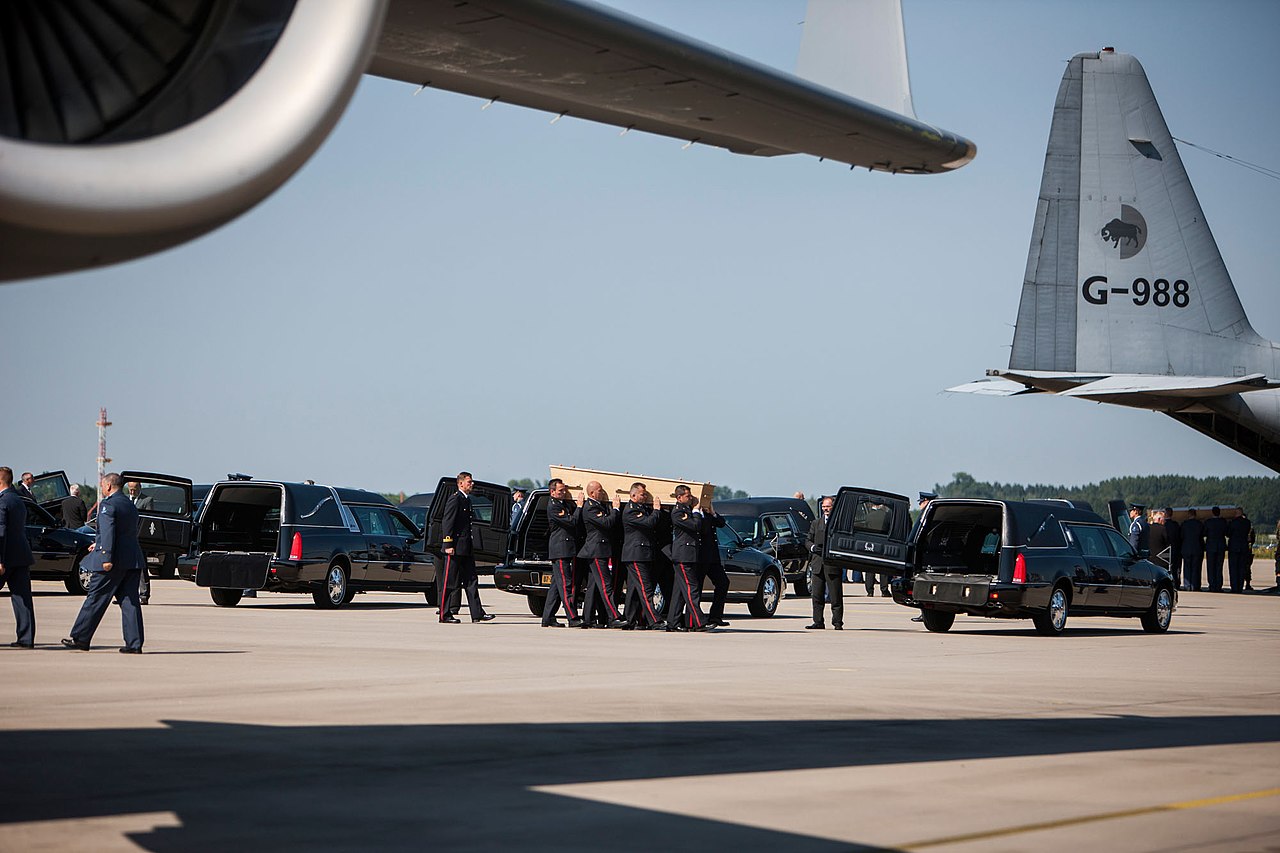
The first remains were flown to Eindhoven in the Netherlands on 23 July, moved there with Dutch air force C-130 and Australian C-17 transport aircraft, which landed at Eindhoven Airport just before 16:00 local time. The day after, another 74 bodies arrived. The examination and identification of the bodies was conducted at the Netherlands Army medical regiment training facility in Hilversum and was coordinated by a Dutch forensic team.
On 1 August, it was announced that a search and recovery mission, including about 80 forensic police specialists from the Netherlands, Malaysia and Australia, and led by Colonel Cornelis Kuijs of the Royal Marechaussee, would use drones, sniffer dogs, divers and satellite mapping to search for missing body parts at the crash site. Australian officials had believed that as many as 80 bodies were still at the site, but after some days of searching the international team had "found remains of only a few victims" and concluded that "the recovery effort undertaken by local authorities immediately after the crash was more thorough than initially thought."
On 6 August, Dutch Prime Minister Mark Rutte announced that the recovery operation would be temporarily halted due to an upsurge in fighting around the crash site threatening the safety of crash investigators and recovery specialists, and that all international investigators and humanitarian forces conducting searches would leave the country, leaving behind a small communications and liaison team.
On 22 August, the bodies of 20 Malaysians (of 43 killed in the incident) arrived in Malaysia. The government announced a National Day of Mourning, with a ceremony broadcast live on radio and television.
On 9 October, a spokesman for the Dutch National Prosecutor's Office stated that one victim had been found with an oxygen mask around his neck; a forensic investigation of the mask for fingerprints, saliva and DNA did not produce any results, and it is therefore not known how or when the mask got around the neck of the victim.
By 5 December 2014, the Dutch-led forensic team had identified the bodies of 292 out of 298 victims of the crash. In February and April 2015, new remains were found on the site, after which only two victims, both Dutch citizens, had not been identified.
Aftermath
About 90 minutes after the incident, Ukraine closed all routes in Eastern Ukrainian airspace, at all altitudes. The incident dramatically heightened fears about airliner shoot-downs, leading to some airlines announcing that they would avoid flying over the conflict zones.
Shortly after the incident, it was announced that Malaysia Airlines would retire flight number MH17 and change the Amsterdam–Kuala Lumpur route to flight number MH19 beginning on 25 July 2014, with the outbound flight MH16 unchanged. In association with the retirement of the Boeing 777 aircraft type from Malaysia Airlines' fleet, Malaysia Airlines ended its service to Amsterdam on 25 January 2016, opting to codeshare with KLM on the KUL-AMS route for the services instead. Following the shootdown, shares in Malaysia Airlines dropped by nearly 16%.
On 23 July 2014, two Ukrainian military jets were hit by missiles at the altitude of 17,000 feet (5,200 m) close to the area of the MH17 crash. According to the Ukrainian Security Council, preliminary information indicated that the missiles came from Russia.