
A lifeguard is a rescuer who supervises the safety and rescue of swimmers, surfers, and other water sports participants such as in a swimming pool, water park, beach, spa, river and lake. Lifeguards are trained in swimming and CPR/AED first aid, certified in water rescue using a variety of aids and equipment depending on requirements of their particular venue. In some areas, lifeguards are part of the emergency services system to incidents and in some communities, lifeguards may function as the primary EMS provider.
Responsibilities
A lifeguard is responsible for the safety of people in an area of water, and usually a defined area immediately surrounding or adjacent to it, such as a beach next to an ocean or lake. The priority is to ensure no harm comes to users of the area for which they are responsible. Lifeguards often take on this responsibility upon employment, however, there may also be volunteer lifeguards.
The conditions resulting in drowning are summarized by the 'drowning chain' in which each link can lead directly to an incident, or contribute to a succession of links. It consists of lack of education about water safety or local conditions, a lack of safety advice (for example, about rip currents at a beach) a lack of protection (like no flotation device for a weak swimmer), lack of safety supervision, or an inability to cope with conditions (strong surf with a weak swimmer).

The drowning chain provides a clear basis for preventing drowning which includes:
Education and information
Provision of warnings

Denial of access
Supervision
Training in survival skills
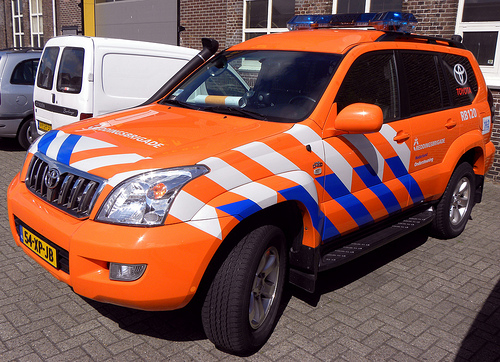
The lifeguard is able to provide all these elements to help prevent drownings (or other incidents) in their area of responsibility, and for this reason this should be the primary focus of a lifeguard's activities, as it is better to stop an incident from occurring rather than reacting once it has occurred. This means that the effectiveness of a lifeguard unit can be measured not by the number or rapidity of rescues, or the skill with which they are executed, but by the absence or reduction of drownings, accidents and other medical emergencies. Prevention is an effective skill that is vitally important to a lifeguard because it can aid in maintaining the safety of the aquatic patrons.
Duties
A lifeguard's key duties (usually as part of a team, but in some places, lifeguards may be required to work on their own) are to:
Enforce rules to prevent problems/injuries

Maintain concentrated observation of the duty area and its users in to anticipate problems (this will enable the lifeguard to intervene with one of the drowning prevention measures) and to identify an emergency quickly.
Supervise the use of other equipment when allocated to that duty (such as water slides or any other activities taking place)
Effect rescues and initiate other emergency action as necessary

Give immediate first aid in the event of injury to a bather or other incident
Communicate with bathers and other users to fulfill the above tasks
Help clean areas around pool or beach to ensure the safety of patrons

Lifeguards may have other secondary duties such as cleaning, filing paperwork, checking a swimming pool's chlorine and pH levels, or acting as a general information point. It is important that lifeguards never allow their secondary responsibilities to interfere with their primary responsibilities.
Lifeguards may also be required to attend in-service meetings to discuss strategy, patron safety and water skills.
The California State Lifeguards, a division of the California State Parks Peace Officer department, perform law enforcement duties in addition to regular lifeguard tasks.
Training
Every lifeguard has to undergo a certification course in order to be able to work as a lifeguard. Certain certification companies, such as the Red Cross or Ellis and Associates, are in charge of the certification process. Certification usually lasts for 1–2 years, but can last up to 5. Classes last 25–30 hours and will generally be held over a few days, with the hours per day varying depending on the number of days needed. At the end of the certification class, lifeguards are required to take a final exam, and will only receive a certificate if they pass the final exam. Lifeguards are then required to do additional training throughout the duration of their certification at the discretion of the facility they work for.
Most skills taught in various lifeguard certification classes are similar or the same, but some skills may vary minorly based on the certification company. Additionally, different in-water skills will be taught depending on the facility certifying the lifeguard, i.e., shallow/deep water pools, water parks, beaches, etc.
Training equipment required in certification classes include:
Rescue tubes
Backboards
CPR mannequins
Resuscitation masks
Bag-valve masks
Disposable gloves
AED Trainer
First aid supplies
Some of the various out-of-water skills taught are:
Cardiopulmonary resuscitation (CPR) – A series of chest compressions and ventilations that try to circulate blood containing oxygen throughout the body to vital organs in an attempt to resuscitate a victim.
First aid – The lifeguard in training should know how to protect themselves from blood borne pathogens. Lifeguards should protect themselves at all times when performing first aid.
Emergency oxygen administration – Provides emergency oxygen therapy for victims with breathing and cardiac emergencies.
In-line stabilization – A technique used for suspected spinal injuries both in and out of the water that uses the arms to stabilize the head and prevent further movement that could worsen the head, neck, or spinal injury.
Active and unconscious choking – Active choking measures make use of back blows and abdominal thrusts to try to force out the object blocking the victim's airway; Unconscious choking measures are similar to CPR with a few small changes.
Various first aid skills – Used to treat various injuries and sudden illnesses that can occur.
Legal Issues – lifeguards must learn how to legally care for guests and/or guests in distress, otherwise they may be a liability. The certification process and further trainings will instruct lifeguards on the legal facets of lifeguarding: duty to care, standard of care, negligence, consent, refusal of care, abandonment, confidentiality, and documentation.
Emergency Action Plans – each facility will have an established protocol in the event of an emergency. The details of this protocol are decided by the facility.
Some of the various in-water skills taught are:
Active-victim rescue – An active victim rescue is designed to quickly remove and calm a victim from the water. Depending on whether the victim is facing towards or facing away from the rescuer, the rescue will change.
Active-victim front rescue – A common rescue, when a victim is facing the rescuer, is to straighten the arms and push the victim to the side of the pool. The space the straightened arms give between the rescuer and the victim will prevent a victim from latching on to the rescuer. When approaching an active drowning victim from the rear, a common save is to perform a 'hooking' maneuver, where rescuers hook their arms under the victim's arm pits and begin extraction.
Passive-victim rescue – Saving and removing a victim who is passive (or not moving) in the water; There are variations for both shallow and deep water
Spinal rescue – A rescue that assumes a victim has a head, neck, or spinal injury and uses more appropriate measures to ensure that no unnecessary movement creates further harm to the victim. There are variations for both shallow and deep water.
Prerequisites
Most lifeguard certification companies require potential lifeguards to demonstrate strong swimming skills prior to the certification process. These prerequisites will usually include a mid-distance swim, a timed water tread, and diving for a weighted brick at the bottom of the pool.
Ongoing Trainings
Many aquatic facilities will have their lifeguards undergo additional Lifeguard Training Classes for the duration of their certification. The nature and frequency of these additional training depends on the aquatic facility and the certification company the aquatic facility follows. For example, a beach facility may practice beachfront saves and search-and-rescue scenarios, where an indoor pool facility whose lifeguards are responsible for the whole building may practice scenarios that simulate emergencies in different parts of the building. These in-service trainings are meant to serve as practice in order to maintain and develop skills taught during the certification process. Examples of these trainings include First Aid/CPR/AED skill review and Aquatic Emergency Action Plan Drills.
Additionally, some certification companies outside of the facility may audit or examine lifeguards during their rotations. These visits are meant to serve as both a test of preparedness and also as a learning experience and a chance to improve on weaker skills. Visits are generally unannounced and may include videoing of on-duty lifeguards, skills evaluations involving a scenario meant to model real life, and vigilance awareness testing.
Lifeguards also must be recertified regularly, as lifeguard certifications expire after some time.
Water entries
There are four main types of water entries:
Slide-in is the slowest of the four entries. This technique is used when a victim has a suspected head, neck, or spinal injury.
Stride jump should only be used in water depth of five feet or more and the lifeguard should be no higher than three feet above ground.
Compact jump can be used from the side of the pool or from the lifeguard chair. The pool depth should be at least five feet if jumping from an elevated position.