
Hurricane Helene ( heh-LEEN) was a powerful and devastating tropical cyclone that caused widespread catastrophic damage and numerous fatalities across the Southeastern United States in late September 2024. It was the strongest hurricane on record to strike the Big Bend region of Florida, the deadliest Atlantic hurricane since Hurricane Maria in 2017, and the deadliest to strike the mainland U.S. since Hurricane Katrina in 2005.
The eighth named storm, fifth hurricane, and second major hurricane of the 2024 Atlantic hurricane season, Helene began forming on September 22, 2024 as a broad low-pressure system in the western Caribbean Sea. By September 24, the disturbance had consolidated enough to become a tropical storm as it approached the Yucatán Peninsula, receiving the name Helene from the National Hurricane Center. Weather conditions led to the cyclone's intensification, and it became a hurricane early on September 25. More pronounced and rapid intensification ensued as Helene traversed the Gulf of Mexico the following day, reaching Category 4 intensity on the evening of September 26. Late on September 26, Helene made landfall at peak intensity in the Big Bend region of Florida, near the city of Perry, with maximum sustained winds of 140 mph (220 km/h). Helene weakened as it moved quickly inland before degenerating to a post-tropical cyclone over Tennessee on September 27. The storm then stalled over the state before dissipating on September 29.
Helene's precursor and early stages caused flooding in Nicaragua, Honduras, the Cayman Islands, and the Yucatán Peninsula, where high winds left more than 120,000 customers without electricity in Quintana Roo. Storm surge in Florida caused significant damage from the Tampa Bay area northward. Hillsborough and Pinellas counties combined reported the destruction of at least 419 residences, major damage to at least 18,512 structures, and minor to moderate damage to 13,909 others. Several counties in or near the Big Bend suffered extensive wind impacts. Heavy crop and timber losses occurred over southern Georgia, totaling about $5.5 billion. Tens of thousands of homes and buildings suffered wind damage as far north as the Augusta area, while floodwaters entered at least 200 structures and a number of vehicles in the Atlanta area. Catastrophic flooding and more than 2,000 landslides occurred over the southern Appalachian Mountains, especially North Carolina, due to rainfall totals up to 30.78 in (782 mm) in Busick, North Carolina. In North Carolina, over 125,000 housing units and approximately 822,000 acres (333,000 ha) of timberland suffered some degree of damage. Thousands of miles of bridges and roads were damaged by floodwaters. At least 106 fatalities occurred in North Carolina, far more than any other state. Helene and its remnants also spawned thirty-nine tornadoes across the United States, one of which killed two people in Wheeler County, Georgia. Flooding also impacted Virginia, West Virginia, and Ohio, leaving 12 homes destroyed and 104 others damaged in Pulaski County, Virginia, alone. More than 7.4 million customers lost electricity across the United States. At least 252 deaths and $78.7 billion in damages have been attributed to Helene, making it the second-deadliest hurricane to strike the continental United States in fifty years, after Katrina in 2005, and the deadliest overall since Maria in 2017, as well as being the fifth costliest hurricane in the United States.
Meteorological history
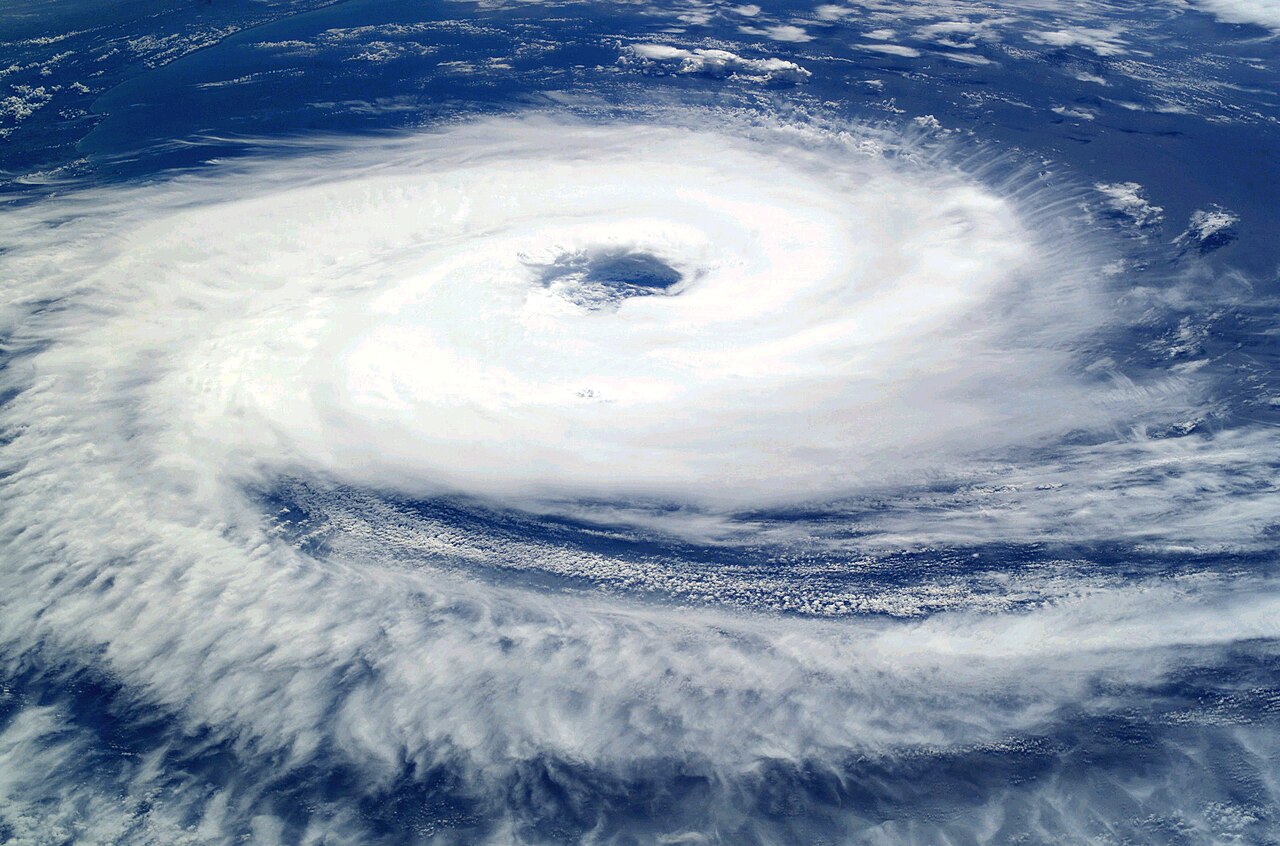
On September 17, 2024, the National Hurricane Center (NHC) highlighted the potential for tropical cyclogenesis in the western Caribbean Sea. Conditions conducive for development of a tropical cyclone resulted from the interaction of the Central American gyre—a broad monsoon low pressure system—and the Madden–Julian oscillation, which reinforced the large-scale cyclonic flow extending from the eastern Pacific Ocean to the western Caribbean Sea. Several days later, on September 22, a broad low-pressure area developed within the western Caribbean. As the system traversed an environment conducive for tropical cyclone development, showers and thunderstorms associated with the disturbance gradually consolidated. Due to the system's imminent threat to land, it was designated Potential Tropical Cyclone Nine on September 23. The next day, Air Force Reserve Hurricane Hunters aircraft and satellite data indicated that a low-level center had formed by 12:00 UTC, leading to the NHC to upgrade the system to Tropical Storm Helene with maximum sustained winds of 45 mph (72 km/h). The system continued strengthening, becoming a hurricane by 12:00 UTC on September 25 as it entered the Gulf of Mexico while turning north. An upper-level trough to its west and a ridge of high pressure located off the Southeastern United States both served to steer the cyclone towards the U.S. Gulf Coast. Helene was an extensive system, with the NHC noting in multiple forecast discussions that the forecast storm radii were "at the 90th percentile of hurricane size at similar latitudes".
After remaining steady in intensity for a while due to its broad size and some entrainment of drier air to its west, Helene rebounded on the morning of September 26. Aided by low mid-level wind shear, high relative humidity, and sea surface temperatures exceeding 86 °F (30 °C) near the Loop Current, the system began to rapidly intensify. An increasingly defined eye developed, and Helene reached Category 2 intensity at 12:00 UTC. By 18:00 UTC, Helene strengthened to a Category 3 major hurricane, with sustained winds up to 120 mph (190 km/h). At 00:00 UTC on September 27, the hurricane attained its peak intensity with maximum sustained winds of 140 mph (220 km/h) and a minimum barometric pressure of 939 millibars (27.73 inHg). Retaining this intensity, it made landfall about 10 miles (16 km) west-southwest of Perry, Florida at 3:10 UTC, becoming the strongest hurricane to strike Florida's Big Bend region since records began in 1900. Rapid weakening occurred as the storm tracked inland, and it weakened to a Category 2 hurricane at 5:00 UTC shortly after crossing into Georgia. Weakening further, it became a tropical storm over east central Georgia at 9:00 UTC. Helene transitioned to a post-tropical cyclone at 18:00 UTC by September 27 in southern Kentucky, with the system losing deep convection and merging with a cut-off low to its west. After executing a slow-cyclonic loop, remnants of Helene dissipated at 18:00 UTC on September 28 over north-central Tennessee.
As Helene moved north into the Southern Appalachian Mountains, the storm would encounter the terrain of the Blue Ridge and Black Mountains. As it passed through, there was a significant and noticeable amplifying of rainfall, as well as a rapid increase in cooling, condensation and precipitation in the region.

Influence of climate change
On October 9, researchers with World Weather Attribution concluded with "high confidence" that Helene was made worse by climate change. In a scientific assessment, researchers found the 2.3 °F (1.3 °C) increase in temperatures due to climate change increased Helene's rainfall by 10% and maximum wind speeds by 11%, or 13.6 mph (22 km/h), as compared to a similar storm in prior cooler conditions.
Preparations
Mexico
Tropical storm warnings were issued on September 24, 2024, for the eastern Yucatán Peninsula. Parts of Quintana Roo and Yucatán were placed under a blue alert, indicating indirect impacts. It was later raised to red alert, maximum danger. Cruise ship arrivals in the former state's ports were canceled for September 24 and 25. Tren Maya was also closed. On Isla Mujeres, two shelters were opened. Evacuations were carried out in vulnerable areas. Visitors of Isla Holbox were offered a ferry ride off the island at no cost. Classes were suspended in Quintana Roo.
Caribbean
Cayman Islands
The Cayman Islands were under a tropical storm warning on September 24. The Cayman Islands' Red Cross shelter opened in preparation for the storm; nobody used it. Sandbagging sites opened on Grand Cayman and Cayman Brac. Due to the threat of heavy rainfall, schools in the Cayman Islands were closed on September 23. Charles Kirkconnell International Airport and Owen Roberts International Airport were closed ahead of Helene's arrival. The Cayman Islands Regiment was deployed ahead of the system to help with the preparation and distribution of sandbags. Additionally, a small craft warning was issued for the islands on September 23, with a marine advisory issued the next day. The tropical storm warning was canceled the next day.

Cuba
Tropical storm warnings and hurricane watches were issued for western Cuba. Medical brigades were prepared for flood-prone areas; as heavy rain began to fall, schools and ports were closed, and fishing boats were called in. Due to adverse weather conditions caused by Helene, the Provincial Transport Company of Havana suspended ferry services in Regla. Additionally, the Maritime Administration of Cuba suspended navigation in the Gulf of Batabanó.
United States
Amtrak modified or canceled several of its southeastern train routes between September 27 and October 1 because of the storm.
Florida
Hurricane warnings were issued for the Big Bend area of Florida, and the entire state except the westernmost part of the Florida panhandle was put under a tropical storm warning. In addition, on the evening of September 26, an extreme wind warning was issued for the east part of the Florida panhandle, the first since Hurricane Idalia. On September 23, Ron DeSantis, the governor, issued a state of emergency for 41 of Florida's 67 counties. The next day, this was expanded to 61 counties. U.S. President Joe Biden authorized a federal disaster declaration for 61 counties across Florida. Locally, Volusia County issued a state of emergency. Several sandbagging sites opened up across the state. On September 24, several state parks were closed: four of them in Franklin County, two in Gulf County, and one in Gadsden County.

In the Tampa Bay area, officials announced that schools would be closed ahead of the storm. A college football game between Florida A&M University and Alabama A&M University, which was scheduled for the weekend of September 28–29, was postponed until November 29 due to the storm. At Florida State College at Jacksonville, classes and activities at the campus were canceled for two days. The SpaceX Crew-9 mission, which would have launched from the Cape Canaveral Space Force Station on September 26, was delayed to September 28 due to the storm. The Central Florida Zoo and Botanical Gardens planned to close on September 26 and canceled events on that date.
Mickey's Not-So-Scary Halloween Party was canceled due to Helene, with SeaWorld Orlando and several other parks in Walt Disney World and Universal Orlando also closing or modifying their hours. Halloween Horror Nights was also canceled. The universities of Central Florida, Embry–Riddle Aeronautical, Florida, Florida A&M, Florida Atlantic, Florida Gulf Coast, Florida State, Keiser, Lynn, North Florida, South Florida, and Stetson announced closures of their campuses and suspended academic operations. Leon County opened up schools to be used as shelters.
On September 24, Citrus County issued mandatory evacuations for zone A, which includes coastal areas in the communities of Crystal River and Homosassa. In Wakulla County, a mandatory evacuation was ordered for all residents and visitors. In contrast, in Hernando County, mandatory evacuations were ordered for anyone west of US 19 and all residents in coastal or low-lying areas and those living in manufactured homes. Two prisons in Wakulla County holding a combined 2,500 inmates were not evacuated despite the evacuation order issued to residents. Gulf County issued mandatory evacuations for all visitors. In Charlotte County and Franklin County, mandatory evacuations were issued for barrier islands, low-lying and flood-prone areas, manufactured homes, and homes that did not meet building codes. In Sarasota County, officials issued an evacuation order for Level A and manufactured home communities on September 25.

Busch Gardens Tampa Bay, St. Pete–Clearwater International Airport, and Tampa International Airport were closed on September 26. Further north, Tallahassee International Airport was closed the same day.
Prior to Helene's landfall, residents in Florida showed the highest level of perception of disaster likeliness at 84% believing that there would likely be a major meteorological event, according to a 2023 FEMA National Household Survey. Despite this, there was also a relatively low preparedness rate within the state, with only about 47% of residents saying that they believed they could stay home in case of a major meteorological event.
Georgia
The coast of Georgia was placed under tropical storm warnings. In contrast, southwestern Georgia was placed under a hurricane warning which extended as far north into the state as Spalding County, and all tropical storm watches in Georgia were replaced with tropical storm warnings as far north as the Tennessee and Georgia state border. The National Weather Service in Peachtree City accidentally issued a hurricane warning for Jackson County when it was supposed to be a tropical storm warning.

In addition, on the night of September 26, an extreme wind warning was issued for portions of southern Georgia, including Valdosta. On September 24, in preparation for Helene, officials in the counties of Bryan, Candler, and Chatham began mobilizing emergency response centers. Colquitt, Thomas, and Decatur counties opened shelters. On the same day, Governor Brian Kemp issued a state of emergency for Georgia since Helene was expected to track into the state. In Thomas County, the Public Works Department began providing sandbags due to the storm.
On September 25, schools were closed in the counties of Bibb and Twiggs. Many schools in the Atlanta metropolitan area canceled instruction for September 26 and 27, such as Atlanta Public Schools, with some counties moving students and non-essential workers online. Also, some schools went to a digital learning day, for example, Gwinnett County Public Schools had a digital learning day on the 26th and was canceled altogether on the 27th. Elsewhere, in Clayton County, schools and indoor and outdoor athletic events were canceled. The Cumberland Island National Seashore and Fort Pulaski National Monument closed on September 25 in preparation for the hurricane. The Atlanta Braves postponed the remaining two games in a series against the New York Mets to September 30 in a doubleheader. Curfews were implemented by several localities on September 26. Emory University moved classes online for September 26 and 27, and the University of Georgia cancelled classes entirely. Ahead of the storm, vice-presidential nominee JD Vance canceled two events on September 26 for the 2024 Trump–Vance campaign scheduled in Macon and Flowery Branch.
South Carolina
The entirety of South Carolina was put under a tropical storm warning on September 25, followed by a statewide state of emergency being issued by Governor Henry McMaster the same day. Congaree National Park closed at 4:00 pm local time on September 26 through September 27 due to the hurricane. On September 27, Fort Sumter and Fort Moultrie National Historical Park and Charles Pinckney National Historic Site temporarily closed due to the hurricane threatening the safety of visitors and staff. Schools in Bamberg, Fairfield, Kershaw, Lee, Saluda, Sumter, Richland One and Two counties, University of South Carolina, Clarendon, Calhoun, Newberry, Orangeburg, Lexington One, Two, and Four, and Lexington-Richland Five counties all closed and switched to e-learning classes on September 27. On September 25, the Weather Prediction Center issued a high risk of excessive rainfall in the Appalachian region of the state.
North Carolina
Western North Carolina was placed under tropical storm warnings. Governor Roy Cooper declared a state of emergency for North Carolina. Both Gorges State Park and Mount Mitchell State Park were closed due to the storm, with a shutdown also occurring on the Blue Ridge Parkway.
Elsewhere
Portions of Indiana and Ohio were placed under high wind warning or wind advisory alerts as a result of remnants of the hurricane producing wind speeds of at least 10–35 mph (16–56 km/h) as well as wind gusts up to 50 mph (80 km/h). In Alabama, Henry and Houston Counties were placed under a hurricane warning. Several eastern counties were also placed under tropical storm warning. Several school districts in Alabama either canceled school or released early in preparation for Helene. A state of emergency was approved for the state by President Joe Biden. In Louisville, Kentucky, a music festival, Louder Than Life, canceled their Friday shows due to strong winds. Glenn Youngkin, the Governor of Virginia, issued a state of emergency. Virginia Task Force 1 along with Maryland Task Force 1 were deployed to Hurricane Helene.
Impact
Honduras
Honduras experienced heavy rains as a result of the Central American gyre which preceded Helene. As a result, the Goascorán River brought flooding to nearby communities located in low-lying areas through Valle and Choluteca departments, reaching a level over 0.48 feet (0.15 m). A state of emergency was issued in San Marcos de Colón, Choluteca, due to overall damage caused by the storm. Nearly 30 homes were estimated to be affected in El Cubulero, Alianza, Valle. Due to high waves onshore, 120 families were affected in the coastal town of Marcovia, Choluteca; at least one home was destroyed. Heavy rainfall left communities isolated, and 50 people were sheltered in El Paraíso due to severe floods.
Mexico
The region around Cancún received 240 mm (9.4 in) of rain. Over 120,000 customers, 14% of all Comisión Federal de Electricidad customers, lost power in Quintana Roo. Extreme flooding covering much of Isla Mujeres occurred. The island also experienced wind gusts up to 69 mph (111 km/h). Cancún and Cozumel saw very rough surf, breaking the seawall in Cozumel and increasing beach erosion in Cancún. Flights at Cozumel International Airport were delayed while Cancún International Airport saw nearly 100 cancellations or delays. Only minor delays occurred at Mérida Airport. The companies most affected by Helene were Viva Aerobus, Volaris, and Aeromexico. Trees fell and roofs were damaged across the Yucatán Peninsula. A gas explosion occurred in Cancún during Helene, but no fatalities were reported. No deaths nor major damage were reported in Mexico during Helene.
Caribbean
Cayman Islands
Over 10 inches (250 mm) of rain fell onto the Cayman Islands. Heavy rainfall and large waves began affecting the Cayman Islands on September 24. Roads in George Town were flooded as rainfall produced by the storm caused 14 power outages, affecting 118 customers across Grand Cayman. The government began planning to buy land to aid in storm water management. After Helene had passed, Grand Cayman was impacted by 5–7 ft (1.5–2.1 m) waves on September 26.
Cuba
In Cuba, heavy rainfall occurred, with peak accumulations of 218.4 mm (8.60 in) recorded in Presa Herradura and 186.8 mm (7.35 in) in Palacios. Elsewhere, Punta del Este and Isla de la Juventud received 101 mm (4.0 in), Paso Real de San Diego received 78 mm (3.1 in), Pinar del Río received 72 mm (2.8 in), and Isabel Rubio received 70 mm (2.8 in). In Pinar del Río Province, 17 of the province's 24 reservoirs overflowed. Elsewhere, in El Palenque, road access was cut off due to flooding caused by Helene. Helene's winds caused a failure in the power lines that feed the Guanito transmitter, causing most of the territory, especially San Juan and Martínez, Guane, Mantua, and Minas de Matahambre, to suffer blackouts. Gale-force winds were recorded in the provinces of Isla de la Juventud and Pinar del Río. In total, around 70,000 customers experienced power outages in Pinar del Rio, with another 160,000 residents affected in Artemisa.
In Havana, one person was injured after an uninhabited building collapsed due to heavy rains, and two landslides occurred. Intense rainfall caused the Cuyaguateje River to rise rapidly, causing flooding in parts of Pinar del Río on September 26. Flooding also occurred in Mayabeque Province, primarily in the municipalities of Batabanó, Melena del Sur, and San Nicolás de Bari.
United States
Initial estimates suggested that insured losses could reach US$3–6 billion, according to reinsurance broker Gallagher Re; AM Best estimated losses in excess of US$5 billion. Later estimates by Moody's Analytics estimated that the damage could reach US$20–34 billion. AccuWeather estimated that the total damage and economic loss could cost anywhere from US$225–250 billion. At least four million people have lost power, according to the Omaha Public Power District. Agricultural damage is estimated at US$7 billion. Insured losses are expected to be lower than initially estimated due to standard home insurance policies not including flood insurance coverage, increased coverage restrictions by insurers, and hurricane deductibles. Helene caused 65 wind-related fatalities across the Southeastern United States, the most wind-related fatalities caused by a tropical cyclone in the Contiguous United States since at least 1963.
On September 27, Delta Air Lines at Hartsfield–Jackson Atlanta International Airport issued travel waivers to people impacted by flight cancellations or delays. They also anticipated that there would be travel disruptions due to the force of Hurricane Helene, making it dangerous for airplanes to fly. There were 171 flight cancellations to and from Hartsfield–Jackson Atlanta International Airport, most of which were from Charlotte Douglas International Airport and Augusta Regional Airport. There were 489 flight delays, with most of those flight delays from Tampa International Airport, Augusta Regional Airport, and Jacksonville International Airport. These cancellations and delays included Delta Air Lines, Frontier Airlines, Spirit Airlines, WestJet, and many other airlines.
A Baxter International manufacturing site in Marion, North Carolina, which produced 60% of the nation's sterile intravenous and kidney dialysis fluids for health facilities, was temporarily closed due to flood damage. The closure of the manufacturing site led to a shortage and rationing of IV fluids across hospitals across the country. The shutdown resulted in shortages of parenteral IV fluids through the end of 2024.
Across six affected states, a total of 250 fatalities were recorded. North Carolina reported the highest amount, with 107 deaths recorded across the state. Buncombe County alone accounted for 43 of the total deaths in the state. Florida would report 34 fatalities, Georgia would report 37, and South Carolina would report 50.
Florida
By the morning of September 26, 2024, thousands in the Tampa Bay area were experiencing power outages. Wind gusts reached 64 mph (103 km/h) in Fort Lauderdale and 67 mph (108 km/h) in Naples. Key West experienced storm surge of 1 to 3 feet (0.30 to 0.91 m). Storm surge reached 7.18 feet (2.19 m) in Tampa. Areas of the Big Bend experienced inundation of more than 16 feet.
Helene caused 34 deaths in Florida, including at least twelve in Pinellas County; two in Tampa involving a car accident where a sign fell on a car on I-4, along with an elderly woman who drowned inside her house; and one in Dixie County involving a tree falling on a home. Of the deaths in Pinellas, ten have been drownings and one was caused by an electrical fire that started after water rushed into a home. Pasco County Sheriff's Office rescued around 200 people in water emergencies. In Citrus County, over 100 people and 50 pets were rescued after ten feet of storm surge hit the area. In total, over 1,000 people had to be rescued in the Tampa Bay area. As a result of the storm, around 1.69 million customers in Florida lost power. Rainfall in the state peaked at 14.39 in (366 mm) in Liberty county.
Additionally, researchers at Imperial College London, applying extreme event attribution, concluded in October 2024, that 44% of the loss in Florida due to Helene could be attributed to climate change.
Georgia
Though the storm weakened substantially crossing over Florida, Helene still entered Georgia as a strong category 2 hurricane, with maximum sustained winds estimated at 110 mph (180 km/h). The high winds caused at least $5.5 billion in losses to the timber and agricultural industries.
In Atlanta, the National Weather Service in Peachtree City issued the city's first-ever flash flood emergency due to Atlanta having its heaviest 3-day rainfall totals in 104 years. Rainfall totals over 48 hours in the city reached 11.12 in (282 mm), the most the city has seen in 48 hours since record keeping began in 1878. About 25 people had to be rescued from floods in Atlanta. Localized urban flooding was also reported on multiple interstates like I-285, I-85, I-75 and many other interstate systems encompassing Atlanta. More significant flooding occurred in Buckhead due to overflowing of the Peachtree Creek, which flooded multiple surrounding apartment complexes. Other flooding occurred in areas around Metro Atlanta. The Chattahoochee River overflowed its banks in multiple areas around Fulton County, Georgia and in downstream counties which prompted a water rescue in Coweta County. Three tornadoes were spawned by Helene in the state, including one that killed two people in Wheeler County when it overturned their mobile home. The Wheeler County tornado was rated an EF1, while the other two were rated EF0.
Rabun County officials ordered the evacuation of people living below a dam at Lake Rabun after officials were forced to open a third floodgate, inundating several roads and trapping people in their communities in the southern part of the county. Four homes were destroyed by falling trees in White County and Habersham County, but no injuries were reported. Rabun County's emergency management department said many roads were left "impassable" by the storm and that most residents were without power into September 27, urging them to stay home to allow rescue and cleanup personnel to work uninterrupted. The Hiwassee River in Towns County crested at over ten ft (3.0 m), just one ft (0.30 m) below the record, and flooded pastures and parts of a campground, but campers were not reached.