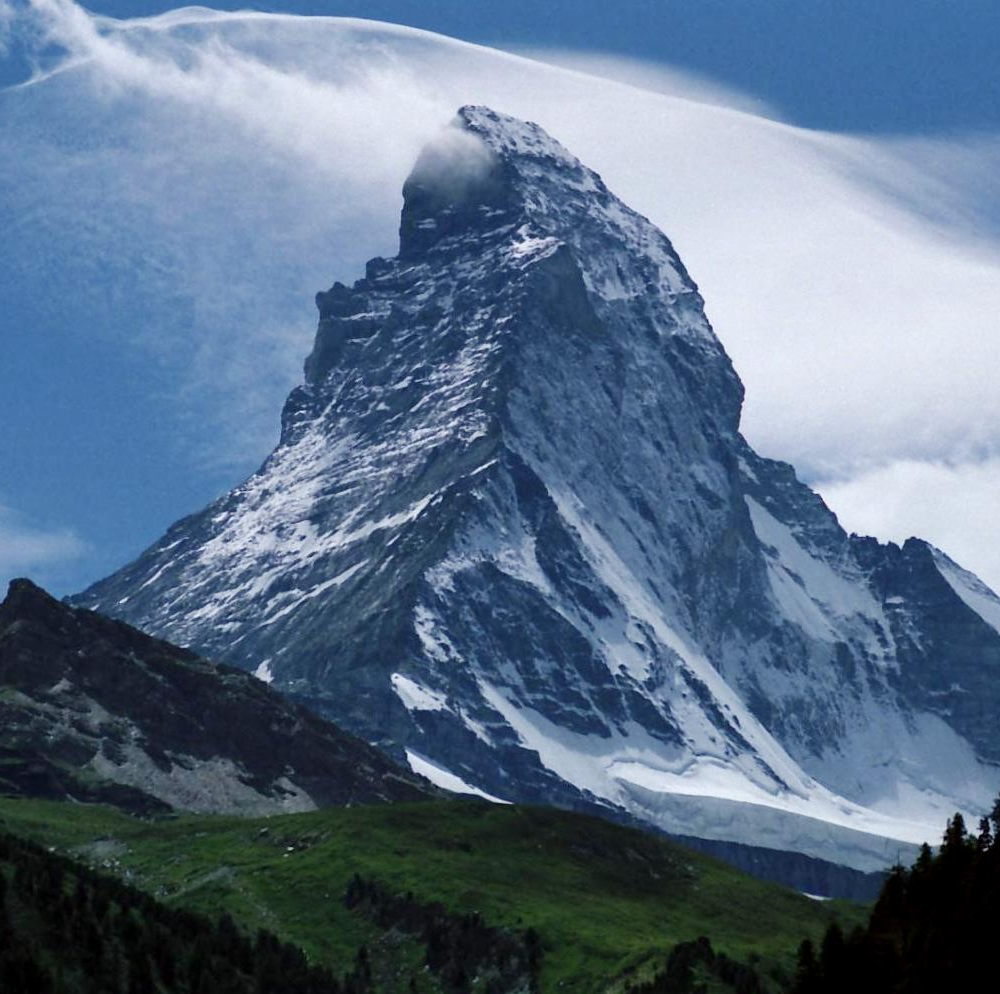
The Grampian Mountains (Scottish Gaelic: Am Monadh) is one of the three major mountain ranges in Scotland, that together occupy about half of Scotland. The other two ranges are the Northwest Highlands and the Southern Uplands. The Grampian range extends northeast to southwest between the Highland Boundary Fault and the Great Glen. The range includes many of the highest mountains in the British Isles, including Ben Nevis (whose peak contains the highest point in the British Isles at 1,345 m or 4,413 ft above sea level) and Ben Macdui (whose peak contains second-highest at 1,309 m or 4,295 ft).
A number of rivers and streams rise in the Grampians, including the Tay, Spey, Cowie Water, Burn of Muchalls, Burn of Pheppie, Burn of Elsick, Cairnie Burn, Don, Dee and Esk. The area is generally sparsely populated.
There is some ambiguity about the extent of the range, and until the nineteenth century, they were generally considered to be more than one range, which all formed part of the wider Scottish Highlands. This view is still held by many today, and they have no single name in the Scottish Gaelic language or the Doric dialect of Lowland Scots. In both languages, a number of names are used. The name "Grampian" has been used in the titles of organisations covering parts of Scotland north of the Central Belt, including the former local government area of Grampian Region (translated into Scots Gaelic as Roinn a' Mhonaidh), NHS Grampian, and Grampian Television.

Name
The Roman historian Tacitus recorded Mons Graupius as the site of the defeat of the native Caledonians by Gnaeus Julius Agricola c. 83 AD. The actual location of Mons Graupius, literally 'Mount Graupius' (the element 'Graupius' is of unknown meaning), is a matter of dispute among historians, though most favour a location within the Grampian massif, possibly at Raedykes, Megray Hill or Kempstone Hill. The spelling Graupius comes from the Codex Aesinas, a mediaeval copy of Tacitus's Germania believed to be from the mid-9th century. In the Middle Ages, this locale was known as the Mounth, a name still held by a number of geographical features.
Etymology
Recorded first as Graupius in 83 A.D, the origin of the name Grampians is uncertain. The name may be Brittonic and represent a corrupted form, of which the genuine would be *Cripius, containing *crip meaning "ridge" (cf. Welsh crib).