
Deakin University is a public research university in the state of Victoria, Australia. Its largest campus is in Victoria's capital Melbourne, with regional campuses in Geelong and Warrnambool. The university was named after Alfred Deakin, the early Prime Minister of Australia and a founding father of Australian Federation.
The university's foundation dates back to the opening of the Gordon Memorial Technical College in 1887, later renamed as the Gordon Institute of Technology in 1921. It's higher education portion merged with the Geelong campus of the State College of Victoria in 1974 to form Deakin University.
As of 2024, Deakin University is ranked among the top 1% of universities in the world, with some of its disciplines ranked within the world's top 100. Deakin Business School has accreditation from the Association to Advance Collegiate Schools of Business and EQUIS.

Deakin University consistently ranks highly in student satisfaction. Deakin has had the highest undergraduate student satisfaction ratings and in the top two for highest postgraduate student satisfaction out of all Victorian universities every year since 2010.
History
Deakin University was established as a merger between State College of Victoria, Geelong (formerly Geelong Teachers College), and the higher education courses of the Gordon Institute of Technology, which originally opened in 1887 as the Gordon Memorial Technical College. The vocational part of the Gordon continues separately as the Gordon Institute of TAFE.
Deakin University was formally established with the passage of the Deakin University Act 1974. Deakin University's first campus was established at Waurn Ponds, previously a campus of the Gordon Institute of Technology.
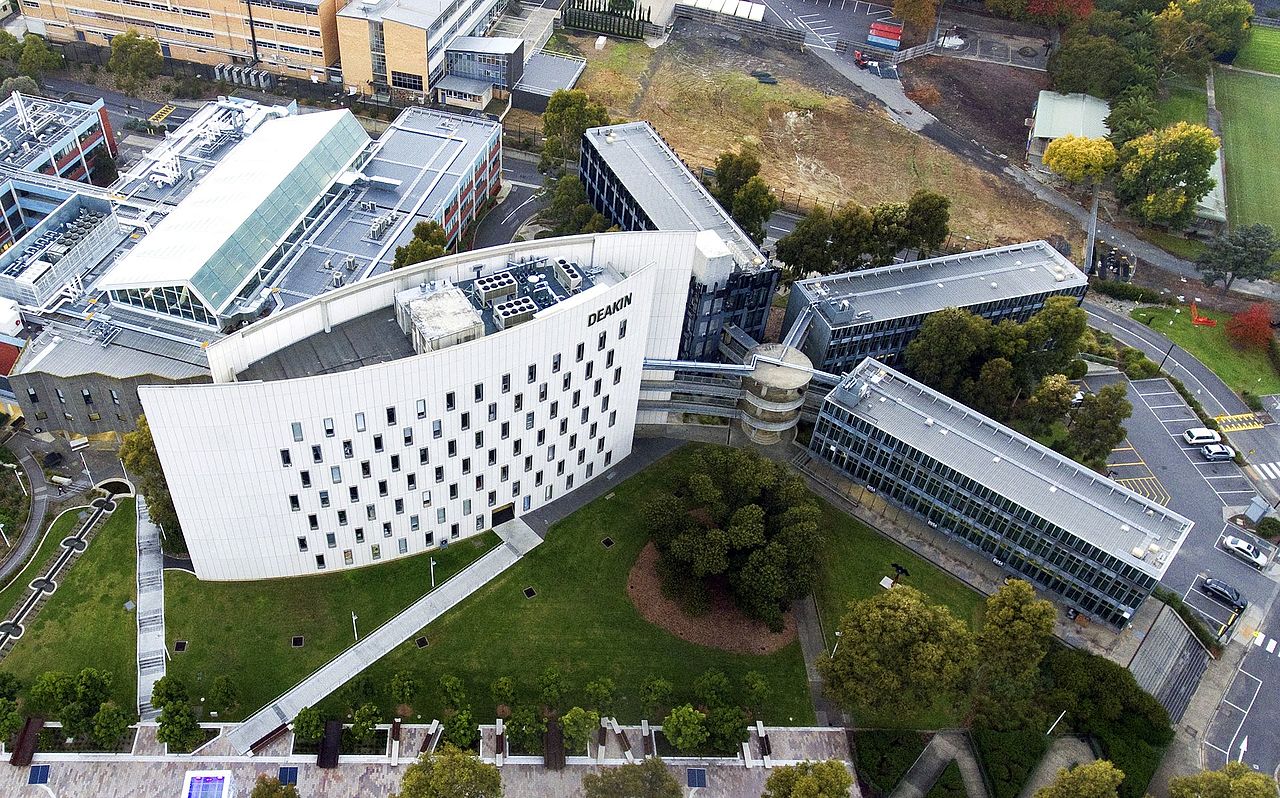
The Burwood campus is on the site of the former Burwood Teachers' College (established in 1954). That college began by conducting two-year training courses for primary school teachers, and three year courses for infant teachers (females only).
As part of the Dawkins education reforms that were announced in 1988 by the Commonwealth government, a merger with Warrnambool Institute of Advanced Education took place in 1990, which was followed by a merger with most of Victoria College in 1991, including its campuses in Burwood, Malvern and Clayton.
The former Toorak Campus, located in Malvern, was offered for sale in 2006 as the university considered the campus surplus to its requirements. The courses and resources were relocated to the Melbourne Burwood campus in November 2007. As a Deakin campus, it was home to the Deakin Business School, Deakin University English Language Institute (DUELI), and the Melbourne Institute of Business and Technology, which have now become the Deakin College.

The main building on the site was the 116-year-old Stonnington Mansion The sale of Stonnington Mansion by Deakin provoked public outrage as it involved the mansion which was at risk of redevelopment by property developers. The Stonnington Stables art gallery and the university's contemporary art collection were located here, but has since relocated to the Deakin University Art Gallery at the Melbourne Burwood campus. The Deakin University Art Gallery has a wide collection of work by Australian artists including the Sydney based artist Rox De Luca. The university's action of offering the campus, including the mansion, provoked public outrage over the potential privatization of what had been public space. In December 2006, the three-mansion was sold for $33 million to a joint venture between Hamton Property Group and Industry Superannuation Property Trust.
Campuses and buildings
Melbourne Burwood Campus
The university's largest campus is in Burwood (37.8479°S 145.1143°E / -37.8479; 145.1143 (Deakin University, Melbourne Campus)), about 45 minutes by tram (route 75) from the Melbourne CBD. Located alongside Gardiner's Creek parklands between Elgar Road on the north-west border and Mount Scopus Memorial College on the east border. The campus has around 31,975 (2020) undergraduate and postgraduate on-campus students. A recent addition to the Burwood campus in 2021 was the law building, designed by Australian architecture firm Woods Bagot. This building was awarded first place, gold at the 2022 WAN Awards.
Waurn Ponds Campus
The original campus of Deakin University (38.1979°S 144.2973°E / -38.1979; 144.2973 (Deakin University, Waurn Ponds Campus)) is located in the regional city of Geelong in the suburb of Waurn Ponds, 72 kilometres south west of Melbourne. The campus, serviced by the Princes Highway and the Geelong Ring Road. It has a student population of more than 8,382 (2020).
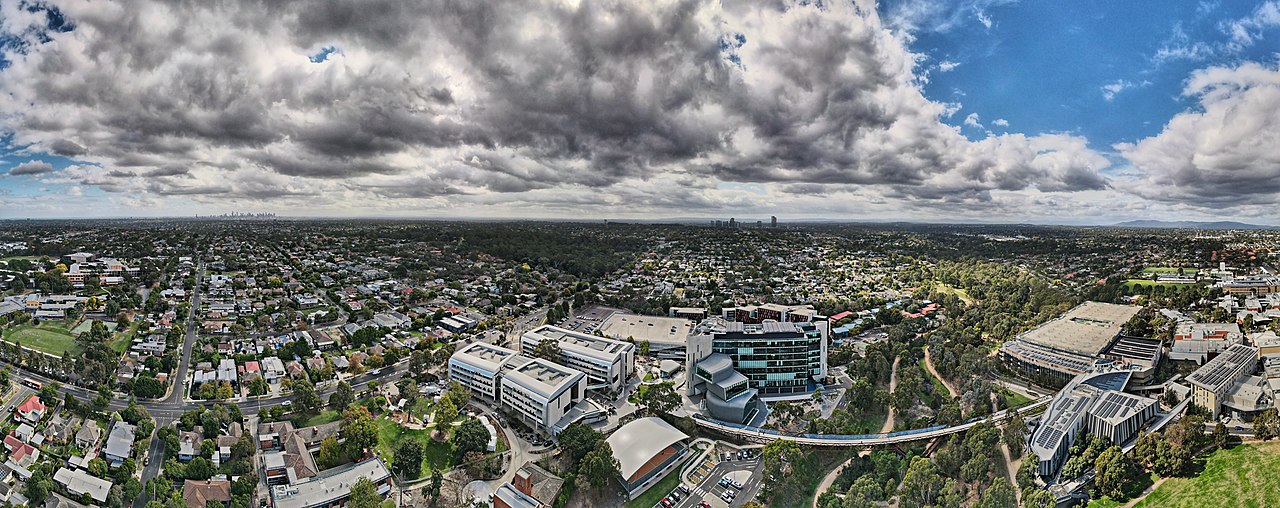
The campus is home to the Geelong Technology Precinct, which provides research and development capabilities and opportunities for university–industry partnerships and new enterprises in the region. The Elite Sports Precinct is home to the Deakin Ducks Football Club, and is used by the Geelong Football Club as an alternate training facility.
The Waurn Ponds Deakin Residence houses 800 students in shared dorms, shared units, town houses and studio apartments.
The residence is made up of Alfred Deakin College, Barton College, and Parkes College.

The Deakin University School of Medicine was opened in 2008 by the then Prime Minister of Australia Kevin Rudd. Deakin's Doctor of Medicine (M.D.) is a four-year, graduate-entry program, which requires students to complete a Bachelor’s degree (of at least three-year duration) before entry, together with GAMSAT/MCAT test and a medical MMI interview. Course entry is highly competitive with more than 3600 domestic applicants indicated Deakin as a preference for 130 MD places in 2023-2024 via GEMSAS, making it one of the most applied-to medical schools in Australia. Clinical education of the MD program can be completed at one of the clinical schools in Melbourne and regional Victoria.
Warrnambool Campus
The Warrnambool Campus (38.3906°S 142.5373°E / -38.3906; 142.5373 (Deakin University, Warrnambool campus)) was created in 1990 when the university absorbed the Warrnambool Institute of Advanced Education. It is situated on the banks of the Hopkins River in the coastal city of Warrnambool, close to local surf beaches and popular tourist attractions in close proximity to the Great Ocean Road and The Twelve Apostles. The 94-hectare (230-acre) site is approximately 5 kilometres (3.1 mi) from the Warrnambool CBD, serviced by the Princes Highway and by its own railway station, and bus services from Melbourne and Geelong, as well as locally in Warrnambool between the campus and the city.
There is an on-campus student population of around 1135 students pursuing courses in arts, business, education, environment, health sciences, law, management, marine biology, nursing and psychology.
Geelong Waterfront Campus
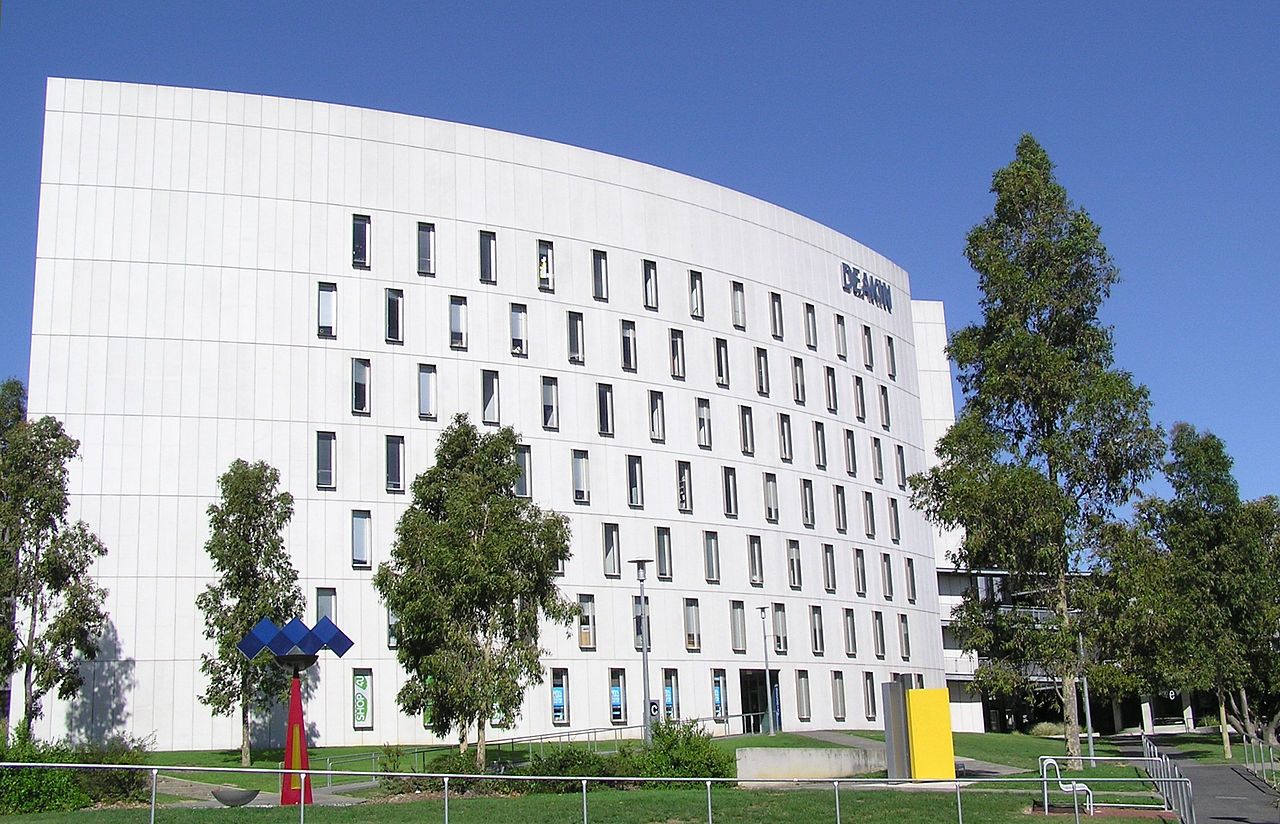
The Geelong Waterfront Campus (38.1439°S 144.3603°E / -38.1439; 144.3603 (Deakin University, Waterfront Campus)) is Deakin's newest campus, located on Corio Bay, in the central business district of Geelong. Originally built as the Dalgety's Woolstores in 1893, the buildings have been extensively renovated.
More than 5,362 (2020) students are based at the Geelong Waterfront Campus, which hosts the schools of Architecture and Built Environment, Health and Social Development, Psychology, and Nursing and Midwifery, as well as the Faculty of Business and Law.
A $37 million redevelopment of the Dennys Lascelles Building has increased the capacity of this campus, allowing the university to provide an expanded range of courses. The building houses the Alfred Deakin Prime Ministerial Library and the Alfred Deakin Institute.
This campus houses Costa Hall, a 1422-seat concert auditorium, which is used for the university's graduation ceremonies and is part of Geelong Arts Centre.
Governance and structure
University Council
The Deakin University Council is the governing body of the university and is chaired by the chancellor, Claire Higgins. The council is responsible for the general direction and oversight of the university and is publicly accountable for the university's actions. The vice-chancellor is the chief executive officer of the university and is responsible to the council. Professor Iain Martin was vice-chancellor and president of Deakin University and Deakin's 7th vice-chancellor until his resignation (effective immediately) on June 9, 2026.
Chancellors and Vice-Chancellors
Source:
Chancellors
1978-1982 – Peter Thwaites
1983-1986 – Austin Asche
1987-1996 – Jim Leslie
1997–2005 – Richard Searby
2006–2016 – David M. Morgan
2016–2025 – John Stanhope
2026-present - Claire Higgins
Vice-Chancellors
1977–1985 – Frederic Jevons
1986–1991 – Malcolm Skilbeck
1992–1996 – John A. Hay
1997–2002 – Geoff Wilson
2003–2010 – Sally Walker
2010–2019 – Jane den Hollander
2019–9 June 2026 – Iain Martin
9 June 2026- present - Matthew Clarke (Acting Vice-Chancellor)
Faculties and departments
The university is divided into four faculties, covering arts and education, business and law, health, and science, engineering and built environment. Within the Faculty of Arts and Education the three schools cover education, social sciences, humanities, communication and the creative arts. The Institute of Koorie Education also falls under the Faculty of Arts and Education. The Faculty of Health has the School of Medicine, along with schools covering nursing and midwifery, exercise and nutrition sciences, psychology, and incorporates subjects such as occupational therapy, social work, and health economics into the School of Health and Social Development. The Deakin University School of Law and the Deakin Business School both fall under the Faculty of Business and Law, and the Faculty of Science, Engineering and Built Environment encompasses architecture, information technology, engineering, and life and environmental sciences.
Constituent schools
Deakin Business School
Deakin Law School
School of Architecture and Built Environment
School of Engineering
School of Information Technology
Deakin University School of Medicine
School of Nursing and Midwifery