
A business school is a higher education institution or professional school that teaches courses leading to degrees in business administration or management.
A business school may also be referred to as school of business, school of management, management school, school of business administration, college of business, business college, or colloquially b-school or biz school.
Types
There are several forms of business schools, including a school of business, business administration, and management.
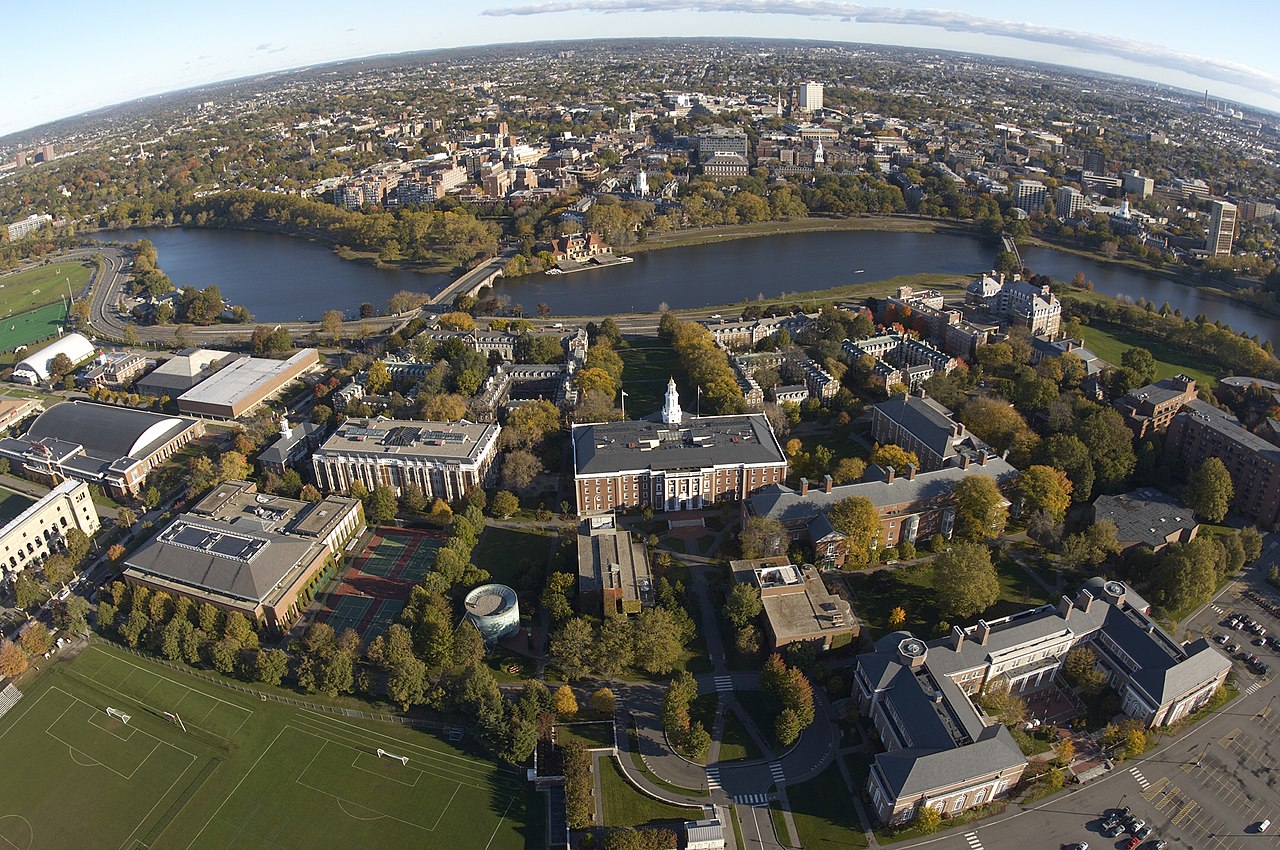
Most of the university business schools consist of faculties, colleges, or departments within the university, and predominantly teach business courses.
In North America, a business school is often understood to be a university program that offers a graduate Master of Business Administration degrees and/or undergraduate bachelor's degrees.
In Europe and Asia, some universities teach predominantly business courses.

Privately owned business school which is not affiliated with any university.
Highly specialized business schools focusing on a specific sector or domain.
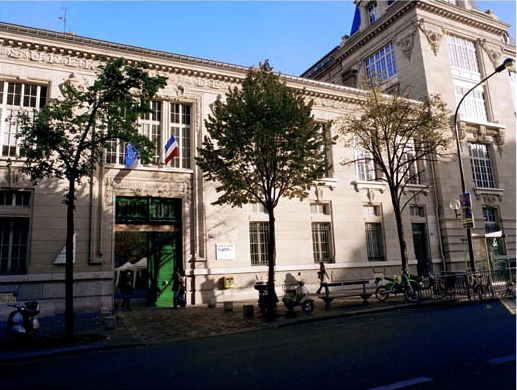
In France, many business schools are public-private partnerships (École consulaire or EESC) largely financed by the public Chambers of Commerce. These schools offer accredited undergraduate and graduate degrees in business from the elite Conférence des Grandes Écoles and have only loose ties, or no ties at all, to any university.
Andreas Kaplan classifies business schools along four corners:
Culture (Europe - US): Independent of their actual (physical) location, business schools can be classified according to whether they follow the European or the US model.
Compass (international/global – regional/local): Business schools can be classified along a continuum, with international/global schools on one end and regional/local schools on the other.
Capital (public – private): Business schools can either be publicly (state) funded or privately funded, for example through endowments or tuition fees.
Content (teaching – research): Business school can be classified according to whether a school considers teaching or research to be its primary focus.
Notable firsts
The first business school appeared in Europe in the eighteenth century. The concept spread from the beginning of the nineteenth century.
1759 – The Aula do Comércio in Lisbon was founded as the world's first institution specialising in the teaching of accounting. It provided a model for the development of similar government-sponsored schools across Europe, and closed in 1844.
1819 – The oldest business school still in existence as of 2025, ESCP Business School, was established as Ecole Supérieure de Commerce de Paris, in Paris, France. Initially a private school, it became a family firm from 1830 to 1869.
1852 – The Belgian Higher Institute of Commerce, founded in Antwerp, was established as the first state-funded business school and the first business school in Belgium.
1857 – Budapest Business School was founded in Budapest in Austria-Hungary as the first business school in Central Europe.
1868 – Ca' Foscari University was founded in Venice as the first business school in Italy.
1881 – Wharton School at the University of Pennsylvania in Philadelphia was founded as the first business school in the United States.
1898 – Haas School of Business was established as the College of Commerce of the University of California, the first public business school in the US.
1898 – Handelshochschule Leipzig, now HHL Leipzig Graduate School of Management, was founded as the first business school in Germany and the oldest in German-speaking regions.
1898 – University of St. Gallen was established as the first university in Switzerland to teach business and economics.
1900 – The first graduate school of business in the United States, the Tuck School of Business at Dartmouth College, was founded. The school conferred the first advanced degree in business, specifically, a Master of Science in Commercial Sciences, a predecessor of the MBA.
1902 – The University of Birmingham opened its School of Commerce, the first school dedicated to commerce in the UK, and established the first Bachelor of Commerce degrees.
1906 – Warsaw School of Economics (SGH) was established as the first university in Poland dedicated to teaching commerce and economics.
1908 – Harvard Business School was founded at Harvard University as the first business program in the world to offer the Master of Business Administration degree.
1909 – Stockholm School of Economics was founded on the initiative of the Swedish business sector as the first business school in Sweden.
1921 – Shanghai University of Commerce was established as the first business school in China.
1926 – The first postgraduate business courses in the United Kingdom were offered at the Manchester College of Technology.
1936 – The Norwegian School of Economics (NHH) was founded as the first business school in Norway.
1943 – The first executive MBA program was launched at the Booth School of Business, University of Chicago.
1946 – The Thunderbird School of Global Management, then the American Institute for Foreign Trade, was founded as the first graduate management school focused exclusively on global business.
1948 – The first MBA program outside of the US was established in Canada at the Richard Ivey School of Business, University of Western Ontario.
1949 – The University of Pretoria in South Africa founded the first business school in Africa (now the Gordon Institute of Business Science), and launches the first MBA course outside of North America.
1949 – XLRI, India's first business management school was founded.
1954 – Istanbul University Graduate School of Business, established with support from Harvard Business School and the Ford Foundation, becomes Turkey’s first graduate business school.
1955 – The Institute of Business Administers at the University of Karachi launched the first MBA in Asia.
1956 – German "management guru" Reinhard Höhn founded the Akademie für Führungskräfte der Wirtschaft Bad Harzburg (AFK) in Bad Harzburg (Lower Saxony), launching what developed into the Harzburg Model which shaped German management training until the 1980s.
1957 – INSEAD in France started the first MBA in Europe and pioneered the one-year MBA.
1963 – ESAN University Graduate School of Business in Lima, Peru, became the first Graduate Business School founded in Latin America. It was established under an agreement between the Government of the United States, Stanford Graduate School of Business and the Government of Peru.
1963 – The first MBA program in Australia was established by Melbourne Business School.
1965 – Following the 1963 Franks Report, the first business schools were established in UK universities, including Manchester and Durham.
1966 – London Business School and the University of Strathclyde opened the first MBA programs in the UK. Strathclyde was the first British university to offer the 1-year MBAs that would become standard in the UK.
1991 – IEDC-Bled School of Management in Slovenia became the first business school to offer an MBA program in Eastern Europe.
Singapore Management University (Lee Kong Chian School of Business), first b-school in Singapore that received triple accreditation.
Degrees
United States
In the United States, common degrees in business are:
Associate degrees: Associate of Applied Business (AAB), Associate of Business Administration (ABA);
Bachelor's degrees: Bachelor of Business (BB), Bachelor of Business Administration (BBA), Bachelor of Science in Business (BSB);
Master's degrees: Master of Accounting (MAcc), Master of Business Administration (MBA), Master of Science in Business Administration (MSBA), Executive Mastery of Business Administration (EMBA), Master of Engineering Management (MEM), Master of Science in Engineering Management (MSEMgt), Master of Health Administration (MHA), Master of Health Care Administration (MHCA), Master of Health Care Management (MHCM), Master of Health Services Administration (MHSA), Master of Science in Health Administration (MSHA), Master of Science in Health Care Administration (MSHCA), Master of Hospitality Management (MHM), Master of International Business (MIB), Master of International Business Administration (MIBA), Master of Management (MM), Master of Manufacturing Management (MMM), Master of Professional Accounting (MPA), Master of Science in Management (MSM or MSMgt), Master of Tourism Management (MTM), Matey of Tourism and Hospitality Management (MTHM);
Research doctorates: Doctor of Business Administration (DBA).
Graduates in business may also have generically titled degrees such as Bachelor of Science (BS), Master of Science (MS) or Doctor of Philosophy (PhD).
Europe
In Europe, higher education degrees are organized into three cycles under the Bologna Process in order to facilitate international mobility: bachelor's, master's and doctorates. The details of how degrees are organized vary between countries and institutions, but in terms of ECTS credits, where 60 credits represents a full academic year's work, a bachelor's degree typically requires 180–240 credits and a master's degree 90–120 credits.
France
In France, those levels of study include various "parcours" or paths based on UE (unités d'enseignement or modules), each worth a defined number of ECTS credits. Grande école business schools are elite academic institutions that admit students through an extremely competitive process, and the PGE (Programme Grande École) ends with the degree of Master in Management (MiM).