
Anders Behring Breivik (born 13 February 1979) is a Norwegian neo-Nazi, mass murderer, and domestic terrorist who perpetrated the 2011 Norway attacks. A believer in the Great Replacement conspiracy theory, he sought to combat perceived "Cultural Marxism" by detonating a car bomb at the Regjeringskvartalet (executive government quarter) in Oslo, then carrying out a mass shooting at a summer camp of the Labour Party's youth wing on the island of Utøya, in total killing 77 people and injuring over 323.
Found competent to stand trial, Breivik was tried in 2012, convicted on all charges, and sentenced to the maximum civilian penalty of 21 years' imprisonment under preventive detention, extendable indefinitely if he is deemed a continuing danger.
At age 16, he was arrested for graffiti vandalism in Oslo. He later joined the anti-immigration Progress Party, chaired its Vest Oslo youth branch in 2002, and left in 2006. He joined a gun club in 2005. A company he founded later went bankrupt, and he reported no income in 2009. He financed the attacks with about €130,000 using credit cards.

On the day of the attacks, Breivik distributed a compendium titled 2083: A European Declaration of Independence, outlining his ideology. In it, he opposed Islam, blamed feminism for a perceived European "cultural suicide", and called for the deportation of Muslims from Europe, stating that publicising the text was a primary motive.
Two teams of forensic psychiatrists evaluated Breivik before trial. While the first diagnosed paranoid schizophrenia, a second concluded he was not psychotic at the time of the attacks and instead had narcissistic personality disorder and antisocial personality disorder.
Breivik has since filed multiple legal challenges against the Norwegian Correctional Service under the European Convention on Human Rights regarding his confinement. A partial ruling in his favor in 2016 was overturned on appeal, and later challenges, including a 2024 case on prison isolation, were unsuccessful.
Early life
Breivik was born in Oslo on 13 February 1979, the son of Jens Breivik (born 1935), a civil economist, who worked as a diplomat for the Norwegian Embassy in London and later in Paris, and Wenche Elisabeth Behring (1946–2013), a nursing assistant. He has a maternal half-sister named Elisabeth, and three paternal half-siblings: Erik, Jan, and Nina. Breivik lived in London until aged one, when his parents divorced. His family name is Breivik, and his middle name, Behring, is his mother's maiden name. In 2017, it was reported he had changed his legal name to Fjotolf Hansen.
When Breivik was aged four, and living in Oslo's Frogner borough, two reports were filed expressing concern about his mental health. A psychologist in one report made a note of the boy's peculiar smile, suggesting it was not anchored in his emotions but was rather a deliberate response to his environment. In another report from Norway's National Centre for Child and Adolescent Psychiatry (SSBU), concerns were raised about how Breivik was treated by his mother: "[s]he 'sexualised' the young Breivik, hit him, and frequently told him that she wished that he were dead."
In the report, Wenche Behring is described as "a woman with an extremely difficult upbringing, borderline personality disorder and an all-encompassing if only partially visible depression" who "projects her primitive aggressive and sexual fantasies onto [Breivik]". The report recommended he be forcibly removed from his mother and placed into foster care, as she was heavily emotionally and psychologically abusive towards him, but this was not carried out by the Child Welfare Service.
Breivik's mother had fled her abusive home at age 17 and soon after that became a teenage mother. In her thirties, she became pregnant with Anders and married his father, Jens Breivik. During her pregnancy, she moved to London, where Jens worked. Even before his birth, Breivik's mother developed a disdain for her son. She claimed that he was a "nasty child" and that he was "kicking her on purpose". She had wanted an abortion, but by the time she went to a hospital, she had passed the three-month threshold. Psychologist reports later stated that she thought that Breivik was a "fundamentally nasty and evil child and determined to destroy her". She stopped breastfeeding her son early on because he was "sucking the life out of her".
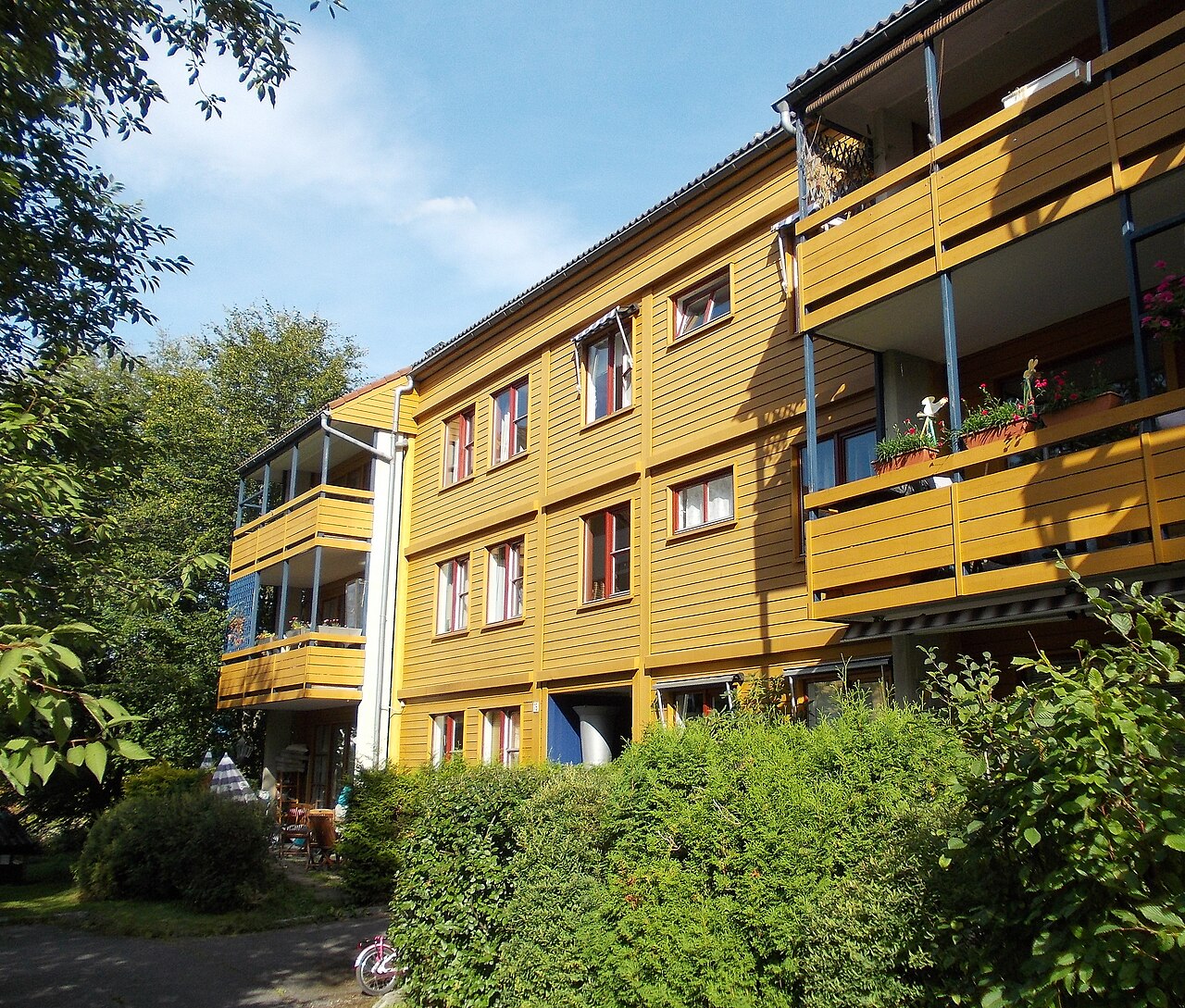
A year after Breivik's birth, his parents' relationship ended. Breivik's mother moved back to Oslo, where she borrowed Jens Breivik's apartment in the Frogner borough. Neighbours claimed that there were noises of fights and that the mother left her children alone for extended periods, while she was working as a nurse. In 1981, Breivik's mother applied for financial welfare benefits; in 1982, she applied for respite care for her son. She said that she was overwhelmed with the boy and unable to care for him. She described him as "clingy and demanding". Breivik was then placed, in cooperation with the Child Welfare Service, with a young couple, who later told police that the mother, when bringing two-year-old Breivik to the house, had asked that he be allowed to touch the man's penis because he had no one to compare himself to in terms of appearance; "He has only ever seen girls' parts", the mother told the couple, according to the couple's undated statement to police.
In February 1983, on the advice of her neighbours, Breivik's mother sought help from the National Centre for Child and Adolescent Psychiatry (SSBU); Breivik and his mother were outpatients, and they stayed there during the daytime for about one month. The psychiatrists' conclusion of the stay was that Breivik should be placed in the foster care system and had to be removed from his mother for him to develop normally. This was based on several observations: in contrast to the highly demanding child that his mother had described, Breivik actually had little emotional engagement and did not show joy, or cry when he was hurt; he also made no attempts to play with other children, was extremely clean, and became anxious when his toys were not in order. He did not show the normal level of uncleanliness of a four-year-old, and had no repertoire on how to express emotions normally. On rare occasions, his long phases of emotional voidness would be interrupted by fits where he would erupt and display extreme uncontrolled emotions.
Psychologists inferred from this that Breivik was subjected to punishment or extreme negative reactions whenever he displayed emotions, leading him to become outwardly emotionless. They also believed that the boy had developed obsessive–compulsive disorder (OCD) as a result of fear of punishment by his mother, who had claimed to them that he was unclean and that she constantly had to care for him.
Reports of the staff said that his mother had told Breivik that she "wished that he was dead" even in the presence of health personnel. At the same time she bound him emotionally to her, alternating between great affection and extreme cruelty from one moment to the next. Some nights, Breivik and his mother would share the bed with close body contact. The psychiatrists concluded this was an unacceptable situation for a four-year-old to be in and the report from 1983 stated: "Anders is a victim of his mother's projections of paranoid-aggressive and sexual fears toward men in general", and "she projects onto him her own primitive, aggressive and sexual fantasies; all the qualities in men that she regards as dangerous and aggressive". Breivik reacted very negatively to his mother and alternated between clinginess, petty aggression and extreme childishness.
The final conclusion of the observation was that the "family is in dire need of help. Anders should be removed from the family and given a better standard of care; the mother is provoked by him and remains in an ambivalent position which prevents him from developing on his own terms. Anders has become an anxious, passive child that averts making contact. He displays a manic defence mechanism of restless activity and a feigned, deflecting smile. Considering the profoundly pathological relationship between Anders and his mother it is crucial to make an early effort to ward off a severely skewed development in the boy." However, Child Welfare Services did not follow this recommendation, and instead he was placed in respite care only during the weekends.
When Breivik's father learned of the situation, he filed for custody. Although Breivik's mother had agreed to have him put in respite care, after Jens had filed for custody she demanded that Breivik be put back into full custody with her. Both the mother and father involved lawyers and eventually, the case was dropped because the Welfare Services thought that they would not be able to provide enough evidence in court to warrant the placement of Breivik in foster care. One of the main reasons for this was the testimony of staff from the Vigelandsparken Nursery, which Breivik had been attending since 1981, who both described him as a happy child and claimed that nothing was or had been wrong with him all along.
The SSBU, however, maintained their stance regarding Breivik, going so far as to state that "urgent action is crucially needed to prevent a severely skewed development in the boy". The SSBU wrote Child Welfare Services a letter claiming that an order should be placed to have Breivik removed by force. In 1984, a hearing in front of Barnevernsnemnda (the municipal child welfare committee) took place on whether Breivik's mother should lose custody of him. The Child Welfare Service lost the case; the agency was represented by a social worker with no prior experience representing a case in front of the committee. It was ruled only that the family should be supervised; however, after only three visits, even this supervision was discontinued. Breivik was never again put into respite care or foster care.
Later childhood and adolescence
Breivik attended Smestad Grammar School, Ris Junior High, Hartvig Nissen School and Oslo Commerce School. A former classmate recalled that Breivik was an intelligent student, physically stronger than others of the same age, who often took care of people who were bullied. Breivik resided with his mother and elder half-sister in the West End of Oslo, regularly visiting his father and stepmother, who had now moved to France, until they divorced when he was 12. His mother remarried to an officer in the Norwegian Army. Breivik chose to be confirmed into the Lutheran Church of Norway at the age of 15.

In his adolescence, Breivik's behaviour was described as rebellious. In his early teen years, he was a prolific graffiti artist and part of the hip hop music community in Oslo West. He took his graffiti much more seriously than his associates did, and was caught by the police on several occasions; Child Welfare Services were notified once again and he was fined twice. According to Breivik's mother, his father ceased contact with him at age 16 after his first arrest for spray painting graffiti on private property. According to Breivik's father, however, his son was the one who ended contact, as he claimed, "I was always willing to see [Anders] despite his destructive activities". At this age, Anders fell out with his best friend and broke off contact with the hip-hop community.
Beginning in adolescence, Breivik spent his spare time weight training and started to use anabolic steroids. He focused on his appearance and strength.
Adulthood
Breivik was exempt from conscription into military service in the Norwegian Army and had no military training. The Norwegian Defence Security Department, which conducts the vetting process, says he was deemed "unfit for service" at the mandatory conscript assessment.
After age 21, Breivik worked in the customer service department of an unnamed company, working with "people from all countries" and being "kind to everyone". A former co-worker described him as an "exceptional colleague", while a close friend of his said he usually had a big ego. According to acquaintances, in his early twenties Breivik had cosmetic surgery on his chin, nose, and forehead, and was pleased with the results.
Breivik is reported to have travelled extensively and visited up to 24 countries in the years before the attacks, including Belarus in 2005. Norwegian prosecuting authorities claim that Breivik went to Belarus to meet a woman he had met on a dating website. The same woman later visited him in Oslo. Norwegian police sent legal requests to sixteen countries to investigate Breivik following his attacks.
2011 terror attacks
Planning
Breivik claimed that in 2002, at the age of 23, he started a nine-year plan to finance the 2011 attacks, forming his own computer programming business, whilst working at a customer service company. He claimed his company grew to six employees and "several offshore bank accounts", and that he had made his first million kroner (NOK) at the age of 24. He wrote in his manifesto that he lost 2 M kroner on stock speculation, but still had about 2 M kroner to finance the attack. The company was later declared bankrupt and Breivik was reported for several breaches of the law. He then moved into his mother's home in order to save money. The first set of psychiatrists who evaluated him said in their report that his mental health deteriorated at this stage and he entered a state of withdrawal and isolation. His declared assets in 2007 were about kr 630,000 (US$76,244), according to Norwegian tax authority figures. He claimed that by 2008 he had about kr 2,000,000 (US$243,332) and nine credit cards giving him access to €26,000 in credit.
In May 2009, he founded Breivik Geofarm, described as a farming sole proprietorship set up to cultivate melons and vegetables including root vegetables and tubers. In 2010, he visited Prague in an unsuccessful attempt to buy illegal weapons, so he decided to use legal channels in Norway instead. He bought one semi-automatic 9 mm Glock 34 pistol, legally by demonstrating his membership in a pistol club in the police application for a gun licence, and a semi-automatic Ruger Mini-14 rifle by possessing a hunting licence. Breivik had no declared income in 2009 and his assets amounted to 390,000 kroner (US$72,063), according to Norwegian tax authority figures. He stated that in January 2010 his funds were "depleting gradually". On 23 June 2011, a month before the attacks, he paid the outstanding amount on his nine credit cards so he could have access to funds during his preparations. Breivik had covered up the windows of his house. A former neighbour described him as a "city dweller, who wore expensive shirts and who knew nothing about rural ways". The owner of a local bar, who once worked as a profiler of passengers' body language at Oslo Airport, said there was nothing unusual about Breivik, who was an occasional customer at the bar.
In late June or early July 2011, he moved to a rural area north of Åsta in Åmot Municipality, Innlandet county, about 140 km (87 mi) north-east of Oslo, the site of his farm. According to his manifesto, Breivik used the company as a cover to legally obtain large amounts of artificial fertiliser and other chemicals for the manufacturing of explosives. A farming supplier sold Breivik's company six tonnes of fertiliser in May. The newspaper Verdens Gang reported that after Breivik bought a small quantity of an explosive primer from an online shop in Poland, his name was among sixty passed to the Police Security Service (PST) by the Norwegian Customs Service as having used the store to buy products. Speaking to the newspaper, Jon Fitje of PST said the information they found gave no indication of anything suspicious. He set the cost of the preparations for the attacks at €317,000—"€130,000 out of pocket and €187,500 in lost revenue over three years." [sic]
The attacks
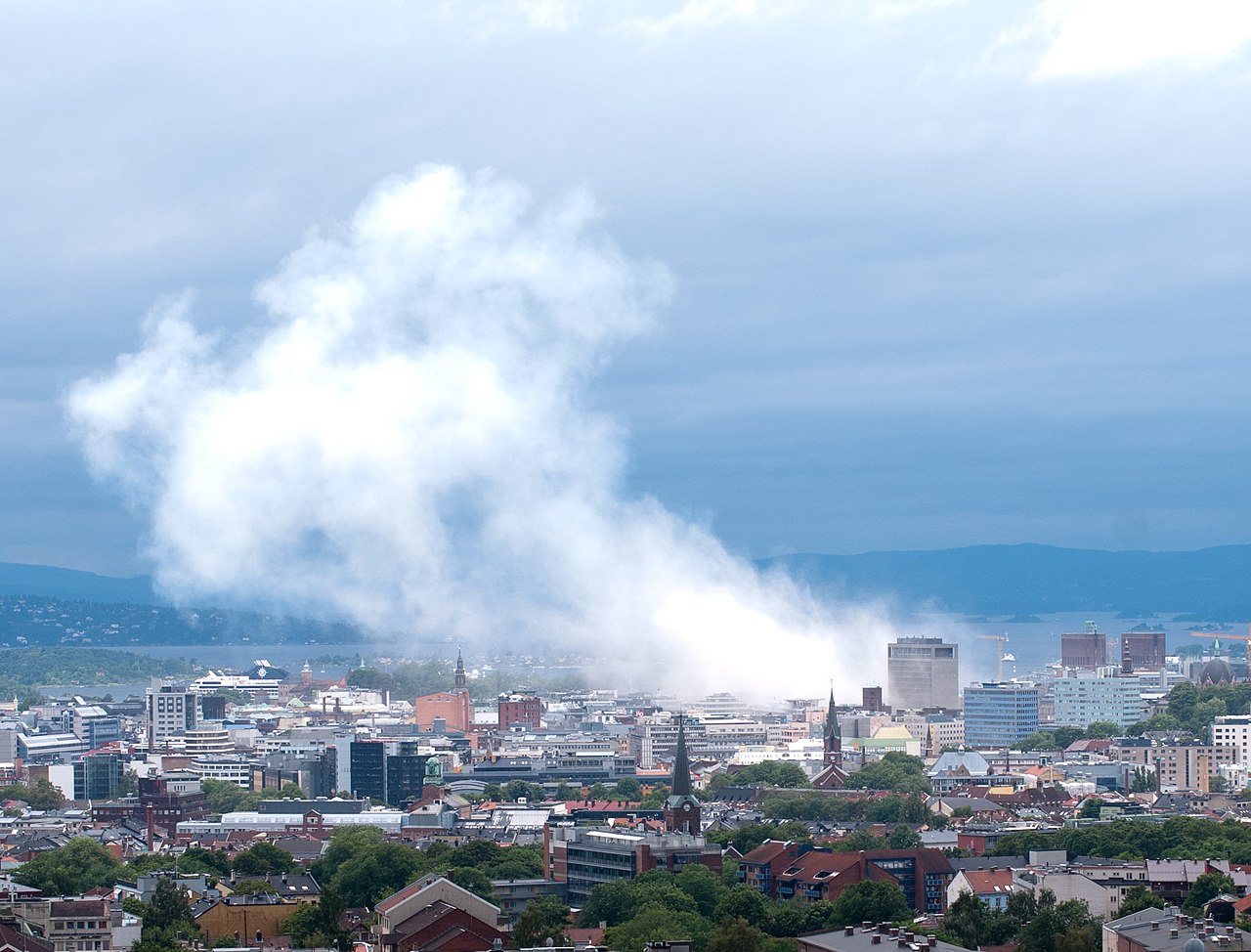
The first attack was a car bomb explosion in Oslo within Regjeringskvartalet, the executive government quarter of Norway, at 15:25:22 (CEST) on 22 July 2011. The bomb was placed inside a van next to the tower block housing the office of Prime Minister Jens Stoltenberg. The explosion killed eight people and injured at least 210 people, twelve severely.
The second attack took place less than two hours later at a youth summer camp on the island of Utøya in Tyrifjorden, Buskerud. The camp was organised by the AUF, the youth wing of the ruling Norwegian Labour Party (AP). Breivik, dressed in a homemade police uniform and showing false identification, took a ferry to the island and opened fire at the participants, methodically killing 69, and injuring 33 over more than an hour. Among the dead were friends of Stoltenberg, and the stepbrother of Norway's crown princess Mette-Marit.
Arrest
When the police tactical unit Delta based in Oslo arrived on the island and confronted him, he surrendered without resistance. After his arrest he was held on the island and interrogated throughout the night, before being moved to a holding cell in Oslo. Breivik admitted to the crimes and said the purpose of the attack was to save Western Europe from a Muslim takeover, and that the Labour Party had to "pay the price" for "letting down Norway and the Norwegian people". After his arrest, Breivik referred to himself as "the greatest monster since Quisling".
Booking and preparations for trial
On 25 July 2011, Breivik was charged with violating paragraph 147a of the Norwegian criminal code, "destabilising or destroying basic functions of society" and "creating serious fear in the population", both of which are acts of terrorism under Norwegian law. He was held for eight weeks, the first four in solitary confinement, pending further court proceedings. The custody was extended in subsequent hearings. The indictment was ready in early March 2012. The Director of Public Prosecutions had initially decided to omit the names of the victims and details about their deaths from the publicly released document, but reversed this decision due to public reaction. On 30 March, the Borgarting Court of Appeal announced that it had scheduled the expected appeal case for 15 January 2013. It would be heard in the courtroom that had been specially constructed for the initial criminal case.
Breivik was kept at Ila Detention and Security Prison after arrest. There, he had at his disposal three prison cells: one where he could rest, sleep, and watch DVDs and TV, a second that was set up for him to use a computer without Internet access, and a third with gymnasium equipment. Only selected prison staff with special qualifications were allowed to work around him, and the prison management aimed to not let his presence as a high-security prisoner affect any of the other inmates. Subsequent to the January 2012 lifting of censorship of letters and banning of visitors, Breivik received several inquiries from private individuals, and he devoted his time to writing back to like-minded people. According to one of his attorneys, Breivik wanted to learn whether his manifesto had begun to take root in society. Breivik's attorneys, in consultation with Breivik, considered whether to have some of his interlocutors called as witnesses during the trial. Media outlets, both Norwegian and international, requested to interview Breivik. The first such was cancelled by the prison administration following a background check of the journalist. A second interview was agreed to by Breivik, and the prison requested a background check to be done by the police in the country of the journalist. No information was divulged about the media organisations in question.
Psychiatric evaluation
Breivik underwent his first examination by court-appointed forensic psychiatrists in 2011. The psychiatrists diagnosed him with paranoid schizophrenia, concluding that he had developed the disorder over time and was psychotic both when he carried out the attacks and during the observation. He was also diagnosed with abuse of non-dependence-producing substances before the attacks. The psychiatrists consequently found Breivik to be criminally insane.
According to the report, Breivik displayed inappropriate and blunted affect and a severe lack of empathy. He spoke incoherently in neologisms and had acted compulsively based on a universe of bizarre, grandiose and delusional thoughts. Breivik alluded to himself as the future regent of Norway, master of life and death, while calling himself "inordinately loving" and "Europe's most perfect knight since WWII". He was convinced that he was a warrior in a "low-intensity civil war" and had been chosen to save his people. Breivik described plans to carry out further "executions of categories A, B and C traitors" by the thousands, the psychiatrists included, and to organise Norwegians in reservations for the purpose of selective breeding. Breivik believed himself to be the "knight Justiciar grand master" of a Templar organisation. He was deemed to be suicidal and homicidal by the psychiatrists. According to his defence attorney, Breivik initially expressed surprise and felt insulted by the conclusions in the report. He later said "this provides new opportunities".
The outcome of Breivik's first competency evaluation was fiercely debated in Norway by mental health experts, over the court-appointed psychiatrists' opinion and the country's definition of criminal insanity. An extended panel of experts from the Norwegian Board of Forensic Medicine reviewed the submitted report and approved it "with no significant remarks". News in the meantime emerged that the psychiatric medical staff in charge of treating prisoners at Ila Detention and Security Prison did not make any observations that suggested he had either psychosis, depression or was suicidal. According to senior psychiatrist Randi Rosenqvist, who was commissioned by the prison to examine Breivik, he rather appeared to have personality disorders.
Counsels representing families and victims filed requests that the court order a second opinion, while the prosecuting authority and Breivik's lawyer initially did not want new experts to be appointed. On 13 January 2012, after much public pressure, the Oslo District Court ordered a second expert panel to evaluate Breivik's mental state. He initially refused to cooperate with new psychiatrists, but later changed his mind, and in late February a new period of psychiatric observation using different methods than the first ones was begun.
If the original diagnosis had been upheld by the court, Breivik could not have been sentenced to a prison term; the prosecution could instead have requested that he be detained in a psychiatric hospital. Medical advice would then have determined whether or not the courts decided to release him at some later point. If considered a perpetual danger to society, Breivik could have been kept in confinement for life. Shortly after the second period of pre-trial psychiatric observation was begun, the prosecution said it expected Breivik would be declared legally insane.
On 10 April 2012, the second psychiatric evaluation was published with the conclusion that Breivik was not psychotic, either during the attacks or during evaluation. Instead, they diagnosed antisocial personality disorder and narcissistic personality disorder. Breivik expressed hope at being declared sane in a letter sent to several Norwegian newspapers shortly before his trial, in which he wrote about the prospect of being sent to a psychiatric ward: "I must admit this is the worst thing that could have happened to me as it is the ultimate humiliation. To send a political activist to a mental hospital is more sadistic and evil than to kill him! It is a fate worse than death."
On 8 June 2012, Professor of Psychiatry Ulrik Fredrik Malt testified in court as an expert witness, saying he found it unlikely that Breivik had schizophrenia. According to Malt, Breivik primarily had Asperger syndrome, Tourette syndrome, narcissistic personality disorder and possibly paranoid psychosis. Malt cited a number of factors in support of his diagnoses, including deviant behaviour as a child, extreme specialisation in Breivik's study of weapons and bomb technology, strange facial expression, a remarkable way of talking, and an obsession with numbers. Eirik Johannesen disagreed, concluding that Breivik was lying and was not delusional or psychotic. Johannesen had observed and spoken to Breivik for more than twenty hours.
Pre-trial hearing
In the pre-trial hearing, in February 2012, Breivik read a prepared statement demanding to be released and treated as a hero for his "pre-emptive attack against traitors" he accused of planning cultural genocide. He said, "They are committing, or planning to commit, cultural destruction, including deconstruction of the Norwegian ethnic group and deconstruction of Norwegian culture. This is the same as ethnic cleansing."
Criminal trial and conviction
The criminal trial of Breivik began on 16 April 2012 in Oslo Courthouse under the jurisdiction of Oslo District Court. The appointed prosecutors were Inga Bejer Engh and Svein Holden with Geir Lippestad serving as Breivik's lead counsel for the defence. Closing arguments were held on 22 June. On 24 August 2012, Breivik was adjudged to have been sane at the time the crimes were committed, and was sentenced to preventive detention for 21 years—the maximum penalty in Norway—with a minimum non-parole period of 10 years, the longest minimum sentence available. This sentence allows the court to continue Breivik's detention indefinitely, five years at a time for as long as the prosecuting authority deems it necessary in order to protect society. Although Breivik had pleaded not guilty, he did not appeal the sentence, and on 8 September the media announced that the verdict was final.
Breivik announced that he did not recognise the legitimacy of the court and therefore did not accept its decision, but had decided not to appeal as this would legitimise the authority of the Oslo District Court.
Prison life
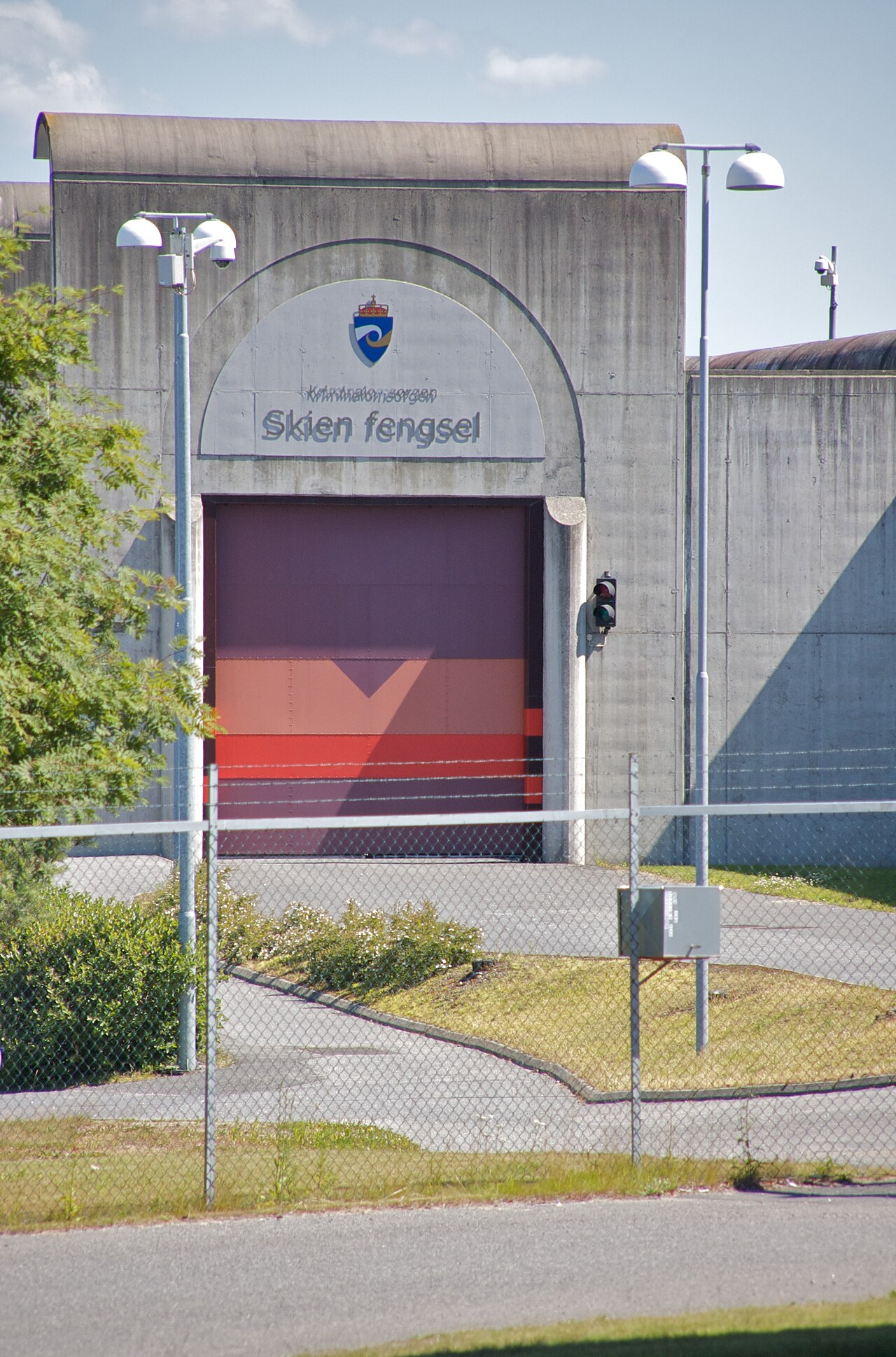
Since August 2011, Breivik has been imprisoned in an SHS section (a prison section with "particularly high security"—"særlig høy sikkerhet"). In March 2022, Breivik was transferred to Ringerike Prison's as of 2022 SHS section. There was another prisoner in the section, but Breivik was completely separated from that prisoner. Breivik had previously been transferred on 23 July 2012 from Ila Detention and Security Prison in Bærum to Skien Prison, formally known as Telemark fengsel, Skien avdeling, in Skien, county Telemark, and then transferred back to Ila on 28 September 2012.
In 2023, Breivik chose not to receive further visits, including from the military chaplain (ranked major) who Breivik had been seeing every two weeks since 2015. His mother visited him five times before her death in 2013, and researcher Mattias Gardell interviewed Breivik in 2014, but no other visitor requested by Breivik has been granted access.
Breivik is isolated from the other inmates and only has contact with healthcare workers and guards. The type of isolation that Breivik has experienced in prison is what the European Court of Human Rights (ECtHR) calls relative social isolation, according to a verdict of 2016 in Oslo District Court. In November 2020, Breivik had an interaction with another prisoner for the first time, in the presence of at least seven prison officers; the prisoners played cards and talked for around one or two hours; the other prisoner chose to not have a third meeting with Breivik, according to media reports in January 2021.
In Norway, it is not uncommon to grant compensatory measures to prisoners who are being held in isolation for several years. As of 2021, he has access in his cell between 9:00 and 14:30 to a personal computer (with seals that impede unauthorised opening of the computer panels) that he uses to write letters. Earlier reports—in 2016—said that he has an electric typewriter and an Xbox without Internet connection in his cell. Previously, when the original verdict was upheld in September 2012, his permission for access to a computer in his prison cell ended.
Breivik enrolled in a bachelor's degree program in political science at the University of Oslo; he passed two courses in 2015. In 2015, he claimed in a letter that harsh prison conditions had forced him to drop out. According to a statement by his lawyer, Breivik had become a Nazi in prison. He was denied parole in 2021, a decision upheld in 2022. The government denied him parole in the third quarter of 2024. Since his imprisonment, Breivik has identified himself as a fascist and a Nazi, and a practitioner of Odinism.
Political activity and attempts at correspondence
As of 2012, Breivik had written to, among others, Peter Mangs and Beate Zschäpe. In 2012, politicians protested Breivik's activities in prison, which they saw as him continuing to promote or expose his ideology and possibly encouraging further criminal acts. As with all convicts, his letters are vetted before sending to prevent further crimes. After he came to Skien Prison in 2013, five of the 300 letters that he sent had not been confiscated, he testified in court in 2016. By 2016, around 4,000 postal items had been sent to or from Breivik, and about 15% of these (600 items) had been confiscated.