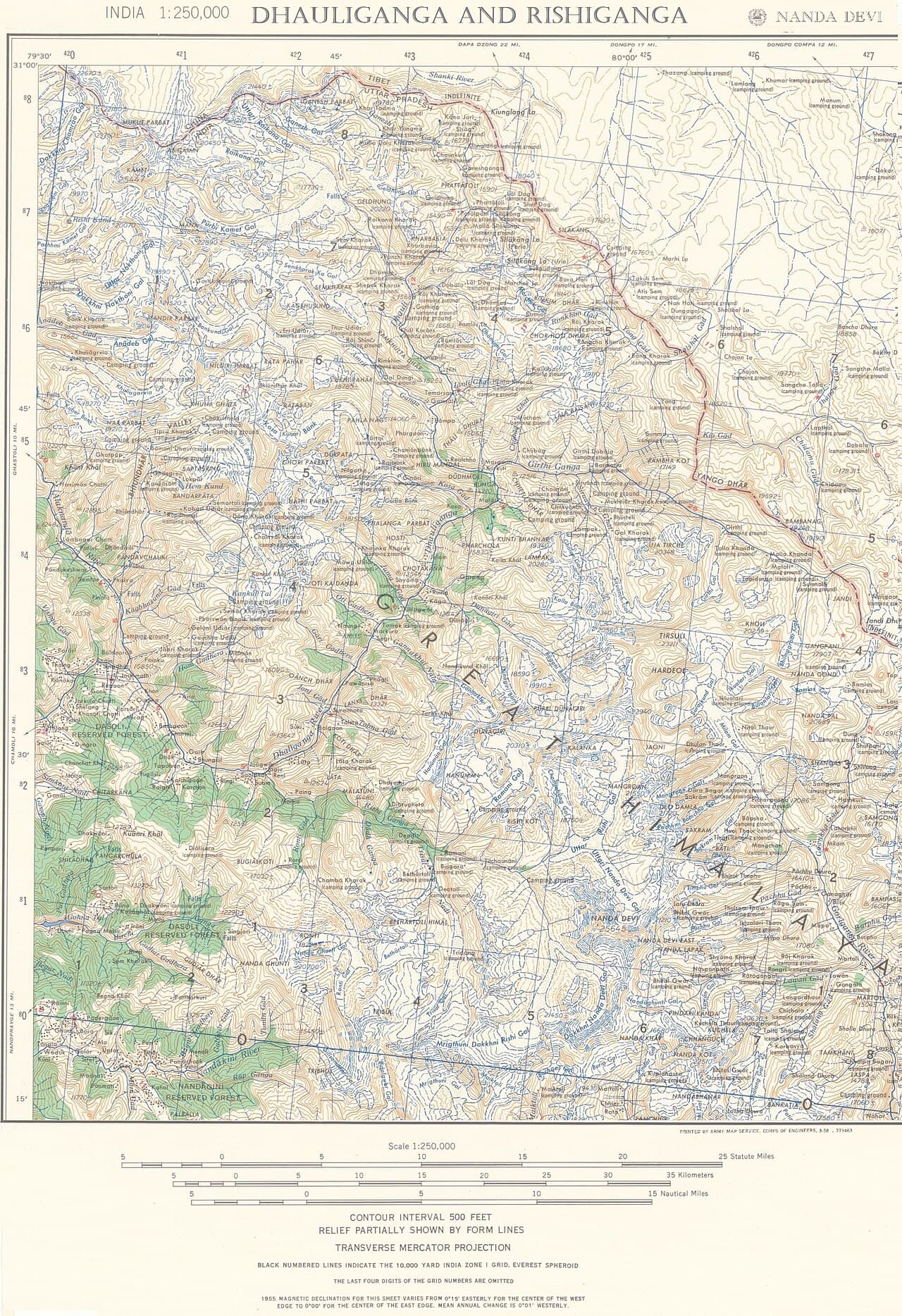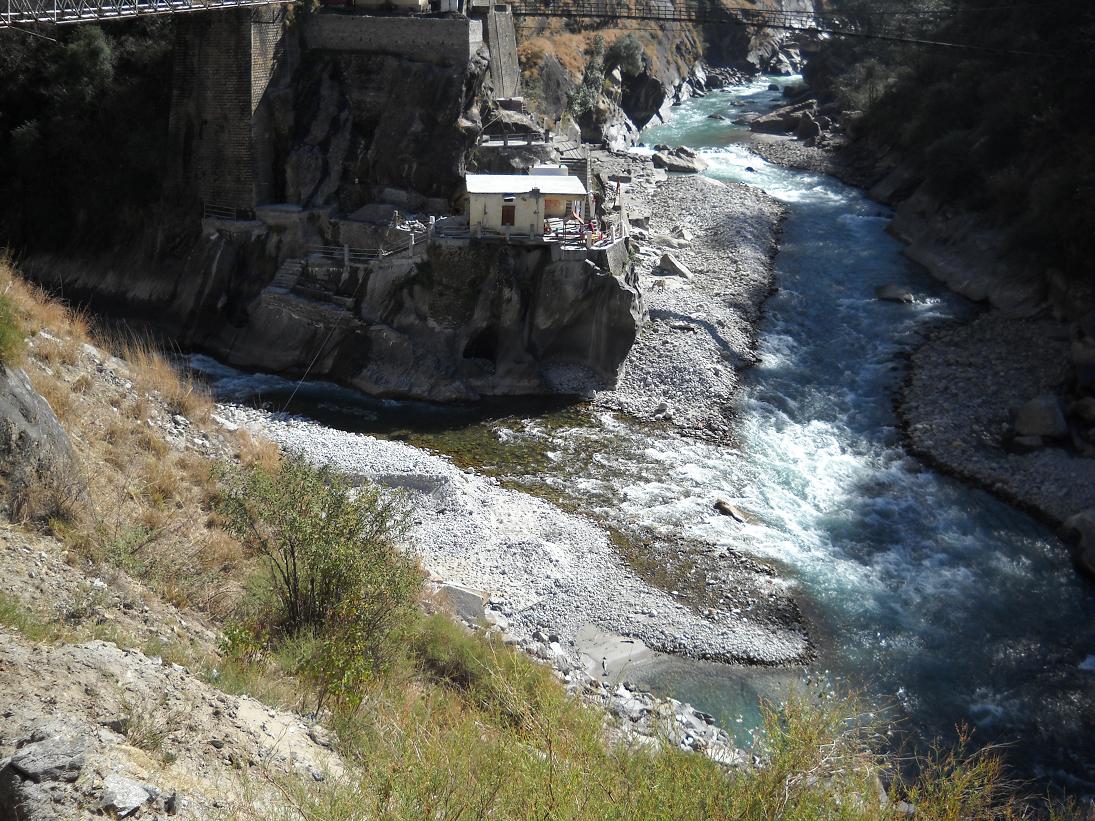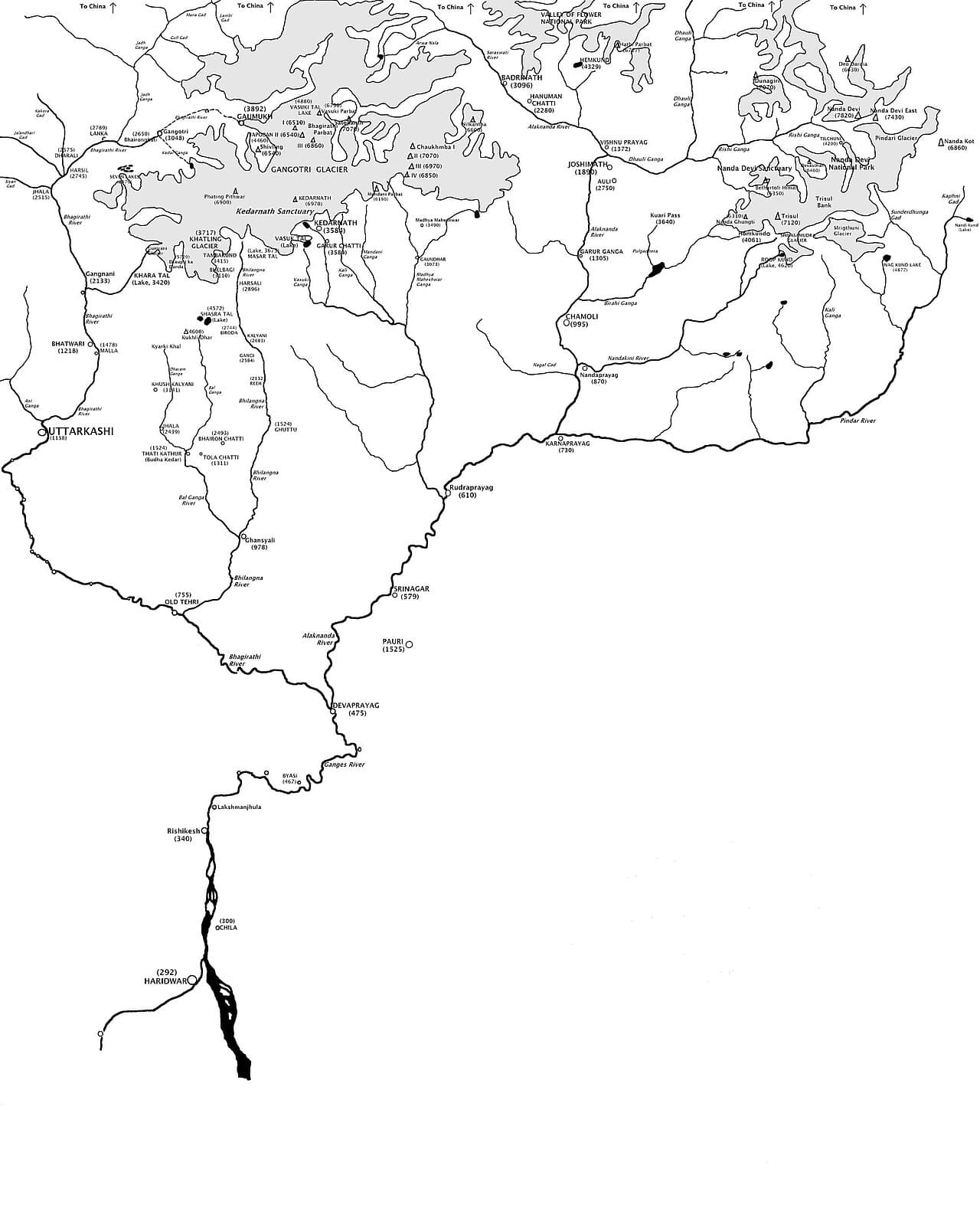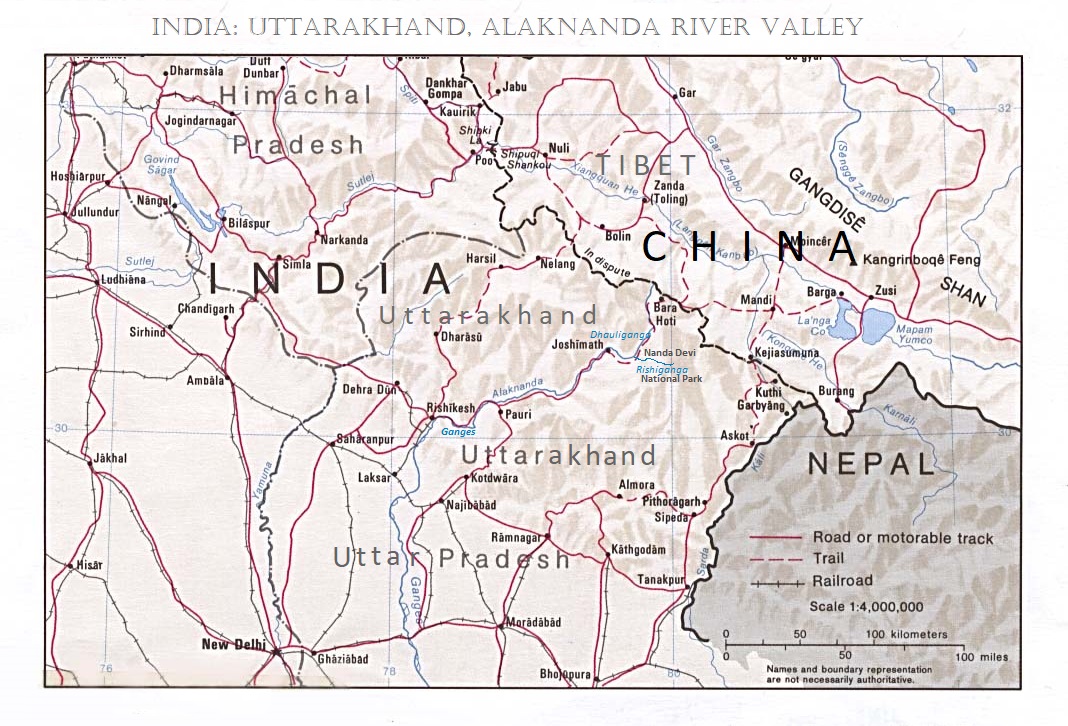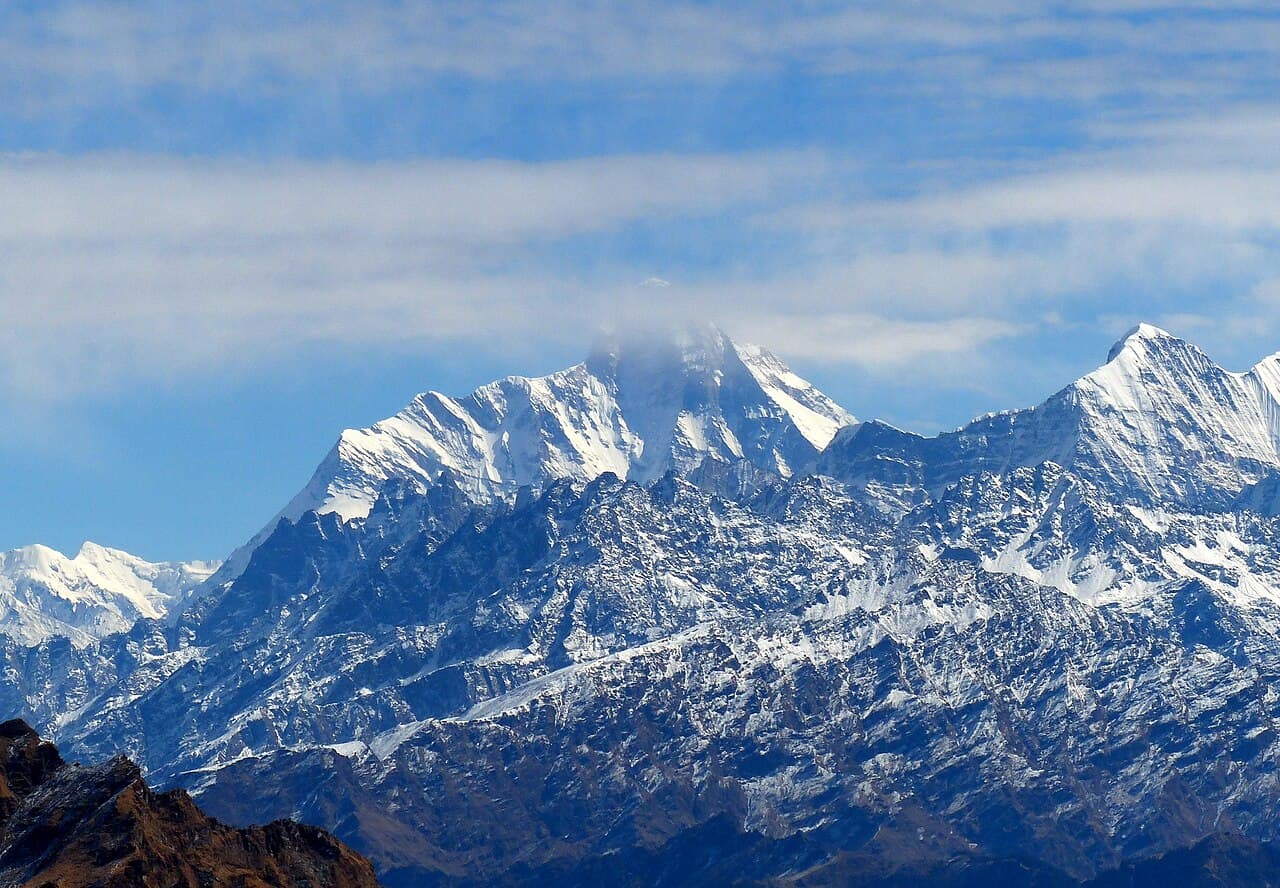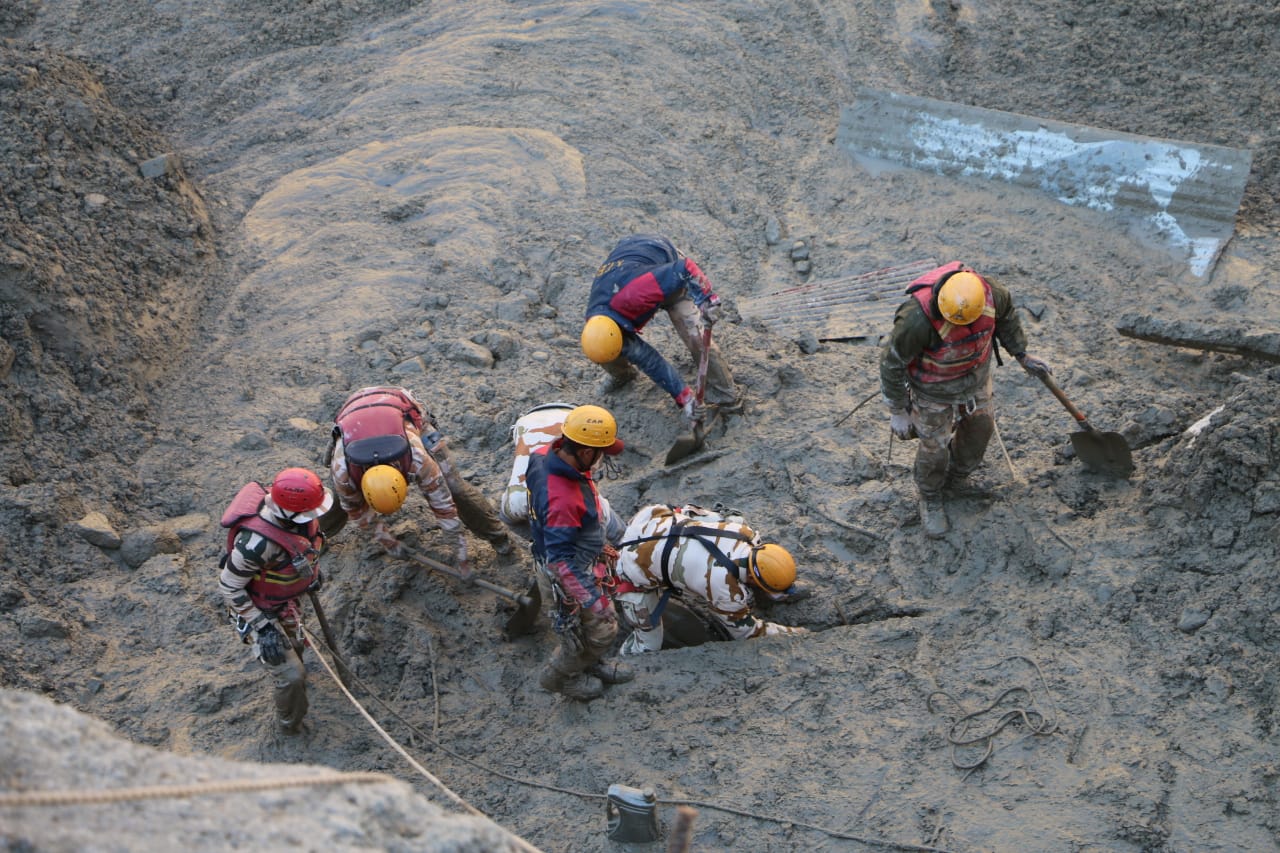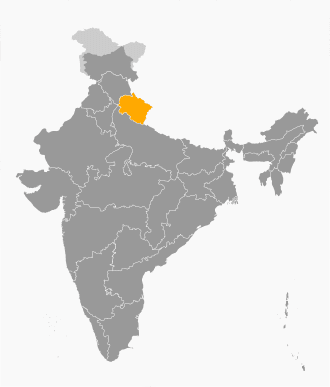
The 2021 Uttarakhand flood, also known as the Chamoli disaster, began on 7 February 2021 in the environs of the Nanda Devi National Park, a UNESCO World Heritage Site in the outer Garhwal Himalayas in Uttarakhand state, India (Maps 1 and 2). It was caused by a large rock and ice avalanche consisting of material dislodged from Ronti peak. It caused flooding in the Chamoli district, most notably in the Rishiganga river, the Dhauliganga river, and in turn the Alaknanda—the major headstream of the Ganges (Maps 2 and 3). The disaster left around 300 killed or missing. Most were workers at the Tapovan dam site.
Cause
According to early reports, the flooding was speculated to have been caused by a portion of the Nanda Devi glacier breaking off early on 7 February, releasing the water trapped behind the ice, and causing a glacial lake outburst flood. But this was shown to be incorrect as satellite images showed no lakes in the valley and that a landslide very clearly triggered the events. On 8 February 2021, The Times, London, reported that a flood was caused by a portion of glacier being torn away and causing a landslide. In satellite images, a 0.5 mi (0.80 km) scar is visible on the slopes of Nanda Ghunti, a 20,700 ft (6,300 m) peak on the southwestern rim of the Nanda Devi sanctuary, a wall of mountains surrounding the Nanda Devi massif (Maps 2, 3, and 4). According to an article in Scientific American, 12 February 2021, data from Planet Labs was interpreted by Dan Shugar, a geomorphologist at the University of Calgary, to suggest that a hanging glacier "15 football fields long and five across" had separated from a mountain and plummeted into the Ronti Gad, a tributary of the Rishiganga (Map 3, 30° 28' N, 79° 45' E; Map 2, lowest left-bank tributary).
According to BBC News, four scientists from the Wadia Institute of Himalayan Geology, Dehradun, India flew over the site in a helicopter, took photographs, and gathered other data; they consider the hanging glacier that cracked and plunged into the Rishiganga basin, to have been attached to a subsidiary peak, Raunthi, 5,600 m (18,372 ft), just below Nanda Ghunti (Map 3, Ronti, at the intersection of 81 and 423). According to Dr. Kalachand Sain, director of the Wadia Institute, climate change is the major factor in the rapid freezing and thawing of ice that causes glacier fractures. A subsequent analysis by Carbon Brief highlighted how though climate change probably didn't directly cause the outburst – instead a landslide or similar geological change triggered it – however, the environmental changes caused by climate change probably contributed to the geographic conditions that allowed for the disaster.