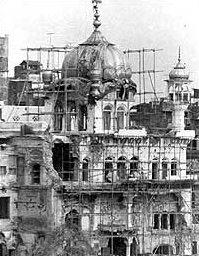
Operation Blue Star was a military operation ordered by Indian Prime Minister Indira Gandhi and carried out between June 1–8, 1984, in which the Indian Army stormed the Golden Temple complex in Amritsar — Sikhism's holiest shrine — to remove Sikh militant leader Jarnail Singh Bhindranwale and his armed followers. The operation killed an estimated 400–500 civilians and militants, wounded hundreds more, and left the sacred Akal Takht severely damaged. It triggered one of the most traumatic political crises in post-independence India, culminating in Gandhi's assassination just four months later.
What Led to Operation Blue Star? The Origins of the Khalistan Movement
Tensions in Punjab had been building since the late 1970s around demands for a separate Sikh homeland called Khalistan and political grievances over the Anandpur Sahib Resolution (1973), which sought greater autonomy for Punjab. Jarnail Singh Bhindranwale, a firebrand preacher initially viewed as an ally of the Congress party, became the face of radical Sikh militancy by the early 1980s. After a series of assassinations and escalating violence — including the killing of DIG Atwal inside the Golden Temple premises in April 1983 — Bhindranwale and hundreds of armed supporters fortified themselves inside the Harmandir Sahib (Golden Temple) complex. By June 1984, the Indian government concluded that a military solution was unavoidable.
What Happened During the Operation? Key Events of June 1984
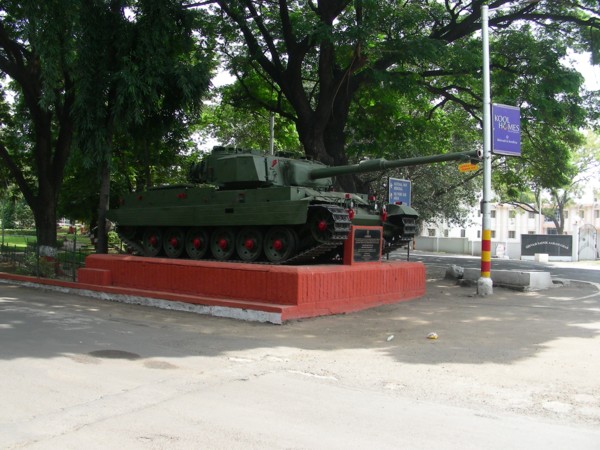
The army, under Lt. General Kuldip Singh Brar, launched the main assault on the night of June 5–6, 1984. Bhindranwale's forces, led by former Indian Army Major General Shahbeg Singh, had spent months reinforcing positions with sandbags, machine-gun nests, and rocket launchers. Indian troops faced fierce resistance; standard infantry tactics proved insufficient, and the Army was forced to deploy armoured vehicles including the Vijayanta tank. The Akal Takht — the temporal seat of Sikh authority — was badly damaged in the shelling. Bhindranwale and Shahbeg Singh were both killed on June 6. Simultaneously, Operation Woodrose was launched across rural Punjab to detain suspected militants. Official Indian Army figures cited 83 soldiers killed and 249 wounded; estimates of civilian and militant deaths ranged from 492 (government) to over 1,500 (independent assessments).
| Detail | Figures |
|---|---|
| Operation dates | June 1–8, 1984 |
| Army commander | Lt. Gen. Kuldip Singh Brar |
| Militant leader killed | Jarnail Singh Bhindranwale |
| Indian Army casualties | 83 killed, 249 wounded (official) |
| Civilian/militant deaths | 492 (govt.) – 1,500+ (independent estimates) |
| Akal Takht status | Severely damaged; later rebuilt |
What Were the Consequences of Operation Blue Star?
The fallout was immediate and devastating. On October 31, 1984, Indira Gandhi was shot dead by two of her Sikh bodyguards, Satwant Singh and Beant Singh, in direct retaliation. Her assassination triggered the 1984 anti-Sikh pogroms, in which over 3,000 Sikhs were killed across India — primarily in Delhi — in three days of mob violence. Mutinies broke out in several Sikh regiments of the Indian Army. The operation permanently deepened mistrust between the Sikh community and the Indian state, fuelled Khalistani separatism abroad (particularly in Canada and the UK), and remains a raw wound in Sikh collective memory. In 2023 and 2024, the Khalistan issue re-emerged in Canadian and Indian diplomatic disputes, demonstrating the operation's enduring geopolitical shadow.
