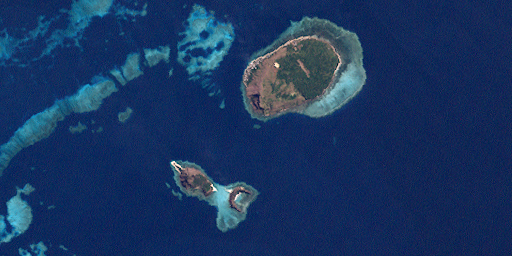
Mabo v Queensland (No 2) is the landmark 1992 High Court of Australia decision in which six of seven justices ruled that the doctrine of terra nullius — which held that Australia was legally empty before British colonisation — was a legal fiction. Brought by Meriam man Eddie Koiki Mabo and four co-plaintiffs from the Murray Islands, the case established that Indigenous Australians could hold Native Title over land their communities had continuously occupied. Handed down on 3 June 1992, the ruling fundamentally transformed Australian property law and the nation's relationship with its First Peoples.
Who Was Eddie Mabo and How Did the Case Begin?
Eddie Koiki Mabo was born on Mer (Murray Island) in the Torres Strait in 1936. A gardener and community activist, he discovered in 1974 that he had no legal title to his family's land under Australian law, despite the Meriam people having cultivated the Murray Islands for generations. In 1982, Mabo and four co-plaintiffs — Sam Passi, David Passi, Celuia Mapo Salee, and James Rice — filed an action in the High Court claiming traditional ownership. Queensland attempted to extinguish the claim by passing the Coast Islands Declaratory Act 1985, but the High Court struck it down in Mabo (No 1) in 1988 as inconsistent with the Racial Discrimination Act 1975. Eddie Mabo died of cancer on 21 January 1992, just five months before judgment was delivered.
What Did the High Court Decide in Mabo (No 2)?
On 3 June 1992, the High Court delivered its 6–1 ruling. Justice Gerard Brennan authored the principal judgment, holding that terra nullius had never validly applied to Australia, that the Meriam people held native title to the Murray Islands by virtue of continuous connection under traditional law, and that native title is a form of title recognised by the common law where it has not been extinguished by valid Crown action. Justices William Deane and Mary Gaudron jointly described the dispossession of Aboriginal peoples as a national legacy of unutterable shame. The sole dissenter, Justice Daryl Dawson, argued that changes of such magnitude to property law were a matter for Parliament.

| Justice | Position | Key Contribution |
|---|---|---|
| Brennan J | Majority (lead) | Authored the principal judgment defining native title doctrine |
| Mason CJ & McHugh J | Majority | Agreed terra nullius was inapplicable; recognised native title |
| Deane & Gaudron JJ | Majority | Described dispossession as a national legacy of shame |
| Toohey J | Majority | Supported recognition of native title in common law |
| Dawson J | Dissent | Argued change should come from Parliament, not courts |
What Was the Legacy of the Mabo Decision?
The Mabo decision prompted Parliament to pass the Native Title Act 1993, which Prime Minister Paul Keating called the basis of a new relationship between Indigenous and non-Indigenous Australians. By 2023, over 400 native title determinations had been made, covering roughly 40 percent of Australia's landmass. The date 3 June is now observed nationally as Mabo Day. Internationally, the decision influenced Indigenous land rights jurisprudence in Canada, New Zealand, and South Africa. Eddie Mabo was posthumously awarded the Human Rights Medal in 1992, and his image appeared on an Australian postage stamp in 1993.