
The 20th century began on 1 January 1901 (MCMI), and ended on 31 December 2000 (MM). It was the 10th and last century in the 2nd millennium and was marked by new models of scientific understanding, unprecedented scopes of warfare, new modes of communication that would operate at nearly instant speeds, and new forms of art and entertainment. Population growth was also unprecedented, as the century started with around 1.6 billion people, and ended with around 6.2 billion.
The 20th century was dominated by significant geopolitical events that reshaped the political and social structure of the globe: World War I (including the Spanish flu pandemic), World War II and the Cold War. Unprecedented advances in science and technology defined the century, including the advent of nuclear weapons and nuclear power, space exploration, the shift from analog to digital computing and the continuing advancement of transportation, including powered flight and the car. The Earth's sixth mass extinction event, the Holocene extinction, continued, and human conservation efforts increased.
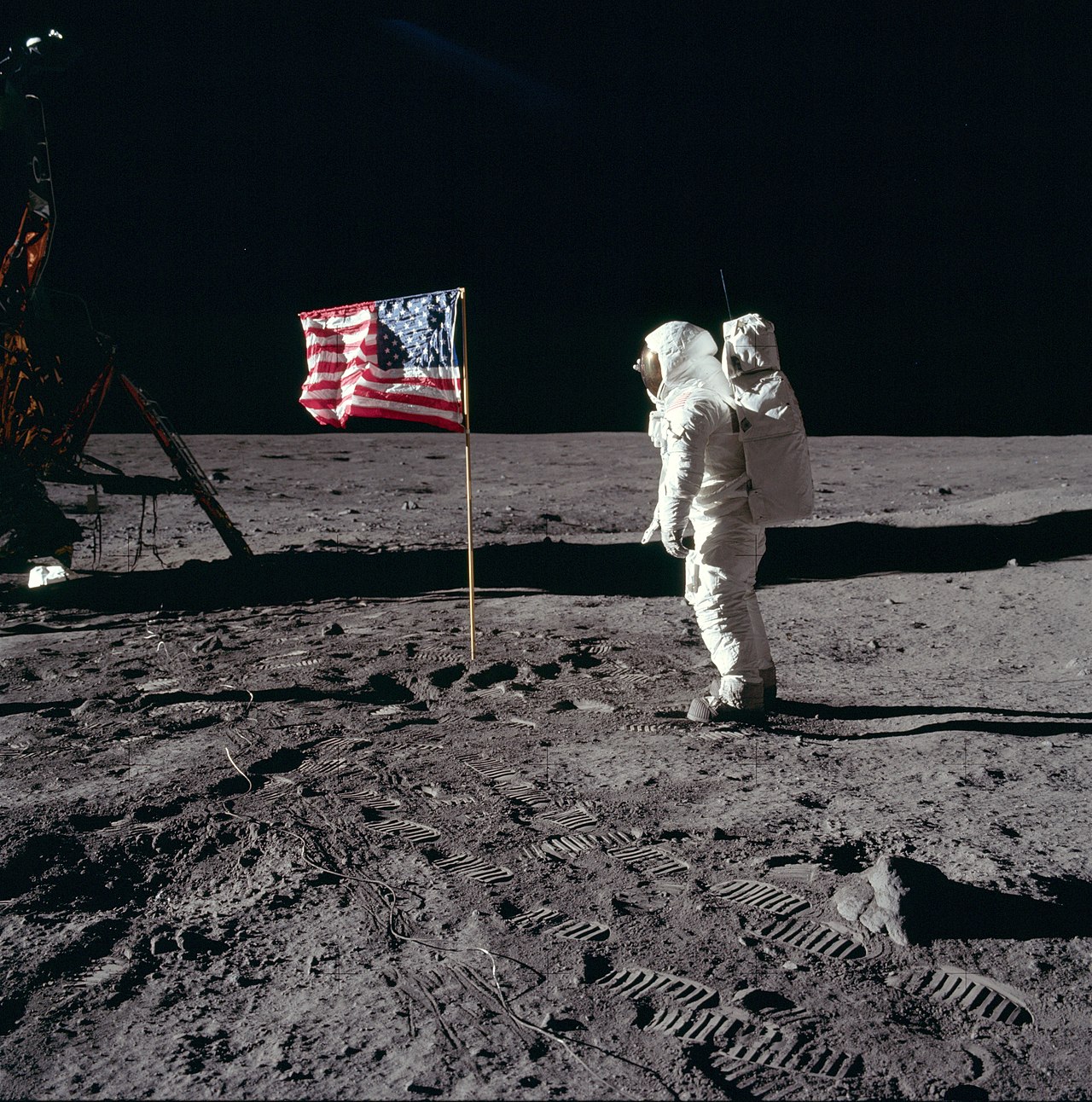
Major themes of the century included decolonization, nationalism, globalization and new forms of intergovernmental organizations. Democracy spread, and women gained the right to vote in many countries in the world. Cultural homogenization began through developments in emerging transportation and information and communications technology, with popular music and other influences of Western culture, international corporations, and what is arguably a truly global economy by the end of the 20th century. Poverty was reduced and the century saw rising standards of living, world population growth, awareness of environmental degradation and ecological extinction. Cars, airplanes, and home appliances became common, and video and audio recording saw mass adoption. These developments were made possible by the exploitation of fossil fuel resources, which offered energy in an easily portable form, but also caused concern about pollution and long-term impact on the environment. Humans started to explore space, taking their first footsteps on the Moon. Great advances in electricity generation and telecommunications allowed for near-instantaneous worldwide communication, ultimately leading to the Internet. Meanwhile, advances in medical technology resulted in the near-eradication and eradication of many infectious diseases, as well as opening the avenue of biological genetic engineering. Scientific discoveries, such as the theory of relativity and quantum physics, profoundly changed the foundational models of physical science, forcing scientists to realize that the universe is more complex than previously believed, and dashing the hopes (or fears) at the end of the 19th century that the last few details of scientific knowledge were about to be filled in.

Summary
At the beginning of the period, the British Empire was the world's most powerful nation, having acted as the world's policeman for the past century.
Technological advancements during World War I changed the way war is now fought, as new inventions such as tanks, chemical weapons, and aircraft modified tactics and strategy. After more than four years of trench warfare in Western Europe, and up to 17 million dead, the powers that had formed the Triple Entente (France, Britain, and Russia, later replaced by the United States and joined by Italy and Romania) emerged victorious over the Central Powers (Germany, Austria-Hungary, the Ottoman Empire and Bulgaria). In addition to annexing many of the colonial possessions of the vanquished states, the Triple Entente exacted punitive restitution payments from them, plunging Germany in particular into economic depression. The Austro-Hungarian and Ottoman empires were dismantled at the war's conclusion. The Russian Revolution resulted in the overthrow of the Tsarist regime of Nicholas II and the onset of the Russian Civil War. The victorious Bolsheviks then established the Soviet Union, the world's first communist state.
Fascism, a movement which grew out of post-war angst and which accelerated during the Great Depression of the 1930s, gained momentum in Italy, Germany, and Spain in the 1920s and 1930s, culminating in World War II, sparked by Nazi Germany's aggressive expansion at the expense of its neighbors. Meanwhile, Japan had rapidly transformed itself into a technologically advanced industrial power and, along with Germany and Italy, formed the Axis powers. Japan's military expansionism in East Asia and the Pacific Ocean brought it into conflict with the United States, culminating in a surprise attack which drew the US into World War II.

After some years of dramatic military success, Germany is defeated in 1945, having been invaded by the Soviet Union and Poland from the East and by the United States, the United Kingdom, Canada, and France from the West. After the victory of the Allies in Europe, the war in Asia ended with the Soviet invasion of Manchuria and the dropping of two atomic bombs on Japan by the US, the first nation to develop nuclear weapons and the only one to use them in warfare. In total, World War II left some 60 million people dead.
Following World War II, the United Nations, successor to the League of Nations, is established as an international forum in which the world's nations could discuss issues diplomatically. It enacted resolutions on such topics as the conduct of warfare, environmental protection, international sovereignty, and human rights. Peacekeeping forces consisting of troops provided by various countries, with various United Nations and other aid agencies, helped to relieve famine, disease, and poverty, and to suppress some local armed conflicts. Europe slowly united, economically and, in some ways, politically, to form the European Union, which consisted of 15 European countries by the end of the 20th century.
After the war, Germany is occupied and divided between the Western powers and the Soviet Union. East Germany and the rest of Eastern Europe became Soviet puppet states under communist rule. Western Europe is rebuilt with the aid of the American Marshall Plan, resulting in a major post-war economic boom, and many of the affected nations became close allies of the United States.

With the Axis defeated and Britain and France rebuilding, the United States and the Soviet Union were left standing as the world's only superpowers. Allies during the war, they soon became hostile to one another as their competing ideologies of communism and democratic capitalism proliferated in Europe, which became divided by the Iron Curtain and the Berlin Wall. They formed competing military alliances (NATO and the Warsaw Pact) which engaged in a decades-long standoff known as the Cold War. The period is marked by a new arms race as the USSR became the second nation to develop nuclear weapons, which were produced by both sides in sufficient numbers to end most human life on the planet had a large-scale nuclear exchange ever occurred. Mutually assured destruction is credited by many historians as having prevented such an exchange, each side being unable to strike first at the other without ensuring an equally devastating retaliatory strike. Unable to engage one another directly, the conflict played out in a series of proxy wars around the world—particularly in China, Korea, Cuba, Vietnam, and Afghanistan—as the USSR sought to export communism while the US attempted to contain it. The technological competition between the two sides led to substantial investment in research and development which produced innovations that reached far beyond the battlefield, such as space exploration and the Internet.
In the latter half of the century, most of the European-colonized world in Africa and Asia gained independence in a process of decolonization. Meanwhile, globalization opened the door for several nations to exert a strong influence over many world affairs. The US's global military presence spread American culture around the world with the advent of the Hollywood motion picture industry and Broadway, jazz, rock music, and pop music, fast food and hippy counterculture, hip-hop, house music, and disco, as well as street style, all of which came to be identified with the concepts of popular culture and youth culture. After the Soviet Union collapsed under internal pressure in 1991, most of the communist governments it had supported around the world were dismantled—with the notable exceptions of China, North Korea, Cuba, Vietnam, and Laos—followed by difficult transitions into market economies.
Nature of innovation and change
Due to continuing industrialization and expanding trade, many significant changes of the century were, directly or indirectly, economic and technological in nature. Inventions such as the light bulb, the automobile, mechanical computers, and the telephone in the late 19th century, followed by supertankers; airliners; motorways; radio communication and broadcasting; television; digital computers; air conditioning; antibiotics; nuclear power; frozen food; microcomputers; the Internet and the World Wide Web; and mobile telephones affected people's quality of life across the developed world. The quantity of goods consumed by the average person expanded massively. Scientific research, engineering professionalization and technological development—much of it motivated by the Cold War arms race—drove changes in everyday life.
Social change
Starting from the century, strong discrimination based on race and sex is significant in most societies. Although the Atlantic slave trade had ended in the 19th century, movements for equality for non-white people in the white-dominated societies of North America, Europe, and South Africa continued. By the end of the 20th century, in many parts of the world, women had the same legal rights as men, and racism had come to be seen as unacceptable, a sentiment often backed up by legislation. When the Republic of India is constituted, the disadvantaged classes of the caste system in India became entitled to affirmative action benefits in education, employment and government.
Attitudes toward pre-marital sex changed rapidly in many societies during the sexual revolution of the 1960s and 1970s. Attitudes towards homosexuality also began to change in the later part of the century.
Trauma brought on by events like World War I and World War II, with their military death tolls alone at bare minimum being 29,697,963, and the Spanish Flu, whose death count alone exceeded that, helped make society in many countries more egalitarian and less neglectful of the poor.

Earth at the end of the 20th century
Economic growth and technological progress had radically altered daily lives. Europe appeared to be at a sustainable peace for the first time in recorded history. The people of the Indian subcontinent, a sixth of the world population at the end of the 20th century, had attained an indigenous independence for the first time in centuries. China, an ancient nation comprising a fifth of the world population, is finally open to the world, creating a new state after the near-complete destruction of the old cultural order. With the end of colonialism and the Cold War, nearly a billion people in Africa were left in new nation states.
The world is undergoing its second major period of globalization; the first, which started in the 18th century, having been terminated by World War I. Since the US is in a dominant position, a major part of the process is Americanization. The influence of China and India is also rising, as the world's largest populations were rapidly integrating with the world economy.
Terrorism, dictatorship, and the spread of nuclear weapons were pressing global issues. The world is still blighted by small-scale wars and other violent conflicts, fueled by competition over resources and by ethnic conflicts.

Disease threatened to destabilize many regions of the world. New viruses such as the West Nile virus continued to spread. Malaria and other diseases affected large populations. Millions were infected with HIV, the virus which causes AIDS. The virus is becoming an epidemic in southern Africa.
Based on research done by climate scientists, the majority of the scientific community consider that in the long term environmental problems pose a serious threat. One argument is that of global warming occurring due to human-caused emission of greenhouse gases, particularly carbon dioxide produced by the burning of fossil fuels. This prompted many nations to negotiate and sign the Kyoto treaty, which set mandatory limits on carbon dioxide emissions.
World population increased from about 1.6 billion people in 1901 to 6.1 billion at the century's end.
Wars and politics
The number of people killed during the century by government actions is in the hundreds of millions. This includes deaths caused by wars, genocide, politicide and mass murders. The deaths from acts of war during the two world wars alone have been estimated at between 50 and 80 million. Political scientist Rudolph Rummel estimated 262,000,000 deaths caused by democide, which excludes those killed in war battles, civilians unintentionally killed in war and killings of rioting mobs. According to Charles Tilly, "Altogether, about 100 million people died as a direct result of action by organized military units backed by one government or another over the course of the century. Most likely a comparable number of civilians died of war-induced disease and other indirect effects." It is estimated that approximately 70 million Europeans died through war, violence and famine between 1914 and 1945.
Russo-Japanese War, between the Russian Empire and the Empire of Japan during 1904 and 1905 over rival imperial ambitions in Manchuria and the Korean Empire.
Russian Revolution of 1905, a wave of mass political and social unrest then began to spread across the vast areas of the Russian Empire. The unrest is directed primarily against the Tsar, the nobility, and the ruling class. It included worker strikes, peasant unrest, and military mutinies.
Sinking of the Titanic, RMS Titanic sank on 15 April 1912 in the North Atlantic Ocean. The largest ocean liner in service at the time, Titanic is four days into her maiden voyage from Southampton, England, to New York City, with an estimated 2,224 people on board when she struck an iceberg at 23:40 (ship's time)[a] on 14 April.
The Armenian, Assyrian and Greek genocide were the systematic destruction, mass murder and expulsion of the Armenians, Assyrians and Greeks in the Ottoman Empire during World War I, spearheaded by the ruling Committee of Union and Progress (CUP).
The Alliance of Eight Nations (Austro-Hungarian Empire, French Republic, German Empire, Kingdom of Italy, Empire of Japan, Russian Empire, United Kingdom of Great Britain and Ireland and United States of America) formed in 1900 to invade the Qing China represented the club of great powers in the early 20th century.
Rising nationalism and increasing national awareness were among the many causes of World War I (1914–1918), the first of two wars to involve many major world powers including Germany, France, Italy, Japan, Russia/USSR, the British Empire and the United States. At the time, it is said by many to be the "war to end all wars".
The Arab Revolt of 1916 is an armed uprising against the Ottoman Empire done by the Arabs in agreement with the British and French empires. The revolt is led by Sharif Hussein bin Ali who is promised by Henry McMahon, the British High Commissioner in Egypt and the French government, that in exchange for fighting the Ottoman Empire, Sharif Hussein would gain control over all Arab lands under the Ottoman Empire. A promise the British and French did not honor.
During World War I, in the Russian Revolution of 1917, 300 years of Tsarist reign were ended and the Bolsheviks, under the leadership of Vladimir Lenin, established the world's first Communist state.
The end of World War I saw the collapse of the central powers, the German Empire, the Austrian-Hungarian Empire, the Kingdom of Bulgaria, and the Ottoman Empire into several independent sovereign states throughout Central Europe, the Balkans, and the Middle East.
After gaining political rights in the United States and much of Europe in the first part of the century, and with the advent of new birth control techniques, women became more independent throughout the century.
Industrial warfare greatly increased in its scale and complexity during the first half of the 20th century. Notable developments included chemical warfare, the introduction of military aviation and the widespread use of submarines. The introduction of nuclear warfare in the mid-20th century marked the definite transition to modern warfare.
The Revolutions of 1917–1923 occurred during and World War I inspired by the Russian Revolution which saw many political changes in Europe and in Asia.
The Osage Murders of 1918–1931 were a series of killings of members of the Native American Osage Nation, who were the richest people per capita in the world at that time.
The 1921 Tulsa Race Massacre, is a racist anti black terrorist attack in the Greenwood District in Tulsa, Oklahoma, which is home to many successful and wealthy Black Americans. The attack is perpetrated by white residents and local white deputies. The perpetrators were armed by local government officials.
The 1923 Beer Hall Putsch failed coup d'état by Nazi Party leader Adolf Hitler.
The Great Depression in the 1930s led to the rise of Fascism (especially Nazism) in Europe.
Holodomor, man-made famine in Soviet Ukraine from 1932 to 1933 that killed millions of Ukrainians.
Night of the Long Knives, purge that took place in Nazi Germany from 30 June to 2 July 1934.
The 1934 to 1935 Long March, military retreat by the Chinese Red Army and Chinese Communist Party (CCP) from advancing Kuomintang forces.
A violent civil war broke out in Spain in 1936 when General Francisco Franco rebelled against the Second Spanish Republic. Many consider this war as a testing battleground for World War II, as the fascist armies bombed some Spanish territories.
Great Purge, political purge in the Soviet Union that took place from 1936 and 1938.
The 1938 Kristallnacht, pogrom against Jews carried out by the Nazi Party's Sturmabteilung (SA) and Schutzstaffel (SS) paramilitary forces
World War II (1939–1945) became the deadliest conflict in human history involving primarily the axis, Nazi Germany, Fascist Italy, and the Empire of Japan against the allies, China, France, the United Kingdom, the Soviet Union, and the United States. The Soviet Union suffered immense casualties in World War II, with the widely accepted figure being around 27 million deaths, representing the highest national toll of the war. Many atrocities occurred, particularly the Holocaust killing approximately 11 million victims. It ended with the atomic bombings on Hiroshima and Nagasaki in Japan.
The two world wars led to efforts to increase international cooperation, notably through the founding of the League of Nations after World War I, and its successor, the United Nations, after World War II.
The creation of Israel in 1948, a Jewish state in the Middle East, at the end of the British Mandate for Palestine, fueled many conflicts between Israelis and Palestinians in addition to regional conflicts. These were also influenced by the vast oil fields in many of the other countries of the predominantly Arab region.
In 1948 The Nakba is, according to several historians, a targeted ethnic cleansing campaign against Arabs in Palestine perpetrated by Jewish Militias under Plan Delta, a plan ordered by Ben-Gurion. The campaign utilized methods of intimidation, violent attacks, and the destruction of several Arab villages.
After the Soviet Union's involvement in World War II, communism became a major force in global politics, notably in Eastern Europe, China, Indochina and Cuba, where communist parties gained near-absolute power.
The Cold War (1947–1991) involved an arms race and increasing competition between the two major players in the world: the Soviet Union and the United States. This competition included the development and improvement of nuclear weapons and space technology. This led to the proxy wars with the Western bloc, including wars in Korea (1950–1953) and in Vietnam (1957–1975).
The Soviet authorities caused the deaths of millions of their own citizens to eliminate domestic opposition. More than 18 million people passed through the Gulag, with a further 6 million being exiled to remote areas of the Soviet Union.
Nationalist movements in the Indian subcontinent led to the independence and partition of Jawaharlal Nehru-led India and Muhammad Ali Jinnah-led Pakistan, although would lead to conflicts between the two nations such as border and territorial disputes.
After a long period of civil wars and conflicts with western powers, China's last imperial dynasty ended in 1912. The resulting republic is replaced, after another civil war, by the communist People's Republic of China in 1949. At the end of the 20th century, though still ruled by a communist party, China's economic system had started the reform and opening up, transitioning to a market-based economy.
Mahatma Gandhi's nonviolence and Indian independence movement against the British Empire influenced many political movements around the world, including the civil rights movement in the United States, and freedom movements in South Africa against apartheid challenging racial segregation
The end of colonialism led to the independence of many African and Asian countries, from the two largest colonial empires in the world, the British and French colonial empires. During the Cold War, many of these aligned with the United States, the USSR, or China for defense.