The Commonwealth Range (84°15′S 172°13′E) is a north-south trending range of rugged mountains, 60 nautical miles (110 km; 69 mi) long, located within the Queen Maud Mountains on the Dufek Coast of the continent of Antarctica. The range borders the eastern side of Beardmore Glacier from Keltie Glacier to the Ross Ice Shelf.
The range is southeast of the Queen Alexandra Range, which is to the west of the Beardmore Glacier. It is west of the Hughes Range and north of the Supporters Range and the Barton Mountains.
Discovery and naming
The range was discovered by the British Antarctic Expedition, 1907–09 and named by them after the Commonwealth of Australia, which gave much assistance to the expedition.
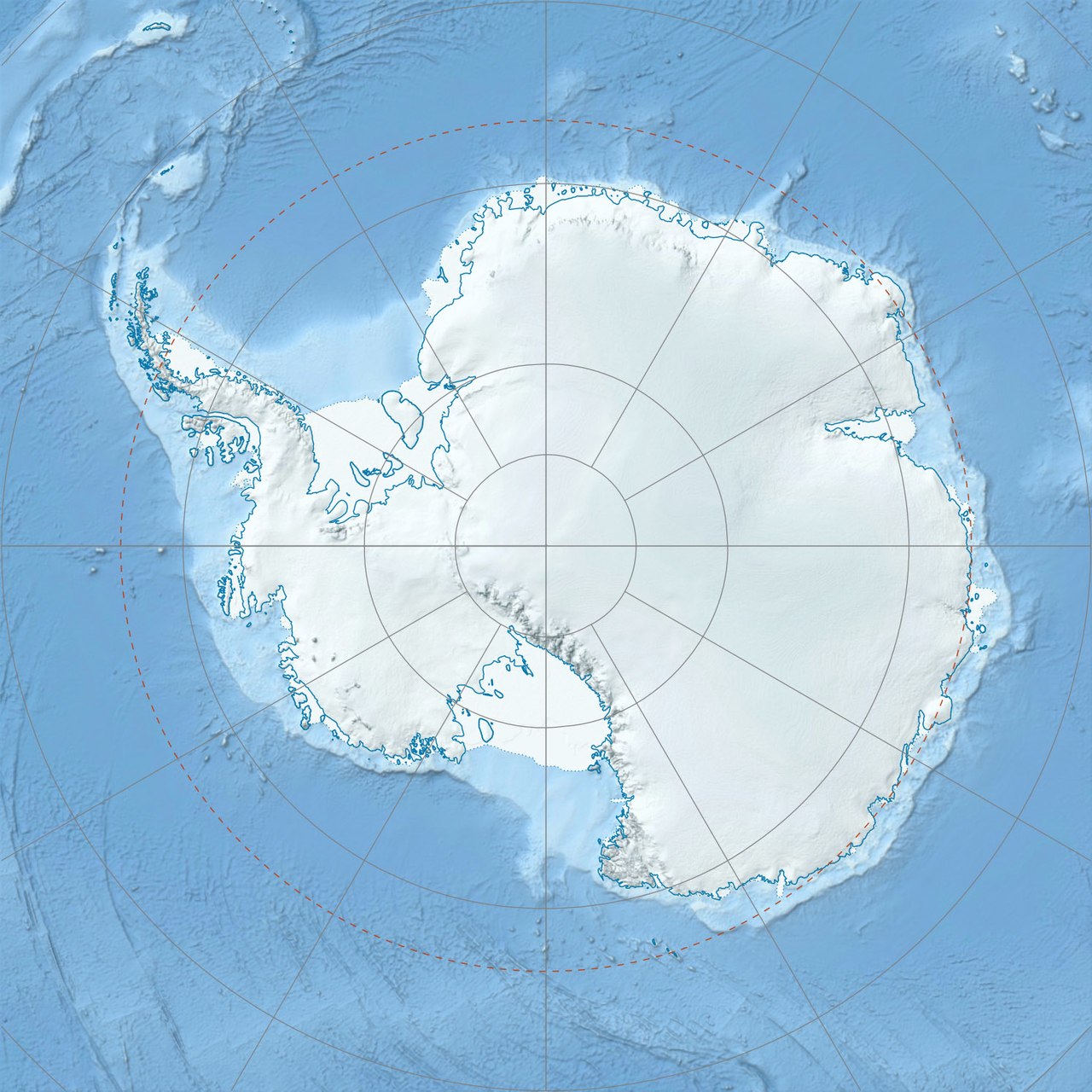
Location
The Commonwealth Range runs from south to north along the east side of the Beardmore Glacier.
Towards its southeast the Pain Névé feeds the Keltie Glacier, which flows southwest, then west, then north round the southern tip of the range to join the Beardmore Glacier.
The Canyon Glacier forms just north of the Pain Névé and flows north along the east side of the range. Further north the Hood Glacier defines the east side of the range, which stretches to the Ross Ice Shelf.

Features, from north to south, include Johnson Bluff, Flat Top, Mount Deakin, Mount Donaldson, Mount Macdonald to the east of Ludeman Glacier, a tributary of the Beardsmore, Mount Hermanson, Gray Peak, Dudley Head, Siege Dome, Dolphin Spur to the north of Hood Glacier, Mount Patrick, Wedge Face, Beetle Spur and Mount Cyril.
Further north are Celebration Pass, Mount Henry, Mount Harcourt and Mount Kyffin.
Highest peaks
Mountains and peaks over 2,500 metres (8,200 ft) high include:

Features
Features, from south to north, include:
Johnson Bluff
84°49′S 170°31′E.
A conspicuous rock bluff 5 nautical miles (9.3 km; 5.8 mi) east-northeast of Ranfurly Point, overlooking the east side of Keltie Glacier at its confluence with Beardmore

Glacier. Named by United States Advisory Committee on Antarctic Names (US-ACAN) for Dwight L. Johnson, USARP biologist at McMurdo Station, 1963.
Flat Top
84°42′S 171°50′E.
A prominent ice-covered mountain, over 4,000 metres (13,000 ft) high, with a broad, flat summit area, standing just east of the head of Osicki Glacier.
It is the highest point in the Commonwealth Range.
Named by the British Antarctic Expedition, 1910–13, as being descriptive.
Mount Deakin
84°40′S 170°40′E.
A prominent mountain, 2,810 metres (9,220 ft) high, at the east side of Beardmore Glacier, just north of the mouth of Osicki Glacier.
Discovered by the British Antarctic Expedition, 1907–09 and named by Shackleton for Sir Alfred Deakin, Prime Minister of Australia, who had supported the expedition.
Mount Donaldson
84°37′S 172°12′E.
A mountain, 3,930 metres (12,890 ft) high, standing 5 nautical miles (9.3 km; 5.8 mi) north-northeast of Flat Top and west of the head of Ludeman Glacier.
Discovered and named by the British Antarctic Expedition, 1907–09.
Mount Macdonald
84°31′S 173°10′E
A peak, 3,630 metres (11,910 ft) high, surmounting the massive north–south trending ridge between Ludeman Glacier and Pain Névé.
Named by NZGSAE (1961–62) for the Hon. T.L. Macdonald, who was Minister of External Affairs and of Defence when the CTAE (1956–58) was being planned and who took a prominent part in obtaining New Zealand participation in the Antarctic.
Mount Hermanson
84°23′S 173°32′E.
An ice-covered mountain in the Queen Maud Mountains, 3,140 metres (10,300 ft) high, standing at the head of Cunningham Glacier, 4 nautical miles (7.4 km; 4.6 mi) southwest of Gray Peak.
Named by US-ACAN for Capt. J.M. Hermanson, USN, air operations officer, McMurdo Station, 1957–58; Chief of Staff to the U.S. Antarctic Projects Officer, 1959.
Gray Peak
84°20′S 173°56′E.
A prominent rock peak, 2,570 metres (8,430 ft) high, standing at the west side of Canyon Glacier, 4 nautical miles (7.4 km; 4.6 mi) northeast of Mount Hermanson.
Named by US-ACAN after Thomas I. Gray, Jr., Weather Central meteorologist at Little America V, 1958.
Dudley Head
84°18′S 172°15′E.
A snow-covered, prominent ridge projecting into the east side of Beardmore Glacier, surmounted by several domes rising to 2,540 metres (8,330 ft), about 5 nautical miles (9.3 km; 5.8 mi) south of Mount Patrick.
Discovered and named by the British Antarctic Expedition 1907–09, and called "Mount Dudley" by Shackleton.
The name was amended by US-ACAN in keeping with the appearance of the feature.
Siege Dome
84°16′S 172°22′E.
A small, ice-covered prominence standing to the south of the head of Hood Glacier, close southeast of Mount Patrick.
Named by the New Zealand Alpine Club Antarctic Expedition (1959–60) because while attempting to establish a survey station here, they met with an eight day snow storm.
Dolphin Spur
84°12′S 172°48′E.
A broad ice-covered spur just east of Mount Patrick, descending north into the upper reaches of Hood Glacier.
Its several rock outcrops when seen from lower levels of the glacier resemble a school of dolphins diving through the sea.
Named by the New Zealand Alpine Club Antarctic Expedition, 1959-60.
Mount Patrick
84°13′S 172°00′E.
A massive largely ice-covered mountain rising to 2,380 metres (7,810 ft) high, just east of Wedge Face on the east side of the Beardmore Glacier.