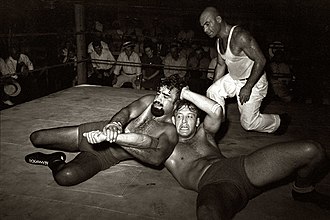
The history of American professional wrestling promotion WWE dates back to the early 1950s when it was founded on January 7, 1953 as the Capitol Wrestling Corporation (CWC). The public branding of the company has undergone several name changes throughout the years, from the CWC to the World Wide Wrestling Federation (WWWF) in 1963, then the World Wrestling Federation (WWF) in 1979, and to World Wrestling Entertainment (WWE) in 2002. Since 2011, it has branded itself solely as WWE. On September 12, 2023, Endeavor, the parent company of mixed martial arts promotion Ultimate Fighting Championship, and WWE merged the two companies into a new parent company, TKO Group Holdings. WWE and UFC continue to operate as separate divisions of the company with WWE focusing on professional wrestling and UFC focusing on mixed martial arts. In 2023, WWE's legal name was changed to World Wrestling Entertainment, LLC, although the branded name remained WWE.
WWE is the largest professional wrestling promotion in the world. It has promoted some of the most successful wrestlers and storylines, and featured some of the most iconic and significant matches and moments in the history of sports entertainment. WWE airs several high-profile programs, such as Raw and SmackDown, in more than 150 countries, hosts at least 12 pay-per-view events a year including its flagship event WrestleMania, and holds approximately 320 live events a year throughout the world. In 2014, WWE launched the first 24/7 streaming network (WWE Network), which would eventually showcase the entire WWE video library (WWE Libraries).
Capitol Wrestling Corporation
Early years (1953–1963)
WWE's origins can be traced back to the 1950s when on January 7, 1953, the first show under the Capitol Wrestling Corporation (CWC) was produced. There is some uncertainty as to who the founder of the CWC was. Some sources state that it was Vincent J. McMahon, while other sources cite McMahon's father, Roderick James "Jess" McMahon (who died in 1954) as the original founder of CWC. The NWA recognized an undisputed NWA World Heavyweight Champion that went to several different professional wrestling promotions in the NWA. The championship was defended around the world. The NWA generally promoted strong shooters as champions, to give their worked sport credibility and guard against double-crosses. While doing strong business in the Midwest (the NWA's core region), these wrestlers attracted little interest in the CWC territory. In 1961, the NWA board decided instead to put the championship on bleach blond showman "Nature Boy" Buddy Rogers, a much more effective drawing card in the region.

The rest of the NWA was unhappy with McMahon and Toots Mondt because he rarely allowed Rogers to wrestle outside of the Northeast. Mondt and McMahon wanted Rogers to keep the NWA World Heavyweight Championship, but Rogers was unwilling to sacrifice his $25,000 deposit on the championship belt (championship holders at the time had to pay a deposit to insure they honored their commitments as champion). Rogers lost the NWA World Heavyweight Championship to Lou Thesz in a one-fall match in Toronto, Ontario, Canada on January 24, 1963, which led to Mondt, McMahon, and the CWC leaving the NWA in protest, creating the World Wide Wrestling Federation (WWWF) in the process.
World Wide Wrestling Federation
Rise of Bruno Sammartino (1963–1979)
The World Wide Wrestling Federation (WWWF) was formed on January 24, 1963. On April 25, 1963, Buddy Rogers was awarded the new WWWF World Heavyweight Championship, supposedly winning an apocryphal tournament in Rio de Janeiro. He lost the championship to Bruno Sammartino a month later on May 17, 1963, after suffering a heart attack shortly before the match. To accommodate Rogers' condition, the match was booked to last under a minute.
Sammartino would retain the title for seven years, eight months and one day (2,803 days), making his the longest continuous world championship reign in men's wrestling history. Although Sammartino was the face of the WWWF, wrestlers such as Superstar Billy Graham and Bob Backlund were also hugely popular. The WWWF gained notoriety in the 1970s by holding their biggest shows at Shea Stadium or Madison Square Garden and doing strong business across the entire Northeast megalopolis. They leveraged former, but still popular, wrestlers such as Captain Lou Albano, "Grand Wizard of Wrestling" Ernie Roth and "Classy" Freddie Blassie to act as managers for Sammartino's heel (villainous) opponents. At this time, only babyface (fan favorite) wrestlers were allowed to have long championship reigns, such as Bruno Sammartino, Pedro Morales and Bob Backlund, who all retained for more than one year each. The heel champions, such as Ivan Koloff and Stan Stasiak, were used to "transition" the championship from one wrestler to another, and they generally kept the title for no more than a single month-long program before dropping it to the next babyface. Graham was the only heel character to keep his championship for longer than one month, as the WWWF felt it needed time to build Backlund up as championship material.

The WWWF was relatively conservative for promotions of its day; running its major arenas monthly rather than weekly or bi-weekly. Programs generally involved a babyface champion facing a heel challenger for one to three meetings in each scheduled town; for longer programs the heel would often win the first match in a non-decisive manner such as a countout or via excessive blood loss, and the champion would then retain in an ultraviolent blow-off match such as a steel cage match or Texas Death match. Unlike most of the NWA territories, the main event would occur in the middle of the arena show cards, allowing the company to build upon the match's finish in order to sell tickets to the next event; reliable, popular workers such as Chief Jay Strongbow would then wrestle at the end of the show to send the crowd home happy. The WWWF also featured popular wrestlers based out of non-WWWF territories such as Dusty Rhodes and retained the services of (at the time) the most popular and highly paid wrestler in the world, André the Giant, in between his territorial and international obligations.
WWWF held their then-major event Showdown at Shea three times at Flushing, New York's Shea Stadium in 1972, 1976 and 1980. Bruno Sammartino main evented the 1972 and 1980 events, wrestling Pedro Morales to a 75-minute time limit draw in 1972, and defeating Larry Zbyszko in a Steel cage match in 1980. The main event of the 1976 event was a "Boxer vs Wrestler" fight between Muhammad Ali and Antonio Inoki which ended in a draw. At that event, Sammartino had retained the WWWF World Heavyweight Championship against Stan Hansen. The 1972, 1976 and 1980 events each had attendance figures of 22,508, 32,000, and 36,295 respectively.
Toots Mondt left the WWWF in the late 1960s, and Vincent J. McMahon assumed complete control of the organization in 1971. Later that year, The Mongols created controversy after they left the WWWF with the WWWF International Tag Team Championship. As a result, the championship would be considered inactive until Luke Graham and Tarzan Tyler won a tournament to claim the championship. They then defeated the Mongols in November 1971, voiding any claim The Mongols had to the championship.
World Wrestling Federation
Purchase by Vince McMahon Jr. (1979–1984)
In March 1979, for marketing purposes, the World Wide Wrestling Federation was renamed as the World Wrestling Federation (WWF). In 1980, Vincent K. McMahon, the son of Vincent J. McMahon, founded Titan Sports, Inc. and applied trademarks for the initials "WWF". Two years later in 1982, McMahon purchased Capitol Sports, the parent company of the WWF, from his father and associates Gorilla Monsoon and Arnold Skaaland. Seeking to make the WWF the premier wrestling promotion in the world, he began an expansion process that fundamentally changed the industry. In an interview with Sports Illustrated, McMahon noted:In the old days, there were wrestling fiefdoms all over the country, each with its own little lord in charge. Each little lord respected the rights of his neighboring little lord. No takeovers or raids were allowed. There were maybe 30 of these tiny kingdoms in the U.S. and if I hadn't bought out my dad, there would still be 30 of them, fragmented and struggling. I, of course, had no allegiance to those little lords.
Upon taking over the company, McMahon immediately worked to get WWF programming on syndicated television all across the United States. This angered other promoters and disrupted the well-established boundaries of the different wrestling promotions. In addition, the company used income generated by advertising, television deals, and tape sales to secure talent from rival promoters. Capitol Sports already controlled most of the northeastern territory, but the younger McMahon wanted the WWF to be a national wrestling promotion, something the NWA did not approve of. He withdrew his promotion from the NWA, much like the American Wrestling Association, which controlled the upper Midwest. To become a national promotion, the WWF would have to become bigger than the AWA or any NWA promotion.
Golden Era (1984–1993)
McMahon's vision for his promotion was starting to become possible when he signed AWA talent Hulk Hogan, who had achieved popularity outside of wrestling – notably for his appearance in Rocky III as Thunderlips. McMahon signed Rowdy Roddy Piper as Hogan's rival, and shortly afterward signed Jesse "The Body" Ventura. Other significant wrestlers who were part of the roster included: Big John Studd, André the Giant, Jimmy "Superfly" Snuka, "The Magnificent" Don Muraco, Junkyard Dog, "Mr. Wonderful" Paul Orndorff, Greg "The Hammer" Valentine, Ricky "The Dragon" Steamboat, and Nikolai Volkoff. In 1984, Hogan was pushed to main event status. He defeated WWF World Heavyweight Champion The Iron Sheik at Madison Square Garden on January 23, 1984, and thus evolved into one of the most recognizable and popular faces in professional wrestling. This event is often considered the start of WWF's Golden Era, or "Hulkamania".

With reasonable revenue being made, McMahon was able to secure television deals, and WWF was being shown across the United States. McMahon also began selling videotapes of WWF events outside the Northeast through his Coliseum Video distribution company, again angering other promoters. The syndication of WWF programming forced promotions to engage in direct competition with the WWF. The increased revenue allowed McMahon to sign more talent, such as Brutus Beefcake, Tito Santana, Jake "The Snake" Roberts, Butch Reed, and "Hacksaw" Jim Duggan.
For McMahon to truly turn WWF into a national promotion, he needed to have WWF touring the entire United States. Such a venture was impossible with the revenue WWF currently had, so McMahon envisioned a way to obtain the necessary capital through a risky all-or-nothing gamble on a supercard concept called WrestleMania in 1985. WrestleMania would be a pay-per-view extravaganza, viewable on closed-circuit television and marketed as the Super Bowl of professional wrestling. WrestleMania was not the first supercard seen in professional wrestling, as the NWA had previously run Starrcade in 1983. However, McMahon's vision was to make WWF and the industry itself mainstream, targeting more of the general television audience by exploiting the entertainment side of the industry. With the inaugural WrestleMania, WWF initiated a joint-promotional campaign with MTV, which featured a great deal of WWF coverage and programming, in what was termed the Rock 'n' Wrestling Connection. The mainstream media attention brought on by celebrities including Muhammad Ali, Mr. T and Cyndi Lauper at the event helped propel WrestleMania to become a staple in popular culture, and the use of celebrities has been a staple of the company to the present day.
With the success of WrestleMania, other promotions which tried hard to keep the regional territory system alive started to merge under Jim Crockett Promotions (JCP). Starrcade and The Great American Bash were the JCP versions of WrestleMania, but even when operating inside of its territory, JCP had trouble matching the success of WWF. After Ted Turner purchased majority of JCP's assets, the promotion would become World Championship Wrestling (WCW), providing WWF with a competitor until 2001, when WCW and its trademarks were purchased by WWF. WrestleMania would become an annual pay-per-view phenomenon, being broadcast in nearly 150 countries and almost 20 different languages.

Perhaps the peak of the 1980s wrestling boom was WrestleMania III at the Pontiac Silverdome, which set a "claimed" attendance record of 93,173. In the main event Hulk Hogan retained the WWF Championship against André the Giant. Hogan and Andre faced each other in a rematch on February 5, 1985, in WWF The Main Event which drew a 15.2 Nielsen rating and 33 million viewers the highest in the history of professional wrestling, this time with Andre winning. McMahon used the success of WrestleMania to create more annual pay-per-views such as SummerSlam, the Royal Rumble and the Survivor Series, the latter two both receiving their names from unique stipulation matches featured at the event. These four shows would be jointly known as the “Big Four” of the company's programming up until the modern day.
During the 1980s, Hulk Hogan would cross over into mainstream prominence presented as an all-American hero. Hogan's time as the face of the WWF would last until he departed from the company in the summer of 1993. Other stars such as "Macho Man" Randy Savage, "Rowdy" Roddy Piper, Ultimate Warrior, The Honky Tonk Man, "Million Dollar Man" Ted DiBiase, and others also helped make WWF a financial success in this period. Jim Duggan won the first Royal Rumble match in 1988. While these talents were recognizable as individuals, some talent became better known for their teamwork as part of tag teams. Stables or groups such as Demolition, Strike Force, the Hart Foundation, the British Bulldogs, the Rockers and the Fabulous Rougeaus helped create a strong tag team division for WWF. Towards the end of the "Golden Age", Bret Hart of the Hart Foundation began to break out on his own as a singles competitor, with his most memorable match early on taking place at SummerSlam in 1992 against "The British Bulldog" Davey Boy Smith. Hart would eventually capture the WWF World Heavyweight Championship from Ric Flair later that year and would win the King of the Ring tournament the following year.
New Generation Era (1993–1997)
In 1991, it was reported that Hulk Hogan, Roddy Piper, Rick Martel, Brian Blair, and Dan Spivey were to testify that they had purchased steroids from WWF physician Dr. George T. Zahorian, who was being charged with the illegal distribution of the drug. Two years later, Vince McMahon was indicted due to his connection to Zahorian, and faced a possible eight-year prison term and a $500,000 fine if convicted. The trial began on July 7, 1994, with the prosecutor, who promised to expose "the dark, corrupt underbelly" of WWF, claimed McMahon distributed steroids "like candy" and pressured wrestlers into taking the drug. Wrestler Nailz testified that McMahon had once said to him: "I strongly suggest you go on the gas". Days later, Hogan admitted that steroid use amongst WWF wrestlers was common, but denied ever being pressured into doing so by McMahon. A week later, McMahon was acquitted of all charges, and was quoted as saying "I'm elated. Just like in wrestling, in the end the good guys always win."
With business down in 1992 because of bad press from the steroid scandal – as well as the ring boy and Rita Chatterton sexual assault allegations – Vince McMahon began pushing younger talents into the spotlight over the next several years. By mid-1993, Bret "Hit Man" Hart, Shawn Michaels, The Undertaker, Razor Ramon, Diesel, Lex Luger, Yokozuna, Owen Hart, Crush, Tatanka and others all became the stars of what the WWF eventually branded as the "New Generation". The 1993 King of the Ring ppv event, which saw Hogan's last televised with the WWF for the remainder of the 1990s and Bret Hart gaining greater prominence after winning the King of the Ring tournament, has been regarded as a major focal point for the New Generation era. Hulk Hogan would leave the company in the summer of 1993 and Hart would become one of the most popular stars of this period until his departure in 1997. In addition, the election of Bill Clinton as U.S. President in 1992 is acknowledged to have marked the spread of dramatic culture changes in the United States during this period in time.
Meanwhile, competition between the major wrestling companies increased. In January 1993, WWF created their prime time cable TV program Monday Night Raw, which aired on the USA Network. In 1994, WCW signed Hulk Hogan and other former WWF stars to multi-year contracts, and in 1995 launched Monday Nitro on TNT, to go head to head with Raw, starting the Monday Night War. At WrestleMania X in 1994 a ladder match between Shawn Michaels and Razor Ramon received critical acclaim and was said to be ground breaking and to have revolutionized the concept of ladder matches.
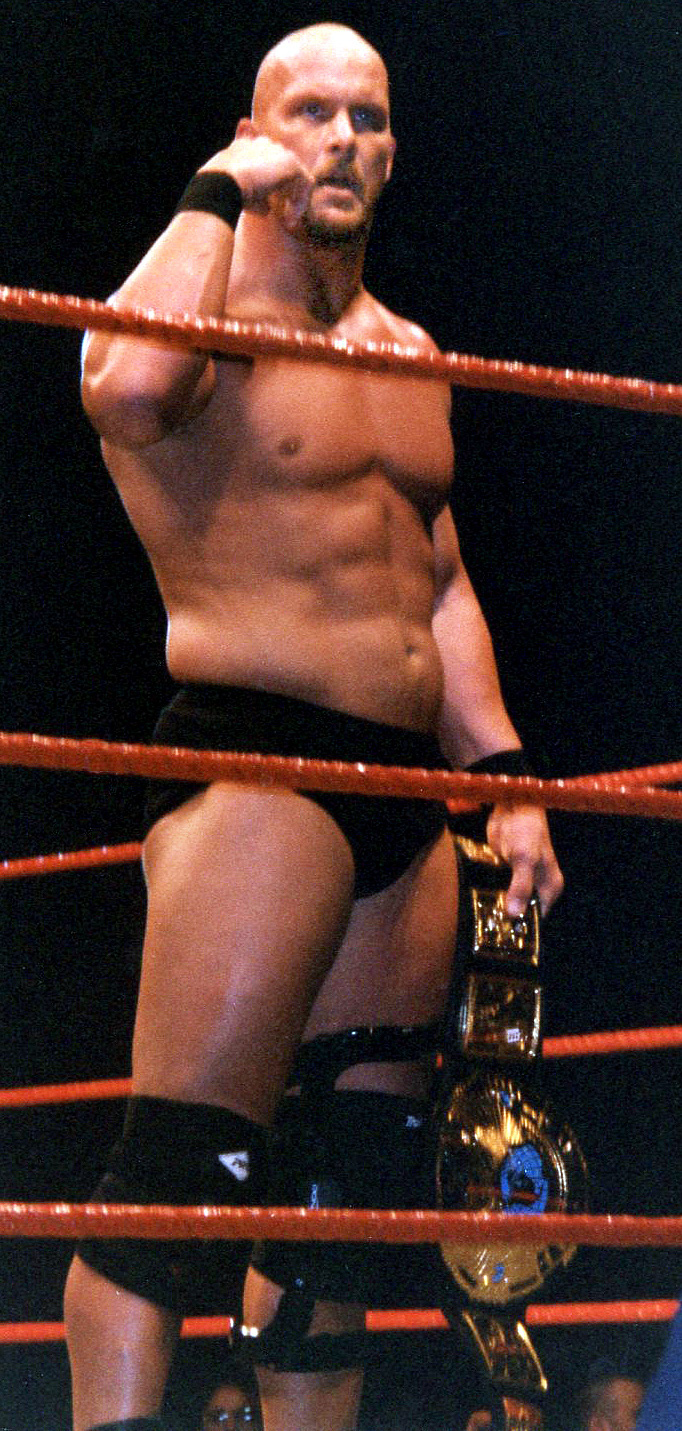
By mid-1996, with the introduction of the New World Order (nWo), a stable led by former WWF wrestlers Hulk Hogan, Scott Hall (Razor Ramon), and Kevin Nash (Diesel), Nitro started a near two years of ratings domination. More talent would eventually leave WWF for WCW including Ted DiBiase, Curt Hennig, reigning WWF Women's Champion Alundra Blayze and The 1-2-3 Kid while Bret Hart decided to stay with the WWF in spite of a lucrative offer by WCW. Towards the end of the New Generation Era, former WCW and ECW talent were being hired by the WWF, including Steve Austin (initially under The Ringmaster persona), Mankind, and Vader. Adopting the Stone Cold persona, Austin's rise to popularity began with his 1996 King of the Ring win and famous "Austin 3:16" speech. Despite starting out as a villain, Austin's popularity would start to gradually exceed those of the top fan favorites in the promotion. The New Generation also saw the debut of Rocky Maivia, who later adopted the more famous persona of The Rock.
At Badd Blood: In Your House in 1997, the first Hell in a Cell match would be held between The Undertaker and Shawn Michaels, which Michaels won after interference from Undertaker's storyline half brother Kane. The match received critical acclaim. The Hell in a Cell match has since become one of the most popular gimmick matches in wrestling history.
Attitude Era (1997–2002)
In 1997, Vince McMahon responded to WCW's big success by taking the WWF in a different direction with more realistic characters and edgier storylines. Also that year, McMahon also informed Bret Hart that he could no longer afford to pay him what his contract stated, and suggested that he go back to the more lucrative deal that WCW had offered him. Hart signed with WCW, but a behind-the-scenes controversy developed over Hart's final matches, resulting in the Montreal Screwjob. At Survivor Series on November 9, 1997, WWF debuted the "WWF Attitude" scratch logo which would be the company's signature throughout the Attitude Era. Hart was defending the WWF World Heavyweight Championship against Shawn Michaels at the event, when McMahon ordered the referee to award the match and the championship to Michaels as if Hart had submitted. While Hart went on to WCW, McMahon received enormous backlash from the media, wrestlers, and fans alike. This inspired him to create the Mr. McMahon character, a villainous extension of his status as a promoter.
On December 15, 1997, Vince McMahon aired a promo on Raw Is War addressing the audience on the company embarking on a "more innovative and contemporary campaign", which would advise parent discretion for a younger audience. This episode also marked the beginning of the scratch logo being officially used for WWF television broadcasts and went into full effect, replacing the New Generation logo. Following Hart's departure, the company implemented a heavy push of popular anti-hero character Stone Cold Steve Austin, whose rising popularity was similar to Hulk Hogan's popularity in the 1980s. During an angle involving Mike Tyson at WrestleMania XIV in March 1998, Austin became WWF Champion by beating Shawn Michaels, giving rise to the Austin era and Austin's feud with Mr. McMahon; this feud would be very important in the WWF turning the tides in the ratings war with rival company WCW. Later in the year, new talent began to emerge for WWF: The Rock, Triple H, Mick Foley, Kurt Angle, The Big Show and Kane strengthened WWF's singles division, while stables such as D-Generation X and the Nation of Domination helped the fight against rival company WCW.
One of the most prominent stars was Stone Cold Steve Austin. The D-Generation X group (consisting of Shawn Michaels, Triple H, Rick Rude, X-Pac, Road Dogg, Billy Gunn and Chyna) proved to be prominently successful during this time. WWF head writer Vince Russo also contributed to the formation of D-Generation X in 1997, The Undertaker vs. Kane feud in 1998, the Stone Cold Steve Austin vs. Mr. McMahon feud, the rise of The Rock, and Mick Foley's three face pushes during the Attitude Era, which helped put Raw ahead of Nitro in the ratings. Russo's booking style was often referred to as "Crash TV," which included edgy, controversial storylines involving sexual content, profanity, swerves or unexpected heel turns, and worked shoots in the storylines. As well as short matches, backstage vignettes, shocking angles and levels of depicted violence.
WWF rebounded in its ratings and popularity, with Raw Is War finally beating Nitro for the first time in 84 weeks on April 13, 1998. Ratings would continue to rise through 1998 and 1999; a 12-minute match between Stone Cold Steve Austin and the Undertaker drew a 9.5 rating on June 28, 1999. It currently stands as the highest-rated segment in Raw history. The Attitude Era saw WWF expand its television coverage and its business structure, as well. During the summer of 1999, WWF's parent company, Titan Sports, was renamed World Wrestling Federation Entertainment, Inc. (WWFE, Inc. or WWFE), and on October 19, 1999, became a publicly traded company, offering 10 million shares priced at $17 each, and began trading on the New York Stock Exchange in October 2000.
In 1999, WWF launched a secondary program known as SmackDown! on the UPN network to compete with WCW's Thunder. SmackDown!'s pilot debuted as a special on April 29, 1999. Beginning on August 26, 1999, the WWF program was aired weekly. In 2000, WWF, in collaboration with television network NBC, created XFL, a new professional football league. XFL was a failure, having only lasted a single year before closing its doors.
Head writer Chris Kreski replaced Vince Russo and Ed Ferrara, who defected to WCW in 1999. Kreski's work was admired for well-planned and detailed storylines, and the transitional period saw feuds and storylines such as the Triple H/Cactus Jack feud, the Triple H/Kurt Angle/Stephanie McMahon love triangle, and a highly successful feud between The Hardy Boyz, Edge and Christian, and The Dudley Boyz. At Survivor Series, WWF's top star, Stone Cold Steve Austin, was run over by a car at the Joe Louis Arena in Detroit, Michigan to write him off of television due to a serious neck injury. At SummerSlam in 2000, WWF debuted the highly popular Tables, Ladders, and Chairs match, the inaugural match seeing Edge and Christian defeating The Dudley Boyz and The Hardy Boyz for the WWF Tag Team Championship.
Prior to WrestleMania 2000, the McMahon family had gone into an on-screen rivalry with each other for the first time, setting up the "McMahon in Every Corner" four-way elimination main event between Big Show (managed by Shane McMahon), The Rock (managed by Mr. McMahon), Triple H (managed by Stephanie McMahon-Helmsley), and future WWF Commissioner Mick Foley (managed by Linda McMahon). Triple H won after Mr. McMahon turned on The Rock and thus retained the WWF Championship. This was historically significant as the first time a heel wrestler had won the main event of Wrestlemania.
Stone Cold Steve Austin would make his return to the company at Unforgiven 2000 and then would make his in-ring return at No Mercy, to gain revenge on Rikishi, who had been revealed as the driver of limousine that had struck Austin at Survivor Series. Austin would go on to win the next year's Royal Rumble match and come out victorious against The Rock for the WWF Championship at WrestleMania X-Seven with help from his former rival, Mr. McMahon, turning heel in the process. At this point WWF won the Monday Night War against WCW.
Purchase of WCW and ECW and the Invasion (2001–2002)
In the Invasion storyline, Shane McMahon (kayfabe) acquired World Championship Wrestling (WCW) in April 2001 and WCW personnel invaded WWF. For the first time since the Monday Night War, WWF's purchase of WCW had made a major American inter-promotional feud possible, but the Invasion turned out to be a disappointment to many fans. One main reason would be that many of WCW's big-name stars were still under contract to WCW's old parent company, AOL Time Warner, rather than WCW itself, and their contracts were not included in the purchase of the company. These wrestlers chose to sit out the duration of their contracts and be financially supported by AOL Time Warner rather than work for WWF for a cheaper salary.
On July 9, 2001, the stars of WCW and Extreme Championship Wrestling (acquired by Stephanie McMahon in a related storyline) joined forces, forming "The Alliance" with WCW owner Shane McMahon and the new owner of ECW Stephanie McMahon leading the charge, with the support and influence of original ECW owner Paul Heyman. At Invasion, Stone Cold Steve Austin turned on WWF and helped the Alliance win the Inaugural Brawl. At Survivor Series, WWF finally defeated WCW and ECW in a "Winner Takes All Match" and the angle was concluded. In the aftermath of the Invasion angle, WWF made several major changes to their product. Ric Flair returned to the WWF as "co-owner" of the company, feuding with Vince McMahon. Jerry Lawler returned to the company after a nine-month hiatus, after his replacement on commentary, Paul Heyman, was fired on-screen by Vince McMahon. Several former Alliance stars were absorbed into the regular WWF roster, such as Booker T, The Hurricane, Lance Storm, and Rob Van Dam. At Vengeance 2001, Chris Jericho went on to unify the WCW Championship and WWF Championship, beating both The Rock and Steve Austin on the same night.
Eventually, Vince McMahon brought back Hollywood Hulk Hogan, Kevin Nash, and Scott Hall to reunite the nWo at the No Way Out pay-per-view in February 2002. However, Hogan proved to be too popular with nostalgic fans of the Golden Era's "Hulkamania" and soon turned face at WrestleMania X8 after his classic match with The Rock, which The Rock won. With an excess of talent employed as a result of having purchased WCW and later ECW, the WWF needed a way to provide exposure for all of its talent. This problem was solved by introducing a "Brand Extension", with the roster split in half and the talent assigned to either Raw or SmackDown! in a mock draft lottery. Wrestlers, commentators and referees became show-exclusive, and the shows were given separate on-screen General Managers. On the March 25, 2002, episode of Raw, the World Wrestling Federation had the first ever WWF draft lottery, which meant the WWF wrestlers are separated between two brands, Raw and SmackDown!. This became effective on April 1, 2002.
World Wrestling Entertainment/WWE
Ruthless Aggression Era (2002–2008)
In 2002, the World Wrestling Federation lost a lawsuit initiated by the World Wildlife Fund over the WWF trademark. The World
Wrestling Federation was forced to rebrand itself and changed its business name to World Wrestling Entertainment (WWE) on May 6, 2002. The company also dropped its "WWF Attitude" moniker that same day and eliminated all uses of the word "Federation"; this affected licensed merchandise such as action figures, video games, and home video releases with its previous logo, which was replaced by a new "scratch" logo with only the two letter Ws and a red slash at the bottom of the logo. However, the older “Block” logo, which the company was no longer using at the time of the legal dispute and the full-length "World Wrestling Federation" name can be used by WWE when referencing history. During this time, the company launched WWE Studios, which was originally formed as WWE Films.
On June 24, 2002, episode of Raw, Vince McMahon officially named the new era "Ruthless Aggression". Later that same year, after WWE Champion Brock Lesnar became exclusive to the SmackDown! brand and with the creation of the World Heavyweight Championship, all the championships became show-exclusive too. Additionally, both Raw and SmackDown! began to stage individual pay-per-view events featuring only performers from that brand, with only the major four pay-per-views Royal Rumble, WrestleMania, SummerSlam and Survivor Series remaining dual-branded. The practice of single-brand pay-per-view events was abandoned following WrestleMania 23. In effect, Raw and SmackDown were operated as two distinct promotions, with a draft lottery taking place each year to determine which talent was assigned to each brand. This lasted until August 2011, when the rosters were merged and the Brand Extension was quietly phased out.
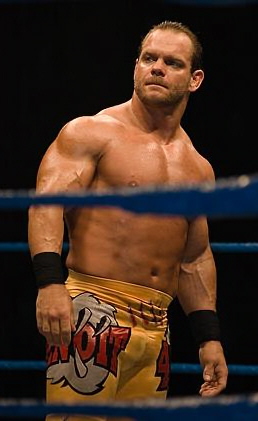
After the company transitioned into its Ruthless Aggression era, this period still featured many elements of its predecessor the Attitude Era, including the levels of violence, sex, and profanity, but there was a larger emphasis on in-ring action. The two top stars of the Attitude Era, Stone Cold Steve Austin and The Rock, eventually left the company in 2003 and 2004, respectively, while newcomers such as Brock Lesnar, who would become the youngest WWE Champion, and Randy Orton, who became the youngest World Heavyweight Champion, saw huge success. Triple H would also be featured prominently during this time, winning several of his fourteen world championships, as would The Undertaker, whose WrestleMania win streak started gaining fame. Eddie Guerrero, Rey Mysterio, Kurt Angle, Chris Benoit, Edge, Brock Lesnar, Randy Orton, John Cena, Batista, John "Bradshaw" Layfield, and Rob Van Dam were also given main event opportunities and all ended up becoming multiple-time world champions. From mid-2002 to 2003, WWE brought several prominent WCW stars to the company, including Eric Bischoff, Scott Steiner, Goldberg, Kevin Nash and Ric Flair. The Great American Bash, originally a WCW pay-per-view event, made its debut as a WWE event.
In August 2002, Shawn Michaels would also return as a wrestler at SummerSlam after a hiatus of over four years. He would achieve great success, and won the World Heavyweight Championship in the first Elimination Chamber match at Survivor Series. The match between Shawn Michaels and Kurt Angle at WrestleMania 21 has been named one of the greatest matches in WWE history. Though Angle won the match, Michaels received praise for his "courageous effort". In 2006, Michaels would reunite with Triple H to once again form the popular 1990s group D-Generation X (DX). They would have major feuds with The Spirit Squad, the McMahon family, and the newly established Rated-RKO (Edge and Randy Orton), which ended prematurely when Triple H suffered a torn quadriceps muscle in 2007 at New Year's Revolution.
Eddie Guerrero, from the famous Mexican Guerrero wrestling family, achieved huge stardom during this period. He gained a large fanbase in 2003 on SmackDown!, which led to a rapid increase in his popularity, promoting him to main event status, and he ultimately won his first world championship, the WWE Championship, at No Way Out in 2004, defeating Brock Lesnar in a highly acclaimed match. He remained the top wrestler of the company after winning the WWE title until his untimely death on November 13, 2005. He was inducted into the WWE Hall of Fame the following year. Guerrero's death due to his drug addictions caused WWE to implement the WWE Wellness Policy to prevent wrestlers from taking drugs. The circumstances of his death would provide a medium for his on- and off-screen friend Rey Mysterio to emerge as a major main-eventer and win the 2006 Royal Rumble match and the World Heavyweight Championship at WrestleMania 22. Mysterio had begun a rivalry with the villainous nephew of Eddie, Chavo Guerrero, who had cost him the World Heavyweight Championship during a match with King Booker. During the feud Mysterio injured his knees and would be sidelined for the rest of 2006 and much of 2007, halting his main event push. Mysterio returned and defeated Chavo in the 2007 edition of SummerSlam and remained a popular fan-favorite wrestler.
John Cena was one of the biggest breakout stars of the Ruthless Aggression era. Upon his debut, Cena quickly proved popular due to his "Doctor of Thuganomics" white rapper gimmick on the SmackDown brand, receiving a WWE Championship match against Brock Lesnar in the spring at Backlash in 2003, and had a major feud with The Undertaker during the summer. At WrestleMania 21, he won his first world championship when he defeated John "Bradshaw" Layfield, the WWE Champion at that time. Cena's popularity soared when he was drafted to Raw, where he quickly became the face of WWE, a rise not seen since Austin and Hulk Hogan. Cena's popularity has led to him becoming the all-time record "wish maker" for the Make-A-Wish Foundation, granting over 500 wishes as of August 2017. Cena secured victories over veterans Triple H and Shawn Michaels in the main events of WrestleMania 22 and WrestleMania 23, respectively. A popular wrestler during the period was Bobby Lashley from the ECW brand. Cena would defeat Lashley at The Great American Bash in 2007 in a well-received match, shortly after which Lashley left the WWE. After being sidelined due to a shoulder injury for the latter half of 2007, Cena returned in the 2008 Royal Rumble match, winning the match.
Triple H, Randy Orton, Ric Flair, and Batista were part of the villainous stable Evolution, who were prominently featured between 2003 and 2005 until their eventual break-up. Beginning in early 2005, the popularity of Batista would soar much like Cena's, winning the 2005 Royal Rumble and the World Heavyweight Championship at WrestleMania 21 from Triple H. Later in 2005, Batista would go on to defeat Triple H in a highly acclaimed Hell in a Cell match at Vengeance. Although Batista would have major success in the months following his championship win, he would suffer an injury in early 2006 and miss that year's WrestleMania. After returning and eventually winning another world championship, at WrestleMania 23 in 2007, Batista would defend the title against The Undertaker in a classic encounter, though he lost the match. However, Batista defeated The Undertaker at Cyber Sunday. Cena and Batista would not face each other for the first time until SummerSlam in 2008, with Batista winning.
Randy Orton became prominent during this period, becoming the youngest world champion in WWE history at the age of 24, defeating Chris Benoit at the 2004 SummerSlam event. Dubbed "the Legend Killer," he would go on to have feuds with legendary wrestlers such as The Undertaker and Hulk Hogan, facing them at WrestleMania 21 and the 2006 SummerSlam event, respectively. Along with Edge, he would form the villainous tag team Rated-RKO and find success in the tag team division. After returning to singles competition Orton became a multi-time WWE Champion. In 2007 Orton began a long lasting on and off rivalry with John Cena, which lasted until 2014. Orton would also be involved in a lengthy rivalry with former Evolution leader Triple H, defeating him in a Last Man Standing match at No Mercy in 2007 but a year later losing to him in another Last Man Standing match at One Night Stand in 2008.
Rising star CM Punk made his WWE debut in 2006, wrestling his first main roster match at Survivor Series that year in a 5-on-5 Survivor Series elimination match as part of Team DX in a clean sweep victory over Team Rated-RKO. In 2008, he won the money in the bank briefcase, and on the June 30 episode of Raw, he cashed it in on the then-World Heavyweight Champion Edge, winning the title. The same night, he had to defend the title against John "Bradshaw" Layfield in the main event, but retained it. The final WWE event to receive an adult-oriented rating was the pay-per-view The Great American Bash in 2008, where Triple H retained the WWE Championship against Edge in the main event match. Following the event, WWE shifted to TV-PG, family-friendly programming.
Money in the Bank (2005)
The concept for the Money in the Bank match was introduced in March 2005 by Chris Jericho. Jericho pitched the idea on an episode of Raw to general manager Eric Bischoff, who liked it and promptly signed it for WrestleMania 21, assigning Jericho, Christian, Chris Benoit, Edge, Shelton Benjamin, and Kane to participate in the match. Edge won this inaugural match, and since, many times the match became a way to help elevate new stars to the main event, with winners such as CM Punk, The Miz, Daniel Bryan, Alberto Del Rio, Seth Rollins, and Dean Ambrose. The match format was originally exclusive to the annual WrestleMania until 2010, when the Money in the Bank pay-per-view debuted. In 2017, the first women's Money in the Bank match was held, which was won by Carmella.
Return of ECW (2006–2010)
By 2004, WWE began reintroducing Extreme Championship Wrestling (ECW) through content from the ECW video library and a series of books, which included the release of The Rise and Fall of ECW. On May 26, 2006, WWE relaunched the franchise with its own show on NBC Universal's Sci Fi Channel, later to be known as Syfy, starting June 13, 2006. Despite initial concerns that professional wrestling would not be accepted by Sci Fi Channel's demographic, network President Bonnie Hammer stated that she believed ECW would fit the channel's theme of "stretching the imagination".
On June 13, Paul Heyman, former ECW owner and newly appointed figurehead for the ECW brand, recommissioned the ECW World Heavyweight Championship to be the brand's world championship and awarded it to Rob Van Dam as a result of winning the WWE Championship at One Night Stand 2006. Under the WWE banner, ECW was presented in a modernized style to that when it was an independent promotion and was produced following the same format as the other brands, with match rules, such as count outs and disqualifications, being standard. Matches featuring the ruleset of the ECW promotion were classified as being contested under "Extreme Rules" and were only fought when specified otherwise. The brand would continue to operate until February 16, 2010, when the brand was rendered defunct.