
Jaime Royal "Robbie" Robertson (July 5, 1943 – August 9, 2023) was a Canadian musician, composer, and producer. Robertson was the onetime lead guitarist for Bob Dylan's backing band. He was also the guitarist and primary songwriter of the Band from its inception until his 1976 departure. In his later solo career, Robertson released six albums.
Robertson's work with the Band was instrumental in creating the Americana music genre. He was inducted into the Rock and Roll Hall of Fame and the Canadian Music Hall of Fame as a member of the Band; he was also inducted into Canada's Walk of Fame, both with the Band and on his own. Robertson is ranked 59th in Rolling Stone magazine's 2011 list of the 100 greatest guitarists of all time. He wrote "The Weight" and "The Night They Drove Old Dixie Down" with the Band and had a solo hit with "Somewhere Down the Crazy River". He was inducted into the Canadian Songwriters Hall of Fame and received a Lifetime Achievement Award from the National Academy of Songwriters.
Robertson collaborated on film and television soundtracks, usually with director Martin Scorsese. His soundtrack work began with The Band's farewell rockumentary film The Last Waltz (1978) and included dramatic films such as Raging Bull (1980), The King of Comedy (1983), The Color of Money (1986), The Irishman (2019), and Killers of the Flower Moon (2023), the last of which was dedicated to his memory and garnered him a posthumous nomination for the Academy Award for Best Original Score.
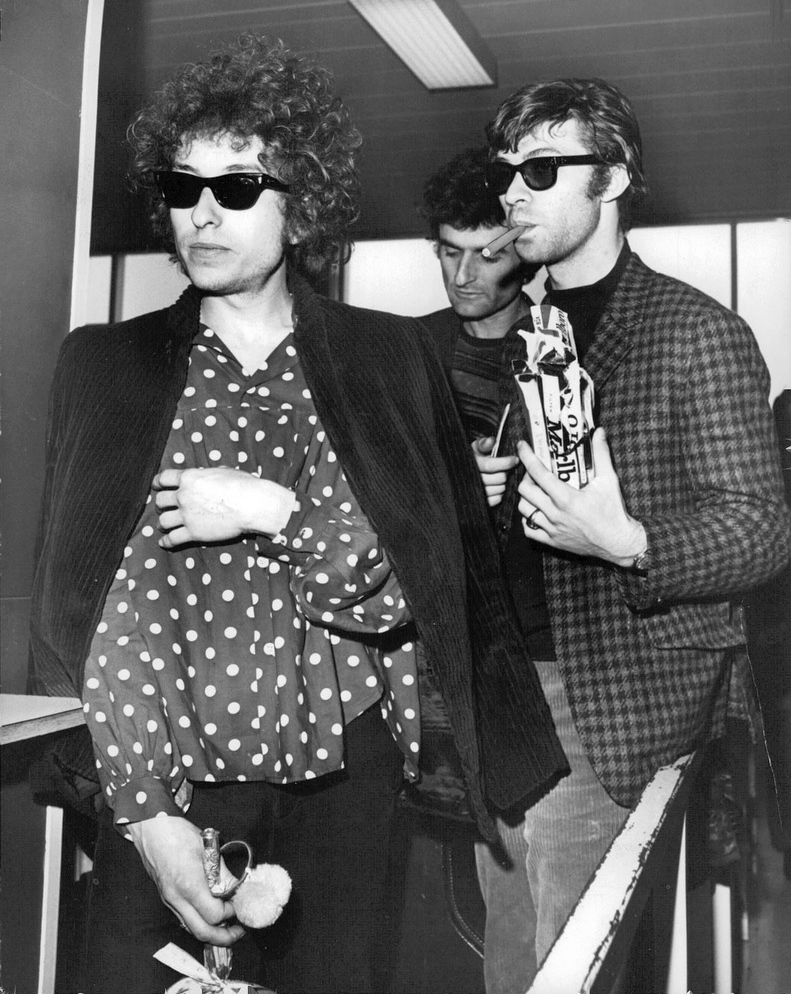
Early life
Jaime Royal "Robbie" Robertson was born on July 5, 1943. His mother, Rosemarie Dolly Chrysler, was born on February 6, 1922. Chrysler was Cayuga and Mohawk, and was raised on the Six Nations of the Grand River reserve southwest of Toronto near Hamilton. Chrysler later lived with an aunt in the Cabbagetown neighbourhood of Toronto and worked at the Coro jewellery plating factory. She met James Patrick Robertson there and married him in 1942.
James and Rosemarie Robertson continued working at the Coro factory, and they lived in several Toronto neighbourhoods while Robbie Robertson was a child. An only child, Robbie Robertson often travelled with his mother to the Six Nations reserve to visit family. Here he was taught guitar, particularly by his older cousin Herb Myke. He became a fan of rock and roll and rhythm and blues through the radio, listening to disc jockey George "Hound Dog" Lorenz play rock on WKBW from Buffalo, New York, and staying up to listen to John R.'s all-night blues show on WLAC, a clear-channel station in Nashville, Tennessee.
When Robertson was 12 years of age, as his mother was in the process of obtaining a divorce from James Robertson, she told him that his biological father was Alexander David Klegerman. Klegerman was a Jewish-American gambler with whom Robertson's mother had been involved before her marriage to James Robertson. Robertson wrote in his 2016 memoir, Testimony, that his mother told him that Klegerman had died in a hit-and-run accident on the Queen Elizabeth Way before Robbie Robertson was born. In fact, Klegerman was killed in June, 1946, shortly before Robertson turned three years old. (“1 killed, 6 Hurt In Motor Mishaps Over Week-End, The Globe and Mail, July 1, 1946). Robertson's mother later arranged for her son to meet his paternal uncles, Morris (Morrie) and Nathan (Natie) Klegerman. Robertson later stated that his uncles "quickly pulled me into their world and went out of their way to make me feel like family".

Early career
When Robertson was 14, he worked two brief summer jobs in the travelling carnival circuit, first for a few days in a suburb of Toronto, and later as an assistant at a freak show for three weeks during the Canadian National Exhibition. He later drew from this experience for his song "Life is a Carnival" (with the Band) and the movie Carny (1980), which he both produced and starred in.
The first band Robertson joined was Little Caesar and the Consuls, formed in 1956 by pianist/vocalist Bruce Morshead and guitarist Gene MacLellan. He stayed with the group for almost a year, playing popular songs of the day at local teen dances. In 1957, he formed Robbie and the Rhythm Chords with his friend Pete "Thumper" Traynor (who later founded Traynor Amplifiers). They changed their name to Robbie and the Robots after they watched the film Forbidden Planet and took a liking to the film's character Robby the Robot. Traynor customized Robertson's guitar for the Robots, fitting it with antennae and wires to give it a space age look. Traynor and Robertson joined with pianist Scott Cushnie and became The Suedes. At a Suedes show on October 5, 1959, when they played CHUM Radio's Hif Fi Club on Toronto's Merton Street, Ronnie Hawkins first became aware of them and was impressed enough to join them for a few numbers.
With Ronnie Hawkins and the Hawks
Robertson began shadowing Hawkins after the Suedes opened for the Arkansas-based rockabilly group Ronnie Hawkins and the Hawks at Dixie Arena. One afternoon he overheard Hawkins say he needed some new songs since they were going into the studio to record the next month. Hoping to ingratiate himself, Robertson stayed up all night and wrote two songs, "Someone Like You" and "Hey Boba Lu", and played them for Hawkins the next day. The showman was impressed and recorded both of them for his new album, Mr Dynamo (1959). Hawkins brought Robertson to the Brill Building in New York City to help him choose songs for the rest of the album.

Hawkins hired pianist Scott Cushnie away from the Suedes and took him on tour in Arkansas with the Hawks. When the Hawks' bass player left the group, Cushnie recommended that Hawkins hire Robertson to replace him on bass. Hawkins invited Robertson to Arkansas, and then flew to the UK to perform on television there. Left in Arkansas, Robertson spent his living allowance on records and practised intensively each day. Upon returning, Hawkins hired him to play bass. Cushnie left the band a few months later. Robertson soon switched from bass to playing lead guitar for the Hawks. He developed into a guitar virtuoso.
Roy Buchanan, a few years older than Robertson, was briefly a member of the Hawks and became an important influence on Robertson's guitar style: "Standing next to Buchanan on stage for several months, Robertson was able to absorb Buchanan's deft manipulations with his volume speed dial, his tendency to bend multiple strings for steel guitar-like effect, his rapid sweep picking, and his passion for bending past the root and fifth notes during solo flights."
Drummer/singer Levon Helm was already a member of the Hawks and soon became close friends with Robertson. The Hawks continued to tour the United States and Canada, adding Rick Danko, Richard Manuel, and Garth Hudson to the Hawks lineup in 1961. This lineup, which later became the Band, toured with Hawkins throughout 1962 and into 1963. They also hired the saxophone player Jerry Penfound and later Bruce Bruno, who were both with the group in their intermediary period as Levon and the Hawks.

Ronnie Hawkins and the Hawks cut sessions for Roulette Records throughout 1961–1963, all of which Robertson appeared on. The sessions included three singles: "Come Love" b/w "I Feel Good" (Roulette 4400 1961); "Who Do You Love" b/w "Bo Diddley" (Roulette 4483 1963); and "There's A Screw Loose" b/w "High Blood Pressure" (Roulette 4502 1963).
With Levon and the Hawks
The Hawks left Ronnie Hawkins at the beginning of 1964 to go on their own. The members of the Hawks were losing interest in playing in the rockabilly style and favoured blues and soul music. In early 1964, the group approached agent Harold Kudlets about representing them, which he agreed to do, booking them a year's worth of shows in the same circuits as they had been in before with Ronnie Hawkins. Originally dubbed The Levon Helm Sextet, the group included all of the future members of the Band as well as Jerry Penfound on saxophone and Bob Bruno on vocals.
After Bruno left the group in May 1964, the group changed their name to Levon and the Hawks. Penfound stayed with the group until 1965. Kudlets kept the group busy performing throughout 1964 and into 1965, finally booking them into two lengthy summer engagements at the popular nightclub Tony Mart's in Somers Point, New Jersey, at the Shore. They played six nights a week alongside Conway Twitty and other acts.

The members of Levon and the Hawks befriended blues artist John P. Hammond while he was performing in Toronto in 1964. Later in the year, the group agreed to work on Hammond's album So Many Roads (released in 1965) at the same time that they were playing the Peppermint Lounge in New York City. Robertson played guitar throughout the album, and was billed "Jaime R. Robertson" in the album's credits.
Levon and the Hawks cut the single "Uh Uh Uh" b/w "Leave Me Alone" under the name the Canadian Squires in March 1965. Both songs were written by Robertson. The single was recorded in New York and released on Apex Records in the United States and on Ware Records in Canada. As Levon and the Hawks, the group cut an afternoon session for Atco Records later in 1965, which yielded two singles, "The Stones I Throw" b/w "He Don't Love You" (Atco 6383) and "Go, Go, Liza Jane" b/w "He Don't Love You" (Atco 6625). Robertson also wrote all three of the tracks on Levon and the Hawks' Atco singles.
With Bob Dylan and the Hawks
1965–1966 World Tour
Toward the end of Levon and the Hawks' second engagement at Tony Mart's in New Jersey, in August 1965, Robertson received a call from Albert Grossman Management requesting a meeting with singer Bob Dylan. The group had been recommended to both Grossman and to Dylan by Mary Martin, one of Grossman's employees; she was originally from Toronto and was a friend of the band. Dylan was also aware of the group through his friend John Hammond, whose album So Many Roads members of the Hawks had performed on.

Robertson agreed to meet with Dylan. Initially, Dylan intended simply to hire Robertson as the guitarist for his backing group. Robertson refused the offer, but did agree to play two shows with Dylan, one at the Forest Hills Tennis Stadium in Forest Hills, New York, on August 28, and one at the Hollywood Bowl in Los Angeles on September 3. Robertson suggested they use Levon Helm on drums for the shows.
Robertson and Helm performed in Dylan's backing band, along with Harvey Brooks and Al Kooper for both shows. The first at Forest Hills received a predominantly hostile response, but the second in Los Angeles was received slightly more favourably. Dylan flew up to Toronto and rehearsed with Levon and the Hawks September 15–17, as Levon and the Hawks finished an engagement there, and hired the full band for his upcoming tour. Robertson thus became Dylan's guitarist as Dylan entered his "legendary electric period".
Dylan and the Hawks toured the United States throughout October–December 1965, with each show consisting of two sets: an acoustic show featuring only Dylan on guitar and harmonica, and an electric set featuring Dylan backed by the Hawks. The tours were largely met with a hostile reaction from fans who knew Dylan as a prominent figure in the American folk music revival, and thought his move into rock music a betrayal. Helm left the group after their November 28 performance in Washington, D.C.
On November 30, 1965, Dylan cut a studio session with members of the Hawks, which yielded the non-LP single "Can You Please Crawl Out Your Window?" Dylan completed the Blonde on Blonde album in Nashville in mid-February 1966, employing Robertson for one of these sessions, which took place on February 14.
Dylan and the Hawks played more dates in the continental United States from February to March 1966 of Bob Dylan's 1966 World Tour. From April 9–May 27, they played Hawaii, Australia, Europe, and the UK and Ireland. The Australian and European legs of the tour received a particularly harsh response from disgruntled folk fans. The May 17 Manchester Free Trade Hall show is best known for an angry audience member audibly yelling "Judas!" at Dylan; it became a frequently-bootlegged live show from the tour, but was eventually released officially as The Bootleg Series Vol. 4: Bob Dylan Live 1966, The "Royal Albert Hall" Concert.
"Basement Tapes" period
On July 29, 1966, Dylan sustained an injured neck from a motorcycle accident, and retreated to a quiet domestic life with his new wife and child in upstate New York. Some of the members of the Hawks were living at the Chelsea Hotel in New York City at the time, and were kept on a weekly retainer by Dylan's management.
In February 1967, Dylan invited the members of the Hawks to come up to Woodstock, New York to work on music. Robertson had met a French-Canadian woman on the Paris stop of Dylan's 1966 world tour, and the two moved into a house in the Woodstock area. The remaining three members of the Hawks rented a house near West Saugerties, New York; it was later dubbed "Big Pink" because of its pink exterior.
Dylan and the members of the Hawks worked together at the Big Pink house every day to rehearse and generate ideas for new songs, many of which they recorded in Big Pink's makeshift basement studio. The recordings were made between the late spring and autumn of 1967. Previous Hawks member Levon Helm returned to the group in August 1967. By this time, Robertson's guitar style had evolved to be more supportive of the songs and less devoted to displaying speed and virtuosity.
In time, word about these sessions began to circulate, and in 1968, Rolling Stone magazine co-founder Jann Wenner brought attention to these tracks in an article entitled "Dylan's Basement Tape Should Be Released".
In 1969, a bootleg album with a plain white cover compiled by two incognito music industry insiders featured a collection of seven tracks from these sessions. The album, which became known as The Great White Wonder, began to appear in independent record stores and receive radio airplay. This album became a runaway success and helped to launch the bootleg recording industry.
In 1975, Robertson produced an official compilation, The Basement Tapes, which included a selection of tracks from the sessions. An exhaustive collection of all 138 extant recordings was released in 2014 as The Bootleg Series Vol. 11: The Basement Tapes Complete.
The Band
1967–1968: Music from Big Pink
In late 1967, Dylan left to record his next album, John Wesley Harding (1967). After recording the basic tracks, Dylan asked Robertson and Garth Hudson about playing on the album to fill out the sound. Robertson liked the starkness of the sound and recommended Dylan leave the tracks as they were. Dylan worked with the Hawks again when they were his backup band for two Woody Guthrie memorial concerts at Carnegie Hall in New York City in January 1968. Three of these performances were later released by Columbia Records on the LP A Tribute to Woody Guthrie, Vol. 1 (1972).
Over the course of the "Basement Tapes" period, the group had developed a sound of their own. Grossman went to Los Angeles to shop the group to a major label, securing a contract with Capitol Records. The group went to New York to begin recording songs with music producer John Simon. Capitol brought the group to Los Angeles to finish the album. The resulting album, Music from Big Pink, was released in August 1968. The group called itself The Band, and Music from Big Pink was its debut studio album.
Robertson was the principal songwriter and lead guitarist of the Band. He wrote four of the songs on Music From Big Pink, including "The Weight", "Chest Fever", "Caledonia Mission", and "To Kingdom Come". He is listed in the songwriting credits as "J.R. Robertson". He sang lead vocals on the track "To Kingdom Come"; he did not sing on another Band song released to the public until "Knockin' Lost John" on 1977's Islands. Two of Robertson's compositions for the album, "The Weight" and "Chest Fever", became important touchstones in the group's career. "The Weight" was influenced by the films of director Luis Buñuel, in particular Nazarín (1959) and Viridiana (1961), and reflects the recurring theme in Buñuel's films about the impossibility of sainthood. The song portrays an individual who attempts to take a saintly pilgrimage and becomes mired in requests from other people to do favors for them along the way. The mention of "Nazareth" at the beginning of the song refers to Nazareth, Pennsylvania, where the C. F. Martin & Company guitar manufacturer is located; it was inspired by Robertson seeing the word "Nazareth" in the hole of his Martin guitar.
Although "The Weight" reached No. 21 on the British radio charts, it did not fare as well on the American charts, initially stalling at No. 63. Nevertheless, "The Weight" has since become the Band's best known song. It has been covered by many artists, appeared in dozens of films and documentaries, and has become a staple of American rock music.
1969–1973: Expansion and acclaim
The Band began performing regularly in spring 1969, with their first live dates as the Band taking place at the Winterland Ballroom in San Francisco. Their most notable performances that year were at the 1969 Woodstock Festival and the UK Isle of Wight Festival with Bob Dylan in August.
The Band's self-titled second album was released in September 1969. It became a critical and commercial success. The album received almost universal critical praise, peaked at No. 9 on the U.S. pop charts, and stayed on the Top 40 for 24 weeks. Robertson wrote or co-wrote each song on the album. The Band works as a loose concept album of Americana themes, and was instrumental in the creation of the Americana music genre. It was included in the Library of Congress' National Recording Registry in 2009.
The song from The Band that had the strongest cultural influence was "The Night They Drove Old Dixie Down". The song was written by Robertson, who spent about eight months working on it. The lyrics tell of the last days of the American Civil War, portraying the suffering of the protagonist, Virgil Caine, a poor white Southerner. Robertson said he had the music to the song in his head and would play the chords over and over on the piano but had no idea what the song was to be about. Later, the concept came to him and he researched the subject with help from Helm, a native of Arkansas. Although the Band's original version of the song was only released as the B side of the single "Up on Cripple Creek", a cover version by Joan Baez went to No. 3 on the charts in 1971 and helped to popularize the song. The song was number 245 on Rolling Stone magazine's 2004 list of the 500 greatest songs of all time. Pitchfork Media named it the forty-second best song of the 1960s. The song is included in the Rock and Roll Hall of Fame's "500 Songs that Shaped Rock and Roll" and Time magazine's All-Time 100.
On November 2, 1969, the Band appeared on the Ed Sullivan Show, one of only two television appearances they made. On January 12, 1970, the Band was featured on the cover of Time magazine. The Band rented The Woodstock Playhouse in Woodstock, New York with the intent of recording a new live album there, but the city council voted against it, so they recorded on location, but without an audience. Robertson handled most of the songwriting duties as before. Robertson brought in Todd Rundgren to engineer the album which was recorded in two weeks' time. These sessions resulted in the Band's third album, Stage Fright. Stage Fright became the Band's highest-charting album, peaking at No. 5 on September 5 and staying on the Billboard Top 40 for 14 weeks.
The Band's next album, Cahoots, was recorded at Albert Grossman's newly built Bearsville Studios and was released in October 1971. The album received mixed reviews and peaked at No. 24 on the Billboard charts, only remaining on the Billboard Top 40 for five weeks. Cahoots is notable for its cover of Bob Dylan's "When I Paint My Masterpiece", as well as for featuring the concert favourite "Life Is a Carnival". The inclusion of "When I Paint My Masterpiece" came about when Dylan stopped by Robertson's home during the recording of Cahoots and Robertson asked if he might have any songs to contribute. That led to Dylan playing an unfinished version of "When I Paint My Masterpiece" for him. Dylan soon completed the song and the Band recorded it for the album.
The Band continued to tour throughout 1970–1971. A live album recorded at a series of shows at the Academy of Music in New York City between December 28–31, 1971 was released in 1972 as the double album Rock Of Ages. Rock of Ages peaked at No. 6, and remained in the Top 40 for 14 weeks.
After the Academy of Music shows, the Band again retreated from performing live. They returned to the stage on July 28, 1973, to play the Summer Jam at Watkins Glen alongside the Allman Brothers Band and the Grateful Dead. A recording of the Band's performance was released by Capitol Records as the album Live at Watkins Glen in 1995. With over 600,000 people in attendance, the festival set a record for "Pop Festival Attendance" in the Guinness Book of World Records. The record was first published in the 1976 edition of the book.
In October 1973, the Band released an album of cover songs entitled Moondog Matinee, which peaked at No. 28 on the Billboard charts. Around the time of the recording of Moondog Matinee, Robertson began working on an ambitious project entitled Works that was never finished or released. One lyric from the Works project, "Lay a flower in the snow", was used in Robertson's song "Fallen Angel", which appeared on his 1987 self-titled solo album.
1974: Reunion with Bob Dylan
Bill Graham took out a full-page advertisement in The New York Times to spread the word that Bob Dylan and the Band were going on tour in 1974. The response was one of the largest in entertainment history up to that point, with between five and six million requests for tickets mailed in for 650,000 seats. Graham's office ended up selling tickets off on a lottery basis, and Dylan and the Band netted $2 million from the deal.
While preparing for the tour, the Band went into the studio with Dylan to record a new album for Asylum Records, Planet Waves (1974). Sessions took place at Village Recorder in West Los Angeles, California, from November 2–14, 1973. Planet Waves was released on February 9, 1974. The album was No. 1 on the Billboard album charts for four weeks, and spent 12 weeks total in the Billboard Top 40. Planet Waves was Bob Dylan's first No. 1 album; it was also the first and only studio album that Dylan and the Band recorded together.
The 1974 tour began at the Chicago Stadium on January 3, 1974 and ended at The Forum in Inglewood, California on February 14. The final three shows of the tour at The Forum in Inglewood, California were recorded and assembled into the double album Before the Flood. Credited to "Bob Dylan/The Band", Before the Flood was released by Asylum Records on July 20, 1974. The album debuted at No. 3 on the Billboard charts, and spent ten weeks in the Top Forty.
1974–1975: Shangri-La Studios
Following the 1974 reunion tour with Bob Dylan, rock manager Elliot Roberts booked the Band with the recently reunited Crosby, Stills, Nash, and Young. On September 4, both artists played Wembley Stadium in London, appearing with Jesse Colin Young and Joni Mitchell.
After moving to Malibu in 1973, Robertson and the Band had discovered a ranch in Malibu near Zuma Beach called "Shangri-La" and decided to lease the property. The album release of The Basement Tapes (1975), credited to Bob Dylan and the Band, was the first album production that took place in the new studio at Shangri-La. The album, produced by Robertson, featured a selection of tapes from the original 1967 Basement Tapes sessions with Dylan, as well as demos for tracks eventually recorded for the Music From Big Pink album. Robertson cleaned up the tracks, and the album was released in July 1975.
One of the best-known tracks on the Band's next album, Northern Lights – Southern Cross (1975), is "Acadian Driftwood", the Band's first song with specifically Canadian subject matter. Robertson was inspired to write "Acadian Driftwood" after seeing the 1971 documentary Acadia, Acadia (L'Acadie, L'Acadie?!?) on Canadian television while in Montreal. Northern Lights – Southern Cross was released on November 1, 1975. The album received generally positive reviews, and reached No. 26 on the Billboard charts, remaining on the Top 40 for five weeks.
1976–1978: The Last Waltz
The Band began touring again in June 1976, performing throughout the summer. The members of the Band were splintering off to work on other projects, with Levon Helm building a studio in Woodstock and Rick Danko having been contracted to Arista Records as a solo artist. While on the summer tour, member Richard Manuel severely injured his neck in a boating accident, so ten dates were cancelled.