
A private school or independent school is a school not administered or funded by the government, unlike a public school. Private schools are schools that are not dependent upon national or local government to finance their financial endowment. Unless privately owned they typically have a board of governors and have a system of governance that ensures their independent operation.
Private schools retain the right to select their students and are funded in whole or in part by charging their students for tuition, rather than relying on taxation through public (government) funding; at some private schools students may be eligible for a scholarship, lowering this tuition fee, dependent on a student's talents or abilities (e.g., sports scholarship, art scholarship, academic scholarship), need for financial aid, or tax credit scholarships that might be available. Roughly one in 10 U.S. families have chosen to enroll their children in private school for the past century.
Some private schools are associated with a particular religious denomination or religion, such as Roman Catholicism, various branches of Protestantism or Judaism. Although private schools may have a religious affiliation, the precise use of the term excludes parochial (and other) schools if there is a financial dependence upon, or governance subordinate to, outside (religious) organizations. These definitions generally apply equally to both primary and secondary education.

Types
In the United Kingdom and several other Commonwealth countries including Australia, Canada and New Zealand the use of the term is generally restricted to primary and secondary educational levels, and it is almost never used of universities or other tertiary institutions. Private education in North America covers the whole gamut of educational activity, ranging from pre-school to tertiary level institutions. Annual tuition fees at K–12 schools range from nothing at so called 'tuition-free' schools to more than $45,000 at several New England University-preparatory schools.
The secondary level includes university-preparatory schools, boarding schools, and day schools. Tuition at private secondary schools varies from school to school and depends on many factors, including the school's location, the willingness of parents to pay, peer tuitions, and the school's financial endowment. Some private schools are boarding schools, and many military academies are privately owned or operated as well.
Religiously affiliated and denominational schools form a subcategory of private schools. Some such schools teach religious education, together with the usual academic subjects, to impress their particular faith's beliefs and traditions in the students who attend. Others use the denomination as a general label to describe what the founders based their belief, while still maintaining a fine distinction between academics and religion. They include parochial schools, a term which is often used to denote Roman Catholic schools. Other religious groups represented in the K–12 private education sector include Protestants, Jews, Muslims, and Orthodox Christians.
Many educational alternatives, such as private schools or online schools, are privately financed. Private schools often avoid some state regulations, although in the name of educational quality, most comply with regulations relating to the educational content of classes. Religious private schools often add religious instruction to the courses provided by local public schools.
Special assistance schools aim to improve the lives of their students by providing services tailored to the particular needs of individual students. Such schools include tutoring schools and schools to assist the learning of disabled children.
By country
Australia
In Australia, private schools are mostly operated by an independently elected school council or board of governors and range broadly in the type of school-education provided and the socio-economics of the school community served. Most private schools are run by religious institutes while others have no religious affiliation and are driven by a national philosophy (such as international schools), pedogogical philosophy (such as Waldorf-Steiner schools), or specific needs (such as special schools).

Australia has one of the most privatised education systems in the world with 30 per cent of primary students and more than 40 per cent of secondary students attending private schools. In contrast the OECD average is 18 per cent. Catholic schools make up a sizeable proportion of total enrolment (nearly 15%) and are usually regarded as a school sector of their own within the broad category of private schools, often charging lower fees than Protestant private schools. Enrolment in non-government schools have been growing steadily at the expense of enrolments in government schools, which have seen their enrolment share reduce from 78.1 percent to 65 percent since 1970, although the rate of growth of private schools has slowed in the later years.
Australian private schools differ from those in other OECD nations as the Australian Government provides funding ("State aid") to all schools including private schools. In 2013, after release of the (first) Gonski Report, the funding formula was changed to compute individual school funding compared to a School Resourcing Standard (SRS). The SRS uses exam results from the National Assessment Program – Literacy and Numeracy tests, calculates the SRS from a cohort of well-performing schools, and applies this formula to other schools on the assumption that they should be able to achieve similar results from similar funding. The funding provided to private schools is on a sliding scale and still has a "capacity to pay" element; however, on average, funding granted to the private school sector is 40 percent of that required to operate government schools, the remainder being made up by tuition fees and donations from parents. The majority of the funding comes from the Commonwealth Government, while the state and territory governments provide about one-third of the Commonwealth amount. The Turnbull government commissioned Gonski in 2017 to chair the independent Review to Achieve Educational Excellence in Australian Schools, commonly called Gonski 2.0. The government published the report on 30 April 2018.
Following negotiation, bilateral agreements between the Commonwealth of Australia with each state and territory commenced on 1 January 2019, with the exception of Victoria, whose bilateral agreement commenced on 1 February 2019. The funding agreements provide states with funding for government schools (20 percent) and non-government schools (80 percent) taking into consideration annual changes in enrolment numbers, indexation and student or school characteristics. A National School Resourcing Board was charged with the responsibility of independently reviewing each state's compliance with the funding agreement(s).
Private school fees can vary from under $100 per month to $2,000 and upwards, depending on the student's year level, the school's size, and the socio-economics of the school community. In late 2018 it was reported the most expensive private schools (such as AAGPS and CAS schools in New South Wales, GPS and QGSSSA schools in Queensland, AGSV and APS schools in Victoria) charge fees of up to $500,000 for thirteen years of education. The oldest private school in Australia is The King’s School, founded in 1831.
Catholic schools form the second-largest sector after government schools, with around 21% of secondary enrolments. Catholic schools, typically have a strong religious focus and usually most of the staff and students are Catholic.
Canada
In 1999, 5.6% of Canadian students were enrolled in private schools, some of which are religious or faith-based schools, including Christian, Jewish, and Islamic schools. Some private schools in Canada are considered world-class, especially some boarding schools. Private schools have sometimes been controversial, with some in the media and in Ontario's Provincial Ministry of Education asserting that students may buy inflated grades from private schools.
Finland
In Finland, education takes place in state-run, municipality-run, and private schools. To qualify for public funding, all schools must receive a license from the Ministry of Education and Culture and align with the national curriculum and educational standards. While education is generally free, schools that offer instruction in languages other than the official languages of Finland (for example in English) may charge modest fees. There are also unlicensed private schools that do not follow any national curriculum and do not receive public funding. Certificates obtained from such institutions are not recognized as valid proof of education.
In 2018, private schools accounted for 3% of basic education institutions and 9% of upper secondary education institutions. All Universities of Applied Sciences are either privately owned or municipality-owned companies or foundations. Some private Universities in Finland operate without legal mandate and are not overseen by the Ministry of Education and Culture. Graduates from these universities must undergo the same verification process as those holding foreign degrees.
Germany
The right to create private schools in Germany is in Article 7, Paragraph 4 of the Grundgesetz and cannot be suspended even in a state of emergency. It is also not possible to abolish these rights. This unusual protection of private schools was implemented to protect these schools from a second Gleichschaltung or similar event in the future.

Italy
In Italy education is predominantly public; about one-fifth of schools are private, attended by about one out of 10 Italian schoolchildren. The Italian constitution states that education is to be public, free, and compulsory for at least eight years.
India
In India, private schools are called independent schools, but since some private schools receive financial aid from the government, it can be an aided or an unaided school. Demand for private schools has been growing over the years. While a consensus over what is the most significant driver of this growth in private schooling has not yet emerged, some authors have attributed this to a higher demand for English-medium education, a dissatisfaction with the quality of public schools, greater affordability of private schools, and non-availability of preferred field of study in government schools. After the adoption of the Right to Education (RTE) Act 2009, private schools were required to be 'government-recognised'. A private school would be eligible for government recognition when it met certain conditions.
At the primary and secondary level, India has a large private school system complementing the government run schools, with 29% of students receiving private education in the 6 to 14 age group. Certain post-secondary technical schools are also private. The private education market in India had a revenue of US$450 million in 2008, but is projected to be a US$40 billion market. Although there are private schools in India, they are highly regulated in terms of what they can teach, in what form they can operate (must be a non-profit to run any accredited educational institution) and all the other aspects of the operation. Hence, the differentiation between government schools and private schools can be misleading.
Iran
A lot of criticism towards Iranian government is because of large gap of University entrance Exam success between public and private school students, number private school growth has seen a 15% growth dominating Iranian education sector. there is a rise of "luxury" schools. Studying for one year term in private schools may cost 50 million as of July 2023.
Ireland
In Ireland, the internationally recognised definition of "private school" is misleading and a more accurate distinction is between fee-charging schools and non-fee-charging schools. This is because approximately 85% of all schools are private schools (Irish: scoil phríobháideach) by virtue of not being owned by the state. The Roman Catholic Church is the largest owner of schools in Ireland, with other religious institutions owning the remaining private schools. Nevertheless, despite the vast majority of schools being under the ownership of private institutions, a large majority of all their costs, including teachers' salaries, are paid for by the Irish state. Of these private schools, only a very small minority actually charge fees. In 2007, 'The number of schools permitted to charge fees represents 7.6% of the 723 post primary level schools and they cater for 7.1% of the total enrolment.'
If a fee-charging school wishes to employ extra teachers they are paid for with school fees, which tend to be relatively low in Ireland compared to the rest of the world. Because state funding plays a fundamental role in the finances of all but one fee-charging school, they must undergo similar state inspection to non-fee-charging schools. This is due to the requirement that the state ensure that children receive a certain minimum education; Irish state subsidised fee-charging schools must still work towards the Junior Certificate and the Leaving Certificate, for example.
The single fee-charging secondary school in Ireland which receives no state funding, the Nord Anglia International School Dublin, does not have to undergo the state supervision which all the other fee-charging schools undergo. Students there also sit the International Baccalaureate rather than the Irish Leaving Certificate which every other Irish secondary school student sits. In exchange, however, Nord Anglia students pay some €25,000 per annum in fees, compared to c. €4,000 – €8,000 per annum fees by students in all other fee-charging Irish schools.
Many fee-charging schools in Ireland also double as boarding schools. The fees for these may then rise up to €25,000 per year. All the state-subsidised fee-charging schools are run by a religious order, e.g., the Society of Jesus or Congregation of Christian Brothers, etc. The major private schools being Blackrock College, Clongowes Wood College, Castleknock College, Belvedere College, Gonzaga College and Terenure College. There are also a few fee-charging international schools in Ireland, including a French school, a Japanese school and a German school.
Japan
Malaysia
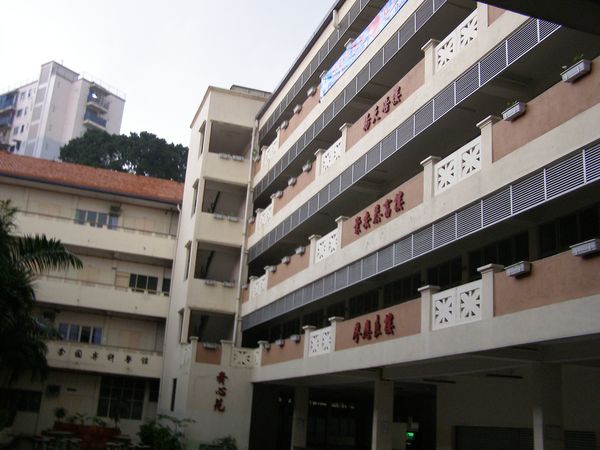
Chinese schools were being founded by the ethnic Chinese in Malaysia as early as the 19th century. They provide secondary education in the Chinese language as the continuation of the primary education in Chinese national-type primary schools. The main medium of instruction in these schools is Mandarin Chinese using simplified Chinese characters.
Being private schools, Chinese independent high schools do not receive consistent funding from the Malaysian government, although they did receive some funding from some state governments as well as in the 2019 and 2020 budgets under the Pakatan Harapan government. However, in accordance with their aim of providing affordable education to all in the Chinese language, their school fees are substantially lower than those of most other private schools. The schools are kept alive almost exclusively by donations from the public.
Netherlands
In the Netherlands over two-thirds of state-funded schools operate autonomously, with many of these schools being linked to faith groups. The Programme for International Student Assessment, coordinated by the OECD, ranks the education in the Netherlands as the 9th best in the world as of 2008, being significantly higher than the OECD average.
New Zealand
As of April 2014, there were 88 private schools in New Zealand, catering for around 28,000 students or 3.7% of the entire student population. Private school numbers have been in decline since the mid-1970s as a result of many private schools opting to become state-integrated schools, mostly due to financial difficulties stemming from changes in student numbers or the economy. State-integrated schools keep their private school special character and receives state funds in return for having to operate like a state school, e.g. they must teach the state curriculum, they must employ registered teachers, and they can not charge tuition fees (they can charge "attendance dues" for the upkeep on the still-private school land and buildings). The largest decline in private school numbers occurred between 1979 and 1984, when the nation's then-private Catholic school system integrated. As a result, private schools in New Zealand are now largely restricted to the largest cities (Auckland, Hamilton, Wellington and Christchurch) and niche markets.
Private schools are almost fully funded by tuition fees paid by students' parents, but they do receive some government subsidies. Private schools are popular for academic and sporting performance, prestige, exclusivity and old boys/girls networks; however, many state-integrated schools and some prestigious single-sex state schools, such as Auckland Grammar School and Wellington College, are actively competitive with private schools in academic and sporting achievement, history and character.
Private schools are often Anglican, such as King's College and Diocesan School for Girls in Auckland, St Paul's Collegiate School in Hamilton, St Peter's School in Cambridge, Samuel Marsden Collegiate School in Wellington, and Christ's College and St Margaret's College in Christchurch; or Presbyterian, such as Saint Kentigern College and St Cuthbert's College in Auckland, Scots College and Queen Margaret College in Wellington, and St Andrew's College and Rangi Ruru Girls' School in Christchurch. However, the Catholic schismatic group, the Society of St Pius X in Wanganui operates three private schools (including the secondary school, St Dominic's College). A recent group of private schools run as a business has been formed by Academic Colleges Group; with schools throughout Auckland, including ACG Senior College in Auckland's CBD, ACG Parnell College in Parnell, and international school ACG New Zealand International College.
Philippines
In the Philippines, the private sector has been a major provider of educational services. Private schools are generally free to determine their curriculum in accordance with existing laws and regulations. Science high schools are special schools for the more intellectually promising students to foster the problem-solving approach of critical thinking. As separate high schools, they have specific characteristics not found in regular high schools. However, any private or public high school can aspire to meet these minimum standards and be considered a science high school.
The Fund for Assistance to Private Education (FAPE) is a perpetual trust fund for private education created by Executive Order № 156 s. 1968 and amended by Executive Order № 150 s. 1994. FAPE was created on November 5, 1968 by Executive Order No. 156, in implementation of the project agreement between the Philippine and United States governments to establish a permanent trust fund that would address the needs of the private education sector in the country.
Portugal
In Portugal, private schools were traditionally set up by foreign expatriates and diplomats in order to cater for their educational needs. Portuguese-speaking private schools are widespread across Portugal's main cities. International private schools are mainly concentrated in and around Lisbon, Porto, Braga, Coimbra and Covilhã, across the Portuguese region of Algarve, and in the autonomous region of Madeira. The Ministério da Educação acts as the supervisory and regulatory body for all schools, including international schools.
Singapore
In Singapore, after Primary School Leaving Examination (PSLE), students can choose to enter a private high school. Private tuition is a lucrative industry in Singapore, since many parents send their children for private tuition after school. A straw poll by The Straits Times newspaper in 2008 found that out of 100 students interviewed, only 3 students did not have any form of tuition. In 2010, the Shin Min Daily News estimated that there were around 540 tuition centres offering private tuition in Singapore. Due to their high demand, tuition centres are able to charge high fees for their services; they have an annual turnover of SGD$110.6 million in 2005. The official government stance on private tuition is that "it understands parents want the best for their children and that it is their decision whether to engage tutors".
South Africa
Some of the oldest schools in South Africa are private church schools that were established by missionaries in the early nineteenth century. The private sector has grown ever since. After the abolition of apartheid, the laws governing private education in South Africa changed significantly. The South African Schools Act of 1996 recognizes two categories of schools: "public" (state-controlled) and "independent" (which includes traditional private schools and schools which are privately governed).
In the final years of the apartheid era, parents at white government schools were given the option to convert to a "semi-private" form called Model C, and many of these schools changed their admissions policies to accept children classified to be of other races. These schools tend to produce better academic results than government schools formerly reserved for other "race groups". Former "Model C" schools are state-controlled, not private. All schools in South Africa (including both independent and public schools) have the right to set compulsory school fees, and formerly model C schools tend to set much higher school fees than other public schools.
Sweden
In Sweden, pupils are free to choose a private school and the private school gets paid the same amount as municipal schools. Over 10% of Swedish pupils were enrolled in private schools in 2008. Sweden is internationally known for this innovative school voucher model that provides Swedish pupils with the opportunity to choose the school they prefer. For instance, the biggest school chain, Kunskapsskolan ("The Knowledge School"), offers 30 schools and a web-based environment, has 700 employees and teaches nearly 10,000 pupils.
United Kingdom
In the UK, the term "private schools" encompasses schools that are independently funded and not part of the state system. These schools are known as independent schools. Within this category, "public schools" refer to a specific group of prestigious, often older, independent schools. Private schools also encompass faith based schools. Preparatory schools in England and Wales prepare pupils up to 13 years old to enter public schools. In Scotland, where the education system has always been separate from the rest of Great Britain, the term 'public school' was used historically to refer to state schools for the general public.