
Planet Nine is a hypothetical ninth planet in the outer region of the Solar System. Its gravitational effects could explain the peculiar clustering of orbits for a group of extreme trans-Neptunian objects (ETNOs)—bodies beyond Neptune that orbit the Sun at distances averaging more than 250 times that of the Earth, over 250 astronomical units (AU). These ETNOs tend to make their closest approaches to the Sun in one sector, and their orbits are similarly tilted. These alignments suggest that an undiscovered planet may be shepherding the orbits of the most distant known Solar System objects. Nonetheless, some astronomers question this conclusion and instead assert that the clustering of the ETNOs' orbits is due to observational biases stemming from the difficulty of discovering and tracking these objects during much of the year.
Based on earlier considerations, this hypothetical super-Earth—mini-Neptune sized planet would have had a predicted mass of five to ten times that of the Earth, and an elongated orbit 400–800 AU. The orbit estimation was refined in 2021, resulting in a somewhat smaller semimajor axis of 380+140−80 AU. This was shortly thereafter updated to 460 +160−100 AU, and to 290±30 AU in 2025. Astronomers Konstantin Batygin and Michael Brown have suggested that Planet Nine may be the core of a giant planet that was ejected from its original orbit by Jupiter during the genesis of the Solar System. Others suggest that the planet was captured from another star, was once a rogue planet, or that it formed on a distant orbit and was pulled into an eccentric orbit by a passing star.
Although sky surveys such as Wide-field Infrared Survey Explorer (WISE) and Pan-STARRS did not detect Planet Nine, they have not ruled out the existence of a Neptune-diameter object in the outer Solar System. The ability of these past sky surveys to detect Planet Nine was dependent on its location and characteristics. Further surveys of the remaining regions were conducted using NEOWISE and are ongoing using the 8-meter Subaru Telescope. Unless Planet Nine is observed, its existence remains purely conjectural. Several alternative hypotheses have been proposed to explain the observed clustered distribution of trans-Neptunian objects (TNOs).

Subsequent discoveries of objects including 2017 OF201 and 2023 KQ14 have challenged the hypothesis, as their orbits are not aligned with the other TNOs and would be unstable if Planet Nine were present.
History
Following the discovery of Neptune in 1846, there was considerable speculation that another planet might exist beyond its orbit. The best-known of these theories predicted the existence of a distant planet that was influencing the orbits of Uranus and Neptune. After extensive calculations, Percival Lowell predicted the possible orbit and location of the hypothetical trans-Neptunian planet and began an extensive search for it in 1906. He called the hypothetical object Planet X, a name previously used by Gabriel Dallet. Clyde Tombaugh continued Lowell's search and in 1930 discovered Pluto, but it was soon determined to be too small to qualify as Lowell's Planet X. After Voyager 2's flyby of Neptune in 1989, the difference between Uranus' predicted and observed orbit was determined to have been due to the use of a previously inaccurate mass of Neptune.
Attempts to detect planets beyond Neptune by indirect means such as orbital perturbation date to before the discovery of Pluto. Among the first was George Forbes who postulated the existence of two trans-Neptunian planets in 1880. One would have an average distance from the Sun, or semi-major axis, of 100 AU, 100 times that of the Earth. The second would have a semi-major axis of 300 AU. Forbes' work is considered similar to more recent Planet Nine theories in that the planets would be responsible for a clustering of the orbits of several objects, in this case the clustering of aphelion distances of periodic comets near about 100–300 AU. This is similar to how the aphelion distances of Jupiter-family comets cluster near its orbit.
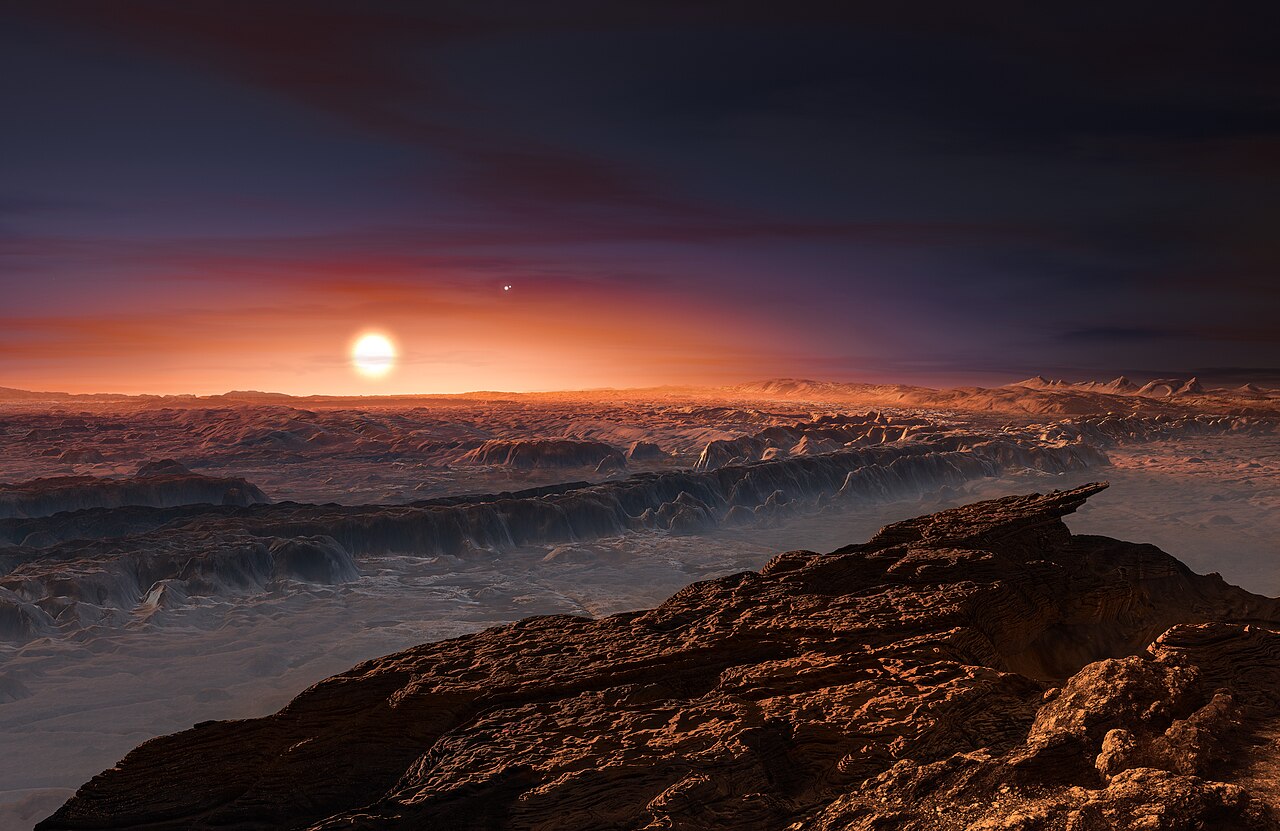
The discovery of Sedna, a dwarf planet with a highly peculiar orbit in 2003, led to speculation that it had encountered a massive body other than one of the known planets. Sedna's orbit is detached, with a perihelion distance of 76 AU that is too large to be due to gravitational interactions with Neptune. Several authors have proposed that Sedna entered this orbit after encountering a massive body such as an unknown planet on a distant orbit, a member of the open cluster that formed with the Sun, or another star that later passed near the Solar System. The announcement in March 2014 of the discovery of 2012 VP113, a second sednoid in a similar orbit but with a perihelion distance of 80 AU led to renewed speculation that an unknown super-Earth yet remains in the distant Solar System.
At a conference in 2012, Rodney Gomes proposed that an undetected planet was responsible for the orbits of some ETNOs with detached orbits and the large semi-major axis Centaurs, small Solar System bodies that cross the orbits of the giant planets. The proposed Neptune-massed planet would be in a distant (a ≈ 1500 AU), eccentric (e ≈ 0.4), and steeply inclined (i ≈ 40°) orbit. Like Planet Nine it would cause the perihelia of objects with semi-major axes greater than 300 AU to oscillate, delivering some into planet-crossing orbits and others into detached orbits like that of Sedna. The joint work with Soares and Brasser was published in 2015.
In 2014, astronomers Chad Trujillo and Scott S. Sheppard noted the similarities in the orbits of Sedna and 2012 VP113 and several other ETNOs. They proposed that an unknown planet in a circular orbit between 200 and 300 AU was perturbing their orbits. Later that year, Raúl and Carlos de la Fuente Marcos argued that two massive planets in orbital resonance were necessary to produce the similarities of so many orbits, 13 known at the time. Using a larger sample of 39 ETNOs, they estimated that the nearer planet had a semi-major axis in the range of 300–400 AU, a relatively low eccentricity, and an inclination of nearly 14°.

Batygin and Brown hypothesis
Brown had led a team which discovered and identified many TNOs throughout the 2000s. They were the first to catalog many of the objects which would later be used as evidence for Planet Nine.
In early 2016, California Institute of Technology's Batygin and Brown described how the similar orbits of six ETNOs could be explained by Planet Nine and proposed a possible orbit for the planet. This hypothesis could also explain ETNOs with orbits perpendicular to the inner planets and others with extreme inclinations, and had been offered as an explanation of the tilt of the Sun's axis.
Orbit
Planet Nine was initially hypothesized to follow an elliptical orbit around the Sun with an eccentricity of 0.2–0.5, and its semi-major axis was estimated to be 400–800 AU,
roughly 13–26 times the distance from Neptune to the Sun. It would take the planet between 10000 – 20000 years to make one full orbit around the Sun, and its inclination to the ecliptic, the plane of the Earth's orbit, was projected to be 15° to 25°.
The aphelion, or farthest point from the Sun, would be in the general direction of the constellation of Taurus, whereas the perihelion, the nearest point to the Sun, would be in the general direction of the southerly areas of Serpens (Caput), Ophiuchus, and Libra. Brown thinks that if Planet Nine exists, a probe could reach it in as little as 20 years by using a powered slingshot trajectory around the Sun.
Mass and radius
Planet Nine is estimated to have 5–10 times the mass and 2–4 times the radius of the Earth. Brown thinks that if Planet Nine exists, its mass is sufficient to clear its orbit of large bodies in 4.5 billion years, the age of the Solar System, and that its gravity dominates the outer edge of the Solar System, which is sufficient to make it a planet by current definitions. Astronomer Jean-Luc Margot has also stated that Planet Nine satisfies his criteria and would qualify as a planet if and when it is detected.
Later simulations by Amir Siraj and colleagues in 2025 have refined estimates of the planet's mass to 4.4 ± 1.1 times that of Earth.
Internal composition
Given a hypothesized ~10 Earth masses and using a theory of exoplanet sizes in the Kepler-454 system, Esther Linder and Christoph Mordasini assumed that Planet Nine's radius would be 3.66 times that of Earth's (23,300 km versus 6,378 km), and that its internal composition would be similar to Uranus and Neptune's: Planet Nine would likely have a hydrogen-helium atmosphere averaging 47 kelvins, with a core composed of iron and a mantle filled with magnesium silicate and water ice.
However, Siraj et al. (2025) suggest that Planet Nine's mass and orbital characteristics would render its composition closer to that of a rocky planet like Earth.

Origin
Several possible origins for Planet Nine have been examined, including its ejection from the neighborhood of the known giant planets, capture from another star, and in situ formation. In their initial article, Batygin and Brown proposed that Planet Nine formed closer to the Sun and was ejected into a distant eccentric orbit following a close encounter with Jupiter or Saturn during the nebular epoch. Then, either the gravity of a nearby star or drag from the gaseous remnants of the Solar nebula reduced the eccentricity of its orbit. This process raised its perihelion, leaving it in a very wide but stable orbit beyond the influence of the other planets.
The odds of this occurring has been estimated at a few percent. If it had not been flung into the Solar System's farthest reaches, Planet Nine could have accreted more mass from the proto-planetary disk and developed into the core of a gas giant or ice giant. Instead, its growth was halted early, leaving it with a lower mass than Uranus or Neptune.
Dynamical friction from a massive belt of planetesimals also could have enabled Planet Nine's capture into a stable orbit. Recent models propose that a 60–130 M🜨 disk of planetesimals could have formed as the gas was cleared from the outer parts of the proto-planetary disk. As Planet Nine passed through this disk its gravity would alter the paths of the individual objects in a way that reduced Planet Nine's velocity relative to it. This would lower the eccentricity of Planet Nine and stabilize its orbit. If this disk had a distant inner edge, 100–200 AU, a planet encountering Neptune would have a 20% chance of being captured in an orbit similar to that proposed for Planet Nine, with the observed clustering more likely if the inner edge is at 200 AU. Unlike the gas nebula, the planetesimal disk is likely to have been long lived, potentially allowing a later capture.
An encounter with another star could also alter the orbit of a distant planet, shifting it from a circular to an eccentric orbit. The in situ formation of a planet at this distance would require a very massive and extensive disk, or the outward drift of solids in a dissipating disk forming a narrow ring from which the planet accreted over a billion years. If a planet formed at such a great distance while the Sun was in its original cluster, the probability of it remaining bound to the Sun in a highly eccentric orbit is roughly 10%. However, while the Sun remained in the open cluster where it formed, any extended disk would have been subject to gravitational disruption by passing stars and by mass loss due to photoevaporation.
Planet Nine could have been captured from outside the Solar System during a close encounter between the Sun and another star. If a planet was in a distant orbit around this star, three-body interactions during the encounter could alter the planet's path, leaving it in a stable orbit around the Sun. A planet originating in a system without Jupiter-massed planets could remain in a distant eccentric orbit for a longer time, increasing its chances of capture. The wider range of possible orbits would reduce the odds of its capture in a relatively low inclination orbit to 1–2%. Amir Siraj and Avi Loeb found that the odds of the Sun capturing Planet Nine increases by 20× if the Sun once had a distant, equal-mass binary companion. This process could also occur with rogue planets, but the likelihood of their capture is much smaller, with only 0.05–0.10% being captured in orbits similar to that proposed for Planet Nine.
Evidence
The gravitational influence of Planet Nine would explain four peculiarities of the Solar System:
the clustering of the orbits of ETNOs;
the high perihelia of objects like Sedna that are detached from Neptune's influence;
the high inclinations of ETNOs with orbits roughly perpendicular to the orbits of the eight known planets;
high-inclination trans-Neptunian objects (TNOs) with semi-major axis less than 100 AU.
Planet Nine was initially proposed to explain the clustering of orbits, via a mechanism that would also explain the high perihelia of objects like Sedna. The evolution of some of these objects into perpendicular orbits was unexpected, but found to match objects previously observed. The orbits of some objects with perpendicular orbits were later found to evolve toward smaller semi-major axes when the other planets were included in simulations. Although other mechanisms have been offered for many of these peculiarities, the gravitational influence of Planet Nine is the only one that explains all four. The gravity of Planet Nine would also increase the inclinations of other objects that cross its orbit, however, which could leave the scattered disk objects, bodies orbiting beyond Neptune with semi-major axes greater than 50 AU, and short-period comets with a broader inclination distribution than is observed. Previously Planet Nine was hypothesized to be responsible for the 6° tilt of the Sun's axis relative to the orbits of the planets, but recent updates to its predicted orbit and mass limit this shift to ≈1°.
Observations
The clustering of the orbits of TNOs with large semi-major axes was first described by Trujillo and Sheppard, who noted similarities between the orbits of Sedna and 2012 VP113. Without the presence of Planet Nine, these orbits should be distributed randomly, without preference for any direction. Upon further analysis, Trujillo and Sheppard observed that the arguments of perihelion of 12 TNOs with perihelia greater than 30 AU and semi-major axes greater than 150 AU were clustered near 0°, meaning that they rise through the ecliptic when they are closest to the Sun. Trujillo and Sheppard proposed that this alignment was caused by a massive unknown planet beyond Neptune via the Kozai mechanism. For objects with similar semi-major axes the Kozai mechanism would confine their arguments of perihelion near to either 0° or 180°. This confinement allows objects with eccentric and inclined orbits to avoid close approaches to the planet because they would cross the plane of the planet's orbit at their closest and farthest points from the Sun, and cross the planet's orbit when they are well above or below its orbit. Trujillo and Sheppard's hypothesis about how the objects would be aligned by the Kozai mechanism has been supported by further analysis and evidence.
Batygin and Brown, looking to refute the mechanism proposed by Trujillo and Sheppard, also examined the orbits of the TNOs with large semi-major axes. After eliminating the objects in Trujillo and Sheppard's original analysis that were unstable due to close approaches to Neptune or were affected by Neptune's mean-motion resonances, Batygin and Brown determined that the arguments of perihelion for the remaining six objects (Sedna, 2012 VP113, 474640 Alicanto, 2010 GB174, 2000 CR105, and 2010 VZ98) were clustered around 318°±8°. This finding did not agree with how the Kozai mechanism would tend to align orbits with arguments of perihelion at 0° or 180°.
Batygin and Brown also found that the orbits of the six ETNOs with semi-major axis greater than 250 AU and perihelia beyond 30 AU (Sedna, 2012 VP113, Alicanto, 2010 GB174, 2007 TG422, and 2013 RF98) were aligned in space with their perihelia in roughly the same direction, resulting in a clustering of their longitudes of perihelion, the location where they make their closest approaches to the Sun. The orbits of the six objects were also tilted with respect to that of the ecliptic and approximately coplanar, producing a clustering of their longitudes of ascending nodes, the directions where they each rise through the ecliptic. They determined that there was only a 0.007% likelihood that this combination of alignments was due to chance. These six objects had been discovered by six different surveys on six telescopes. That made it less likely that the clumping might be due to an observation bias such as pointing a telescope at a particular part of the sky. The observed clustering should be smeared out in a few hundred million years due to the locations of the perihelia and the ascending nodes changing, or precessing, at differing rates due to their varied semi-major axes and eccentricities. This indicates that the clustering could not be due to an event in the distant past, for example a passing star, and is most likely maintained by the gravitational field of an object orbiting the Sun.
Two of the six objects (2013 RF98 and Alicanto) also have very similar orbits and spectra. This has led to the suggestion that they were a binary object disrupted near aphelion during an encounter with a distant object. The disruption of a binary would require a relatively close encounter, which becomes less likely at large distances from the Sun.
In a later article Trujillo and Sheppard noted a correlation between the longitude of perihelion and the argument of perihelion of the TNOs with semi-major axes greater than 150 AU. Those with a longitude of perihelion of 0–120° have arguments of perihelion between 280 and 360°, and those with longitude of perihelion between 180° and 340° have arguments of perihelion between 0° and 40°. The statistical significance of this correlation was 99.99%. They suggested that the correlation is due to the orbits of these objects avoiding close approaches to a massive planet by passing above or below its orbit.
A 2017 article by Carlos and Raúl de la Fuente Marcos noted that distribution of the distances to the ascending nodes of the ETNOs, and those of centaurs and comets with large semi-major axes, may be bimodal. They suggest it is due to the ETNOs avoiding close approaches to a planet with a semi-major axis of 300–400 AU. With more data (40 objects), the distribution of mutual nodal distances of the ETNOs shows a statistically significant asymmetry between the shortest mutual ascending and descending nodal distances that may not be due to observational bias but likely the result of external perturbations. In 2025, astronomers reported a Sedna-like trans-Neptunian object, 2023 KQ14 ('Ammonite'), its longitude of perihelion lies opposite that of previously known sednoids, filling a perihelion gap and remaining stable over 4.5 Gyr in simulations. These findings show that, if a distant planet exists, it favors a more remote (~500 AU) orbit than closer configurations.
Simulations
The clustering of the orbits of ETNOs and raising of their perihelia is reproduced in simulations that include Planet Nine. In simulations conducted by Batygin and Brown, swarms of scattered disk objects with semi-major axes up to 550 AU that began with random orientations were sculpted into roughly collinear and coplanar groups of spatially confined orbits by a massive distant planet in a highly eccentric orbit. This left most of the objects' perihelia pointed in similar directions and the objects' orbits with similar tilts. Many of these objects entered high-perihelion orbits like Sedna and, unexpectedly, some entered perpendicular orbits that Batygin and Brown later noticed had been previously observed.
In their original analysis Batygin and Brown found that the distribution of the orbits of the first six ETNOs was best reproduced in simulations using a 10 M🜨
planet in the following orbit:
semi-major axis a ≈ 700 AU (orbital period 7001.5 = 18520 years)
eccentricity e ≈ 0.6, (perihelion ≈ 280 AU, aphelion ≈ 1120 AU)
inclination i ≈ 30° to the ecliptic
longitude of the ascending node Ω ≈ 100°.
argument of perihelion ω ≈ 140° and longitude of perihelion ϖ ≡ ω + Ω ≈ 240°
These parameters for Planet Nine produce different simulated effects on TNOs. Objects with semi-major axis greater than 250 AU are strongly anti-aligned with Planet Nine, with perihelia opposite Planet Nine's perihelion. Objects with semi-major axes between 150 and 250 AU are weakly aligned with Planet Nine, with perihelia in the same direction as Planet Nine's perihelion. Little effect is found on objects with semi-major axes less than 150 AU. The simulations also revealed that objects with semi-major axes greater than 250 AU could have stable, aligned orbits if they had lower eccentricities. These objects have yet to be observed.
Other possible orbits for Planet Nine were also examined, with semi-major axes between 400 AU and 1500 AU, eccentricities up to 0.8, and a wide range of inclinations. These orbits yield varied results. Batygin and Brown found that orbits of the ETNOs were more likely to have similar tilts if Planet Nine had a higher inclination, but anti-alignment also decreased. Simulations by Becker et al. showed that their orbits were more stable if Planet Nine had a smaller eccentricity, but that anti-alignment was more likely at higher eccentricities. Lawler et al. found that the population captured in orbital resonances with Planet Nine was smaller if it had a circular orbit, and that fewer objects reached high inclination orbits. Investigations by Cáceres et al. showed that the orbits of the ETNOs were better aligned if Planet Nine had a lower perihelion orbit, but its perihelion would need to be higher than 90 AU. Later investigations by Batygin et al. found that higher eccentricity orbits reduced the average tilts of the ETNOs' orbits. While there are many possible combinations of orbital parameters and masses for Planet Nine, none of the alternative simulations were better at predicting the observed alignment of the original ETNOs. The discovery of additional distant Solar System objects would allow astronomers to make more accurate predictions about the orbit of the hypothesized planet. These may also provide further support for, or refutation of, the Planet Nine hypothesis.
Simulations that included the migration of giant planets resulted in a weaker alignment of the ETNOs' orbits. The direction of alignment also switched, from more aligned to anti-aligned with increasing semi-major axis, and from anti-aligned to aligned with increasing perihelion distance. The latter would result in the sednoids' orbits being oriented opposite most of the other ETNOs.
Interactions of Planet Nine with ETNOs
Planet Nine modifies the orbits of ETNOs via a combination of effects. On very long timescales Planet Nine exerts a torque on the orbits of the ETNOs that varies with the alignment of their orbits with Planet Nine's. The resulting exchanges of angular momentum cause the perihelia to rise, placing them in Sedna-like orbits, and later fall, returning them to their original orbits after several hundred million years. The motion of their directions of perihelion also reverses when their eccentricities are small, keeping the objects anti-aligned, see blue curves on diagram, or aligned, red curves. On shorter timescales mean-motion resonances with Planet Nine provides phase protection, which stabilizes their orbits by slightly altering the objects' semi-major axes, keeping their orbits synchronized with Planet Nine's and preventing close approaches. The gravity of Neptune and the other giant planets, and the inclination of Planet Nine's orbit, weaken this protection. This results in a chaotic variation of semi-major axes as objects hop between resonances, including high-order resonances such as 27:17, on million-year timescales. The mean-motion resonances may not be necessary for the survival of ETNOs if they and Planet Nine are both on inclined orbits. The orbital poles of the objects precess around, or circle, the pole of the Solar System's Laplace plane. At large semi-major axes the Laplace plane is warped toward the plane of Planet Nine's orbit. This causes orbital poles of the ETNOs on average to be tilted toward one side and their longitudes of ascending nodes to be clustered.
In 2024, Brown and Batygin completed a simulation which showed that the presence of Planet Nine, over time, would increase the eccentricities of a significant subset of objects with semi-major axes above 100 AU until their perihelion reduced under 30 AU, which would mean that their orbits cross that of Neptune. They also conducted a survey of Neptune-crossing objects with inclinations below 40 degrees and semi-major axes between 100 and 1000 AU and argued that the results aligned with the presence of Planet Nine, which would produce a ratio of Neptune-crossers to objects with a perihelion beyond Neptune's orbit of 3%, compared to 0.5% in the absence of Planet Nine.
Objects in perpendicular orbits with large semi-major axis
Planet Nine can deliver ETNOs into orbits roughly perpendicular to the ecliptic. Several objects with high inclinations, greater than 50°, and large semi-major axes, above 250 AU, have been observed. These orbits are produced when some low inclination ETNOs enter a secular resonance with Planet Nine upon reaching low eccentricity orbits. The resonance causes their eccentricities and inclinations to increase, delivering the ETNOs into perpendicular orbits with low perihelia where they are more readily observed. The ETNOs then evolve into retrograde orbits with lower eccentricities, after which they pass through a second phase of high eccentricity perpendicular orbits, before returning to low eccentricity and inclination orbits. The secular resonance with Planet Nine involves a linear combination of the orbit's arguments and longitudes of perihelion: Δϖ – 2ω . Unlike the Kozai mechanism this resonance causes objects to reach their maximum eccentricities when in nearly perpendicular orbits. In simulations conducted by Batygin and Morbidelli this evolution was relatively common, with 38% of stable objects undergoing it at least once. The arguments of perihelion of these objects are clustered near or opposite Planet Nine's and their longitudes of ascending node are clustered around 90° in either direction from Planet Nine's when they reach low perihelia. This is in rough agreement with observations with the differences attributed to distant encounters with the known giant planets.