
Our Gang (also known as The Little Rascals or Hal Roach's Rascals) is an American series of comedy short films chronicling the adventures of a group of mischievous children in a working class neighborhood of Los Angeles. Created by film producer Hal Roach, who also produced the Laurel and Hardy films, Our Gang shorts were produced from 1922 to 1944, spanning the silent film and early sound film periods of American cinema. Our Gang is noted for showing children behaving in a relatively natural way; Roach and original director Robert F. McGowan worked to film the unaffected, raw nuances apparent in regular children, rather than have them imitate adult acting styles. The series also broke new ground by portraying black and white children interacting as equals during the Jim Crow era of racial segregation in the United States.
The franchise began in 1922 as a silent short subject series produced by the Roach studio and released by Pathé Exchange. Roach changed distributors from Pathé to Metro-Goldwyn-Mayer (MGM) in 1927, and the series entered its most popular period after converting to sound in 1929. Production continued at Roach until 1938, when the Our Gang production unit was sold to MGM, where production continued until 1944. Across 220 short films and a feature-film spin-off, General Spanky, the Our Gang series featured more than 41 child actors as regular members of its cast.
Because MGM retained the rights to the Our Gang trademark after buying the series, the Roach-produced Our Gang sound films were re-released to theaters and syndicated for television under the title The Little Rascals.
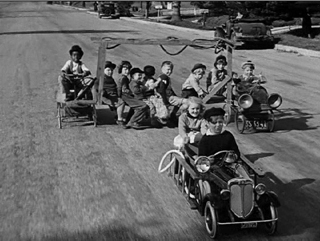
The Roach-produced Little Rascals shorts that remain under copyright (1931–1938) are co-owned by Legend Films and Multicom Entertainment Group, using restored titles from their Official Films masters as "Hal Roach's Famous Kids Comedies"; the entries produced between 1922 and 1930, inclusive, are in the public domain in the United States. Paramount Skydance (through King World Productions) owns the television distribution rights to the 1931–1938 Roach-era shorts for broadcast and cable. Meanwhile, MGM's Our Gang series (1938–1944) is currently owned by Warner Bros. Discovery through Turner Entertainment Co.
New productions based on the shorts have been made over the years, including the 1994 feature film The Little Rascals, released by Universal Pictures.
Series overview
Unlike many films featuring children and based in fantasy, producer/creator Hal Roach rooted Our Gang in real life: most of the children were poor, and the gang was often at odds with snobbish or rich children, officious adults, parents, and other such adversaries. Although the gang members tended to avoid school, chores, and medicines like castor oil whenever possible, they would enthusiastically throw their efforts into constructing elaborate, animal-driven contraptions, putting on athletic contests and spectacles of all kinds, and generally disrupting society events and adult activities.

Directorial approach
Robert F. McGowan directed most of the Our Gang shorts until 1933, assisted by his nephew Anthony Mack. McGowan worked to develop a style that allowed the children to be as natural as possible, downplaying the importance of the filmmaking equipment. Scripts were written by the Hal Roach comedy-writing staff, which included at various times Leo McCarey, Frank Capra, Walter Lantz, and Frank Tashlin. The children, some too young to read, rarely saw the scripts; instead, McGowan would explain scenes to each child immediately before they were shot, directing the children using a megaphone and encouraging improvisation.
With the introduction of sound films in the late 1920s, McGowan slightly modified his approach, but scripts were not closely followed until he left the series. Later Our Gang directors, such as Gus Meins and Gordon Douglas, streamlined the approach to McGowan's methods to meet the demands of the increasingly sophisticated film industry of the mid-to-late 1930s. Douglas was forced to streamline his approach after Roach halved the running times of the shorts from two reels (20 minutes) to one reel (10 minutes).
Finding and replacing the cast
As children aged out of their roles, they were replaced by new children, usually from the Los Angeles area. Eventually Our Gang talent scouting employed large-scale national contests in which thousands of children auditioned for open roles. Norman Chaney ("Chubby"), Matthew Beard ("Stymie"), and Billie "Buckwheat" Thomas all won contests to become members of the cast: Chaney replaced Joe Cobb, Beard replaced Allen Hoskins ("Farina"), and Thomas replaced Beard.
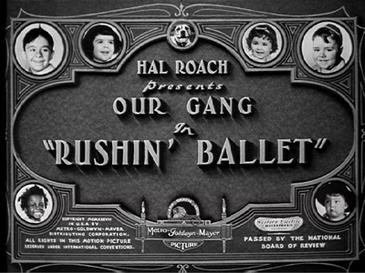
The studio was continuously bombarded by requests from parents suggesting their children for roles in the films. These children included future child stars Mickey Rooney and Shirley Temple, neither of whom advanced past the audition stage.
African-American and other minority cast members
The Our Gang series, produced during the Jim Crow era, is one of the first in cinema history in which African Americans and White Americans were portrayed as equals. The five black child actors who held main roles in the series were Ernie Morrison, Eugene Jackson, Allen Hoskins, Matthew Beard and Billie Thomas. Morrison was the first black actor signed to a long-term contract in Hollywood history and the first major black star in Hollywood history.
The African-American characters have often been criticized as racial stereotypes. The black children spoke (or were indicated as speaking via text titles in the case of the silent entries) in a stereotypical "Negro dialect", and several controversial gags revolved directly around their skin color, such as Stymie sweating jet-black ink and Buckwheat contracting fake "white measles" and supposedly transforming into a monkey. In the 1924 short Lodge Night, the kids form a parody club based on the Ku Klux Klan (although the black children are allowed to join).
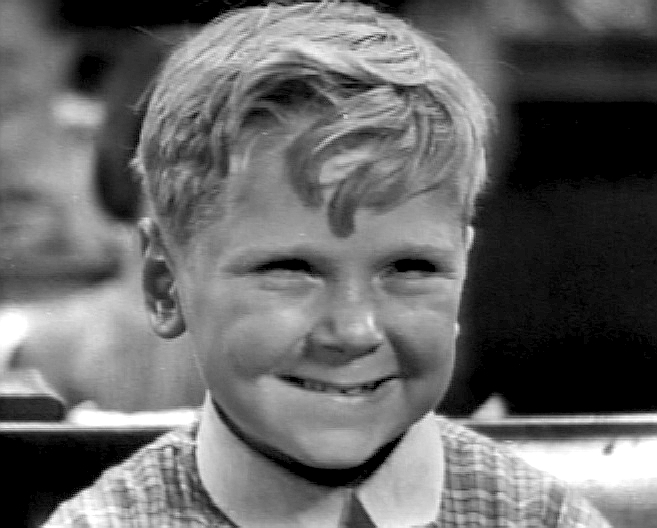
In their adult years, actors Morrison, Beard, and Thomas defended the series, arguing that the white characters were similarly stereotyped: the "freckle-faced kid", the "fat kid", the "neighborhood bully", the "pretty blond girl", and the "mischievous toddler". In an interview on Tom Snyder's The Tomorrow Show in 1974, Beard said of his time in the series that "I feel it was great. Some of the lines I had to say I didn't like, but I never look at it like that. I just try to look at it as mostly a fun thing. We were just a group of kids who were having fun." In a separate interview, Morrison stated, "When it came to race, Hal Roach was color-blind."
Our Gang's integrated cast drew the disdain of some theater owners in the South. Early in film series, these owners complained to Pathé that Morrison and Hoskins were featured with too much screen time and that their prominence in the shorts would offend white audiences. The Our Gang spinoff film Curley (1947) was banned by the Memphis, Tennessee censor board for showing black and white children in school together, a characteristic common to even the earlier shorts. Other minorities, including Asian Americans Sing Joy, Allen Tong (also known as Alan Dong), and Edward Soo Hoo, as well as Italian-American actor Mickey Gubitosi (later known as Robert Blake), were depicted in the series with varying levels of stereotyping.
History
1922–1925: early years
According to Roach, he devised the idea for Our Gang in 1921 after auditioning a child actress whom he believed to be overly rehearsed and wearing excessive makeup. Through his window, Roach saw some children arguing over sticks of wood in a lumberyard and thought that a series of film shorts about children being themselves might be a success.

Our Gang also had its roots in a canceled Roach short-subject series revolving around the adventures of a black boy called "Sunshine Sammy", played by Ernie Morrison. As some theater owners had been wary of booking shorts focused on a black boy, the series ended after just one entry, The Pickaninny (1921), was produced. The character became a focus of the new Our Gang series.
Under the supervision of Charley Chase, work began on the first two-reel shorts in the new "kids-and-pets" series, to be called Hal Roach's Rascals, later that year. Fred C. Newmeyer directed the first pilot film, entitled Our Gang, but Roach scrapped Newmeyer's work and commissioned former fireman Robert F. McGowan to reshoot the film. Roach tested it at several theaters around Hollywood to receptive audiences, and some in the press expressed a desire for additional films. The colloquial usage of the term Our Gang caused it to become the series' second official title, with the title cards reading "Our Gang Comedies: Hal Roach presents His Rascals in..." The series was officially called both Our Gang and Hal Roach's Rascals until 1932, when Our Gang became the sole title of the series.
The first cast was recruited primarily of children recommended to Roach by studio employees, with the exception of Morrison, who was already under contract to Roach. The others included Roach photographer Gene Kornman's daughter Mary Kornman, their friends' son Mickey Daniels, and family friends Allen Hoskins, Jack Davis, Jackie Condon, and Joe Cobb. Most early shorts were filmed outdoors and on location and featured a menagerie of animal characters, such as Dinah the Mule. Robert McGowan and Tom McNamara served in tandem as the series' directors during this early period.

Roach's distributor Pathé released One Terrible Day, the fourth short produced for the series, as the first short on September 10, 1922; the pilot film Our Gang was not released until November 5. The series performed well at the box office, and by the end of the decade, the Our Gang children were pictured in numerous product endorsements.
The featured Our Gang stars were Morrison as Sunshine Sammy, Daniels, Kornman, and Hoskins as little Farina, who eventually became the most popular member of the 1920s gang and the most popular black child star of the 1920s. A reviewer wrote of the Farina character, depicted as female although played by a male child, in Photoplay: "The honors go to a very young lady of color, billed as 'Little Farina.' Scarcely two years old, she goes through each set like a wee, sombre shadow." Daniels and Kornman were very popular and were often paired in Our Gang and a later teen version of the series titled The Boy Friends, which Roach produced from 1930 to 1932. Other early Our Gang children were Eugene Jackson as Pineapple, Scooter Lowry, Andy Samuel, Johnny Downs, Winston and Weston Doty, and Jay R. Smith.
1926–1929: new faces and new distributors
After Ernie, Mickey and Mary left the series in the mid-1920s, the Our Gang series entered a transitional period. The stress of directing child actors forced McGowan to take doctor-mandated sabbaticals for exhaustion, leaving his nephew Robert A. McGowan (credited as Anthony Mack) to direct many shorts in this period. The Mack-directed shorts are considered by many as among the lesser entries in the series. New faces included Bobby Hutchins as Wheezer, Harry Spear, Jean Darling and Mary Ann Jackson, while Farina served as the series' anchor.
Also at this time, the Our Gang cast acquired an American Pit Bull Terrier with a ring around one eye, originally named Pansy but soon known as Pete the Pup, the most famous Our Gang pet. In 1927, Roach ended his distribution arrangement with the Pathé company. He agreed to release future products through the newly formed Metro-Goldwyn-Mayer, which released its first Our Gang comedy, Yale vs. Harvard, now a lost film, in September 1927. The move to MGM offered Roach larger budgets and the chance for his films to be packaged with MGM features for the Loews Theatres chain.
Some shorts around this time, particularly Spook Spoofing (1928), contained extended scenes of the gang tormenting and teasing Farina, scenes that raised claims of racism that many other shorts did not warrant. These shorts marked the departure of Jackie Condon, who had been with the group from the beginning of the series.
1928–1931: entering the sound era
Starting in 1928, Our Gang comedies were distributed with phonographic discs that contained synchronized music and sound-effect tracks. In the spring of 1929, the Roach studios were converted for sound recording, and Our Gang's sound debut occurred in April 1929 with the 25-minute film Small Talk. It took a year for McGowan and the cast to fully adjust to sound films, a period in which they lost Joe Cobb, Jean Darling and Harry Spear and added Norman Chaney, Dorothy DeBorba, Matthew "Stymie" Beard, Donald Haines and Jackie Cooper.
Cooper proved to be the personality whom the series had been missing since Daniels left and was featured prominently in three 1930/1931 Our Gang films: Teacher's Pet, School's Out, and Love Business. These three shorts explored Cooper's crush on new schoolteacher Miss Crabtree, played by June Marlowe. Cooper soon won the lead role in Paramount's feature film Skippy, and Roach sold Cooper's contract to MGM in 1931. Other Our Gang members appearing in the early sound shorts included Buddy McDonald, Clifton Young, and Shirley Jean Rickert. Many also appeared in a group cameo appearance in the all-star comedy short The Stolen Jools (1931).
Beginning with the short When the Wind Blows, in 1930 background music scores were added to the soundtracks of most of the Our Gang films. Initially, the music consisted of orchestral versions of popular tunes. Marvin Hatley had served as the music director of Hal Roach Studios since 1929, and RCA employee Leroy Shield joined the company as a part-time musical director in mid-1930. Hatley and Shield's jazz-influenced scores, first featured in Pups Is Pups in 1930, became recognizable trademarks of Our Gang, Laurel and Hardy, and other Roach films.
Another 1930 short, Teacher's Pet, marked the first use of the Our Gang theme song, "Good Old Days". Originally composed by Shield for use in Laurel and Hardy's first feature, Pardon Us, "Good Old Days," featuring a notable saxophone solo, served as the series' theme until 1938. Shield and Hatley's scores were included in the films regularly through 1934, when they became less frequent.
In 1930, Roach began production on The Boy Friends, a short-subject series that was essentially a teenage version of Our Gang. Featuring Our Gang alumni Daniels and Kornman among its cast, The Boy Friends was produced for two years, with 15 installments in total.
1931–1933: transition
Cooper left Our Gang in early 1931 just before another wave of cast changes, as Farina Hoskins, Chubby Chaney, and Mary Ann Jackson all departed several months later. Our Gang entered another transitional period, similar to that of the mid-1920s. Matthew Beard, Wheezer Hutchins, and Dorothy DeBorba carried the series during this period, aided by Sherwood Bailey and Kendall McComas, who would play Breezy Brisbane. Unlike the mid-1920s period, McGowan sustained the quality of the series with the help of the several regular cast members and the Roach writing staff. Many of these shorts include early appearances of Jerry Tucker and Wally Albright, who later became series regulars.
New Roach discovery George McFarland joined the gang as Spanky late in 1931 at the age of three and remained an Our Gang actor for 11 years, except for a brief break in Summer 1938. At first appearing as the tag-along toddler of the group, and later finding an accomplice in Scotty Beckett in 1934, Spanky quickly became Our Gang's greatest child star. He won parts in a number of outside features, appeared in many Our Gang product endorsements and spinoff merchandise items, and popularized the expressions "Okey-dokey!" and "Okey-doke!"
Veteran child actor Dickie Moore joined in the middle of 1932 and remained with the series for one year. Other members in these years included Mary Ann Jackson's brother Dickie Jackson, John "Uh-huh" Collum, and Tommy Bond. Upon Moore's departure in mid 1933, long-term Our Gang members such as Wheezer (who had been with Our Gang since the late Pathé silents period) and Dorothy left the series as well.
1933–1936: new directions
McGowan, exhausted from the stress of working with the child actors, had as early as 1931 tried to resign as producer/director of Our Gang. Lacking a replacement, Roach persuaded him to remain for another year. At the start of the 1933–34 season, the Our Gang series format was significantly altered to accommodate McGowan and persuade him to stay another year. The first two entries of the season in Fall 1933, Bedtime Worries and Wild Poses (which featured a cameo by Laurel and Hardy), focused on Spanky and his hapless parents, portrayed by Gay Seabrook and Emerson Treacy, in a family-oriented situation-comedy format similar to the style later popular on television. A smaller cast of Our Gang kids—Matthew Beard, Tommy Bond, Jerry Tucker, and Georgie Billings—were featured in supporting roles with reduced screen time.
Unsatisfied, McGowan abruptly departed after Wild Poses (1933). Our Gang entered a four-month hiatus, during which the series was revised to a format similar to its original style, and German-born Gus Meins was hired as the new director.
Hi-Neighbor!, released in March 1934, ended the hiatus and was the first series entry directed by Meins, a veteran of the formerly competing Buster Brown short-subject series. Gordon Douglas served as Meins's assistant director, and Fred Newmeyer alternated directorial duties with Meins for a handful of shorts. Meins's Our Gang shorts were less improvisational than were McGowan's and featured a heavier reliance on dialogue. McGowan returned two years later to direct his final Our Gang film Divot Diggers, released in 1936.
Retaining McFarland, Beard, Bond, and Tucker, the revised series added Scotty Beckett, Wally Albright, and Billie Thomas, who soon began playing the character of Stymie's sister "Buckwheat", although Thomas was male. Semiregular actors such as Jackie Lynn Taylor, Marianne Edwards, and Leonard Kibrick as the neighborhood bully, joined the series. Bond and Albright left in the middle of 1934; Taylor and Edwards would depart by 1935.
Early in 1935, new cast members Carl Switzer and his brother Harold joined Our Gang after impressing Roach with an impromptu musical performance at the studio commissary. While Harold would eventually be relegated to the role of a background player, Carl, nicknamed "Alfalfa", eventually replaced Beckett as Spanky's sidekick. Beard as Stymie left the cast soon after, and the Buckwheat character morphed subtly into a male. That same year, Darla Hood, Patsy May, and Eugene Lee as Porky joined the gang. Beckett departed for a career in features but returned in 1939 for two shorts, Cousin Wilbur and Dog Daze.
The final Roach years
Our Gang was very successful during the 1920s and the early 1930s. However, by 1934, many theater owners were increasingly dropping two-reel (20-minute) comedies such as Our Gang and the Laurel & Hardy series and running double-feature programs instead. The Laurel and Hardy series, formerly film shorts, became features exclusively in mid-1935. By 1936, Hal Roach began debating plans to discontinue Our Gang until Louis B. Mayer, head of Roach's distributor MGM, persuaded Roach to keep the popular series in production. Roach agreed, producing shorter, one-reel Our Gang comedies (10 minutes in length instead of 20). The first one-reel Our Gang short, Bored of Education (1936), marked the Our Gang directorial debut of former assistant director Gordon Douglas and won the Academy Award for Best Short Subject (One Reel) in 1937.
As part of the arrangement with MGM to continue Our Gang, Roach received clearance to produce an Our Gang feature film, General Spanky, hoping that he might move the series to features as was done with Laurel and Hardy. Directed by Gordon Douglas and Fred Newmeyer, General Spanky featured characters Spanky, Buckwheat, and Alfalfa in a sentimental, Shirley Temple-style story set during the American Civil War. The film focused more on the adult leads (Phillips Holmes and Rosina Lawrence) than the children and was a box-office disappointment. No further Our Gang features were produced.
After years of gradual cast changes, the troupe standardized in 1936 with the move to one-reel shorts. The 1936–1939 incarnation of the cast is perhaps the best-known of the series, featuring Spanky, Alfalfa, Darla, Buckwheat, and Porky, with recurring characters such as neighborhood bullies Butch and Woim and the bookworm Waldo. Bond, an intermittent member of the gang since 1932, returned as Butch beginning with the 1937 short Glove Taps. Sidney Kibrick, the younger brother of Leonard Kibrick, played Butch's crony Woim.
Glove Taps also featured the first appearance of Darwood Kaye as the bespectacled, foppish Waldo. In later shorts, both Butch and Waldo were portrayed as Alfalfa's rivals in his pursuit of Darla's affections. Other popular elements in these mid-to-late-1930s shorts include the "He-Man Woman Haters Club" from Hearts Are Thumps and Mail and Female (both 1937), the Laurel and Hardy-style interaction between Alfalfa and Spanky, and the comic tag-along team of Porky and Buckwheat.
Roach produced the final two-reel Our Gang short, a high-budget musical special entitled Our Gang Follies of 1938, in 1937 as a parody of MGM's Broadway Melody of 1938. Alfalfa, who aspires to be an opera singer, falls asleep and dreams that his old pal Spanky has become the rich owner of a swanky Broadway nightclub where Darla and Buckwheat perform, making "hundreds and thousands of dollars".
As the profit margins continued to decline because of double features, Roach found it increasingly difficult to afford to continue producing Our Gang. The lack of consistent success with Roach's concurrent program of feature output and an ultimately unsuccessful partnership with producer Vittorio Mussolini, son of Italian dictator Benito Mussolini, also caused disagreements with the management at MGM and with its parent company, Loews Inc.. As a result, Loews elected to end MGM's partnership with Roach. However, MGM did not want Our Gang discontinued and agreed to acquire the property from Roach and assume production.
On May 31, 1938, Roach sold the Our Gang unit to MGM, including the rights to the name and the contracts for the actors and writers, for $25,000 (equal to $571,809 today). After delivering the Laurel and Hardy feature Block-Heads in August 1938, Roach signed a new distribution deal with United Artists and left the short-subjects business. The final Roach-produced short in the Our Gang series, Hide and Shriek, was his final short-subject production, released by MGM on June 18, 1938.
The MGM era
The Little Ranger was the first Our Gang short to be produced at MGM. Gordon Douglas was loaned from Hal Roach Studios to direct The Little Ranger and another early MGM short, Aladdin's Lantern, while MGM assigned George Sidney, a young director from its own shorts department, as the permanent series director. Our Gang would be used by MGM as a training ground for future feature directors: Sidney, Edward Cahn and Cy Endfield all worked on Our Gang before advancing to feature films. Herbert Glazer remained a second-unit director outside of his work on the series.
Nearly all of the 52 MGM-produced Our Gang films were written by former Roach director Hal Law and former junior director Robert A. McGowan, nephew of former senior Our Gang director Robert F. McGowan, who was credited for these shorts as Robert McGowan (although he is also known as Anthony Mack), causing confusion for audiences and critics.
The last few Roach comedies and the first few MGM comedies featured Carl "Alfalfa" Switzer as the lead character, as George "Spanky" McFarland had departed from the series when his contract expired in March 1938. Casting his replacement was delayed until after the move to MGM, which opted to rehire McFarland to continue with the series.
In 1939, Mickey Gubitosi (later known by the stage name of Robert Blake) replaced Eugene "Porky" Lee, who had matured too quickly. Tommy Bond, Darwood Kaye, and Carl Switzer all left the series in 1940, and Billy "Froggy" Laughlin (with his Popeye-style trick voice) and Janet Burston were added to the cast. By the end of 1941, Darla Hood had departed from the series, and George McFarland followed her within a year. Billie Thomas remained in the cast as Buckwheat until the end of the series as the sole holdover from the Roach era.
The MGM Our Gang films were not received as favorably as were the Roach-produced shorts, largely because of MGM's inexperience with Our Gang's style of slapstick comedy and its insistence on retaining Alfalfa, Spanky, and Buckwheat in the series as they became teenagers. The MGM entries are thus considered by many film historians, and the Our Gang children themselves, as lesser films than the Roach entries. The children's performances were criticized as stilted and stiff, their dialogue recited instead of spoken naturally. Adult situations often drove the action, with each film often incorporating a moral, a civics lesson, or, as the United States prepared for and then entered World War II, a patriotic theme. The series was given a new setting in the fictitious town of Greenpoint rather than the gritty Los Angeles neighborhoods where the Hal Roach productions had been filmed and set. The mayhem caused by the kids was significantly muted.