
Mark Joseph Carney (born March 16, 1965) is a Canadian politician and economist who has served as the 24th prime minister of Canada since 2025. Carney was also elected as the leader of the Liberal Party and the member of Parliament (MP) for Nepean in 2025. He was previously Governor of the Bank of Canada from 2008 to 2013 and Governor of the Bank of England from 2013 to 2020.
Carney was born in Fort Smith, Northwest Territories, and raised in Edmonton, Alberta. He graduated with a bachelor's degree in economics from Harvard University in 1987, and earned a master's degree in 1993 and a doctorate in 1995 from the University of Oxford, both in economics. Carney worked at Goldman Sachs before joining the Bank of Canada in 2003 as a deputy governor. In 2004, he joined the Department of Finance Canada as a senior associate deputy minister. Carney served as the eighth governor of the Bank of Canada from 2008 to 2013. As governor, he oversaw Canadian monetary policy during the 2008 global financial crisis. He was appointed as the second chair of the Financial Stability Board in 2011, serving for two terms until 2018. After his term as Governor of the Bank of Canada, Carney was appointed as the 120th governor of the Bank of England, becoming the first non-British citizen to be appointed to the role. He served from 2013 to 2020, leading the central bank's responses to Brexit and the early phase of the COVID-19 pandemic.
Following his governorship, Carney held several roles in the private and public sectors. He served as chair of Bloomberg L.P., vice-chair at Brookfield Asset Management, and co-chair of the World Bank's private sector investment lab. He was the United Nations Secretary-General's Special Envoy on Climate Action and Finance from 2020. He was also an informal advisor to Canadian prime minister Justin Trudeau at the beginning of the COVID-19 pandemic, before returning to the private sector. In 2024, Carney was appointed as chair of the Liberal Party's Task Force on Economic Growth. After Trudeau announced his resignation in January 2025, Carney entered the Liberal Party leadership election, winning a landslide victory that March. He was appointed prime minister soon after, becoming the first in Canadian history never to have held elected office. Carney then advised the governor general to dissolve Parliament and trigger a federal election. He led the Liberals to a minority government—overturning previous poor opinion polling to win the party's fourth consecutive mandate since 2015—and was elected to represent the riding of Nepean in the House of Commons. The Liberals gained a majority of seats in Parliament in April 2026 through opposition MPs crossing the floor and by-elections.

During his tenure as prime minister, Carney removed the federal consumer carbon tax, enacted the One Canadian Economy Act to reduce interprovincial trade barriers and expedite major infrastructure projects in response to a trade war started by the United States, launched the Build Canada Homes agency, and created a sovereign wealth fund. Carney's government also announced a sharp increase in defence spending, formally recognized the State of Palestine, oversaw an improvement in relations with China and with India, and has continued support for Ukraine in the Russo-Ukrainian war. Carney is ideologically characterized as a centrist, technocrat, and a Blue Grit Liberal, and, as prime minister, has moved the Liberals towards the political centre.
Early life and education
Mark Joseph Carney was born on March 16, 1965, at St. Ann's General Hospital in Fort Smith, Northwest Territories. He has three siblings: an older brother and sister, Seán and Brenda, and a younger brother, Brian. When Carney was six, his family moved to Edmonton, Alberta's Laurier Heights where he was raised.
Carney is the son of Verlie Margaret (née Kemper), a stay-at-home mother originally from Britannia Beach, British Columbia, and Robert J. Carney, a high school principal and Professor of Educational Foundations at the University of Alberta. His father was the Liberal candidate for Edmonton South in the 1980 federal election, placing second. His mother returned to university to pursue a career in education when Carney was ten. Three of his four grandparents were Irish, from Aughagower in County Mayo.

Carney graduated as valedictorian in the class of 1983 from St. Francis Xavier High School, Edmonton, Alberta. From there, he went on to study at Harvard University with a partial scholarship and financial aid. During his Harvard years, he was backup goalie for the varsity ice hockey team and was a roommate of future NHL general manager Peter Chiarelli and former ice hockey player Mark Benning. He lived at Winthrop House, and graduated in 1987 with a bachelor's degree in economics magna cum laude.
After Harvard, he travelled to Europe to study at the University of Oxford. There, he undertook postgraduate studies at St Peter's College and Nuffield College, where he received Master of Philosophy (MPhil) and Doctor of Philosophy (DPhil) degrees in economics in 1993 and 1995, respectively. His master's thesis was titled "Competitive advantage and the advantage of competition: a theoretical analysis of national champions, learning-by-doing and spillovers", and his doctoral thesis was titled "The dynamic advantage of competition". His doctoral advisor was Margaret Meyer. While at Oxford, he was co-captain of the Oxford University Ice Hockey Club alongside fellow Canadian David Lametti, whom he would later appoint as Permanent Representative of Canada to the UN.
In 2021, Carney was elected to Harvard University's Board of Overseers through to 2027. He resigned in early 2025, around the time he assumed leadership of the Liberal Party.

Financial career
Carney spent thirteen years at Goldman Sachs and worked in their Boston, London, New York City, Tokyo, and Toronto offices. His progressively more senior positions included co-head of sovereign risk, executive director for emerging debt capital markets, and managing director for investment banking. He worked on South Africa's post-apartheid venture into international bond markets, and was involved in Goldman's work with the 1998 Russian financial crisis.
In 2003, Carney left Goldman Sachs to join the Bank of Canada as a deputy governor. One year later, he was recruited to the Department of Finance Canada as senior associate deputy minister, beginning on November 15, 2004.
From November 2004 to October 2007, Carney was the senior associate deputy minister and G7 deputy in the Department of Finance Canada. He served under two finance ministers: Ralph Goodale, a Liberal; and Jim Flaherty, a Conservative. During this time, Carney oversaw the Government of Canada's controversial plan to tax income trusts at source. Carney was also the lead on the federal government's profitable sale of its 19 per cent stake in Petro-Canada.

Governor of the Bank of Canada (2008–2013)
In October 2007, Carney was appointed Governor of the Bank of Canada. He immediately left his position at the Department of Finance to become an advisor to the outgoing governor, David Dodge, before formally assuming Dodge's position on February 1, 2008. Carney was selected over Paul Jenkins, the senior deputy governor, who had been considered the front-runner to succeed Dodge.
Carney took on this role at the beginning of the 2008 financial crisis. At the time of his appointment, Carney was the youngest central bank governor among the G8 and G20 nations.
2008 financial crisis
Carney's actions as Governor of the Bank of Canada are said to have played a major role in helping Canada avoid the worst impacts of the 2008 financial crisis.

The epoch-making feature of Carney's tenure as governor remains the decision to cut the overnight rate by 50 basis points in March 2008, one month after his appointment. While the European Central Bank delivered a rate increase in July 2008, Carney anticipated the leveraged-loan crisis would trigger global financial contagion. When policy rates in Canada hit the effective lower bound, the central bank combated the crisis with the non-standard monetary tool "conditional commitment" in April 2009 to hold the policy rate for at least one year, in a boost to domestic credit conditions and market confidence. Output and employment began to recover from mid-2009, in part thanks to monetary stimulus. The Canadian economy outperformed those of its G7 peers during the crisis, and Canada was the first G7 nation to have both its Gross Domestic Product (GDP) and employment recover to pre-crisis levels.
The Bank of Canada's decision to provide substantial additional liquidity to the Canadian financial system, and its unusual step of announcing a commitment to keep interest rates at their lowest possible level for one year, appear to have been significant contributors to Canada's weathering of the crisis.
The commitment to ultra-low lending rates led to a spike in housing prices and household debt. In April 2012, Carney acknowledged there were "issues in some segments of the housing market" and some properties in Canada were "probably overvalued" but he was not overly concerned. He stated low-interest rates were not to blame but the onus was on individuals who take out the loans, the banks, and the federal government's mortgage lending rules. Before Carney left for the Bank of England, there were calls to raise rates as Canadians were holding record-level debt and the housing market was overheated.
Canada's risk-averse fiscal and regulatory environment is also cited as a factor. In 2009 a Newsweek columnist wrote, "Canada has done more than survive this financial crisis. The country is positively thriving in it. Canadian banks are well capitalized and poised to take advantage of opportunities that American and European banks cannot seize."
Carney earned various accolades for his leadership during the 2008 financial crisis: he was named one of Financial Times's "Fifty who will frame the way forward" and of Time Magazine's 2010 Time 100. In May 2011, Reader's Digest named him "Editor's Choice for Most Trusted Canadian". In October 2012, Carney was named "Central Bank Governor of the Year 2012" by the editors of Euromoney magazine.
International organization memberships
Carney was chairman of the Bank for International Settlements' Committee on the Global Financial System from July 2010 until January 2012.
Carney was a member of the Group of Thirty, an international body of leading financiers and academics, and of the Foundation Board of the World Economic Forum. Carney attended the annual meetings of the Bilderberg Group in 2011, 2012 and 2019.
On November 4, 2011, Carney was named chairman of the Basel-based Financial Stability Board, which coordinates international financial regulatory authorities. In a statement, Carney credited his appointment to "the strong reputation of Canada's financial system and the leading role that Canada has played in helping to develop many of the most important international reforms".
The three-year term was a part-time commitment, allowing Carney to complete his term at the Bank of Canada. While there had been no indication of his priorities as chairman, on the day of his appointment the Board published a list of 29 banks that were considered large enough to pose a risk to the global economy should they fail. At his first press conference as Chairman of the FSB in January 2012, Carney laid out his key priorities for the board. In November 2014, Carney was reappointed to a second term as chairman. This second term ended in 2018, while he was in his next post at the Bank of England.
Governor of the Bank of England (2013–2020)
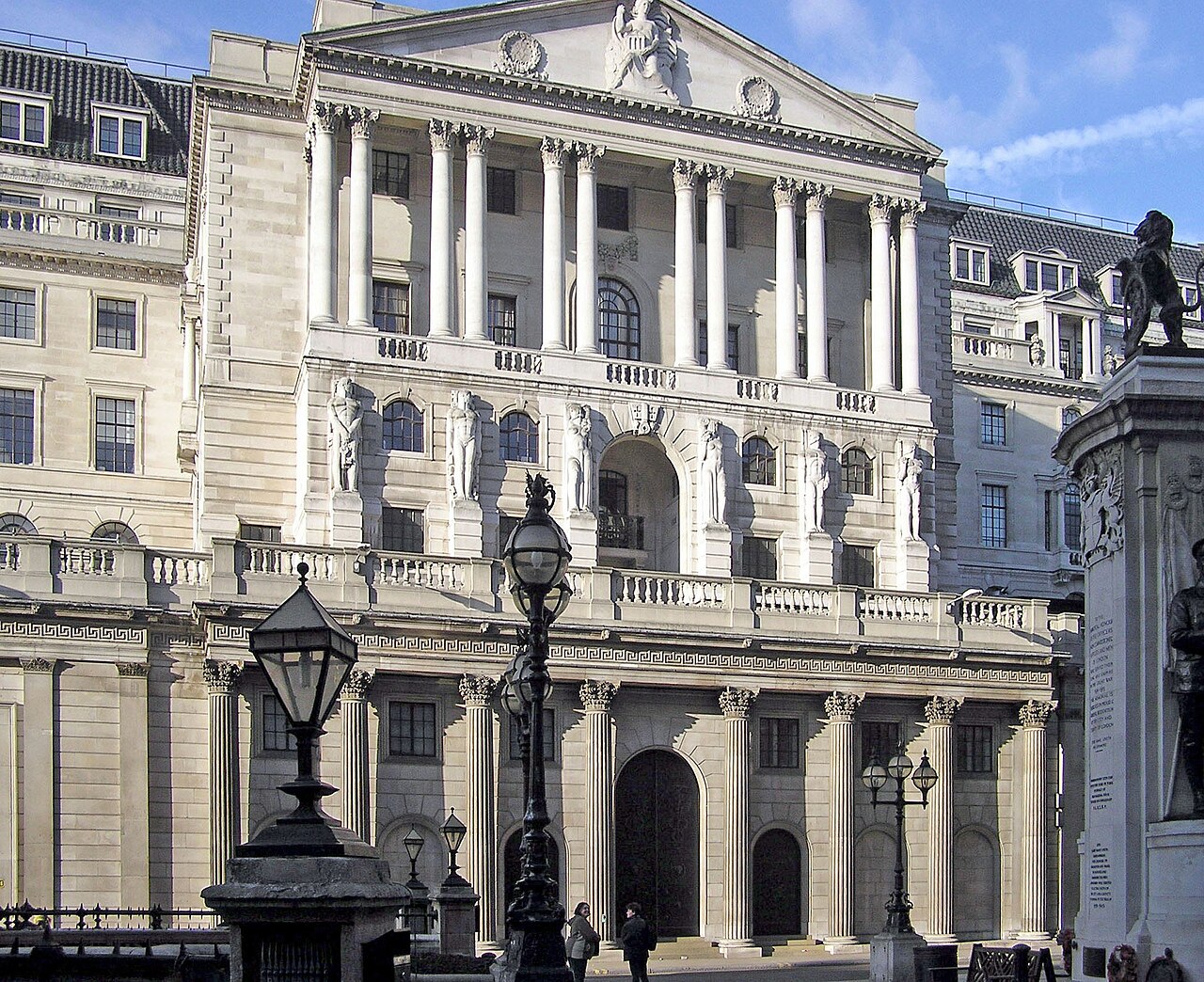
On November 26, 2012, Chancellor of the Exchequer George Osborne announced the appointment of Carney as Governor of the Bank of England. He succeeded Sir Mervyn King on July 1, 2013. He was the first Commonwealth citizen from outside Britain to be appointed to the role since the Bank of England was established in 1694. The Bank of England was given additional powers from 2013, such as the ability to set bank capital requirements. Although the usual term for governor is eight years, Carney indicated that he only intended to serve for five years and stand down in 2018.
Before taking up the post, Carney had already indicated disagreement with the Bank of England's Executive Director of Financial Stability Andy Haldane, specifically on leverage ratios and bank break-ups. He has been quoted as saying that Haldane does not have a "proper understanding of the facts" on bank regulation. He was thought to have been offered a total pay package of about £624,000 per year, approximately £100,000 more per year than his predecessor.
Shortly before Carney took up the post, the Bank of England took up financial regulation duties from the Financial Services Authority. Carney's changes to the Bank's operating procedures helped modernize the institution by making much more media appearances than predecessors, including controversial announcements during two referendums. Carney implemented a policy called "forward guidance" in which the Bank would not raise interest rates if unemployment was above 7% to try and encourage business lending. This policy, which contained many conditions, would later be considered confusing and complicated.
In May 2014, Carney warned the UK's heated housing market was the biggest risk to financial stability, and he was considering providing advice on the Help to Buy mortgage scheme, which some believed was contributing to housing inflation. He stated UK housing prices and the lack of affordability of housing in the United Kingdom was due to limited supply, and stated that twice as many homes were built in Canada than in the UK, although Canada had half the population.
Carney stated foreign cash buyers in the London market were beyond his control but he believed they did not pose a significant risk to the rest of the country. Carney assured the public the Bank was monitoring rising property prices and large-value mortgages to avoid debt overhang destabilizing the economy.
In 2014, Carney warned that if the Scottish independence referendum was successful, the new country would likely not be able to continue using the pound sterling without ceding some powers to the UK.
In 2015, Carney changed the number of yearly interest rate meetings from twelve to eight and ordered minutes to be published during the announcements.
Before the 2016 Brexit referendum, Carney warned that leaving the European Union could cause a recession. After the resignation of Prime Minister David Cameron, he made another public announcement shortly after the result supporting a departure, in which he announced that the financial system would operate normally to assuage public concerns. Afterwards, the bank cut interest rates in half from 0.5% to 0.25% and restarted quantitative easing. At the urging of Prime Minister Theresa May and Chancellor of the Exchequer Philip Hammond, Carney agreed to extend his term while the UK undertook Brexit negotiations, but only for one year. He further agreed to an additional seven months in September 2018, to "support a smooth exit" from the EU, and to a further two months for an orderly transition to his successor, Andrew Bailey.
At the start of the COVID-19 pandemic in the United Kingdom, as Carney was set to leave the governorship in March 2020, the bank cut interest rates by 0.5% to protect against the pandemic's expected economic shocks.
Post-governorships (2020–2024)
In 2020, Carney served as one of many informal advisors to Canadian prime minister Justin Trudeau, advising him on the government's COVID-19 economic response. Carney reportedly advised Trudeau on Canada's response to the COVID-19 pandemic, with Trudeau looking to Carney to help Canada get out of its recession. Due to this, Carney was speculated to potentially become Minister of Finance, and later, Canadian prime minister if Trudeau resigned.
In October 2020, Carney was vice chairman at Brookfield Asset Management—a spin-off of Brookfield Corporation—where he led the firm's environmental, social and governance (ESG) and impact fund investment strategy. In February 2021, Carney retracted an earlier claim that the US$600 billion Brookfield Asset Management portfolio was carbon neutral. He had based his claim on the fact that Brookfield has a large renewable energy portfolio and "all the avoided emissions that come with that". The claim was criticized as accounting tricks because avoided emissions do not counteract the emissions from investments in coal and other fossil fuels responsible for Brookfield's carbon footprint of about 5,200 metric tons of carbon dioxide.
In 2020, Carney launched the Taskforce on Scaling Voluntary Carbon Markets—an initiative to increase trading of voluntary carbon offsets— with Bill Winters as Group Chief Executive. The TSVCM is sponsored by the Institute of International Finance. Taskforce members include more than "40 leaders from six continents with backgrounds across the carbon market value chain", including representatives from the Bank of America, BlackRock, Bloomberg's New Energy Finance, BNP Paribas, BP, Boeing, Goldman Sachs, Tata Steel, Total, IHS Markit, and LSE. In a December 3, 2020 Financial Times article, Carney said that the voluntary global carbon offset market was an "imperative" to help reduce emissions. The Times article cited Carney saying London would likely host the "new pilot market for voluntary carbon offsets" that could be "set up" by December 2021.
In February 2021, Carney joined the board of fintech company Stripe. Carney helped launch the Glasgow Financial Alliance for Net Zero (GFANZ) at COP26 in Glasgow in November 2021. He acts as the group's co-chair. From 2022 to January 2025, Carney has also been an advisor to Watershed, a climate tech company founded by Stripe alumni that proposes to be "the platform companies need to succeed in the climate economy". In August 2023, Carney was named by Michael Bloomberg as chair of the new board of directors for Bloomberg L.P. as part of a broader reshuffle of the company's leadership.
In September 2024, Carney became a special adviser and chair of the Liberal task force on economic growth. Shortly after the appointment, it was revealed Brookfield Asset Management had solicited the federal government for CA$10 billion in funds as part of $50 billion Canada-only asset fund. Carney did not need to follow standard ethical disclosures mandatory for prime ministerial advisors because he was employed by the Liberal Party rather than the Prime Minister's Office.
Political beginnings
According to Carney, in 2012, Canadian Prime Minister Stephen Harper asked Carney—who was then governor of the Bank of Canada—if he would join the Conservative government as minister of finance. Carney declined, stating in a February 2025 interview with the CBC that he felt it "wasn't appropriate" for him to proceed with the offer because he felt it was not right to "go directly from being governor into elective politics."
Carney was approached by some officials in the Liberal Party to run for leader in their 2013 leadership election. He ultimately declined to do so.
As he prepared to step down as governor of the Bank of England, Carney was appointed as United Nations special envoy for climate action and finance in March 2020. In January 2020, UK Prime Minister Boris Johnson appointed Carney to the position of finance advisor for the UK presidency of the COP26 United Nations Climate Change conference in Glasgow. At that time the conference was scheduled for November 2020, but it was later postponed to November 2021.
In 2021, Carney spoke at the Liberal Party policy convention, declaring his support of the party but stopping short of pledging to run under its banner. Later that year, he ruled himself out as a candidate in the then-speculated 2021 Canadian federal election, owing to his COP26 commitments.
Carney endorsed Catherine McKenney's candidacy for mayor of Ottawa in the 2022 mayoral election.
In October 2023, he endorsed the UK Labour Party's Shadow Chancellor Rachel Reeves to be the next chancellor of the exchequer in a video following Reeves' speech at the Labour Party conference that year. Following Labour's victory in the 2024 election, Carney was part of a taskforce which saw the creation of a British National Wealth Fund.
On September 9, 2024, Carney was named by Justin Trudeau to chair the Liberal Party of Canada's leader's Task Force on Economic Growth. His name was briefly mentioned upon the resignation of Chrystia Freeland as a possible candidate for finance minister in Trudeau's ministry.
Leader of the Liberal Party
2025 leadership election
On January 16, 2025, Carney officially announced that he was running in the 2025 Liberal Party of Canada leadership election. Carney also announced that he stepped down from all executive, board and advisory positions that he was part of to focus on his leadership campaign. By February 9, his campaign had raised more than $1.9 million in donations from over 11,000 people and received endorsements from 66 Liberal caucus members. On March 9, Carney won on the first ballot with over 85.9% of the vote, making him the leader of the Liberal Party. His margin of victory surpassed Justin Trudeau's 2013 margin, winning all 343 electoral districts.
Prime Minister of Canada (2025–present)
Swearing-in
On March 14, 2025, five days after winning the leadership election, Carney was sworn in as the 24th prime minister of Canada, along with the 30th Canadian Ministry. Upon taking the oath of office, he became the first Canadian prime minister born in any of its territories (as opposed to provinces) and the third born west of Ontario (after Joe Clark and Kim Campbell). He is the second prime minister to have earned a PhD, after William Lyon Mackenzie King. Additionally, he is the first to have never served in prior elected office, and the first since John Turner not to be sitting in the House of Commons at the time of appointment.
In his first act as prime minister, Carney signed a prime ministerial directive to end the consumer carbon tax by April 1, while ensuring that April's carbon rebate continues. The directive was affirmed by an order in council signed by Governor General Mary Simon. Carney's first foreign visits were to France and the United Kingdom on March 17 to strengthen mutual security and sovereignty. During the latter visit, Carney met with King Charles III for the first time as prime minister.