
Leyland Motors Limited (later known as the Leyland Motor Corporation) was an English vehicle manufacturer of lorries, buses and trolleybuses. The company diversified into car manufacturing with its acquisitions of Triumph and Rover in 1960 and 1967, respectively. It gave its name to the British Leyland Motor Corporation, formed when it merged with British Motor Holdings in 1968, to become British Leyland after having been nationalised. British Leyland later changed its name to simply BL, then in 1986 to Rover Group.
After the various vehicle manufacturing businesses of BL and its successors went defunct or were divested, the following marques survived: Jaguar and Land Rover, now built by Jaguar Land Rover owned by TATA Motors; MG, now built by MG Motor, and Mini, now built by BMW. The truck building operation survived largely intact as Leyland Trucks, a subsidiary of Paccar.
History
Beginning
Leyland Motors has a long history dating from 1896, when the Sumner and Spurrier families founded the Lancashire Steam Motor Company in the town of Leyland in North West England. Their first products included steam powered lawn mowers. The company's first vehicle was a 1.5-ton-capacity steam powered van. This was followed by a number of undertype steam wagons using a vertical fire-tube boiler. By 1905 they had also begun to build petrol-engined wagons. The Lancashire Steam Motor Company was renamed Leyland Motors in 1907 when it took over Coulthards of Preston, who had been making steam wagons since 1897. They also built a second factory in the neighbouring town of Chorley situated on Pilling Lane.

In 1920, Leyland Motors produced the Leyland Eight luxury touring car, a development of which was driven by J.G. Parry-Thomas at Brooklands. Parry-Thomas was later killed in an attempt on the land speed record when the Babs car he was driving overturned. Rumours that a chain drive broke were found to be incorrect when the car was disinterred late in the 20th century as the chains were intact. At the other extreme, they also produced the Trojan Utility Car in the Kingston upon Thames factory at Ham from 1922 to 1928.
Three generations of Spurriers controlled Leyland Motors from its foundation until the retirement of Henry Spurrier in 1964. Spurrier inherited control of Leyland Motors from his father in 1942, and successfully guided its growth during the postwar years. Whilst the Spurrier family were in control the company enjoyed excellent labour relations—reputedly never losing a day's production through industrial action.
World War II
During World War II, Leyland Motors, along with most vehicle manufacturers, was involved in war production. Leyland built the Cromwell tank at its works from 1943 as well as medium/large trucks such as the Hippo and Retriever.

After the war, Leyland Motors continued military manufacture with the Centurion tank.
Post war
In 1946, AEC and Leyland Motors formed British United Traction to build trolleybuses.
In 1955, through an equity agreement, manufacture of commercial vehicles under licence from Leyland Motors commenced in Madras, India at the new Ashok factory. The products were branded as Ashok Leyland.

Leyland Motors acquired other companies in the post war years:
1951: Albion Motors
1953: Collaboration with Danish Automobile Building (DAB), a bus manufacturer, later with a majority stake in the 1970s

1955: Scammell, military and specialist lorry manufacturer
1956: Farington Tank Company
1961: Standard-Triumph, cars, vans and some agricultural machinery interests

Holding company: Leyland Motor Corporation
Donald Stokes, previously Sales Director, was appointed managing director of Leyland Motors Limited in September 1962. Originally a Leyland student apprentice he had grown up with the company. He became chairman in 1966. Chronologically, the 1960s growth of Leyland Motor Corporation (LMC) was as follows:
1962: Leyland Motors acquires Associated Commercial Vehicles (ACV), which incorporated AEC, Thornycroft, Park Royal Vehicles and Charles H Roe.
1962 a new group holding company was incorporated to own Leyland Motors Limited, ACV and new acquisitions
1965: Minority (25%) interests in Bristol Commercial Vehicles and Eastern Coach Works
1966: Acquisition of The Rover Company and their subsidiary car, aero-engine and armoured fighting vehicle manufacturer Alvis Car and Engineering Company
1967: Aveling-Barford was acquired This company mainly made road rollers and dumper trucks.
In 1968 Leyland Motors merged with British Motor Holdings (BMH) to form the British Leyland Motor Corporation (BLMC). BMH, which was the product of an earlier merger between the British Motor Corporation, the Pressed Steel Company and Jaguar, brought with it more marques, including Daimler, Guy, BMC, Austin, MG and Morris. Leyland diesel engines were used in Finnish Sisu and Vanaja lorries and buses in 1960s.
British Leyland era
The BLMC group was difficult to manage because of the many companies under its control, often making similar products. This, and other reasons, led to financial difficulties and in December 1974 British Leyland had to receive a guarantee from the British government.
In 1975, after the publication of the Ryder Report and the company's bankruptcy, BLMC was nationalised as British Leyland (BL) and split into four divisions with the bus and truck production becoming the Leyland Truck & Bus division within the Land Rover Leyland Group. This division was split into Leyland Bus and Leyland Trucks in 1981. Leyland Trucks depended on British sales as well as export markets, mainly Commonwealth and ex-Commonwealth markets. The early 1980s were very hard, with export sales drying up in many places such as oil-dependent Nigeria. In 1986, BL changed its name to Rover Group, with its name being derived from the Rover brand that Leyland had bought in the 1960s, and would eventually gain prominence as BL gradually retired most of its marques. The equity stake in Ashok Leyland was controlled by Land Rover Leyland International Holdings, and sold in 1987. At this point, while building about 10,000 trucks per annum, Leyland was more and more depending on outside engines as production of their own 98-series was steadily declining. The 1986 closure of Bedford Vehicles' heavy truck plant further harmed Leyland, as they had been planning on selling axles and other components to the General Motors subsidiary.
Leyland name post-British Leyland
Buses
The bus operations was sold in a management buyout to form Leyland Bus, and was subsequently bought by Volvo in 1988, which then discontinued most of its product range but kept the Olympian. Volvo reengineered and renamed it as the first named Volvo Bus model, the Volvo Olympian, and aside from minor frame changes the major alterations were the fitment of Volvo axles, braking system, and controls. Both were the best selling double-deck bus chassis of their time.
Trucks
1987 The Leyland Trucks division of Rover Group (formerly BL) (which included the Freight Rover division) merged with DAF Trucks of The Netherlands to form DAF NV (which in the UK traded as Leyland DAF and elsewhere as DAF), and was floated on the Dutch stock exchange. The new company had three plants; two truck plants in Eindhoven and Leyland, and a van plant in Washwood Heath.
1993 DAF NV went into bankruptcy. All three plants were bought through a management buy-out, the truck plant in Eindhoven resumed trading as DAF Trucks, the truck plant in Leyland resumed trading as Leyland Trucks and the van plant in Washwood Heath became LDV which continued trading until 2009. The spare parts operation, Multipart, was subject to a management buy-out, eventually becoming part of the LEX organisation.
1996/1998 Both DAF Trucks & Leyland Trucks were acquired by the US truck manufacturer Paccar. Leyland Trucks now operates as a division of Paccar from the Leyland Assembly Plant in North West England manufacturing around 14,000 trucks per year of which about a third are sold in the EU, though marketed under the DAF name and not with the name Leyland.
Ashok Leyland
The Leyland name and logo continues as a recognised and respected marque across India, the wider subcontinent and parts of Africa in the form of Ashok Leyland. Part of the giant Hinduja Group, Ashok Leyland manufactures buses, trucks, defence vehicles and engines. The company is a leader in the heavy transportation sector within India and has an aggressive expansionary policy. In 1987 the London based Hinduja Group bought the Indian-based Ashok Leyland company. Today, Ashok-Leyland is pursuing a joint venture with Nissan, and through its acquisition of the Czech truck maker, Avia, is entering the European truck market directly. With its purchase of a 26% stake in UK-based bus manufacturer Optare in 2010, Ashok Leyland has taken a step closer to reconnecting with its British heritage, as Optare is a direct descendant of Leyland's UK bus-making division. On 21 December 2011, Ashok Leyland bought an additional 49% stake in Optare, bringing its total to 75%.
Products
Buses
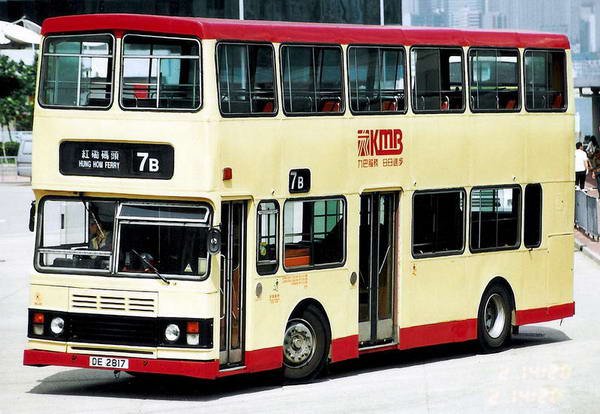
Historically, Leyland Motors was a major manufacturer of buses used in the United Kingdom and worldwide. It achieved a number of firsts or milestones that set trends for the bus industry. It was one of the first manufacturers to devise chassis designs for buses that were different from trucks, with a lower chassis level to help passengers board more easily. Its chief designer, George John Rackham, who had experience at the Yellow Coach Company in Chicago before returning to England, created the Titan and Tiger ranges in 1927 that revolutionised bus design. After 1945, Leyland created another milestone with the trend-setting Atlantean rear-engined double-decker bus design produced between 1956 and 1986.
See List of Leyland buses for the list of bus products.
Trucks
1900–1910
Class H (Steam)
Class F (Steam)
Class K (Steam)
Class W Petrol
Class Xa
Class Xs
Class TX
Class T
1910s
1t
A 2t (1919- )
C 3t (1919– )
G2 4t (1919– )
5t
6t