
Sir Elton Hercules John (born Reginald Kenneth Dwight, 25 March 1947) is a British singer, songwriter and pianist. An influential figure in popular culture, he is known for his flamboyant fashion, showmanship and songwriting partnership with lyricist Bernie Taupin. With over 300 million records sold worldwide, he is one of the best-selling music artists of all time. An EGOT winner, John's accolades include five Grammy Awards, two Academy Awards, a Primetime Emmy Award, a Tony Award, two Golden Globe Awards, a Laurence Olivier Award and the Kennedy Center Honors.
John learnt to play piano at an early age, winning a scholarship to the Royal Academy of Music. In the 1960s, he formed the blues band Bluesology, wrote songs for other artists alongside Taupin, and worked as a session musician, before releasing his debut album, Empty Sky (1969). Throughout the next six decades, John cemented his status as a cultural icon with 32 studio albums, including Honky Château (1972), Goodbye Yellow Brick Road (1973), Rock of the Westies (1975), Sleeping with the Past (1989), The One (1992), Songs from the West Coast (2001), The Diving Board (2013) and The Lockdown Sessions (2021). He has also had success in musical films and theatre, composing music for The Lion King (1994), Aida (2000), and Billy Elliot the Musical (2005). John's final tour, Farewell Yellow Brick Road (2018–2023), became the highest-grossing tour ever at the time. His life and career were dramatised in the 2019 biographical film Rocketman.
John is an HIV/AIDS charity fundraiser and has been involved in the fight against AIDS since the late 1980s. In 1992 he established the Elton John AIDS Foundation, which has raised over £300 million since its inception, and a year later he began hosting his annual AIDS Foundation Academy Awards Party, which has since become one of the biggest high-profile Oscars parties in the Hollywood film industry. John was the chairman and director of Watford Football Club from 1976 to 1987, and again from 1997 to 2002, and is an honorary life president of the club. From the late 1970s to the late 1980s, John developed a severe addiction to drugs and alcohol, but has been clean and sober since 1990. In 2005 he entered a civil partnership with his long-term partner, the Canadian filmmaker David Furnish. They married in 2014, when same-sex marriage was legalised in England and Wales.

John has had nine number-one singles on the UK singles chart and the US Billboard Hot 100, as well as seven consecutive number-one albums on the US Billboard 200. He is the most successful solo artist in the history of the US Billboard charts, and was the first solo artist with UK top 10 singles across six decades. His tribute single to Diana, Princess of Wales, "Candle in the Wind 1997", a rewritten version of his 1974 single, is the best-selling chart single of all time. John was inducted into the Songwriters Hall of Fame and the Rock and Roll Hall of Fame, and is a fellow of The Ivors Academy. He was appointed Knight Bachelor for services to music and charity in 1998 and was appointed a member of the Order of the Companions of Honour in 2020. Rolling Stone ranked him among the greatest artists, greatest singers and greatest songwriters of all time.
Early life and education
Reginald Kenneth Dwight was born on 25 March 1947 in Pinner, Middlesex (now part of the London Borough of Harrow), the eldest child of Stanley Dwight (1925–1991) and only child of Sheila Eileen (née Harris; 1925–2017), who had married in 1945. He was raised in a council house in Pinner where his maternal grandparents lived. When he was six, the family moved to a nearby semi-detached house. He was educated at Pinner Wood Junior School, Reddiford School and Pinner County Grammar School, until he was 17, when he left just before his A-Level examinations to pursue a career in music.
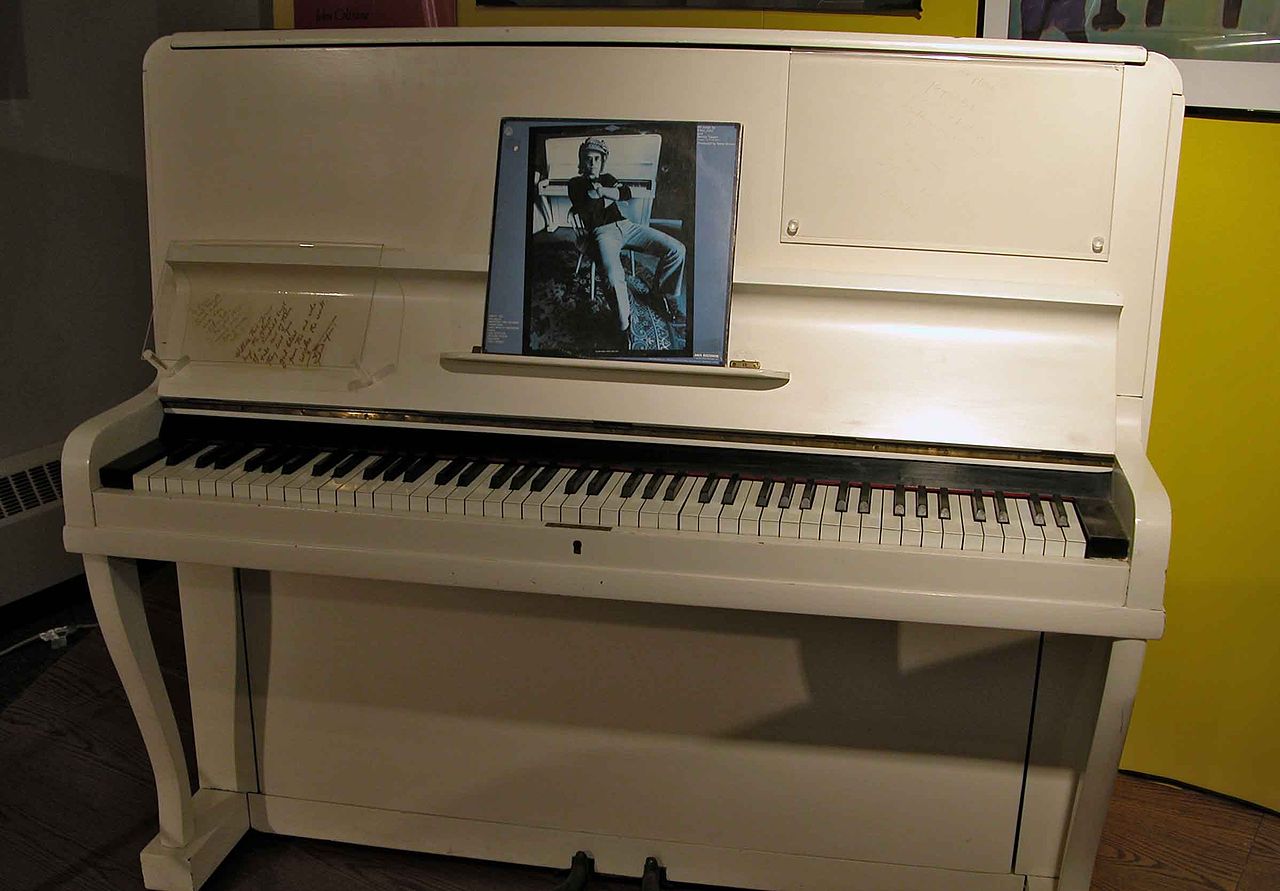
When John began to consider a career in music seriously, his father, who served in the Royal Air Force, tried to steer him toward a more conventional career, such as banking. John has said that his wild stage costumes and performances were his way of letting go after a restrictive childhood. Both his parents were musically inclined, his father having been a trumpet player with the Bob Millar Band, a semi-professional big band that played at military dances. The Dwights were keen record buyers, exposing John to the popular singers and musicians of the day. John started playing his grandmother's piano as a young boy, and within a year his mother heard him picking out Émile Waldteufel's "The Skater's Waltz" by ear. After performing at parties and family gatherings, at age seven, he began formal piano lessons. He showed musical aptitude at school, including the ability to compose melodies, and garnered attention for playing like Jerry Lee Lewis at school functions. At age 11, he won a junior scholarship to the Royal Academy of Music. According to one of his instructors, John promptly played back, like a "gramophone record", a four-page piece by George Frideric Handel after hearing it for the first time.
For the next five years, John attended Saturday classes at the academy in Central London, and he has said he enjoyed playing Frédéric Chopin and Johann Sebastian Bach and singing in the choir during Saturday classes, but that he was not otherwise a diligent classical student. "I kind of resented going to the Academy," he said. "I was one of those children who could just about get away without practising and still pass, scrape through the grades." He has said that he would sometimes skip classes and ride around on the London Underground. Several instructors have attested that he was a "model student", and during the last few years he took lessons from a private tutor in addition to his classes at the academy. He left the academy before taking the final exams.
John's mother, though strict with her son, was more outgoing than her husband, and something of a free spirit. With Stanley Dwight uninterested in his son and often absent, John was raised primarily by his mother and maternal grandmother. When his father was home, the Dwights had vehement arguments that greatly distressed John. When he was 14, they divorced. His mother then married a local painter, Fred Farebrother, a caring and supportive stepfather whom John affectionately called "Derf", "Fred" backward. They moved into flat No. 3A in an eight-unit apartment building called Frome Court, not far from both previous homes. There John wrote the songs that launched his career as a rock star. He lived there until he had four albums, simultaneously, in the American Top 40.
Career
1962–1969: Pub pianist to staff songwriter
At age 15, with his mother's and stepfather's help, John was hired as a pianist at a nearby pub, the Northwood Hills Hotel, playing Thursday to Sunday nights. Known simply as "Reggie", he played a range of popular standards, including songs by Jim Reeves and Ray Charles, as well as his own songs. A stint with a short-lived group called the Corvettes rounded out his time. Although normal-sighted as a teenager, John began wearing horn-rimmed glasses to imitate Buddy Holly.
In 1962, John and some friends formed a band named Bluesology. By day, he ran errands for a music publishing company; he divided his nights between solo gigs at a London hotel bar and working with Bluesology. By the mid-1960s, Bluesology were backing touring American soul and R&B musicians such as the Isley Brothers, Major Lance and Patti LaBelle and the Bluebelles. In 1966 the band became Long John Baldry's supporting band and played 16 times at the Marquee Club.
In 1967 John answered an advertisement in the British music paper New Musical Express, placed by Ray Williams, then the A&R manager for Liberty Records. At their first meeting, Williams gave John an unopened envelope of lyrics written by Bernie Taupin, who had answered the same ad. John wrote music for the lyrics and then sent it to Taupin, which began their decades-long partnership that still continues. When the two first met in 1967, they recorded the first John/Taupin song, "Scarecrow". Six months later, John began going by the name Elton John in homage to two members of Bluesology: the saxophonist Elton Dean and the vocalist Long John Baldry. He legally changed his name to Elton Hercules John on 7 January 1972. "Hercules" came from the name of a horse in British sitcom Steptoe and Son, of which John was a big fan.
The team of John and Taupin joined Dick James's DJM Records as staff songwriters in 1968, and over the next two years wrote material for various artists, among them Roger Cook and Lulu. Taupin would write a batch of lyrics in under an hour and give it to John, who would write music for each of them in half an hour, disposing of the lyrics if he could not come up with anything quickly. For two years they wrote easy-listening tunes for James to peddle to singers. Their early output included a contender for the UK entry for the Eurovision Song Contest 1969, for Lulu, called "I Can't Go On (Living Without You)". It came sixth of six songs. In 1969, John provided piano for Roger Hodgson on his first released single, "Mr. Boyd" by Argosy, a quartet that was completed by Caleb Quaye and Nigel Olsson.

1969–1973: Empty Sky to Goodbye Yellow Brick Road
On the advice of music publisher Steve Brown, John and Taupin began writing more complex songs for John to record for DJM. The first was the single "I've Been Loving You" (1968), produced by Caleb Quaye, Bluesology's former guitarist. In 1969, with Quaye, the drummer Roger Pope and the bassist Tony Murray, John recorded another single, "Lady Samantha", and an album, Empty Sky. For their follow-up album, Elton John, John and Taupin enlisted Gus Dudgeon as producer and Paul Buckmaster as musical arranger.
Elton John was released in April 1970 on DJM Records/Pye Records in the UK and Uni Records in the US, and established the formula for subsequent albums: gospel-chorded rockers and poignant ballads. The album's first single, "Border Song", peaked at 92 on the Billboard Hot 100. The second, "Your Song", reached number seven in the UK Singles Chart and number eight in the US, becoming John's first hit single as a singer. The album soon became his first hit album, reaching number four on the US Billboard 200 and number five on the UK Albums Chart.
Backed by the former Spencer Davis Group rhythm section, drummer Nigel Olsson and bassist Dee Murray, John's first American concert took place at the Troubadour in Los Angeles, California, on 25 August 1970, and was a success. The concept album Tumbleweed Connection was released in October 1970 and reached number two in the UK and number five in the US. The live album 17-11-70 (titled 11–17–70 in the US) was recorded at a live show aired from A&R Studios on WABC-FM in New York City. Sales of the live album took a blow in the US when an east-coast bootlegger released the performance several weeks before the official album, including all 60 minutes of the aircast, not just the 40 minutes selected by Dick James Music.

John and Taupin wrote the soundtrack to the 1971 film Friends and the album Madman Across the Water, which reached number eight in the US and included the hit songs "Levon" and the album's opening track, "Tiny Dancer". In 1972 Davey Johnstone joined the Elton John Band on guitar and backing vocals. Released in 1972, Honky Château became John's first US number-one album, spending five weeks at the top of the Billboard 200, and began a streak of seven consecutive US number-one albums. The album reached number two in the UK, and spawned the hit singles "Rocket Man" and "Honky Cat".
In 1972 John performed at the Royal Variety Performance, where he was upstaged by the dancing of Larry Smith, the drummer with the Bonzo Dog Doo-Dah Band. Smith was invited to join John's second US tour; Smith later said: "I suggested adding in various other bizarre elements like me doing "Singin' in the Rain" as a song and dance act with Elton playing piano. Kubrick's Clockwork Orange film had recently featured that song. Plus I designed crazy, over-the-top costumes and giant stage sets – known as 'Legstravaganzas'. Elton loved all of it."
The pop album Don't Shoot Me I'm Only the Piano Player came out at the start of 1973 and reached number one in the UK, the US, and Australia, among other countries. The album produced the hits "Crocodile Rock", his first US Billboard Hot 100 number one, and "Daniel", which reached number two in the US and number four in the UK. The album and "Crocodile Rock" were respectively the first album and single on the consolidated MCA Records label in the US, replacing MCA's other labels, including Uni.
Goodbye Yellow Brick Road, a double-album released in October 1973, gained instant critical acclaim and topped the chart on both sides of the Atlantic, remaining at number one for two months. It also temporarily established John as a glam rock star. It contained the US number 1 "Bennie and the Jets", along with the hits "Goodbye Yellow Brick Road", "Candle in the Wind", "Saturday Night's Alright for Fighting" and "Funeral for a Friend/Love Lies Bleeding".
1974–1980: The Rocket Record Company to 21 at 33
John formed his own record label, The Rocket Record Company (distributed in the US by MCA and initially by Island in the UK), and signed acts to it—notably Neil Sedaka (John sang background vocals on Sedaka's "Bad Blood") and Kiki Dee, in whom he took a personal interest. Rather than releasing his own records through The Rocket Record Company, John signed an US$8 million contract with MCA Records. Upon the signing of the deal in 1974, MCA reportedly secured a $25 million insurance policy on his life. In 1974 MCA released Elton John's Greatest Hits, a UK and US number one that is certified Diamond by the RIAA for US sales of 17 million copies.
In 1974 John collaborated with John Lennon on his cover of the Beatles' "Lucy in the Sky with Diamonds", the B-side of which was Lennon's "One Day at a Time". It was number 1 for two weeks in the US. In return, John was featured on "Whatever Gets You Thru the Night" on Lennon's album Walls and Bridges. Later that year, in Lennon's last major live performance, the pair performed these two number-one hits, along with the Beatles' "I Saw Her Standing There", at Madison Square Garden in New York City. Lennon made the rare stage appearance with John and his band to keep the promise he had made that he would appear on stage with him if "Whatever Gets You Thru The Night" became a US number-one single. Caribou was released in 1974, becoming John's third number one in the UK and topping the charts in the US, Canada and Australia. Reportedly recorded in two weeks between live appearances, it featured "The Bitch Is Back" and "Don't Let the Sun Go Down on Me". "Step into Christmas" was released as a stand-alone single in November 1973, and appears in the album's 1995 remastered reissue.
Pete Townshend of the Who asked John to play the "Local Lad" in the 1975 film adaptation of the rock opera Tommy, and to perform the song "Pinball Wizard". Drawing on power chords, John's version was recorded and used in the movie. The song charted at number 7 in the UK. John, who had adopted a glam aesthetic on stage, would later state glam rock icon Marc Bolan "had a great effect on me."
The 1975 autobiographical album Captain Fantastic and the Brown Dirt Cowboy debuted at number one in the US, the first album to do so, and stayed there for seven weeks. John revealed his previously ambiguous personality on the album, with Taupin's lyrics describing their early days as struggling songwriters and musicians in London. The lyrics and accompanying photo booklet are infused with a specific sense of place and time that is otherwise rare in his music. The hit single from this album, "Someone Saved My Life Tonight", captured an early turning point in John's life. The album's release signalled the end of the Elton John Band, as an unhappy and overworked John dismissed Olsson and Murray.
According to Circus, a spokesman for John's manager John Reid said the decision was reached mutually via phone while John was in Australia promoting Tommy. Davey Johnstone and Ray Cooper were retained, Quaye and Roger Pope returned, and the new bassist was Kenny Passarelli; this rhythm section provided a heavier backbeat. James Newton Howard joined to arrange in the studio and to play keyboards. In June 1975 John introduced the line-up at Wembley Stadium in London.
The rock-oriented Rock of the Westies entered the US albums chart at number 1, as had Captain Fantastic and the Brown Dirt Cowboy, a previously unattained feat. John's stage wardrobe now included ostrich feathers, $5,000 spectacles that spelled his name in lights, and costumes such as the Statue of Liberty, Donald Duck, and Wolfgang Amadeus Mozart. In 1975 he received a star on the Hollywood Walk of Fame. The album features his fifth US number-one single, "Island Girl". To celebrate five years since he had first appeared at the venue, in 1975 John played a two-night, four-show stand at the Troubadour. With seating limited to fewer than 500 attendees per show, tickets were distributed through a postcard lottery system, with each selected individual eligible to purchase two tickets. All attendees received a hardbound "yearbook" documenting the band's history. That year, he also played piano on Kevin Ayers's Sweet Deceiver and was among the first and few white artists to appear on the African-American television series Soul Train.
On 9 August 1975 John was named the outstanding rock personality of the year at the first annual Rock Music Awards in Santa Monica, California, US. In May 1976 the live album Here and There was released, followed in October by the album Blue Moves, which contained the single "Sorry Seems to Be the Hardest Word". His biggest success in 1976 was "Don't Go Breaking My Heart", a duet with Kiki Dee that topped a number of charts, including the UK, the US, Australia, France and Canada.
In addition to being the most commercially successful period of John's career, the years 1970 to 1976 are also widely regarded as his critical peak. Between 1972 and 1975, he achieved seven consecutive number-one albums in the United States, a feat that had not been accomplished prior to that time. All six of his albums to make Rolling Stone's 2003 list of "The 500 Greatest Albums of All Time" are from this period, with Goodbye Yellow Brick Road ranked highest at number 91. Between 1972 and 1976 he also had six singles reach number one on the Billboard Hot 100.
In November 1977, John announced he was retiring from performing; Taupin began collaborating with others. Now producing only one album a year, John issued A Single Man in 1978, with a new lyricist, Gary Osborne; the album produced no singles that made the top 20 in the US, but the two singles from the album released in the UK, "Part-Time Love" and "Song for Guy", both made the top 20 there, with the latter reaching the top 5. In 1979, accompanied by Ray Cooper, John became one of the first Western artists to tour the Soviet Union and Israel. John returned to the US top ten with "Mama Can't Buy You Love" (number 9), a song MCA rejected in 1977, recorded with the American soul producer Thom Bell. John said Bell was the first person to give him voice lessons and encouraged him to sing in a lower register.
A disco-influenced album, Victim of Love, was poorly received. In 1979 John and Taupin reunited, although they did not collaborate on a full album until 1983's Too Low For Zero. 21 at 33, released in 1980, was a significant career boost, aided by his biggest hit in four years, "Little Jeannie" (number 3 US), with the lyrics by Gary Osborne. In May 1979 John played eight concerts in the Soviet Union; four dates in Leningrad (now Saint Petersburg) and four in Moscow. At the same time, John collaborated with the French couple France Gall and Michel Berger on the songs "Donner pour donner" and "Les Aveux", released together in 1980 as a single.
1981–1989: The Fox to Sleeping with the Past
John's 1981 album The Fox was recorded during the same sessions as 21 at 33 and included collaborations with Tom Robinson and Judie Tzuke. On 13 September 1980, with Olsson and Murray back in the Elton John Band, and joined by Richie Zito on lead guitar, Tim Renwick on rhythm guitar, and James Newton Howard on keyboards, John performed a free concert to an estimated 400,000 fans on The Great Lawn in Central Park in New York City. He played part of the set dressed as Donald Duck. The album Jump Up! was released in 1982, the biggest hit from which was "Blue Eyes". Also on that album is “Empty Garden (Hey Hey Johnny)”, written in the wake of John Lennon’s 1980 murder.
With the original band members Johnstone, Murray and Olsson together again, John returned to the charts with the 1983 album Too Low for Zero, which included the singles "I'm Still Standing" (No. 4 UK) and "I Guess That's Why They Call It the Blues", the latter of which featured Stevie Wonder on harmonica and reached number four in the US and number five in the UK. In October 1983 John caused controversy when he broke the United Nations' cultural boycott on apartheid-era South Africa by performing at Sun City. He married his close friend and sound engineer, Renate Blauel, on Valentine's Day 1984; the marriage lasted three years. In 1984 he released Breaking Hearts, which featured the song "Sad Songs (Say So Much)", a number five hit in the US and number seven in the UK.
In 1985 John was one of the many performers at Live Aid, held at Wembley Stadium. John performed "Bennie and the Jets" and "Rocket Man" at Live Aid before performing with Kiki Dee for the first time since 1982. He concluded by introducing George Michael (then of Wham!) for "Don't Let the Sun Go Down on Me". John also recorded material with Millie Jackson in 1985. Towards the end of the year, John released "Nikita" from the album Ice on Fire, which had a music video directed by Ken Russell. The song reached number three in the UK and number seven in the US.
John's highest-charting single of the decade was a collaboration with Dionne Warwick, Gladys Knight and Stevie Wonder called "That's What Friends Are For". It reached number one in the US at the beginning of 1986; credited as Dionne and Friends, the song raised funds for HIV/AIDS research. In the same year, a live orchestral version of "Candle in the Wind" reached number six in the US. He also played piano on two tracks on the heavy metal band Saxon's album Rock the Nations.
In 1988 John performed five sold-out shows at Madison Square Garden in New York City, giving him 26 for his career. Netting over $20 million, 2,000 items of John's memorabilia were auctioned off at Sotheby's in London. He also released "I Don't Wanna Go On with You Like That" from the album Reg Strikes Back, the single reaching number two in the US in 1988. His albums continued to sell, but of those released in the latter half of the 1980s, only Reg Strikes Back (number 16, 1988) placed in the top 20 in the US.
1990–1999: "Sacrifice" to Aida
In 1990 John achieved his first solo UK number one hit single, with "Sacrifice" (coupled with "Healing Hands") from the previous year's album Sleeping with the Past; it stayed at the top spot for five weeks. The following year, "Basque" won the Grammy for Best Instrumental, and a guest concert appearance at Wembley Arena John made on George Michael's cover of "Don't Let the Sun Go Down on Me" was released as a single and topped the charts in both the UK and the US. At the 1991 Brit Awards in London, John won Best British Male.
In 1992 John released the US number 8 album The One, featuring the hit song "The One". It was his first album recorded entirely sober. As John recalled in 2020, "I was used to making records under the haze of alcohol or drugs, and here I was, 100% sober, so it was tough. But I managed to come up with a good song, which was the title of the record." He also released "Runaway Train", a duet he recorded with his longtime friend Eric Clapton, with whom he played on Clapton's World Tour. John and Taupin then signed a music publishing deal with Warner/Chappell Music for an estimated $39 million over 12 years, including the largest cash advance in music publishing history.
In April 1992 John appeared at the Freddie Mercury Tribute Concert at Wembley Stadium, performing "The Show Must Go On" with the remaining members of Queen, and "Bohemian Rhapsody" with Axl Rose of Guns N' Roses and Queen's remaining members. In September John performed "The One" at the 1992 MTV Video Music Awards and closed the ceremony performing "November Rain" with Guns N' Roses. In 1993 he released Duets, which featured collaborations with 15 artists, including Tammy Wynette and RuPaul. This included a new collaboration with Kiki Dee, "True Love", which reached the Top 10 of the UK charts. In the same year, The Bunbury Tails, a multi-artist charity album, was released, which was the soundtrack to the British animated television series of the same name. "Up The Revolution" was John's track, alongside contributions from George Harrison, the Bee Gees and Eric Clapton. The album was issued briefly, and only in the UK.
Along with Tim Rice, John wrote the songs for the 1994 Disney animated film The Lion King. At the 67th Academy Awards, three of the five nominees for the Academy Award for Best Original Song were from The Lion King soundtrack. John won the award for "Can You Feel the Love Tonight". Both that and "Circle of Life" became hits. "Can You Feel the Love Tonight" also won the Grammy Award for Best Male Pop Vocal Performance at the 37th Annual Grammy Awards. The soundtrack for The Lion King remained at the top of the Billboard 200 for nine weeks. On 10 November 1999, the RIAA certified The Lion King "Diamond" for selling 15 million copies.
In 1994 John was inducted into the Rock and Roll Hall of Fame by Guns N' Roses' frontman Axl Rose. In 1995 he released the album Made in England (number 3). The title track is an autobiographical recounting of parts of his life. The album also featured the single "Believe". John performed "Believe" at the 1995 Brit Awards and won the Outstanding Contribution to Music prize. In September 1995, he appeared as Angel Rick on the original studio album of Randy Newman's musical Faust.
A duet with Luciano Pavarotti, "Live Like Horses", reached number nine in the UK in December 1996. A compilation album, Love Songs, was released in 1996. Early in 1997, John held a 50th birthday party, costumed as Louis XIV, with 500 friends. He performed with the surviving members of Queen in Paris at the opening night (17 January 1997) of Le Presbytère N'a Rien Perdu De Son Charme Ni Le Jardin De Son Éclat, a work by the French ballet dancer Maurice Béjart that draws upon the AIDS crisis and the deaths of Freddie Mercury and the company's principal dancer, Jorge Donn. Later in 1997, two close friends died: the designer Gianni Versace was murdered on 15 July, and Diana, Princess of Wales, died in a Paris car crash on 31 August.
In early September John asked Taupin to revise the lyrics of their 1973 song "Candle in the Wind" to honour Diana, and Taupin agreed. On 6 September 1997 John performed "Candle in the Wind 1997" live for the only time at Diana's funeral in Westminster Abbey. The song became the fastest- and biggest-selling single of all time, eventually selling over 33 million copies globally. The best-selling single in UK chart history, and the best-selling single in Billboard history, it is the first single certified Diamond in the US where it sold over 11 million copies. The 2009 Guinness World Records states it is "the biggest-selling single since UK and US singles charts began in the 1950s, having accumulated worldwide sales of 33 million copies". The song's proceeds of approximately £55 million were donated to Diana's charities via the Diana, Princess of Wales Memorial Fund. It won the Grammy Award for Best Male Pop Vocal Performance at the 40th Annual Grammy Awards in 1998. The song "Something About the Way You Look Tonight" was released as a double A-side.
On 15 September 1997 John appeared at the Music for Montserrat charity concert at the Royal Albert Hall in London, performing three songs solo ("Your Song", "Don't Let the Sun Go Down on Me" and "Live Like Horses") before finishing with "Hey Jude" alongside Paul McCartney, Eric Clapton, Phil Collins, Mark Knopfler and Sting. Two months later he performed on the BBC's Children in Need charity single "Perfect Day", which reached number one in the UK. John appeared as himself in the Spice Girls film Spice World, released in December 1997.
The Lion King musical debuted on Broadway in 1997 and the West End theatre in 1999. In 2014 it had grossed over $6 billion and became the top-earning title in box-office history for both stage productions and films, surpassing the record previously held by Andrew Lloyd Webber's 1986 musical The Phantom of the Opera. In addition to The Lion King, John composed music for Disney's musical production Aida in 1999 with the lyricist Tim Rice, for which they received the Tony Award for Best Original Score at the 54th Tony Awards, and the Grammy Award for Best Musical Show Album at the 43rd Annual Grammy Awards.
The musical premiered at the Alliance Theatre in Atlanta, Georgia, US, before moving to Chicago, Illinois, and subsequently opening on Broadway in New York City. John released a live compilation album, Elton John One Night Only – The Greatest Hits, featuring songs from his show at Madison Square Garden in New York City that same year. A concept album of songs from the musical Aida, Elton John and Tim Rice's Aida, was also released and featured the John duets "Written in the Stars" with LeAnn Rimes, and "I Know the Truth" with Janet Jackson.
2000–2009: Billy Elliot the Musical and 60th birthday
By this time, John disliked appearing in his own music videos; the video for "This Train Don't Stop There Anymore" featured Justin Timberlake portraying a young John, and the video for "I Want Love" featured Robert Downey Jr lip-syncing the song. At the 2001 Grammy Awards, John performed "Stan" with Eminem. One month after the 11 September attacks, John appeared at the Concert for New York City, performing "I Want Love" as well as "Your Song" as a duet with Billy Joel. In August 2003 John's fifth UK number-one single, "Are You Ready for Love", topped the charts.
Returning to musical theatre, John composed music for a West End theatre production of Billy Elliot the Musical in 2005 with playwright Lee Hall. John had been moved to write the musical after seeing the 2000 British coming-of-age film Billy Elliot, saying of the titular character, "he's like me". Opening to strong reviews, the show won four Laurence Olivier Awards, including Best New Musical. The 12th-longest-running musical in West End history, the London production, which featured Tom Holland as Billy for two years, ran through April 2016, with 4,566 performances.
As at December 2015 Billy Elliot has been seen by over 5.25 million people in London and nearly 11 million people worldwide (on Broadway where it won the Tony Award for Best Musical, in Sydney and Melbourne, Australia, Chicago, Illinois, Toronto, Ontario, Seoul, South Korea, the Netherlands and São Paulo, Brazil, etc.), grossed over $800 million worldwide and won over 80 theatre awards internationally. John's only theatrical project with Taupin is Lestat, based on Anne Rice's The Vampire Chronicles. It received negative reviews from critics and closed in May 2006 after 39 performances. John featured on the rapper Tupac Shakur's posthumous single "Ghetto Gospel", which topped the UK charts in July 2005.
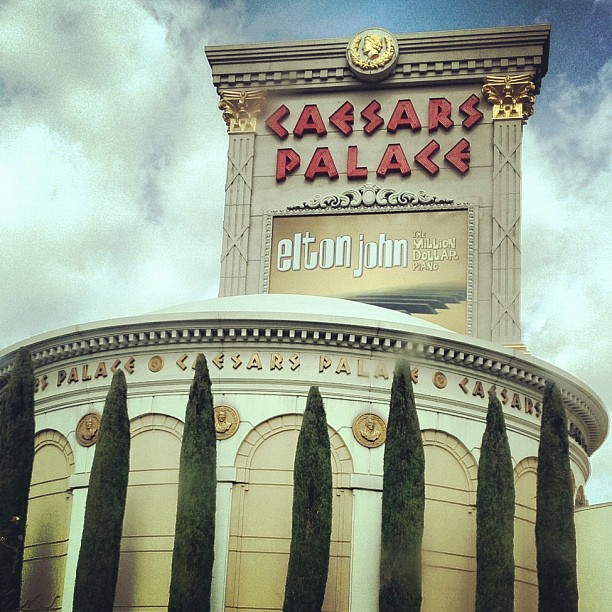
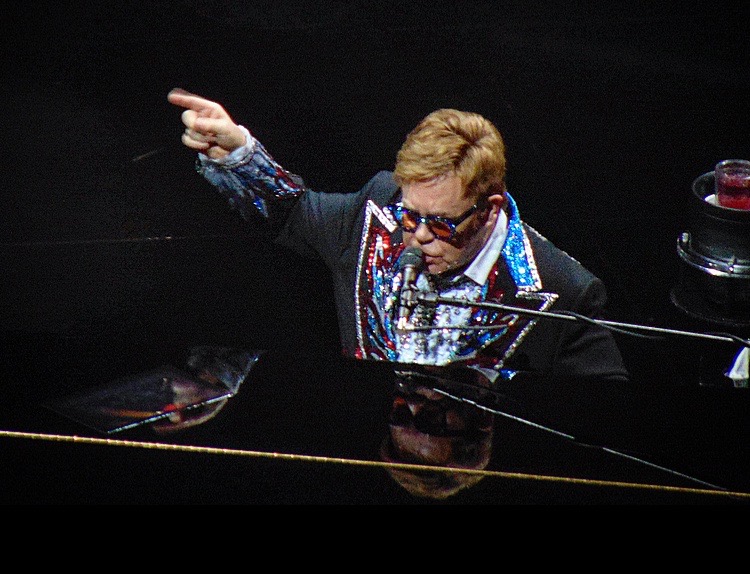
In October 2003 John announced that he had signed an exclusive agreement to perform 75 shows over three years at Caesars Palace on the Las Vegas Strip in Las Vegas, US. The show, The Red Piano, was a multimedia concert featuring massive props and video montages created by David LaChapelle. Effectively, he and Celine Dion shared performances at Caesars Palace throughout the year; while one performed, the other rested. The first of these shows took place on 13 February 2004. In February 2006 John and Dion sang together at the venue to raise money for Harrah's Entertainment Inc. workers affected by the 2005 hurricanes, performing "Sorry Seems to Be the Hardest Word" and "Saturday Night's Alright (for Fighting)".
The Walt Disney Company named John a Disney Legend for his contributions to Disney's films and theatrical works on 9 October 2006. Also in 2006, he told Rolling Stone that he planned for his next record to be in R&B and hip hop. "I want to work with Pharrell Williams, Timbaland, Snoop [Dogg], Kanye [West], Eminem and just see what happens", he said. West sampled John's "Someone Saved My Life Tonight" on his 2007 song "Good Morning" and in 2010 invited him to his Hawaii studio to play piano and sing on "All of the Lights".
In March 2007 John performed at Madison Square Garden for a record-breaking 60th time for his 60th birthday; the concert was broadcast live and a DVD recording was released as Elton 60 – Live at Madison Square Garden; a greatest-hits compilation CD, Rocket Man—Number Ones, was released in 17 different versions worldwide, including a CD/DVD combo; and his back catalogue—almost 500 songs from 32 albums—became available for legal paid download.
On 1 July 2007 John appeared at the Concert for Diana at Wembley Stadium in honour of Diana, Princess of Wales on what would have been her 46th birthday, with the concert's proceeds going to Diana's charities as well as to charities of which her sons, Prince William and Prince Harry, are patrons. John opened the concert with "Your Song" and closed it with "Saturday Night's Alright For Fighting", "Tiny Dancer", and "Are You Ready For Love".
On 21 June 2008 John performed his 200th show at Caesars Palace. A DVD/CD package of The Red Piano was released through Best Buy in November 2008. In a September 2008 GQ interview John said, "I'm going on the road again with Billy Joel again next year", referring to "Face to Face", a series of concerts featuring the two. The tour began in March.