
British Leyland was a British automotive engineering and manufacturing conglomerate formed in 1968 as British Leyland Motor Corporation Ltd (BLMC), following the merger of Leyland Motors and British Motor Holdings. It was partly nationalised in 1975, when the British government created a holding company called British Leyland, later renamed BL in 1978. It incorporated much of the British-owned motor vehicle industry, which in 1968 had a 40% share of the UK car market, with its history going back to 1895. Despite containing profitable marques such as Jaguar, Rover, and Land Rover, as well as the best-selling Mini, BLMC had a troubled history, leading to its eventual collapse in 1975 and subsequent part-nationalisation.
After much restructuring and divestment of subsidiary companies as well as entering into a major alliance with Honda, BL was renamed the Rover Group in 1986, becoming a subsidiary of British Aerospace from 1988 to 1994, then was subsequently bought by BMW. The final surviving incarnation of the company as the MG Rover Group went into administration in 2005, bringing mass car production by British-owned manufacturers to an end. MG and the Austin, Morris and Wolseley marques became part of China's SAIC, with whom MG Rover attempted to merge prior to administration. As of 2026, Mini, Jaguar Land Rover, Leyland Trucks, and Unipart are the most prominent former parts of British Leyland that still exist, with SAIC still operating its UK base out of the former Longbridge site. The Indian truck manufacturer Ashok Leyland also continues to use the Leyland name and logo, but now operates independently of any former Leyland Motors or BL subsidiary.
History
1968–1974: Creation of BLMC, and the Stokes era
BLMC was founded on 17 January 1968 by the merger of British Motor Holdings (BMH) and Leyland Motor Corporation (LMC), encouraged by Tony Benn as chairman of the Industrial Reorganisation Committee created by the first Wilson Government. At the time, LMC was a highly successful truck and bus manufacturer – as well as owning prosperous car brands Triumph and Rover – whilst BMH (which was the product of an earlier merger between the British Motor Corporation, Pressed Steel and Jaguar) was perilously close to collapse. The government hoped LMC's expertise would revive the ailing BMH, and effectively create a "British General Motors". The merger combined most of the remaining independent British car manufacturing companies and included car, bus and truck manufacturers and more diverse enterprises including: construction equipment, refrigerators, metal casting companies, road surface manufacturers; in all, nearly one hundred different companies. The new corporation was arranged into seven divisions under its new chairman, Sir Donald Stokes (formerly the chairman of LMC). At the time of its founding, BLMC was the world's fifth largest vehicle manufacturer after General Motors, Ford, Chrysler and Volkswagen.

The seven divisions were:
Austin-Morris; the volume car division made up entirely of the former British Motor Corporation marques (Austin, Morris, MG, Riley and Wolseley), as well as Austin and BMC branded light commercial vehicles.
Specialist Division; the sports/luxury marques (Rover, Land Rover, Alvis, Triumph and Jaguar – the latter having moved across from the old BMC/BMH organisation).

Leyland Truck and Bus; the original Leyland commercial vehicles business.
Pressed Steel Fisher (PSF); had its origins in the Pressed Steel Company which had been a BMH subsidiary that made car body shells for both BLMC and other manufacturers.
Overseas; made up largely of BLMC's satellite car manufacturing operations around the world – many of these had been inherited from BMH.

Construction Equipment
General Engineering & Foundries
While BMH was the UK's largest car manufacturer (producing over twice as many cars as LMC), it offered a range of dated vehicles, including the Morris Minor which was introduced in 1948 and the Austin Cambridge and Morris Oxford, which dated back to 1959. Although BMH had enjoyed great success in the 1960s with both the Mini and the 1100/1300, both cars were infamously underpriced and despite their pioneering but unproven front wheel drive engineering, warranty costs had been crippling and had badly eroded those models' profitability.
After the merger, Lord Stokes was horrified to find that BMH had no plans to replace the elderly designs in its portfolio. Also, BMH's design efforts immediately prior to the merger had focused on unfortunate niche market models such as the Austin Maxi (which was underdeveloped and with an appearance hampered by using the doors from the larger Austin 1800) and the Austin 3-litre, a car with no discernible place in the market.
The lack of attention to the development of new mass-market models meant that BMH had nothing in the way of new models in the pipeline to compete effectively with popular rivals such as Ford's Escort and Cortina.
Immediately, Lord Stokes instigated plans to design and introduce new models quickly. The first result of this crash programme was the Morris Marina in early-1971. It used parts from various BL models with new bodywork to produce BL's mass-market competitor. It was one of the strongest-selling cars in the United Kingdom in the 1970s; being the second-most popular new car sold in Britain in 1973; though by the end of production in 1980 it was widely regarded as a dismal product that had damaged the company's reputation. The Austin Allegro (replacement for the 1100/1300 ranges), launched in 1973, gained a similar reputation over its ten-year production life.

The company became an infamous example of the industrial turmoil that plagued the United Kingdom in the 1970s. Action by unions frequently crippled BL manufacturing. Despite the duplication of production facilities as a result of the merger, there were multiple single points of failure in the company's production network which meant that a strike in a single plant could stop many of the others. Domestic rivals Ford and General Motors mitigated against this by merging their previously separate British and German subsidiaries and product lines (Ford combined Ford of Britain and Ford Germany to create Ford of Europe, whilst GM eventually merged the operations of Vauxhall and Opel), so that production could be sourced from either British or Continental European plants in the event of industrial unrest. The upshot was that both Ford and Vauxhall ultimately overtook BL to become Britain's two best-selling marques. At the same time, a tide of Japanese imports, spearheaded by Nissan (Datsun) and Toyota exploited both BL's inability to supply its customers and its declining reputation for quality. Continental carmakers including Fiat, Renault and Volkswagen were also achieving strong sales on the British market.
By the end of the 1970s, the British government had introduced protectionist measures in the form of import quotas on Japanese manufacturers to protect the ailing domestic producers (both BL and Chrysler Europe), which it was helping to sustain.
At its peak, BLMC owned almost forty manufacturing plants across the country. Even before the merger, BMH had included theoretically competing marques that were in fact selling substantially similar badge engineered cars. The British Motor Corporation had never properly integrated either the dealer networks or the production facilities of Austin and Morris. This had been done partly to appease poor industrial relations, as decades old rivalries between Austin and Morris workers at Longbridge and Cowley respectively, had persisted after the 1952 merger and creation of BMC. The upshot was that both plants were producing badge engineered models of otherwise identical Austin and Morris cars so that each dealer network would have a product to sell. This meant that Austin and Morris still, to an extent, competed with each other and meant that each product was saddled with effectively twice the logistics, marketing and distribution costs that it would have if sold under a single name or if production of a single model platform was concentrated in one factory. Although BL did eventually end the wasteful double sourcing – for example production of the Mini and the 1100/1300 was concentrated at Longbridge, whilst the 1800 and Austin Maxi ranges moved to Cowley, the production of sub-assemblies as well as component suppliers were scattered all over the Midlands which greatly increased the cost of keeping the factories running.

BMH and Leyland Motors had expanded and acquired companies throughout the 1950s and 1960s which were in direct competition with each other, with the result that when the two conglomerates were brought together into BL there was even more internal competition. Rover competed with Jaguar at the expensive end of the market, and Triumph with its family cars and sports cars against Austin, Morris and MG. Internal politics became so bad that one marque's team would attempt to derail another marque's programmes.
Individual model lines that were similarly sized were therefore competing against each other, yet were never discontinued nor were model ranges rationalised quickly enough; in fact, the policy of having multiple models competing in the same market segment continued long after the merger – for instance BMH's MGB remained in production alongside LMC's Triumph TR6, the Rover P5 competed with the Jaguar XJ, whilst in the medium family sector, the Princess was in direct competition with upscale versions of the Morris Marina and Austin Maxi, meaning that economies of scale resulting from large production runs could never be realised. In addition, in consequent attempts to establish British Leyland as a brand in consumers' minds in and outside the UK, print ads and spots were produced, causing confusion rather than attraction for buyers.
BL marketing and management attempted to draw more obvious distinctions between the marques – most notable was the decision to pitch Morris as a maker of conventional mass-market cars to compete with Ford and Vauxhall and Austin to continue BMC's line of advanced family cars with front-wheel drive and fluid suspension. This resulted in the development of the Morris Marina and the Austin Allegro. The policy's success was mixed. Since the dealership network was still not sufficiently rationalised it meant that Austin and Morris dealers (which had, in BMC/BMH days, each offered a full range of cars both advanced and traditional) had their product range halved and found that they could no longer cater to many previously loyal customers' tastes. The policy was also carried out haphazardly: The advanced, Hydragas-sprung Princess began life in 1975 sold as an Austin, a Morris and a Wolseley before being rebadged altogether under the new Princess name. The Princess (and the Mini, which BL also turned into a marque in its own right) was sold across the Austin-Morris dealership network, making any distinction between the two even more vague to many customers. Critically, the new models that had been introduced by BLMC failed to sell in high enough quantities outside of the home market, despite the UK now being a part of the European Economic Community – with the Allegro and Princess, in particular, having been tailored for European tastes. However, both these vehicles were saloons when the trend in Europe was moving towards family-sized hatchbacks, typified by the Volkswagen Golf in 1974 and the Simca 1307 (Chrysler Alpine) in 1975.
The company also wasted much of its scant funds on concepts, such as the Rover P8 or P9, that never entered production to earn income for the company.
These internal issues, which were never satisfactorily solved, combined with serious industrial relations problems with trade unions, the 1973 oil crisis, the three-day week, high inflation and ineffectual management meant that BL became an unmanageable and financially crippled behemoth. "Following a disastrous couple of years in the marketplace, by the end of 1974 BLMC was on the brink of bankruptcy. Its financial backers – the City banks – had become very nervous about its future, and persuaded Lord Stokes to approach Tony Benn for financial assistance."
1975–1982: Collapse, the Ryder Report and the Edwardes era
Sir Don Ryder was asked to undertake an enquiry into the position of the company, and his report was presented to the government in April 1975. Following Ryder's recommendations, the organisation was drastically restructured and the Labour Government created a new holding company, British Leyland Limited (BL), of which it was the major shareholder, effectively nationalising the company. Between 1975 and 1980, these shares were vested in the National Enterprise Board which had responsibility for managing this investment. The original seven divisions of the company were now reorganised into four:
Leyland Cars – the largest car manufacturer in the UK, employing some 128,000 people at 36 locations, and with a production capacity of one million vehicles per year.
Leyland Truck and Bus – the largest commercial and passenger vehicle manufacturer in the UK, employing 31,000 people at 12 locations, producing 38,000 trucks, 8,000 buses (including a joint venture with the National Bus Company), and 19,000 tractors per year. The tractors were based on the Nuffield designs, but built in a plant in Bathgate, Scotland.
Leyland Special Products – the miscellaneous collection of other acquired businesses, itself structured into five sub-divisions:
Construction equipment – Aveling & Porter, Aveling-Marshall, Barfords of Belton and Goodwin-Barsby
Refrigeration – Prestcold
Materials handling – Coventry Climax (incorporating Climax Trucks, Climax Conveyancer and Climax Shawloader)
Military vehicles – Alvis and Self-Changing Gears
Print – Nuffield Press (which printed the company's publications) and Lyne & Son
Leyland International – responsible for the export of cars, trucks and buses, and responsible for manufacturing plants in Africa, India and Australia, employing 18,000 people.
There was positive news for BL at the end of 1976 when its new Rover SD1 executive car was voted European Car of the Year, having gained plaudits for its innovative design. The SD1 was actually the first step that British Leyland took towards rationalising its passenger car ranges, as it replaced two cars competing in the same sector, the Rover P6 and Triumph 2000. More positive news for the company came at the end of 1976 with the approval by Industry Minister Eric Varley of a £140,000,000 investment of public money in refitting the Longbridge plant for production of the company's "ADO88" (Mini replacement), due for launch in 1979. However, poor results from customer clinics of the ADO88, coupled with the UK success of the Ford Fiesta, launched in 1976, forced a snap redesign of ADO88 which evolved into the "LC8" project – eventually launched as the Austin Mini Metro in 1980.
In 1977, Michael Edwardes was appointed chief executive by the NEB. Edwardes embarked on a massive restructuring of the beleaguered conglomerate, selling off many of its non-core businesses such as Prestcold and Coventry Climax. Edwardes also took on the militant unions head-on, culminating in the dismissal of chief shop steward Derek Robinson in 1979, who had been seen as the perpetrator of much of the strikes and industrial unrest that had crippled the company throughout the decade. Edwardes quickly reversed the Ryder Report's policy of giving prominence to the "Leyland" brand, and returned focus back to the individual brands, resulting in the creation of two new completely autonomous subsidiaries:
BL Cars Ltd - the volume cars business, which consisted of two sub divisions; namely:
Austin-Morris - encompassing the mainstream brands Austin, Morris and sports car brand MG.
Jaguar-Rover-Triumph' (JRT) - the specialist or upmarket division. Jaguar (including the Daimler) brand) regained much of its independence under former Unipart CEO John Egan, preparing it for its eventual demerger from BL in 1984.
Land Rover Group Ltd - Land Rover (and Range Rover) were split away from Rover itself and became a completely autonomous entity, with Rover car production moved out of Solihull by 1982, which was repurposed as a Land Rover-only plant. In that same period, the commercial vehicles arm of Austin-Morris (which consisted solely of the Sherpa range of light vans), would become part of the wider Land Rover Group and was now known as Freight Rover.
At the same time the public use of the "British Leyland" name ceased due to its negative connotations, being abbreviated simply to "BL", whilst the company's "hurricane" logo was redesigned with the central "L" removed. The Austin-Morris division was given its own unique brand identity with the introduction of the blue and green "chevron" logo, which was later expanded in use when the car manufacturing operations were further consolidated into the Austin Rover Group in the 1980s.
In 1978, the company was the subject of an important legal development concerning corporate civil liability. In the case of Walton v British Leyland, the court held Leyland liable for negligence owing to a design defect in the wheel bearings of their new model of the Allegro. The company were aware of the issue but had decided against a recall. They were held liable for damages as they had failed to take reasonable care, because the costs of the recall were deemed in proportion with the potential risks of injury.
BLCV
In 1978, the company formed a new group for its commercial vehicle interests, BL Commercial Vehicles (BLCV) under managing director David Abell. The following companies moved under this new umbrella:
Leyland Vehicles Limited (trucks, tractors and buses)
Alvis (military vehicles)
Coventry Climax (fork lift trucks and specialist engines)
Self-Changing Gears (heavy-duty transmissions)
BLCV and the Land Rover Group later merged to become Land Rover Leyland.
In December 1978, British Leyland Limited was renamed BL Limited and its subsidiary, which acted as a holding company for all the other companies within the group. The British Leyland Motor Corporation Limited was renamed BLMC Limited at the same time.
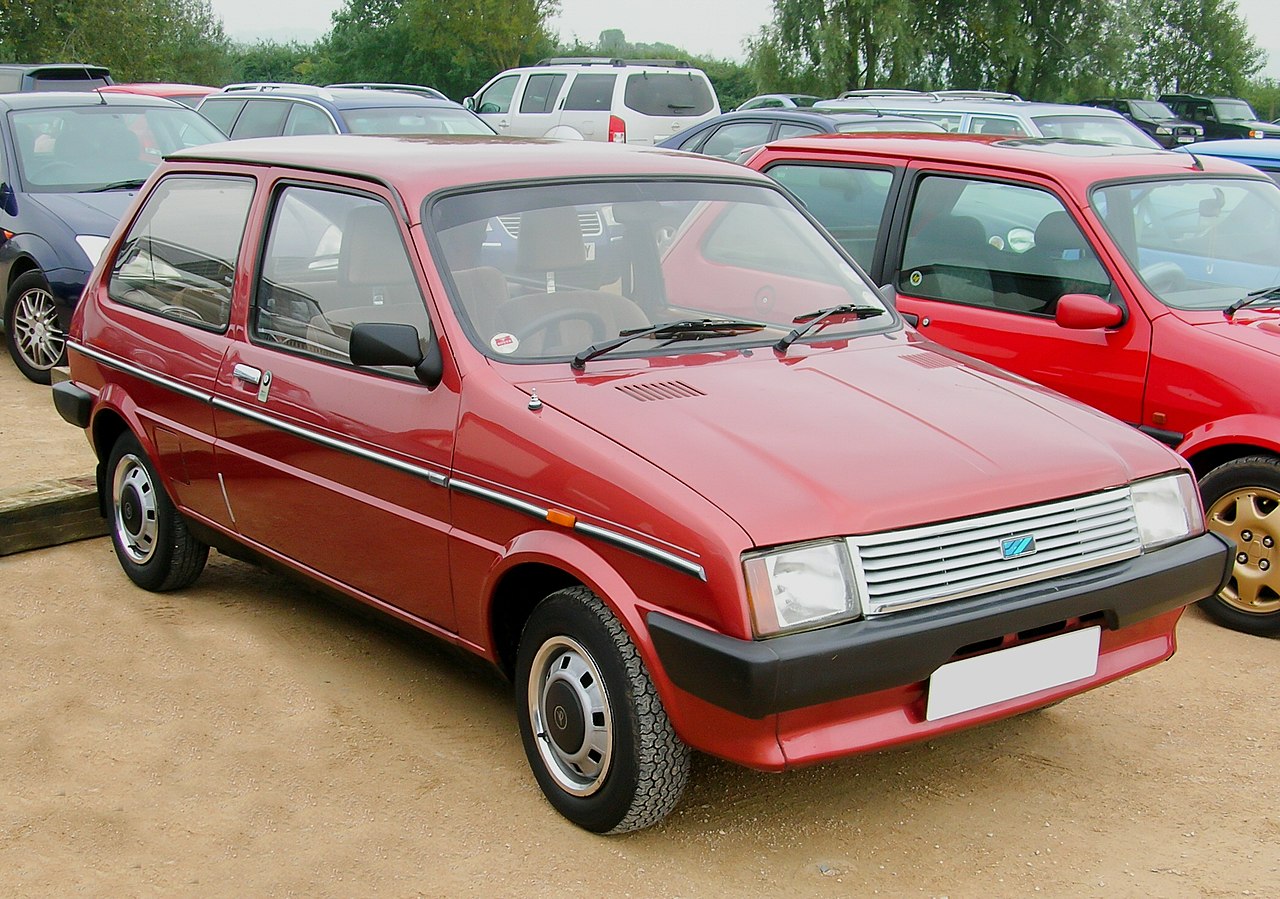
BL's fortunes took another much-awaited rise in October 1980 with the launch of the Austin Metro (initially named the Mini Metro), a three-door hatchback that gave buyers a more modern and practical alternative to the iconic but ageing Mini. This went on to be one of the most popular cars in Britain in the 1980s. Towards the final stages of the Metro's development, BL entered into an alliance with Honda to provide a new mid-range model to replace the ageing Triumph Dolomite, and more crucially to be a stop-gap until the Austin Maestro and Montego were ready for launch. This car emerged as the Triumph Acclaim in 1981, and became the first of a long line of collaborative models jointly developed between BL and Honda. At the same time, Leyland Trucks introduced the Landtrain, the first in a series of vehicles developed specifically for export markets.
A rationalisation of the model ranges also took place around this time. In 1980, British Leyland was still producing three cars in the large family car sector—the Princess 2, Austin Maxi and Morris Marina. The Marina was succeeded by the Morris Ital in July 1980 following a superficial facelift, and a year later the Princess 2 received a major upgrade to become the Austin Ambassador, meaning that the 1982 range had just two competitors in this sector. In April 1984, these cars were discontinued to make way for a single all-new model, the Austin Montego.
The Acclaim was replaced in that same year by another Honda-based product, the Rover 200-series.
The MG factory at Abingdon and Triumph factory at Canley were both closed in 1980.
1982–1986: Edwardes steps down, Jaguar divested, Austin Rover Group
By the end of Michael Edwardes' tenure as chairman of BL plc in 1982, the company had been restructured into two parts – the Cars Division (which consisted of Austin-Morris, Rover and Jaguar, and was led by Ray Horrocks) and the Commercial Vehicle Division (which consisted of Land Rover, Leyland Trucks, Leyland Buses and Freight Rover) – whose chief executive was David Andrews. The holding company BL plc was now chaired by Austin Bide in a non-executive capacity. Around this time, the BL Cars Ltd subsidiary renamed itself Austin Rover Group, shortly before the launch of the Austin Maestro and Ray Horrocks was replaced by Harold Musgrove as its chairman and chief executive.
The emergence of the Austin Rover brand was intended to give a new public face to the company (with the 'Leyland' and 'BL' names fading from public view), although the conglomerate's holding company was still known as "BL plc". The creation of Austin Rover also dispensed with the separate Austin-Morris and Jaguar-Rover-Triumph divisions, since by this time, Jaguar now resided in a separate company called Jaguar Car Holdings and was now led by Sir John Egan, and this was later de-merged from BL completely and privatised in 1984. That same year, with both the Morris Ital and the Triumph Acclaim being discontinued, their respective brands were effectively shelved, leaving only the Austin and Rover marques, whilst Land Rover moved into the Freight Rover Group alongside the light trucks division. After the divestment of Unipart and the van, truck and bus divisions in 1987 (see below), leaving just two subsidiaries – Austin Rover (volume cars) and Land Rover (SUVs) this essentially remained the basic structure of BL and subsequently the Rover Group until the 2000 break-up.
Renaming to Rover Group and Land Rover's eventual sale to Ford
In 1986, Graham Day took the helm as chairman and CEO and the third joint Rover-Honda vehicle – the Rover 800-series – was launched which replaced the ten-year-old Rover SD1. Around the same time, BL changed its name to Rover Group and in 1987 the Trucks Division – Leyland Vehicles merged with the Dutch DAF company to form DAF NV, trading as Leyland DAF in the UK and as DAF in the Netherlands. In 1987, the bus business was spun off into a new company called Leyland Bus. This was the result of a management buyout who decided to sell the company to the Bus & Truck division of Volvo in 1988. That same year, the British government controversially tried to privatise and sell-off Land Rover, however this plan was later abandoned. The Austin name was dropped from the Metro, Maestro and Montego by 1988, signalling the end for the historic Austin marque, in a push to focus on the more prestigious (and potentially more profitable) Rover badge. In 1988, the business was sold by the British government to British Aerospace (BAe), and shortly afterwards shortened its name to just Rover Group. It subsequently sold the business to BMW, who, after years of investment that ultimately resulted in huge losses, decided to break up the Rover Group, and only retain the Cowley operations and the rights to manufacture the new MINI family of vehicles.