
The Attitude Era was a major era of professional wrestling within the World Wrestling Federation (WWF, now WWE), succeeding the New Generation Era. The Attitude Era was characterized by adult-oriented content, which included increased depicted violence, profanity, and sexual content, as well as disregarding the "good guys versus bad guys" formula in favor of unpredictable and shocking storylines, in a significant shift from the "traditional" and family-friendly output that the WWF had produced up until that point. The Attitude branding officially lasted from November 9, 1997, at Survivor Series 1997, to May 6, 2002 (renaming of WWF to WWE), and was succeeded by the Ruthless Aggression Era.
The era was spearheaded during the Monday Night War when WWF's Raw went head-to-head with rival World Championship Wrestling's (WCW) Nitro in a weekly battle for television ratings. As part of the change, the WWF also rebranded its flagship show (which became Raw Is War), redesigned the arena setups, and later introduced the "scratch" logo and officially referred to and promoted the "Attitude" name. The Attitude Era was a highly successful period for the company with television ratings, merchandise sales, and pay-per-view buy rates for the WWF reaching record highs and it also came at a time of a general shift in American television moving away from family-friendly to "edgier" content, with the WWF pushing the limits of what was deemed acceptable for television. Bret Hart, Shawn Michaels, Sycho Sid and Stone Cold Steve Austin were among the wrestlers that ushered in the Attitude Era, with events such as Hart's explicit rant, the formation of D-Generation X and the Montreal Screwjob being key points of evolution to the Attitude format. However, Hart and Sid both left the WWF at the dawn of the era, and Michaels retired soon after.
Steve Austin would go on to become a major superstar of the Attitude Era and was joined by many new stars including The Rock, Triple H, Kane, Mick Foley (in various personas), Chyna and Kurt Angle, whereas The Undertaker continued to be popular as a veteran, and the company's chairman Vince McMahon would form a villainous persona out of himself, involving his real-life family in storylines. The Austin–McMahon feud was one of the longest-running and most prominent rivalries of the era. WWF also signed a number of wrestlers who left WCW during this boom period, including Chris Jericho, Eddie Guerrero, Chris Benoit, and the Big Show. In addition, the WWF Women's Championship was reactivated in September 1998 after years of dormancy, and most of the company's female talent, such as Sable, Sunny and Stacy Keibler during this time period were marketed as sex symbols booked in sexually provocative gimmick matches (e.g., "bra and panties", bikini, lingerie, etc.), whereas prominent female stars such as Chyna, Lita, and Trish Stratus were presented as serious wrestlers. The era also saw the resurgence of tag team wrestling, namely The Hardy Boyz, The Dudley Boyz, and Edge & Christian, who were featured in several destructive, physical and stunt-filled Tables, Ladders and Chairs matches during this era. Distinguished stables that were established in this era include D-Generation X, Nation of Domination, The Corporation, Ministry of Darkness, Corporate Ministry and The Brood, and had developed major rivalries among each other. Also, the Hardcore Championship was established in November 1998, a chaotic division involving no disqualification, falls count anywhere matches that would start ringside and then would be taken outside, with blunt weapons involved.
Initiation
The actual start of the Attitude Era itself is often debated among fans; Vince McMahon's promo on the December 15, 1997 episode of Raw about not being "passé" is usually the latest point in time. The WWE themselves retrospectively claim that the start of the era is hard to pinpoint, and have used inconsistent events to categorize the era. In 2017 and 2021 respectively, the WWE released DVD and Blu-ray compilations named 1997 - Dawn of the Attitude and 1996 - Prelude to Attitude, signifying that the era was, in yearly terms, beginning in 1997.
It is generally considered that the start of the Attitude era was gradual rather than immediate, based on different elements: the year 1996 saw the WWF increasing graphic violence and selling sex among its female talent, while the year 1997 saw the major aesthetic makeover, the normalisation of crude language and behavior, and the beginning of dramatised plots. General consensus is that the era (incorporating all these elements) had fully begun during the second half of 1997. In the years following, the Attitude era continued to evolve and experiment with ever more violent and crude content.
Context and concept
During the New Generation Era of the mid-1990s, the World Wrestling Federation was at a difficult point following the steroid scandal against its chairman Vince McMahon, the loss of some of its stars to rival WCW, and a difficult financial situation. In the Monday Night War, a television ratings battle between WWF's Monday Night Raw and WCW's Monday Nitro, the WCW had the upper hand. The former WWF megastar, Hulk Hogan, had also been enjoying success at WCW as part of the nWo with its distinctly "edgy" nature. This also coincided with societal acceptance of racier television content occurring in the latter half of the 1990s, strongly influenced by NYPD Blue and amplified by The Jerry Springer Show, which had become exceptionally popular in 1997. Kevin Eck wrote in a The Baltimore Sun column in 1997:
The kids of the '80s who grew up rooting for All-American good guys like Hulk Hogan, they say, are now jaded twentysomethings who worship Marilyn Manson, Howard Stern, and Dennis Rodman. They're looking for something more real, more dangerous, the kind of entertainment they can now find in fringe "sports" like Extreme Championship Wrestling [ECW] and The Ultimate Fighting Championship [UFC].
In an effort to revamp itself, the company began to transition from the "traditional way" wrestling had long been presented, instead opting for a product which "pushed the envelope" according to then-head writer Vince Russo. The creative side of the product during the era's early stages in 1997 was spearheaded by Russo, who drastically changed the way WWF television was written. Ed Ferrara would later join Russo in June 1998, when he was hired by the WWF. Russo's and Ferrara's booking style has been described as "Crash TV", where they contributed edgy, controversial storylines involving sexual content, profanity, swerves, unexpected heel turns, and worked shoots, as well as short matches, backstage vignettes, shocking angles and levels of depicted violence. Vince McMahon commented in a May 1997 interview that the "taste of the American public changes from time to time" and "If their tastes change, so too will the direction of our company." McMahon had already started a working relationship with hardcore wrestling promotion ECW as early as September 1996, which influenced the Attitude era.
Beginnings
Several on-screen moments have been credited with helping WWF transition into the Attitude Era.

Sex appeal and Goldust
In his book, Vince Russo mentions the debut of the character Goldust on October 22, 1995 as a pivotal turning point, due to Goldust's controversial homoerotic undertones. The WWF then begun playing up female sexuality with Sunny, who appeared in sexualized skimpy outfits on and off the ring, including at Royal Rumble, and began to be pushed in other WWF media and suggestive Raw segments. WrestleMania XII also saw the debut on-screen appearances of Sable, who often dressed in suggestive leather outfits, and Marlena (who was also the manager of Goldust). Rather than being serious wrestlers, all three were normally ringside valets and personas, used for sex appeal. Both Sunny and Sable also appeared in Playboy-like suggestive shots for the official RAW Magazine (marketed to "Mature Readers" as opposed to the WWF Magazine) published by the WWF through 1996. Also in that year's SummerSlam pay-per-view, all three of them featured in a bikini contest. Sexualization was also pushed in comedic stunts by Sunny and Marlena in the first couple of episodes of Shotgun Saturday Night.
Birth of Austin 3:16
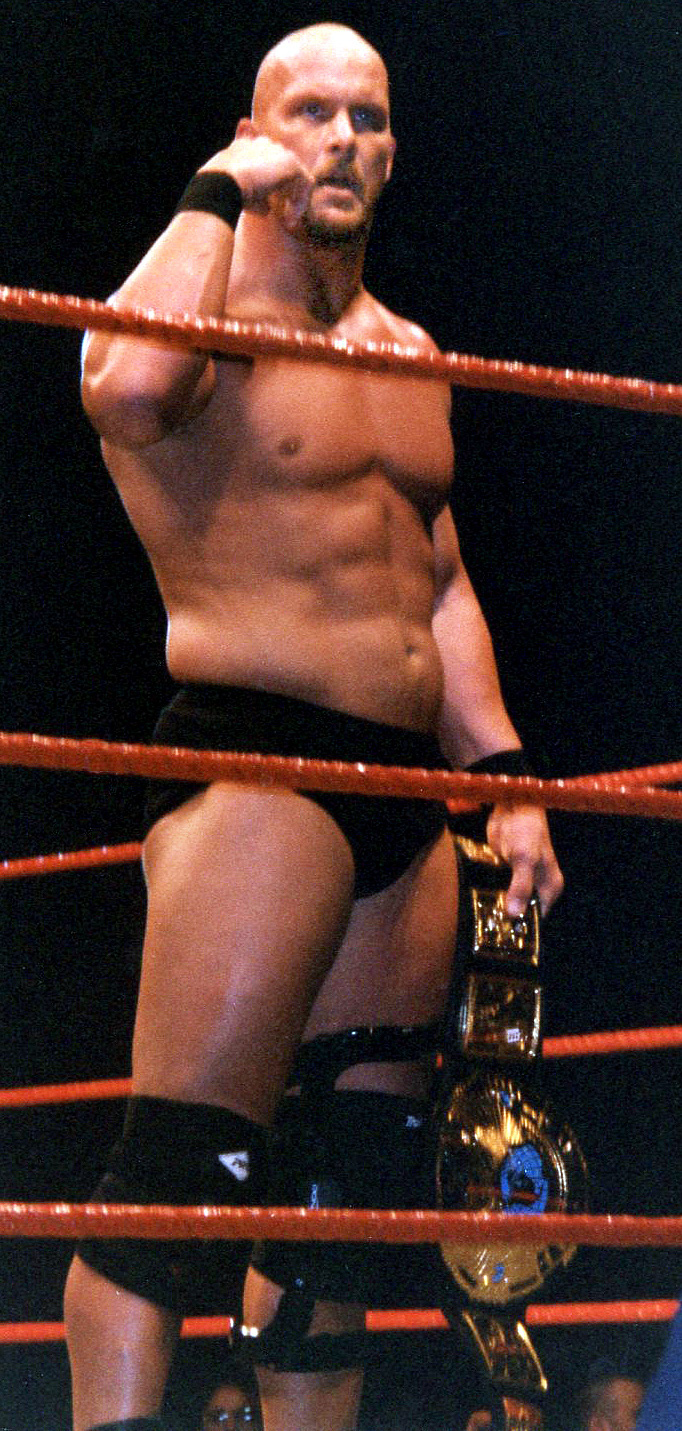
After "Stone Cold" Steve Austin debuted at the WWF, he would go on to win the 1996 King of the Ring tournament by defeating Jake "The Snake" Roberts. In his post-win ad-libbed speech, Austin mocked Roberts' recital of the biblical passage John 3:16 by saying, "You sit there and you thump your Bible, and you say your prayers, and it didn't get you anywhere! Talk about your Psalms, talk about John 3:16... Austin 3:16 says I just whipped your ass!" Austin's rebellious, anti-hero attitude and delivery was well received by crowds, signifying a change in public taste (this was also evident by Sycho Sid's reception as a heel at Survivor Series). The speech is referenced by some fans as being the actual start of the Attitude era, both because of the nature of the speech (which was uncharacteristic for its time) and the fact that Austin would eventually become the biggest star at the peak of the Attitude era, with "Austin 3:16" becoming the major marketing tool for WWF during the era.
Pillman and match violence
Brian Pillman, who joined the WWF in June 1996, carried over his "Loose Cannon" persona from ECW as a deranged, unpredictable character, and provided segments that would later define the Attitude era. The infamous "Pillman's got a gun" segment on Raw on November 4, 1996, was an uncharacteristically dark angle, and has also been viewed as a key moment of change within the company, although Pillman and the WWF did issue a public apology after the segment, with McMahon admitting at the time that they went too far. Another new uncanny gimmick introduced that year was Mankind (himself also formerly of ECW), who feuded with The Undertaker and fought physically fierce matches with such as the Boiler Room Brawl at SummerSlam, the earliest example of the sort of backstage brawls and hardcore matches that would later become fundamental to the Attitude era. Mankind also used his disturbed persona to invoke unusual violent tactics in his main event match against Shawn Michaels at In Your House 10: Mind Games.
Raw arena rework and Bret's tirade
The WWF also refreshed branding and visual production. The March 10, 1997 episode of Raw debuted a new look and theme centered solely around the colors red and black, along with the renaming of Monday Night Raw to Raw Is War (suggested to signify that the WWF was waging "war" with WCW's Monday Nitro) and being extended to two hours, with the second hour dubbed the "War Zone". Production within the arenas also changed significantly: pyrotechnics were utilized for everyone and at the start of every show and lighting effects were altered. The ring rope colors were changed from red, white and blue to monocolor (and the turnbuckles changed from blue to black), and the wrestlers' entrance was redesigned to one featuring a long ramp, while the Titantron video display appeared for the first time, with Sycho Sid being the first wrestler to enter using it. These aesthetic changes would make their way onto other WWF events as well.
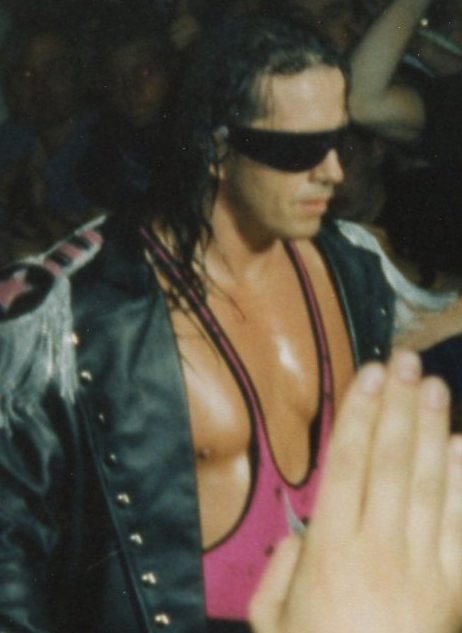
One week later, on the March 17 episode (and the week before WrestleMania 13), after losing a steel cage match against Sycho Sid in an attempt to win back the WWF Championship, Bret Hart angrily shoved Vince McMahon to the mat during a post-match interview and went into a profanity-laced tirade. Both the WWF and the USA Network apologized for the language, which included the words "goddamn" and "bullshit", including commentator Jim Ross while on air, and it led to the USA Network introducing a seven-second delay in order to bleep out offensive language. Some fans have referenced Hart's uncensored tirade and marking the start of the Attitude era.
Consolidation
The company's Raw program continued to struggle for US ratings in the Monday Night War in early 1997. This led to Vince McMahon's full embrace of a new direction that would build the Attitude era, partly convinced by Vince Russo who then joined the creative writing team for Raw, significantly altering the nature of the wrestling, and Raw's production was completely refreshed to fit the target theme.
WrestleMania and rise of Stone Cold
"Stone Cold" Steve Austin began a long-term feud with one of WWF's top superstars, Bret Hart, from late-1996 to mid-1997. They faced each other for the first time at Survivor Series and although Austin lost, the match was well received and it made Austin popular among fans despite being a heel. Their feud then climaxed in a Submission Match at WrestleMania 13, with a rare double-turn, turning Hart (who had been a traditional 'good guy' at the WWF for a long time) into a heel. Austin skyrocketed in public popularity after the Wrestlemania match and he had already become a household name by the middle of 1997. The match has also been cited by some as starting the Attitude era.
In a symbolic moment of the company's change, at the 1997 Slammy Awards, Austin beat up a returning Doink the Clown. Later, a storyline involving Owen Hart and Austin culminated in performing a Stone Cold Stunner on Vince McMahon to a positive crowd response, resulting to Austin being kayfabe arrested on the September 22, 1997 episode of Raw.
Darker storylines and DX
Darker and more dramatic storylines began to be regularly implemented on WWF programming by mid-1997, such as Paul Bearer's implication that The Undertaker had murdered his own family (which would build on to the debut of Kane). The existing Nation of Domination stable was in quick succession joined by the Disciples of Apocalypse, Los Boricuas and The Truth Commission, which all began feuding with each other in "gang wars" with racial undertones from July 1997. Around the same time began a feud between Goldust and Brian Pillman, where at Ground Zero: In Your House Pillman attempted to "win" Goldust's wife Marlena to use as his personal "sex slave". Kayfabe began to be regularly broken, and the cartoonish gimmicks that had previously been the mainstay of WWF superstars were mostly eliminated by the latter half of 1997.

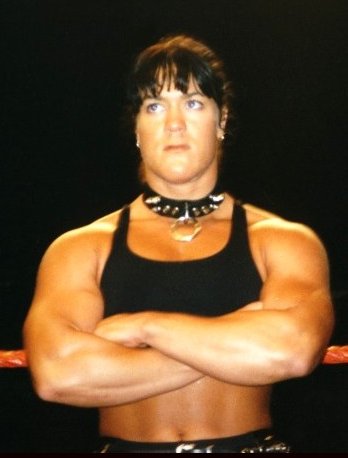
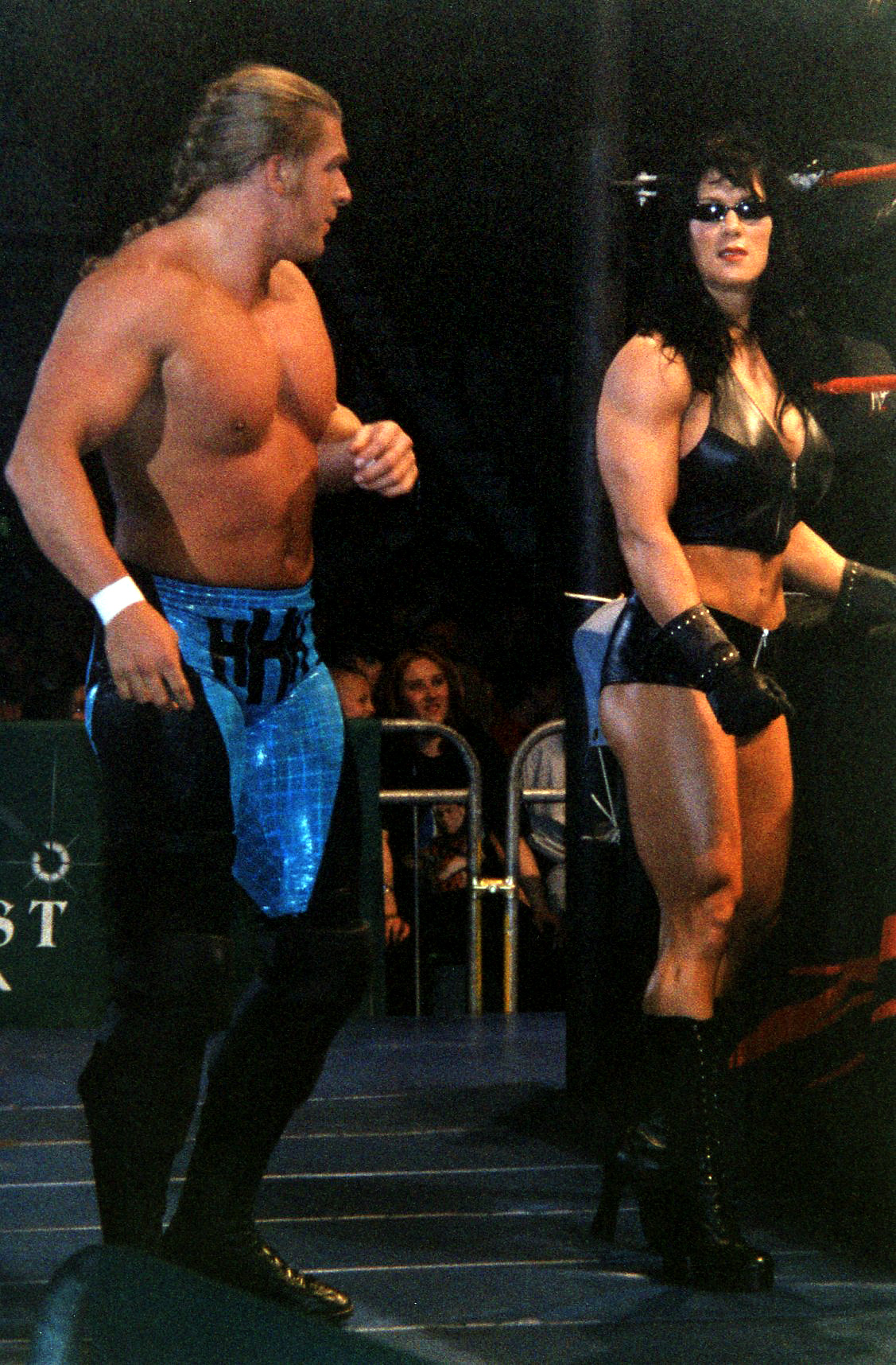
The D-Generation X stable formed in August 1997, made up of Shawn Michaels, HHH and Chyna, and were noted for their shocking segments and crudeness, such as playing strip poker in the ring (December 8, 1997 episode or Raw) - these elements would define the Attitude era. Their feud with the Hart Foundation, led by Michaels's arch-rival Bret Hart, was notable for being one of the first major heel against heel storylines in the WWF.
Bret vs. Shawn, Montreal Screwjob, and logo rework
Another storyline from 1996 to 1997 was the personal feud between Bret Hart and Shawn Michaels, who had legitimate issues with one another outside of wrestling. The conflict behind the scenes spilled into their on-screen storyline, where both men made deeply personal remarks in interviews and promo segments that were often rooted in these issues. One of the best known incidents was the so-called "Sunny Days" comment on the May 21, 1997 episode of Raw where Michaels seemingly unscripted directed at Hart that he was having a real-life affair with "Sunny" Tammy Sytch.
On November 1, 1997, then-WWF Champion Hart officially signed a contract to work for WCW beginning that December. Notably, Hart was also unhappy with the new "crude" direction that the WWF was taking in its programming. Vince McMahon sought to prevent Hart from leaving the WWF as its champion, allegedly not wanting Hart to potentially appear on WCW television with the WWF Championship, and proposed having Hart lose to Michaels at their scheduled match at Survivor Series on November 9. Hart refused due to his personal issues with Michaels becoming too great, with Bret using his "creative control" clause included in his WWF contract as leverage. Both parties seemingly came to an agreement in which the match would have a disqualification finish – which would not result in a title change – therefore, Hart would retain the championship and either lose or forfeit the title at a later date. However, McMahon, Michaels, and other WWF employees covertly went on to change the outcome of the match without Hart's knowledge.
During the pay-per-view broadcast at Survivor Series, a video package aired immediately before the Hart vs. Michaels match, debuting the "Attitude" promo that included the first instance of the WWF "scratch" logo. This "edgy" design was noticeably different from the existing cartoony yellow and blue themed WWF logo. During the match, Michaels placed Hart in the Sharpshooter, Hart's signature finishing maneuver. McMahon – who was at ringside, a rarity at the time, as he was primarily working as an on-screen commentator – quickly ordered referee Earl Hebner to call for the bell and award Michaels the WWF Championship by submission, despite Hart not submitting. Hart, realizing that he had been the victim of a so-called "screwjob", spit on McMahon, destroyed television equipment, and traced the letters "WCW" in the air with his finger while fans in the arena threw garbage into the ring area and expressed their support for Hart. The incident would go on to be dubbed the Montreal Screwjob.
One week later, on Raw, McMahon gave an interview with Jim Ross in which McMahon explained his actions and infamously claimed that "Bret Hart screwed Bret Hart." The WWF successfully went on to parlay fan resentment towards McMahon – whose position as owner of the WWF was rarely acknowledged on-screen prior to the Montreal Screwjob – into creating the "Mr. McMahon" character, a villainous, overbearing boss. McMahon's new heel character would become a major part of the WWF's transition to reality-based storylines, particularly his rivalry with Stone Cold Steve Austin.
The Montreal Screwjob is considered by some as the beginning of the Attitude Era. The scratch logo was gradually rolled out (first appearing on-air on the December 15, 1997 episode of Raw) and had fully replaced the older block WWF logo (such as in the WWF published magazines) by May 1998.
Vince McMahon's promo
On the December 15, 1997 edition of Raw, McMahon expressed the change into the new era as an evolution towards more contemporary tones in a fourth wall breaking segment denoted as "The Cure For The Common Show". He harkened back to the phrase "sports entertainment", to describe the pairing of athleticism now delving deeper beyond sports mediums in favor of broader spectrums like popular television programs of the time. McMahon discussed the idea of blurring the lines more for fans between the typical hero and villain (or babyface and heel) dynamic which would ring true for popular anti-hero Steve Austin. He referred to the "era of the superhero urging you to say your prayers and eat your vitamins" as passé; as of that time former WWF Champion Hulk Hogan had also transitioned from larger than life superhero into the leader of the villainous faction The New World Order on WCW television. It verbally represented a transition further from the Hulkamania era of the 1980s as well as the "New Generation" period of the early-to-mid-1990s.
McMahon laid out a campaign to continue adapting creatively with the times as a means of furthering the WWF's longevity. He advised parental discretion for parents of younger viewers among an increased viewer base who would now be watching RAW and War Zone, but that no such discretion would be necessary for the morning shows Saturday LiveWire and Sunday Superstars. Near the end of the promo, McMahon added that the new creative direction has "resulted in a huge increase in television viewership", thus implying that the "Attitude" era had already been underway to positive television ratings effect.
USA Network ownership change
In October 1997, USA Network owners at Seagram agreed to sell the network to media mogul Barry Diller. Diller's purchase of the USA Network was finalized in February 1998, and longtime USA Network managing head Kay Koplovitz would be ousted from the network she founded two months later. Shaun Assael and Mike Mooneyham's book Sex, Lies, and Headlocks: The Real Story of Vince McMahon and World Wrestling Entertainment stated that "the terrain shifted completely under everyone's feet" following Diller's purchase of the USA Network, which began in October 1997, and that Koplovitz was in fact planning to remove WWF programming from the USA Network prior to the purchase.
Following the purchase, the WWF began to dominate cable television ratings with Raw episodes which were not only breaking away from traditional censorship, but that were also showing fans at ringside screaming obscenities, wearing risqué t-shirts, and holding signs that often sported controversial phrases. The USA Network was even reported as showing less remorse than WWF owner Vince McMahon did over a controversial incident on the September 14, 1998 episode of Raw where the wrestler Jacqueline had one of her breasts exposed during an evening gown match, which network spokesman David Schwartz described as "not worse than anything you see on broadcast television at that time of night, such as NYPD Blue." USA Network executive Bonnie Hammer, a protege of Diller who was also one of the few USA Network executives to speak out against the plan to cancel Raw, worked extensively with head writer Vince Russo in reinventing the World Wrestling Federation. In 2022, Russo stated that the USA Network "directly oversaw the WWE product" during he and his creative partner Ed Ferrera's time with the WWF, with Ferrera actually serving as a USA Network consultant and working with Hammer.
Notable stars
Stone Cold Steve Austin had been a leading figure into the start of the Attitude Era and is considered to be the most prominent superstar throughout the era. The era featured a generation of new wrestlers that would become prominent WWF stars during this time, largely replacing the old guard of the preceding New Generation Era (such as Shawn Michaels, Bret Hart, Diesel, Yokozuna, Razor Ramon, Lex Luger and Doink the Clown), although The Undertaker was a notable exception who would also be prominent in the Attitude Era.
In addition, Vince McMahon himself, the chairman of the WWF, would be a major prominent figure in the Attitude Era as he began competing and feuding for the first time since his first on-screen WWF appearance in 1969. McMahon made his in-ring debut on the April 13, 1998 episode of Raw Is War against Stone Cold.
Stone Cold Steve Austin
After Stone Cold Steve Austin won the 1998 Royal Rumble, former heavyweight boxing champion Mike Tyson, who was in attendance at the pay-per-view, made a guest appearance on Raw the following night. Tyson, who at the time was still suspended from boxing, was to be introduced as the "Special Guest Enforcer" referee for the championship match at WrestleMania XIV, but Vince McMahon's presentation of Tyson was abruptly interrupted by Austin, who flipped off Tyson, leading to a brief scuffle. In an interview with Austin, head writer Vince Russo described this moment as the start of the Attitude Era. Over the following weeks, Tyson aligned himself with Michaels, Austin's opponent at WrestleMania, and D-Generation X. At WrestleMania, in the closing moments of the match, Tyson counted Austin's victorious pinfall on Michaels. Tyson was paid $4 million for his role.
Following his crowning as champion, a long-term storyline pitting Austin and McMahon as rivals began, and it proved pivotal in increasing the WWF's revenues from merchandise sales, arena events, and PPV sales, as well as television ratings. Week by week, Austin would regularly have to overcome the odds stacked against him by Mr. McMahon. Austin and McMahon were featured in numerous segments which led to a scheduled match between the duo on April 13, 1998, episode of Raw. Austin and McMahon were going to battle out their differences in an actual match, but the match was declared a no-contest when Mick Foley (Reprising his character Dude Love) interrupted. On that night, Raw defeated Nitro in the television ratings for the first time since June 10, 1996. Austin again wrestled McMahon on February 14, 1999, at St. Valentine's Day Massacre in a steel cage match, which he won when the debuting Big Show accidentally threw him through the cage wall, resulting in Austin earning a WWF title shot at WrestleMania XV, where he defeated The Rock, whom he also defeated in a rematch the following month at Backlash.
Throughout the Austin-McMahon rivalry, McMahon founded two heel factions: The Corporation and The Corporate Ministry. The feud between the two also involved some of the most iconic moments of Austin getting revenge on McMahon, including driving a Zamboni to the ring to attack McMahon; disguising himself as a hospital nurse to ambush McMahon; stealing a cement mixer and filling McMahon's Chevrolet Corvette with cement; and driving to the ring in a beer truck and using a fire hose to spray Vince, Shane McMahon, and The Rock with beer.
At Fully Loaded in 1999, Vince McMahon added a special stipulation to the scheduled first blood match between The Undertaker and Austin for the WWF Championship. The stipulation was that if Austin won, McMahon would kayfabe step away from the WWF, but if Austin lost, he would never receive a shot at the WWF Championship again. Austin won the match, thus leading to Vince temporarily being banned from the WWF. At Survivor Series, Austin was run down by a car driven by a mystery assailant in the parking lot. This was due to Austin needing to take time away from wrestling because of underlying spinal and neck issues caused by his initial injury at SummerSlam in 1997. Austin then underwent spinal fusion surgery by Dr. Lloyd Youngblood. Austin would not be seen on WWF television (aside from a one-off appearance at Backlash 2000) for nine months.
Upon Austin's return at Unforgiven 2000, he confronted and questioned several superstars, hoping to find his assailant. Rikishi would ultimately admit responsibility for the attack on Austin, claiming the assault was done as a favor per the request of Austin's prior rival, The Rock. Austin faced off against Rikishi at No Mercy, the match ending in a no contest. Austin would go on to win the 2001 Royal Rumble match and face The Rock for the WWF Championship in the main event of WrestleMania X-Seven. At WrestleMania, Austin officially turned heel after aligning with his former rival Vince McMahon and defeated The Rock to regain the WWF Championship. During the Invasion storyline, Austin entered a rivalry with Kurt Angle, losing the WWF Championship to Angle at Unforgiven.
The Rock
Dwayne Johnson, a third-generation wrestler, made his debut at the 1996 Survivor Series as "Rocky Maivia", naming himself after his grandfather Peter Maivia and his father Rocky Johnson. Despite being a babyface with an impressive winning streak and an Intercontinental Championship reign, he was frequently met with negative reception from live audiences, such as loud boos, "Rocky sucks!" chants, and even crowd signs that read "Die Rocky Die". Maivia officially turned heel when he joined the Nation of Domination in late 1997 and renamed himself "The Rock". As a member of the Nation of Domination, The Rock won the Intercontinental title for a second time. The Rock eventually overthrew Faarooq to become the leader of the Nation. After the Nation disbanded in late 1998, The Rock began referring to himself as the "People's Champion" and began to receive the support of the audience, which led Vince McMahon and the Corporation to target him. Survivor Series 1998 marked the first PPV headlined by The Rock. During the final match of a tournament against Mankind to crown a new WWF Champion, a double turn occurred with the help of McMahon, similar to the previous year's Survivor Series, revealing that Rock was working with The Corporation all along, leading to The Rock's victory. The Rock officially joined McMahon as the crown jewel of The Corporation, abandoning his previous moniker as "The People's Champion" and declaring himself "The Corporate Champion".
The Rock had a lengthy feud with Mankind, who won the title on an episode of Raw in January 1999. The reign was short-lived. However, The Rock received his rematch at the 1999 Royal Rumble in an I Quit Match. The Rock won the I Quit Match in a controversial fashion and became the WWF Champion again. A rematch, known as "Half-Time Heat", took place during halftime of that year's Super Bowl, which saw Mankind win the match and the title. The Rock would receive another rematch at St. Valentine's Day Massacre, in a last-man-standing match for the chance to headline WrestleMania XV as the WWF Champion. The bout ended in a draw after both men were unable to stand before the ten count. Despite Mankind being the WWF Champion, he gave The Rock one more shot at the title in a ladder match on Raw. This would end up being their final match, which ended again in controversy as the recent acquisition to The Corporation, "The Big Show" Paul Wight interfered and choke-slammed Mankind off the ladder, allowing The Rock to win the WWF championship for the third time, and headline WrestleMania XV. At WrestleMania, The Rock defended the title in a no-disqualification match against Stone Cold Steve Austin. Before the match, WWF Commissioner Shawn Michaels declared The Corporation were to be barred from ringside. Despite this, Vince McMahon interfered anyway attacking Austin and the referee. Giving The Rock an advantage. Mankind would even the odds, assisting Austin by filling in as the final referee, which allowed Austin to defeat The Rock and win the championship. The following month, The Rock would get his revenge by stealing Stone Cold Steve Austin's prized Smoking Skull Belt, which Austin used the previous year as his own personal title. This was the basis for their match at Backlash: In Your House. A rematch of WrestleMania XV, with Shane McMahon as special guest referee. At Backlash, Austin successfully defended the WWF championship, and won back the Smoking Skull Belt.
After Backlash, The Rock was fired from the Corporation by Shane McMahon after both blamed the other for the defeat. The Rock, who was now an enemy of The Corporation once again declared himself the People's Champion and went on a number of small feuds during the latter part of 1999. During this time, The Rock's popularity began to flourish again, and he aligned with his former rival Mankind to create the tag team, The Rock 'n' Sock Connection. In November 1999, The Rock surpassed Stone Cold Steve Austin as the WWF's top babyface star. The team won the WWF Tag Team Championship on an episode of Raw in 1999. After the Rock 'n' Sock connection broke up, The Rock went back into the main event picture of the WWF, battling the likes of Triple H and his stable, the McMahon-Helmsley Regime. During the McMahon-Helmsley storyline in May, The Rock departed brief hiatus from the WWF to film The Mummy Returns as his character, the Scorpion King before he returned to the WWF to face Triple H in a 60-minute Iron man match for the WWF Championship at Judgment Day in May 2000. Late in the Attitude Era, The Rock faced Stone Cold Steve Austin again at WrestleMania X-Seven in the main event match for the WWF Championship. Austin once again defeated The Rock to regain the title and joined forces with his nemesis Mr. McMahon. Later in 2001, upon his return to the company following a brief hiatus, The Rock would defeat Booker T at SummerSlam to win the WCW Championship, which was now part of the WWF following WWF's purchase of WCW earlier that March. Later that year at Survivor Series, The Rock led Team WWF to victory over Team Alliance as part of the Invasion storyline, by being the sole survivor after last eliminating his rival Austin and celebrated the win with Vince McMahon.
Mick Foley
Mick Foley played three different personas during this era: Mankind, Dude Love, and Cactus Jack. While Mankind was his main WWF persona, and Cactus Jack was previously used in his days in WCW, ECW, Japan, and various independent promotions, Dude Love was inspired by a character Foley created when he and his high school friends participated in backyard wrestling in Long Island, New York. Foley debuted both Dude Love and Cactus Jack in the WWF in mid-1997, while Mankind debuted at Foley's first-ever WWF event on April 1, 1996, during the Raw after WrestleMania XII. Foley's creative versatility allowed him to create distinct characteristics for each character. The 1998 Hell in a Cell match between Mankind and The Undertaker remains one of the most iconic and memorable Hell in a Cell matches to ever take place, with its level of extreme violence and dangerous spots, such as Mankind getting legitimately knocked unconscious and suffering multiple injuries. Though Mankind lost the match, he has been well praised for the brutality he endured during the match.
On the January 4, 1999 edition of Raw, Foley won his first WWF Championship, defeating The Rock with the help of Steve Austin. This match is regarded as a major turning point of the Monday Night War, shifting the ratings permanently in the WWF's favor. The duo fought in an infamous "I quit" match at the 1999 Royal Rumble event. The match was notable for its brutality, in the ending The Rock chased a bloodied Mankind out of the ring and up the walkway while having Mankind handcuffed, hitting him repeatedly with a chair (a total 13 times over the match) until he fell unconscious on the concrete. Finally, Mankind was heard shouting "I quit!" three times in a row; the audio was actually a recording from a promo Mankind made on Heat in the match build up, so Mankind never actually quit, but the Rock was still declared the winner of the match.
Backstage In 2000, Foley reprised his Cactus Jack persona and was involved in a major rivalry with Triple H over the WWF Championship. The duo had a critically acclaimed street fight match at the 2000 Royal Rumble which Triple H won, with the level of brutality displayed by the duo being praised. At No Way Out, Foley lost to Triple H in a Hell in a Cell match, and as per the stipulation, Foley was forced to retire from full-time competition. Despite this Foley competed in the Fatal Four-Way Elimination match main event of WrestleMania 2000 against the Rock, The Big Show and Triple H, which was won by Triple H. Foley would then serve as storyline WWF Commissioner under his real name beginning in the summer of 2000. He lost the position that December after being kayfabe fired onscreen by Mr. McMahon during which he also received a brutal beat down.
Triple H
At the start of the Attitude Era, following Shawn Michaels' severe back injury and subsequent retirement from wrestling in 1998, Triple H assumed leadership of D-Generation X. At SummerSlam, Triple H defeated The Rock in a ladder match with the help of fellow D-X member Chyna to win the Intercontinental Championship. At WrestleMania XV, Triple H lost to Kane after Chyna interfered on his behalf and seemingly rejoined D-X. Later on in the night, however, Triple H would betray his long-time friend and fellow D-X member X-Pac by helping Shane McMahon retain the European Championship and joined The Corporation, turning heel in the process. In April, he started moving away from his D-X look, taping his fists for matches, sporting new traditional wrestling trunks, and adopting a shorter hairstyle. His gimmick changed as he fought to earn a WWF Championship opportunity, and Triple H began referring to himself in interviews as "The Game". After failed attempts at winning the championship, Triple H, along with Mankind, challenged then-WWF Champion Stone Cold Steve Austin to a triple threat match at SummerSlam, which featured Jesse "The Body" Ventura as the special guest referee. Mankind won the match and the title by pinning Austin. The following night on Raw, Triple H defeated Mankind to win his first WWF Championship. However, he would lose the WWF Championship to Mr. McMahon on the September 16, 1999, episode of SmackDown! before regaining it at Unforgiven in a Six-Pack Challenge that included British Bulldog, Big Show, Kane, The Rock, and Mankind. He defeated Stone Cold Steve Austin at No Mercy before dropping the title to Big Show at Survivor Series. Triple H then continued his feud with Mr. McMahon by marrying his daughter Stephanie McMahon and defeating McMahon at Armageddon, which saw Stephanie betray Vince. As a result of the feud, an angle with Triple H and Stephanie began, which carried the WWF throughout the next seventeen months; together, they were known as The McMahon-Helmsley Regime.